

The Haud Almanack: November Events
The Lord Mayor's gilded State Coach of 1757, tar barrels in Ottery St Mary and Hatherleigh, and St Clement's Day at the last water-powered forge in England: three November outings where a Red List craft is the reason to go.
November is the fire month. The clocks have gone back, it is dark by half past four, and half the West Country is getting ready to set light to something. I have picked three outings this month, and each has a craft in it that is down to a handful of people. In London there is a gilded coach that was built in five months in 1757. In Devon there are barrels of tar, and a water-powered tool works on the edge of Dartmoor where the blacksmiths gather for St Clement's Day.
THE LORD MAYOR'S SHOW
City of London. Saturday 14 November. The procession leaves Mansion House at 11am and is back by about 2.30pm.
Every November the new Lord Mayor of London rides out from the City to the Royal Courts of Justice to swear allegiance to the Crown, and has done for roughly eight hundred years. The procession is three miles long. There are bands, livery companies, Gog and Magog, and something like half a million people along the route. If you stand in one spot it takes over an hour to pass. Wait for the end, because the State Coach comes towards the back.
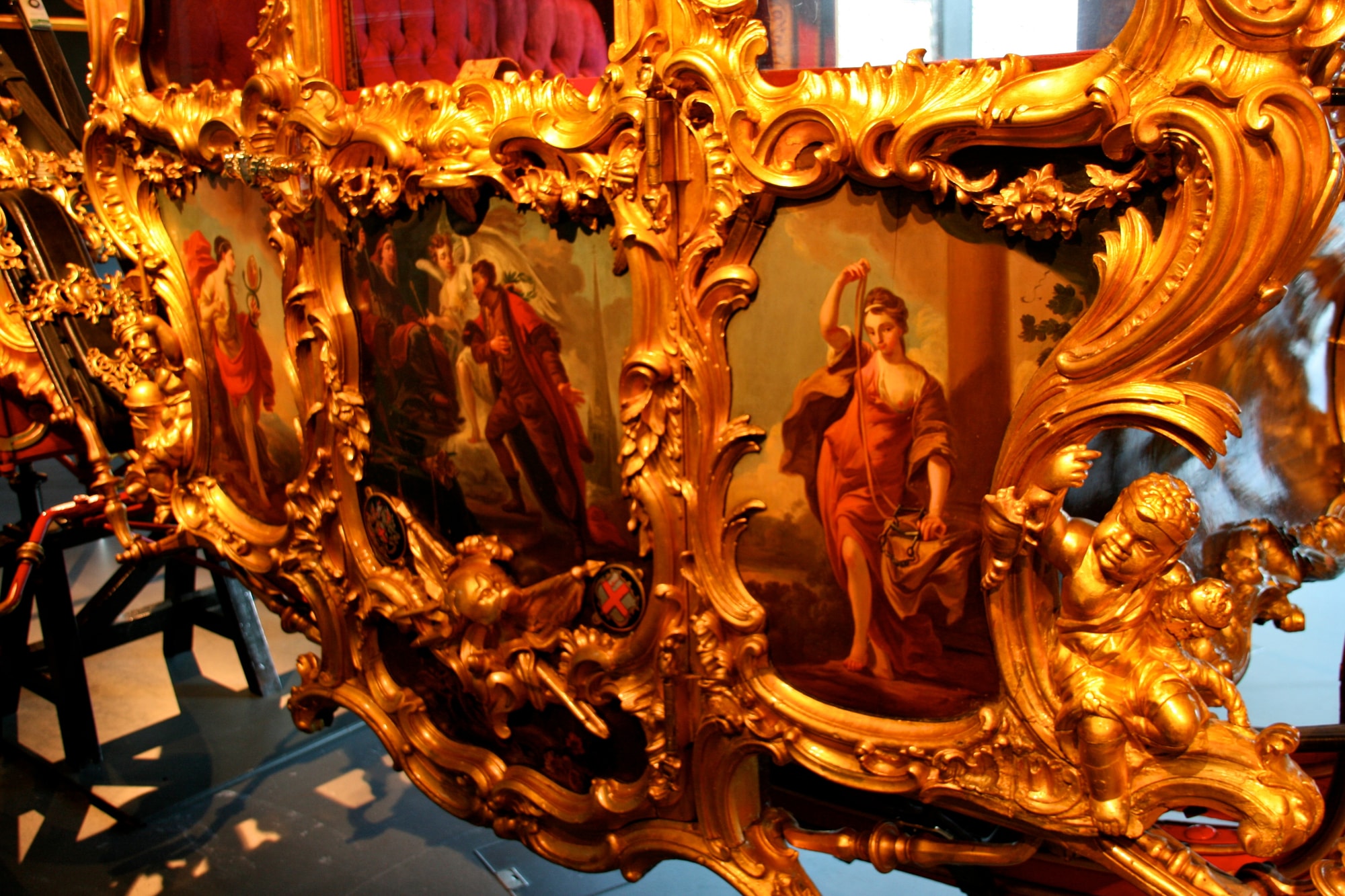
The coach is the reason to go. In April 1757 Sir Charles Asgill, the Lord Mayor-elect, talked his fellow aldermen into paying for a proper one. They gave the job to Joseph Berry, who had a workshop in Leather Lane in Holborn, and he had five months. It was ready for Asgill's inauguration that November. Sir Robert Taylor, who did the pediment on Mansion House, drew it, and the painted panels are attributed to Giovanni Cipriani. On the front, Hope points at the dome of St Paul's. On one side Mars points to a scroll held by Truth, with the name of the first Mayor, Henry Fitz-Ailwin, written on it. The whole thing weighs 2.9 tonnes and is pulled by six shire horses, the front pair ridden by a postillion. It got brakes in 1951. It was last stripped, repaired, regilded and reupholstered in 1952, and it spends the rest of the year with the London Museum.
Coach building is Endangered on the Heritage Crafts Red List. Between six and ten people earn their main living from it, with up to five in training. Most of that work is restoring old vehicles. The Red List says plainly that the skill most likely to go is making a new coach from start to finish, because hardly anyone orders one. A new carriage from Eastern Europe costs about a third of an English one, and that has taken the bottom out of the trade. The upholstery inside the coach is its own craft, coach trimming, also Endangered, with an estimated eleven to twenty professionals, and most of them now trim classic cars.
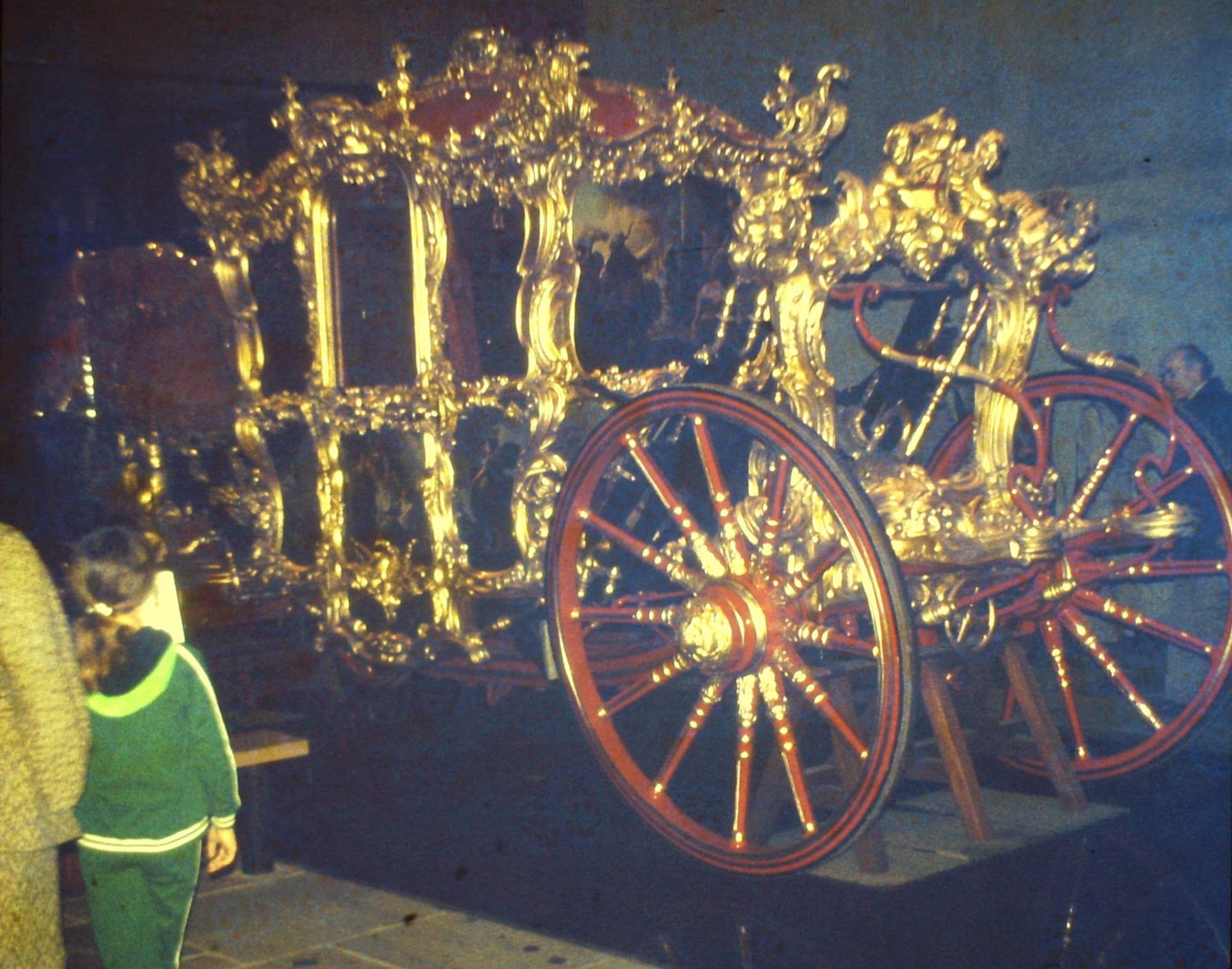
Then look at the wheels. Wheelwrighting is Endangered too. The Worshipful Company of Wheelwrights counted about twelve working wheelwrights in nine businesses last year, another twenty or so doing it on the side, and no trainees at all. The way wheels are still built, with an iron tyre heated and shrunk on so it pulls every spoke tight, was worked out in the middle of the eighteenth century, which is to say at about the same time Joseph Berry was building this coach. I would love to know who looks after those wheels now.
TAR BARRELS
Ottery St Mary, Devon. Thursday 5 November. Roads close from about 4pm; the children's barrels start then and the men's from about 7.30pm.
Hatherleigh, Devon. Saturday 14 November, to be confirmed by the carnival committee. First barrels at 5am, the rest at about 9.30pm.
In Ottery St Mary they carry burning barrels of tar on their backs through the streets. Each barrel is sponsored by a pub and lit outside it, each weighs around 30 kilos, and to carry one you have to be born in the town or run a business there. Up to fifteen thousand people come. The night ends in the Square with the biggest one, the Midnight Barrel. Nobody is sure how it started; the seventeenth century is the usual guess, with the Gunpowder Plot or the Glorious Revolution as the excuse.
Hatherleigh, north-west of Dartmoor, does it differently. The barrels are hauled up Market Street the night before and left ready, and at five in the morning some of them are lit and dragged through the town on sledges. The rest go round at speed late in the evening after the torchlit procession, and end up as the heart of the bonfire.
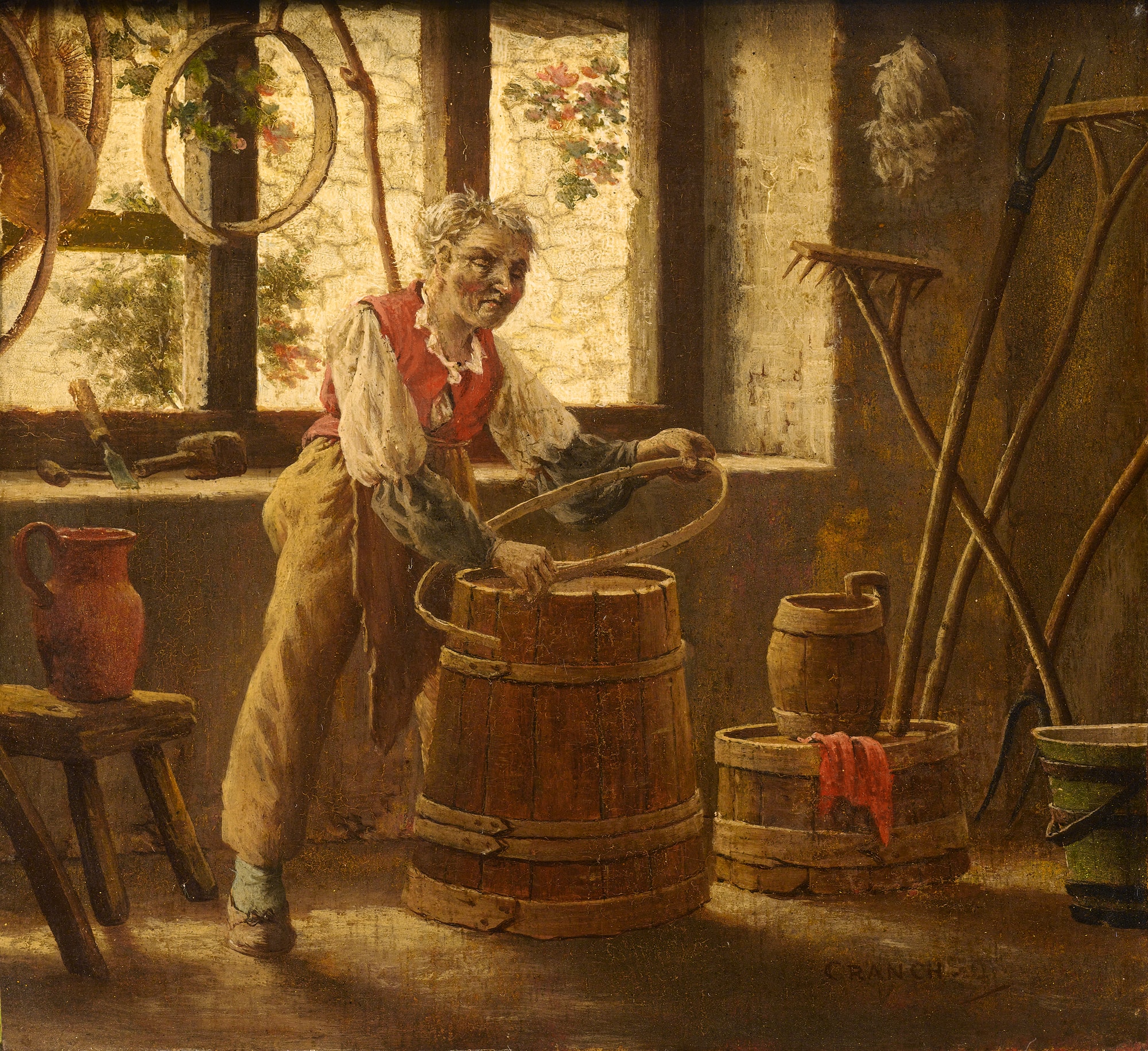
Every one of those barrels was made by a cooper. Coopering for beer, cider and wine casks is Endangered on the Red List: five people make their main living from it, one more does it on the side, and there is one apprentice, mostly in Yorkshire. Hardly any brewery orders wooden casks now. Coopering for whisky is in good health, and I could not find out where Ottery's or Hatherleigh's barrels come from. They may well be old spirit casks. Either way, a barrel that can carry burning tar down a street without falling apart is a cooper's work, and the people who can still raise one by hand are very few.
ST CLEMENT'S DAY AT FINCH FOUNDRY
Finch Foundry, Sticklepath, near Okehampton, Devon. Saturday 21 November, 10am to 4pm. Free, no need to book.
St Clement is the patron saint of blacksmiths and his day is 23 November. On the nearest Saturday, smiths from all over come to Finch Foundry, the last working water-powered forge in England, and spend the day making things and competing. They fire the anvil, which means packing black powder on it and setting it off to prove the iron is sound. There is a Snail Race, with a trophy for the fastest-made or best-forged snail. There are morris dancers too.
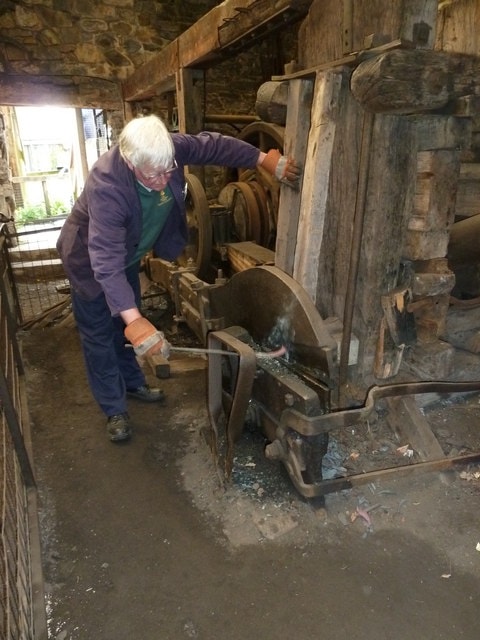
The foundry itself is the thing I would go for. William Finch set up in an old cloth mill here in 1814, and at its peak the works turned out around four hundred edge tools a day: billhooks, scythes and shovels for West Country farmers and miners. Three waterwheels drove the tilt hammers, the drop hammers, the shears and the grindstone, and they still turn. The National Trust has had it since 1994.
Blacksmithing is not on the Red List's endangered lists. What this place made is. Spade making with forged heads is Critically Endangered, the last category before extinct, and the Red List counts one professional and no trainees. The maker it names is Patterson's Spade Mill in County Antrim, the last water-driven spade mill in the British Isles. Finch Foundry stopped making in the 1960s. If the hammers are running while you are there, stand close and watch how much force goes into the head of one shovel.
- 1Ottery St Mary Tar Barrels
Ottery St Mary, Devon, Thursday 5 November
- 2The Lord Mayor's Show
City of London, Saturday 14 November
- 3Hatherleigh Carnival and Tar Barrels
Hatherleigh, Devon, Saturday 14 November (to be confirmed)
- 4St Clement's Day at Finch Foundry
Sticklepath, Devon, Saturday 21 November
If you know who looks after the State Coach's wheels, or where the barrels in Ottery and Hatherleigh come from, please tell me. Those are the names I want to be writing down.
Rosie
Cover: William Logsdail, The Ninth of November, 1888, Guildhall Art Gallery. Photograph: Stephencdickson, CC BY-SA 4.0.