

The Haud Almanack: July Events
If June is thin for old customs, July more than makes up for it. The whole country seems to come outdoors at once: rushes carried into churches, a parliament held on a hillside, a sheep roasted at the edge of a cricket pitch. I have picked three.
If June is thin for old customs, July more than makes up for it. The whole country seems to come outdoors at once: rushes carried into churches, a parliament held on a hillside, a sheep roasted at the edge of a cricket pitch. I have picked three. There is a thread running between the first two that I only noticed while I was writing, and I will come to it.
RUSHBEARING AT GRASMERE
Grasmere, Cumbria. Saturday 11 July.
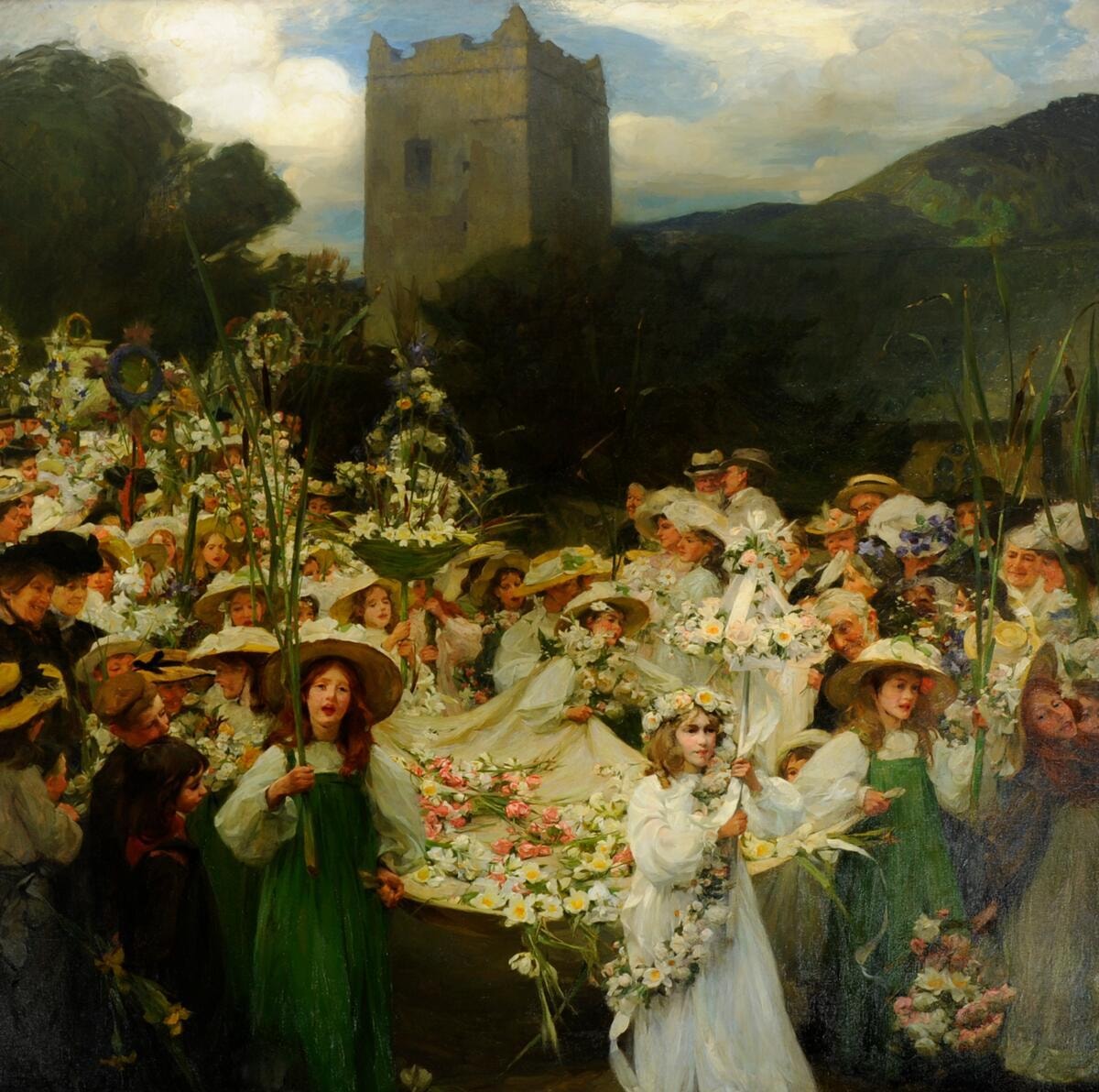
Once, the floors of parish churches were bare earth or stone, and strewn with rushes cut from the lake edges to keep them dry and sweet underfoot. Every year the old rushes were swept out and fresh ones carried in, in procession, with a bit of ceremony. Most churches paved their floors long ago and the need for it vanished. A handful of villages kept the procession anyway. Grasmere keeps it best.
On the second Saturday of July, six girls in green carry a linen sheet heaped with rushes through the village, and behind them the children bear the "bearings", frames of rush and flowers worked into shapes: harps, crosses, a hand holding a heart. They process from the school to St Oswald's, the church where Wordsworth is buried, and after the service every child is given a piece of Grasmere gingerbread, which is baked a few steps from the churchyard and is worth the trip on its own.
What moves me about it is that the rushes serve no purpose now. The floor is paved; nobody needs them. The village keeps making the bearings by hand because a thing made by hand for a single day is reason enough on its own. Lucy's corn dollies are cut from the same cloth.
TYNWALD DAY
St John's, Isle of Man. Monday 6 July.
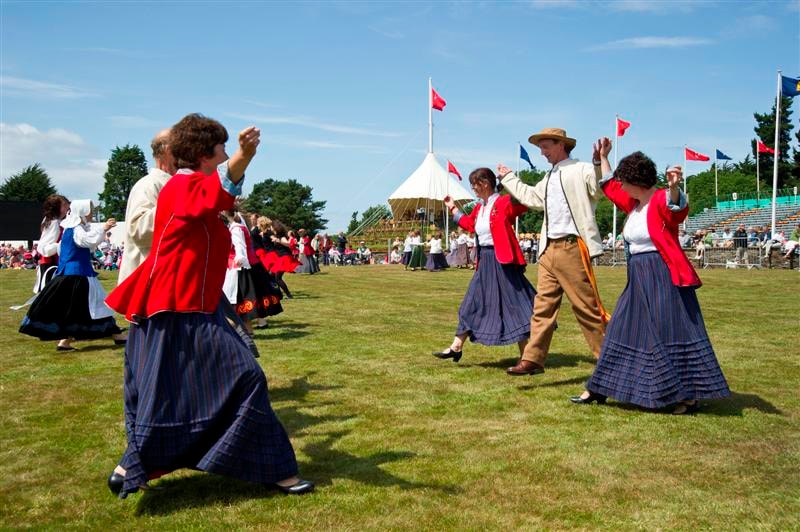
The Isle of Man has the oldest parliament in the world still sitting, and once a year it meets outdoors. On Tynwald Day the whole legislature walks from the chapel at St John's to a small stepped mound called Tynwald Hill, said to be built from soil carried in from all seventeen of the island's parishes, and there the year's new laws are read aloud to anyone who cares to listen, first in English and then in Manx. A law that is not proclaimed this way within eighteen months simply stops being law. It is government you can stand and watch, in the open air, in a language most of the crowd no longer speaks.
Here is the thread I promised. The path from the chapel to the hill is strewn with rushes, exactly as Grasmere's floors once were, a habit older than the parliament itself and traced back to bundles left out for a sea god at midsummer. Add the fifteenth-century Sword of State with its three running legs, the coroners kneeling to receive their staves, and the deemsters swearing to judge as straight as the backbone lies in a herring, and you have a working government dressed in a thousand years of craft.
One practical note. It properly falls on 5 July, but when that lands on a Sunday, as it does this year, the ceremony moves to the Monday. So this year it is Monday 6 July.
EBERNOE HORN FAIR
Ebernoe, West Sussex. Saturday 25 July.
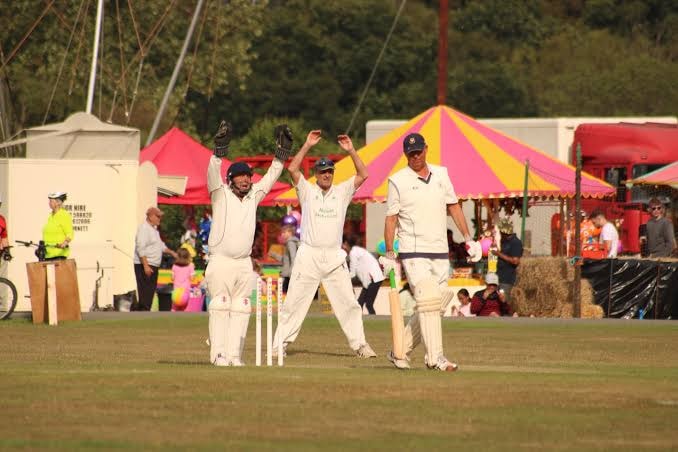
On St James's Day a small Sussex village roasts a whole sheep at the edge of its cricket pitch and plays a match while it cooks. This has gone on for as long as the records reach. At the lunch break the players process the roast around the crease; at the close of play, the batsman on the winning side who has scored the most is presented with the horns, once the actual horns off the roasted ram, now a horned trophy. Then everyone sings the Horn Fair Song and the mutton is shared out.
A country road runs straight across the outfield, so the fielders share the ground with the occasional passing car and nobody seems to mind. It is the least self-important custom I know, and better for it. If you go, take a chair. The cricket keeps its own time, and the horns are not handed over until the last over is bowled.
WHAT'S ON
A short craft diary to close on. Three worth your time this month.
Heritage Crafts in conversation: Chris Park, bee skep maker Online. Wednesday 8 July, 7pm. Heritage Crafts hosts an evening with Chris Park, one of the last skep makers working in Britain. A skep is the old coiled-straw beehive, and the making of them sits on the Heritage Crafts Red List, with no full-time commercial maker left in the country. This is exactly the sort of knowledge the Red List exists to hold on to, and you can sit in on it from the kitchen table for the price of a ticket.
New Designers Business Design Centre, Islington, London. 1 to 4 July. The big graduate show, more than two thousand of them this year across textiles, ceramics, furniture and the rest. It is where a good many makers are first seen. If you want a sense of who is coming up, and what the next few years of British making might look like, this is the room to be in.
Fibre East Ampthill, Bedfordshire. 25 and 26 July. A weekend given over to wool and fibre: spinners, dyers, weavers and the sheep breeds behind them, with demonstrations and stalls run by the people who do the work. Smaller and more hands-on than the trade shows, and the better for it if you like to watch a thing being made.
I will be in the Lakes for the rushbearing, gingerbread in hand. Whether you make it to a custom or a fair, write and tell me what you saw.
Rosie
- 1
Grasmere, Cumbria, England, United Kingdom
- 2
Isle of Man
- 3
Ebernoe, West Sussex, England, United Kingdom