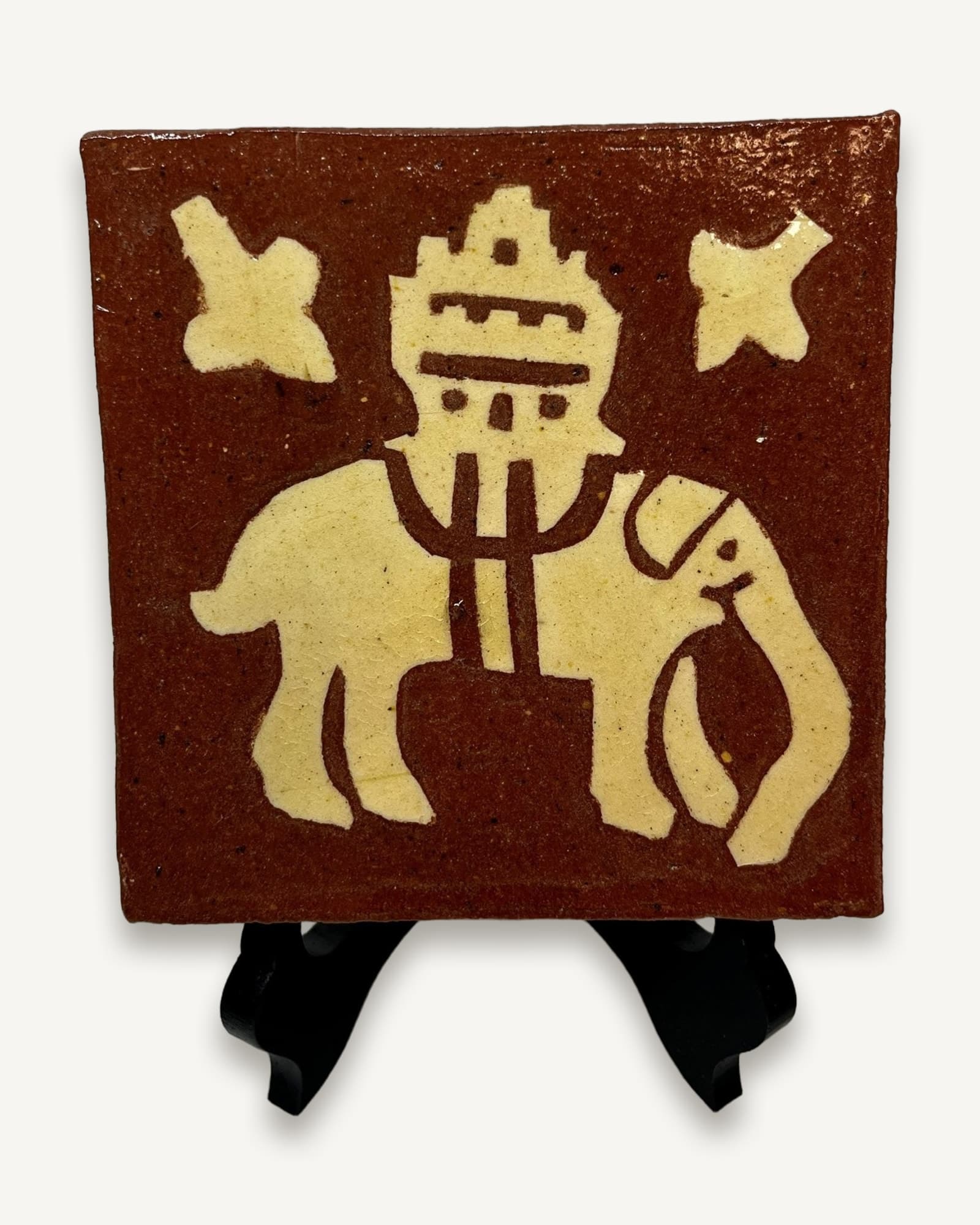
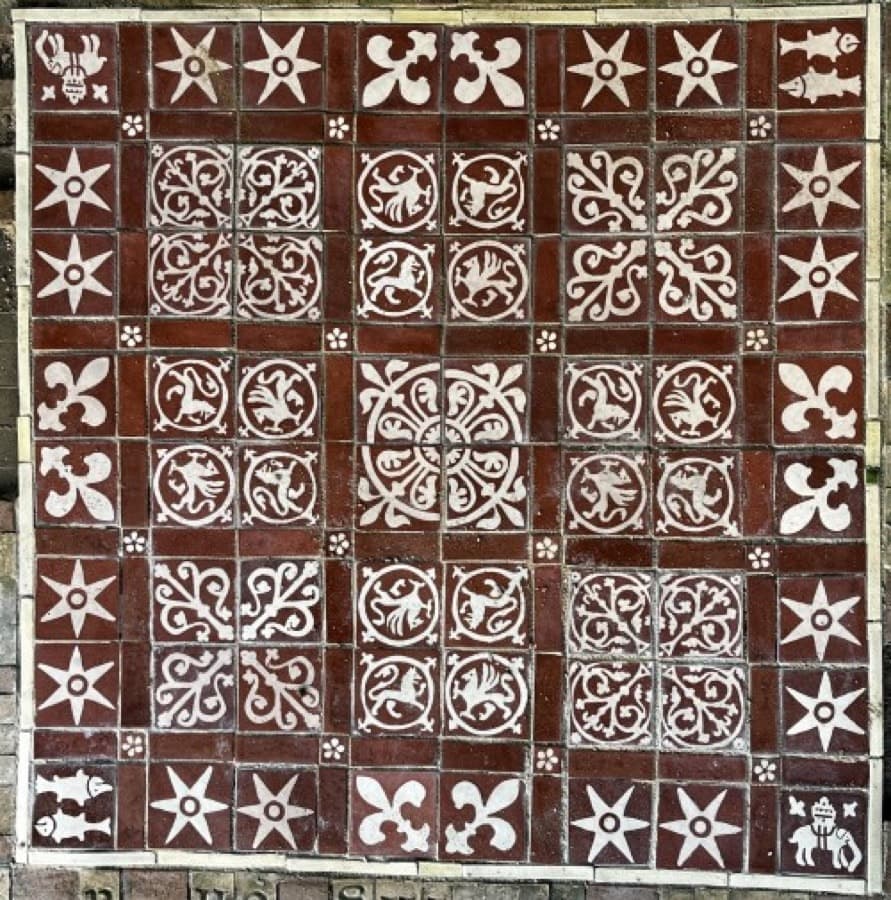
A image of an elephant with houdah with two simple fleur-de-lys images. Given that this tile, and its stamp, where made in the 1200's by a poorly educated tile maker in Somerset this is a remarkably good likeness of an elephant. Henry III did have a zoo at the Tower of London and did have an elephant in the collection for a few months so maybe the tiler did actually see a live elephant. Like other slightly 'qwirky' this tile design is only found in a couple of locations. In this case all known examples are from the Somerset area.
A cork or felt backing can be added for £1.00. A wooden stand to display it upright can be added for £5.00.
Glazed with a modern lead frit, in which the lead is chemically bound to silica rather than the raw lead of the medieval originals. Safe for display, walls and floors, but not for food or drink. Safety certificates are available on request.
 Tom Chamberlain
A image of an elephant with houdah with two simple fleur-de-lys images. Given that this tile, and its stamp, where made in the 1200's by a poorly educated tile maker in Somerset this is a remarkably good likeness of an elephant. Henry III did have a zoo at the Tower of London and did have an elephant in the collection for a few months so maybe the tiler did actually see a live elephant. Like other slightly 'qwirky' this tile design is only found in a couple of locations. In this case all known examples are from the Somerset area.
A cork or felt backing can be added for £1.00. A wooden stand to display it upright can be added for £5.00.
Glazed with a modern lead frit, in which the lead is chemically bound to silica rather than the raw lead of the medieval originals. Safe for display, walls and floors, but not for food or drink. Safety certificates are available on request.
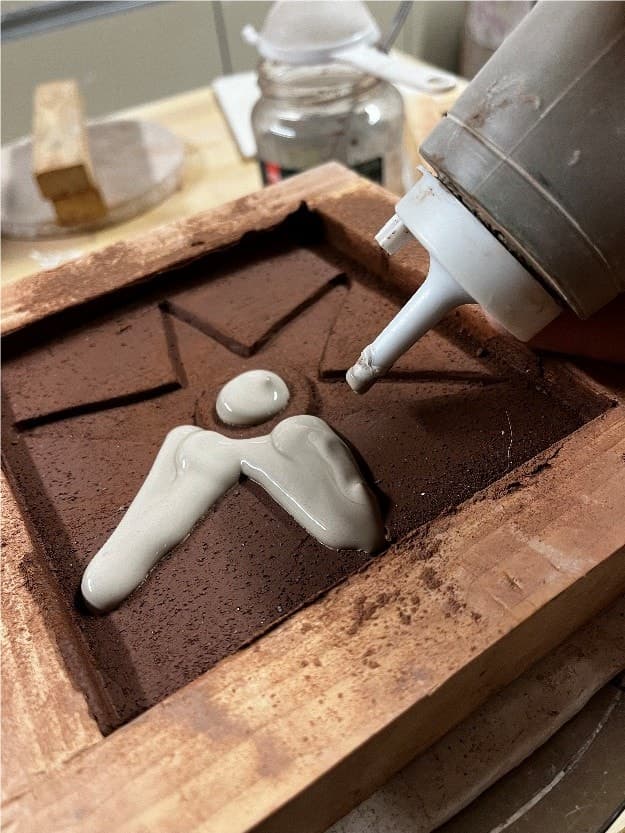
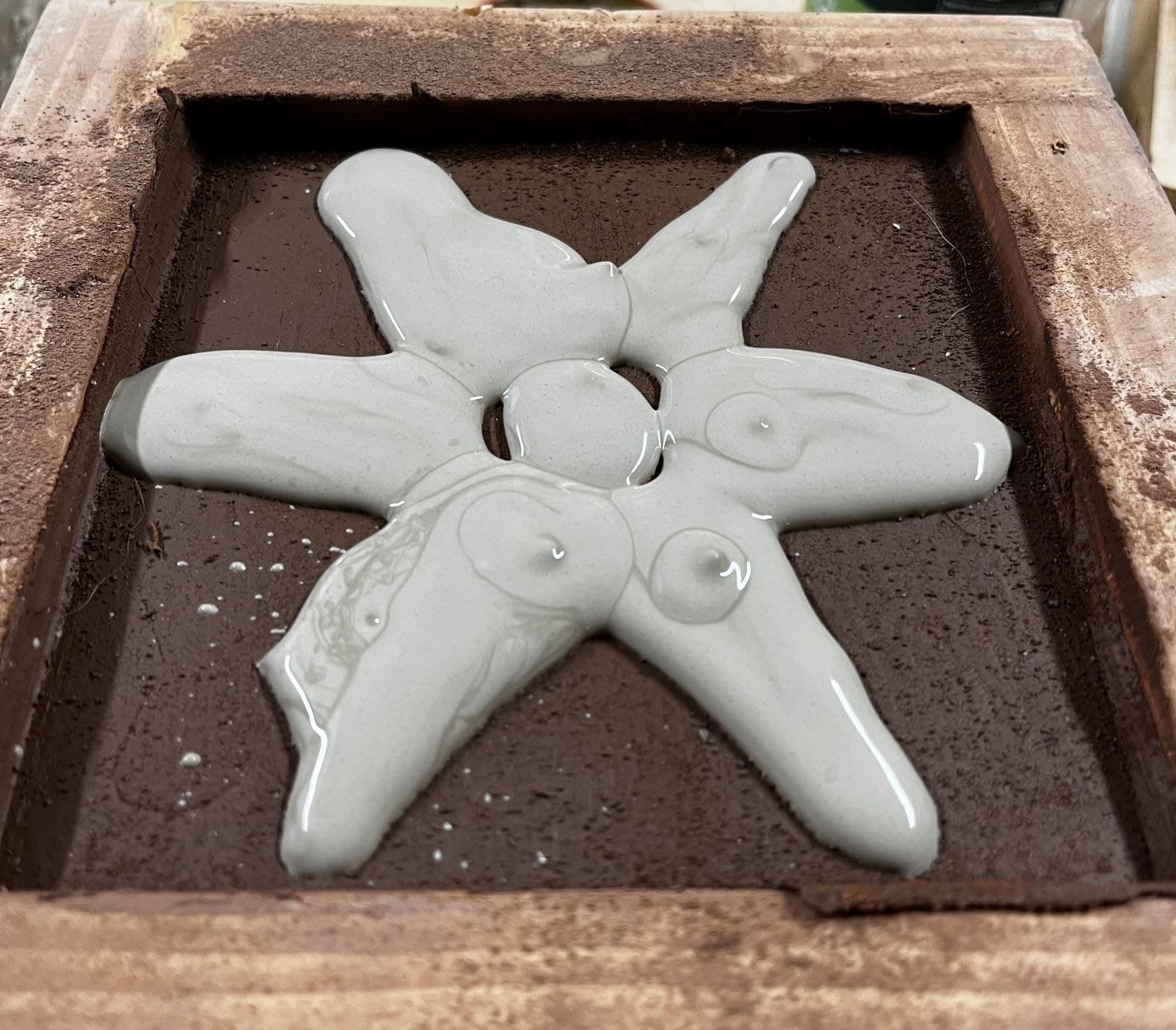
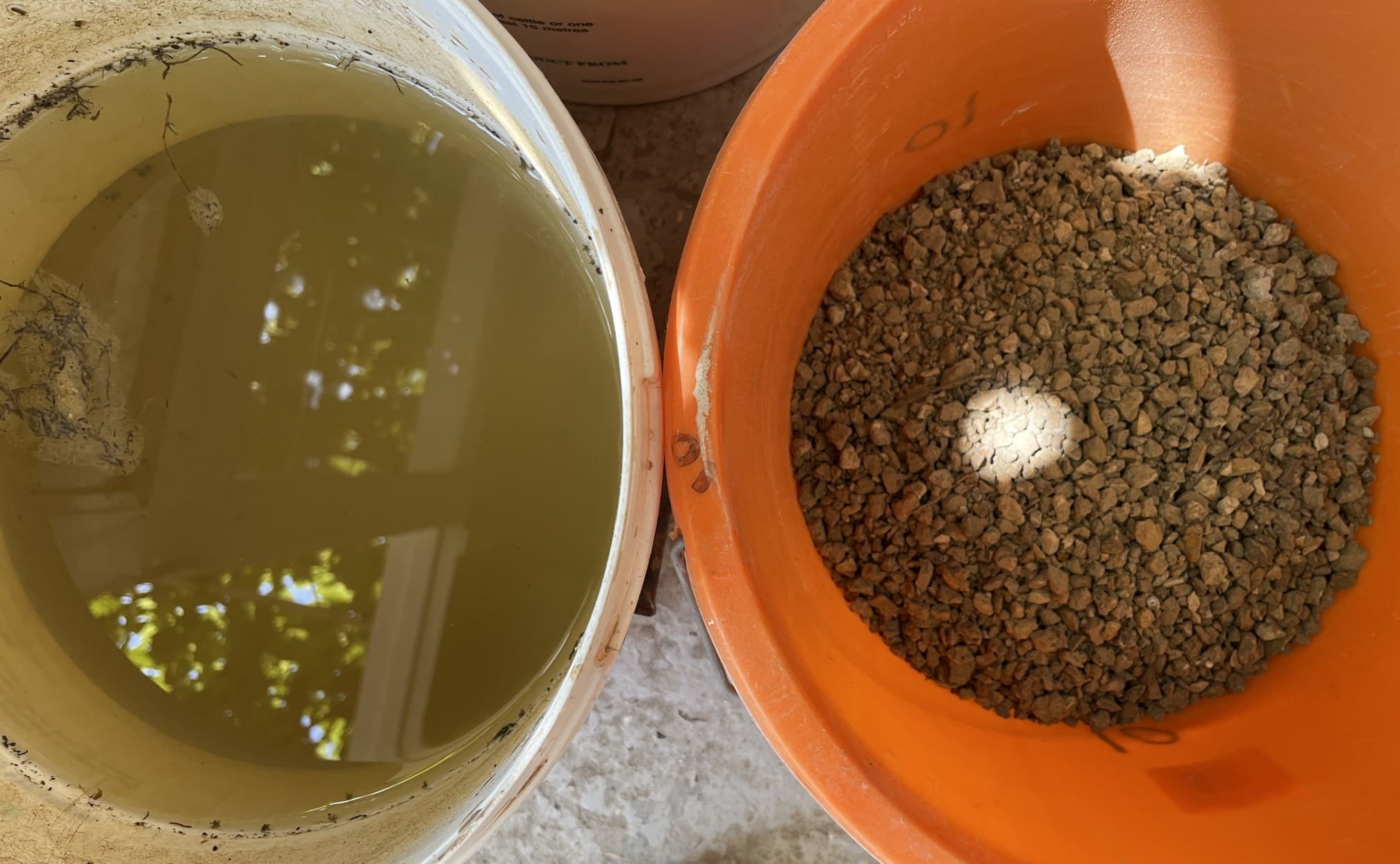
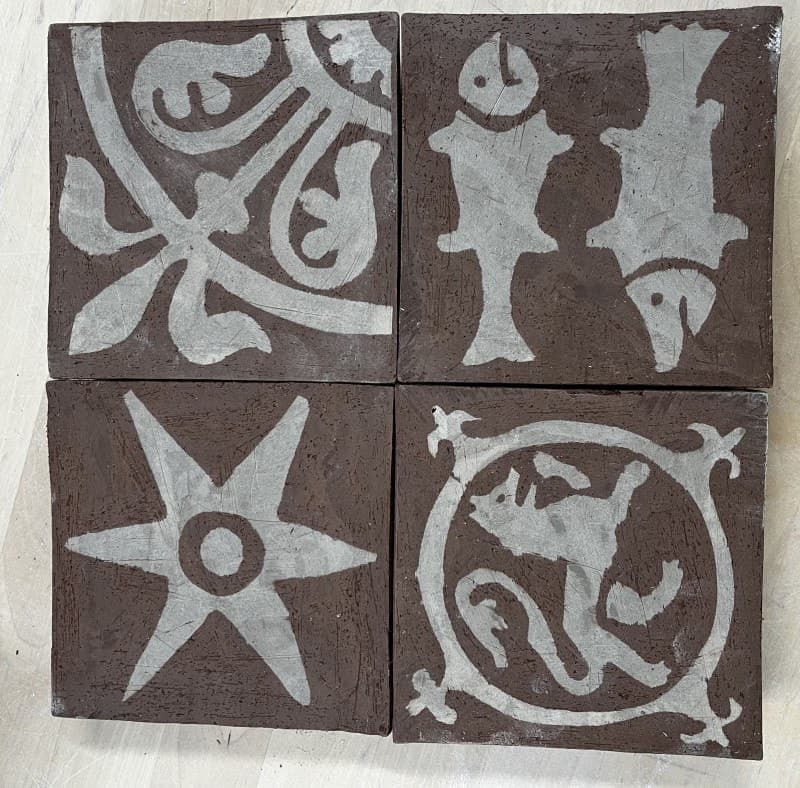
Tom Chamberlain makes floor tiles the way they were made for medieval churches and abbeys. He digs the red clay himself, cuts his own stamps, and has spent the last two years working out the original methods.
Tom Chamberlain makes floor tiles the way they were made for medieval churches and abbeys. He digs the red clay himself, cuts his own stamps, and has spent the last two years working out the original methods.