

The Bench | Bethan Hughes Jones and the art of encaustic tiles
When I visited Bethan Hughes Jones at Fireworks Clay Studios in Cardiff in September, there was a small block of wood on her table with a quatrefoil carved into it, lying beside the porcelain tile it had just been pressed into. It is the first tile stamp she has carved by hand, using woodcarving tools she bought secondhand, and she is modest about it: "It's my first attempt, so it's definitely a bit rustic." Stamps like it are how the floor tiles of medieval abbeys were made, and Bethan is one of very few people in Britain still making tiles that way.
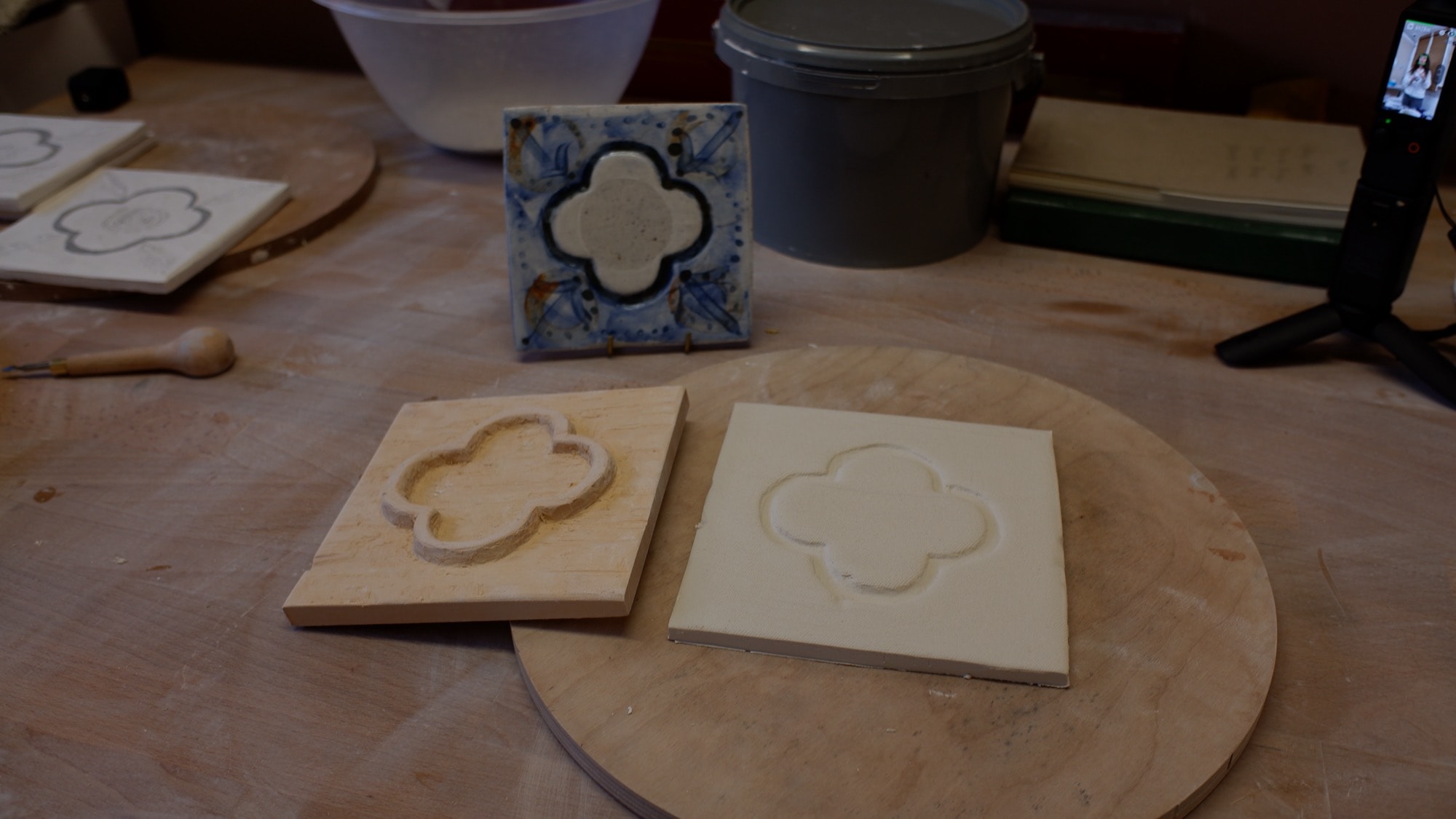
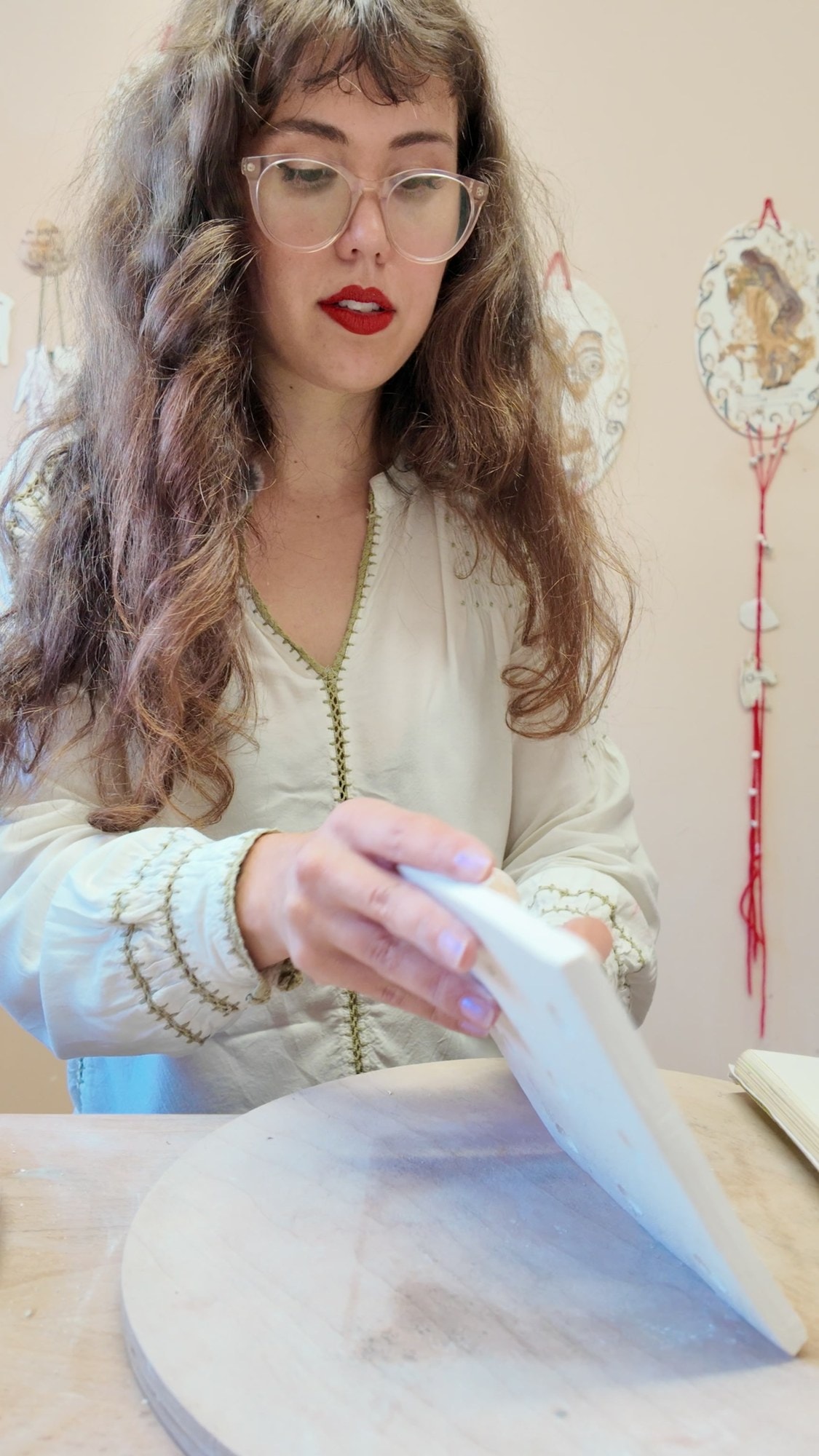
Bethan, whose full name is Bethan Lowri Hughes Jones, makes inlaid porcelain tiles, bowls and charms under the name Cerameg Traed Brân. The technique she uses is called encaustic tile making, and Heritage Crafts lists it as critically endangered, with no more than five people in the UK making their main living from it.
WHAT IS AN ENCAUSTIC TILE?
An encaustic tile is a clay tile whose pattern is inlaid rather than painted on. A design is pressed or carved into the soft clay, the hollows are filled with a liquid clay of a contrasting colour, called slip, and once the tile has firmed up the surface is scraped back so that the pattern sits flush. Because the pattern goes down into the tile rather than sitting on its surface, it can survive centuries of being walked on. The name is misleading, since "encaustic" comes from a Greek word meaning burnt in and was only attached to these tiles in the nineteenth century, so "inlaid" is the more accurate description.
According to Heritage Crafts, the earliest encaustic tiles in Britain date from the mid thirteenth century, and they were laid mainly in monasteries and royal buildings. The craft died out after the dissolution of the monasteries and came back with the Gothic Revival, when Minton made around 75,000 tiles for the Palace of Westminster between 1847 and 1852.
THE KEY TO THE UNDERCROFT AT NEATH ABBEY
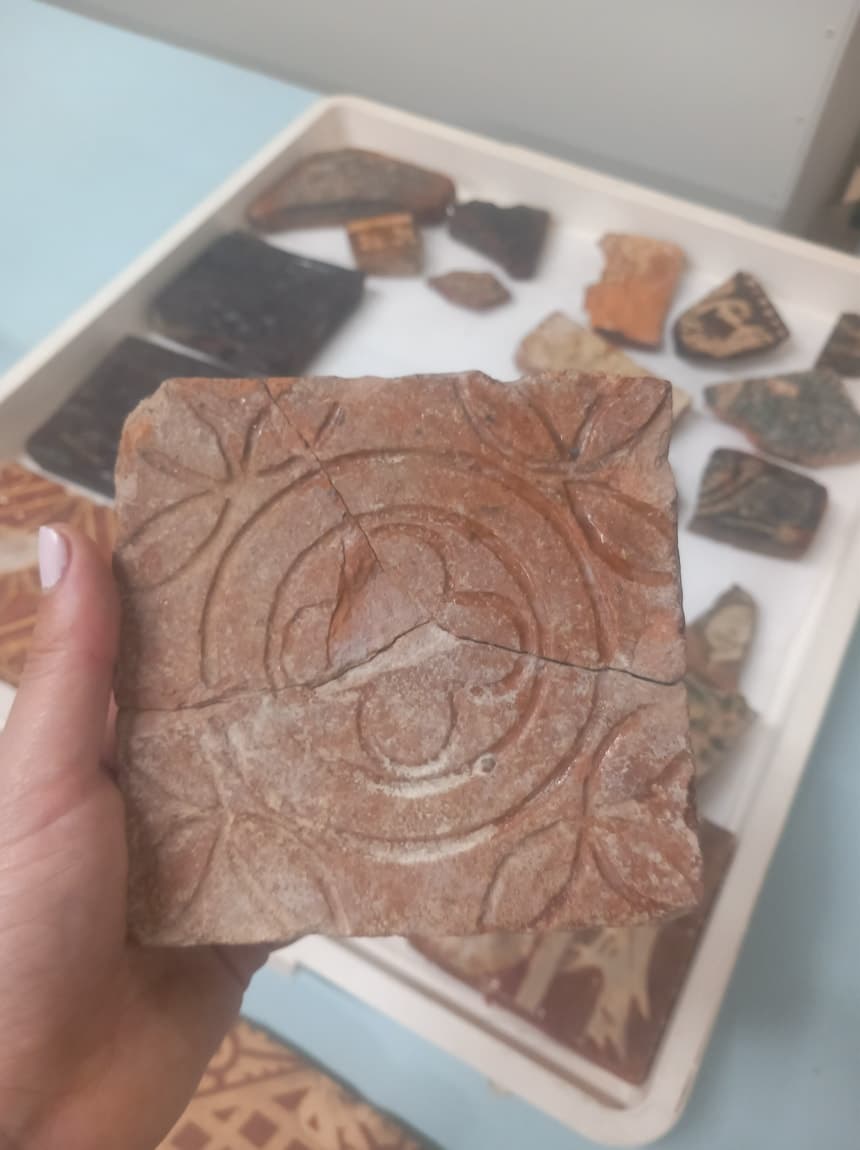
Bethan came to tiles through the medieval period, and through the discovery that in Wales tiles were among the first ceramics made to be decorative. "I'm really interested in the connection between craft and culture," she says, "and in periods in history where there have been big cultural changes." Her research took her to Cadw, which looks after Neath Abbey, and Cadw put her in touch with the abbey's historian, Bill Zajac. He spent an afternoon with her and let her into the undercroft, which is kept locked, and where the medieval tiles lifted from the abbey church in the 1980s are laid out on the floor, with more stacked in crates.
She says she went in with some misconceptions. She had expected the tiles to have been made locally, but they are thought to have come from workshops near Bristol, working to designs that probably originated in France. Many of them carry coats of arms, which were long taken to be the arms of local families, but the same arms turn up at abbeys a long way apart, so they seem to have been stock patterns chosen for a fashionable interior. "Even back in the medieval period there was this idea of copying designs for fashion purposes," she says. "We're constantly relearning what happened." Amgueddfa Cymru now holds more than a thousand tile fragments from over fifty sites across Wales, among them a fourteenth-century tile from Neath showing a knight on horseback.
FROM ANGLESEY TO COUNTY MEATH
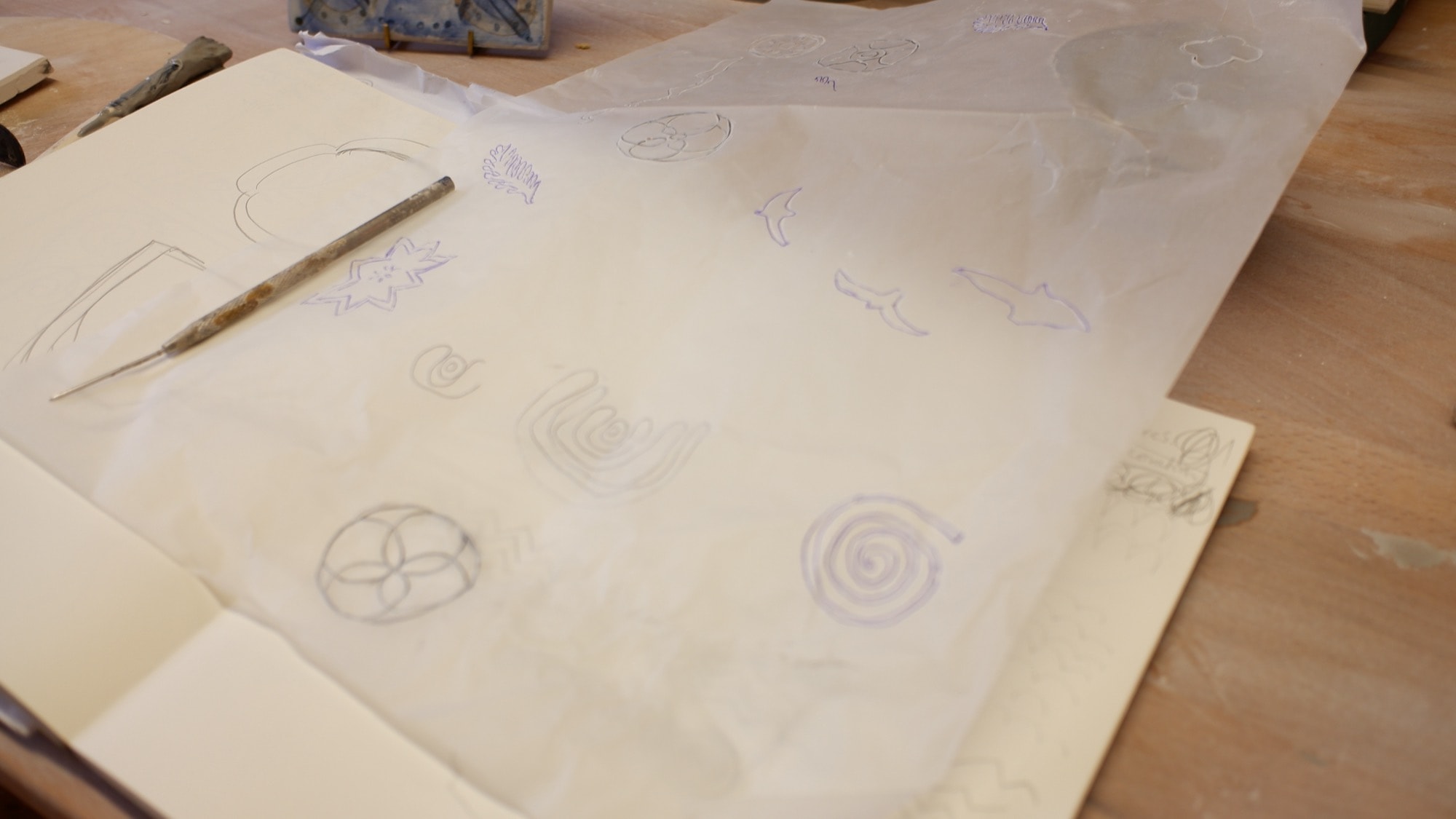
Bethan grew up in North Wales, and lately her research has gone back further than the abbeys, to the carved stones of the Neolithic. Anglesey has chambered tombs from that period, among them Bryn Celli Ddu, where the rising sun at the midsummer solstice shines down the passage into the burial chamber. She has also travelled to the passage tombs of County Meath in Ireland to sketch the patterns carved into their stones.
In that carving she found the quatrefoil, a four-lobed shape that turns up again in medieval tiles, and it has become the shape that ties her work together. "Writing didn't exist, so it's really difficult to understand what people were thinking when they were carving these patterns into the stones," she says, "but there is a theory that it symbolises the soul." She keeps the meaning broad rather than tying it to any one religion, and for her it stands for the way a culture carries on.
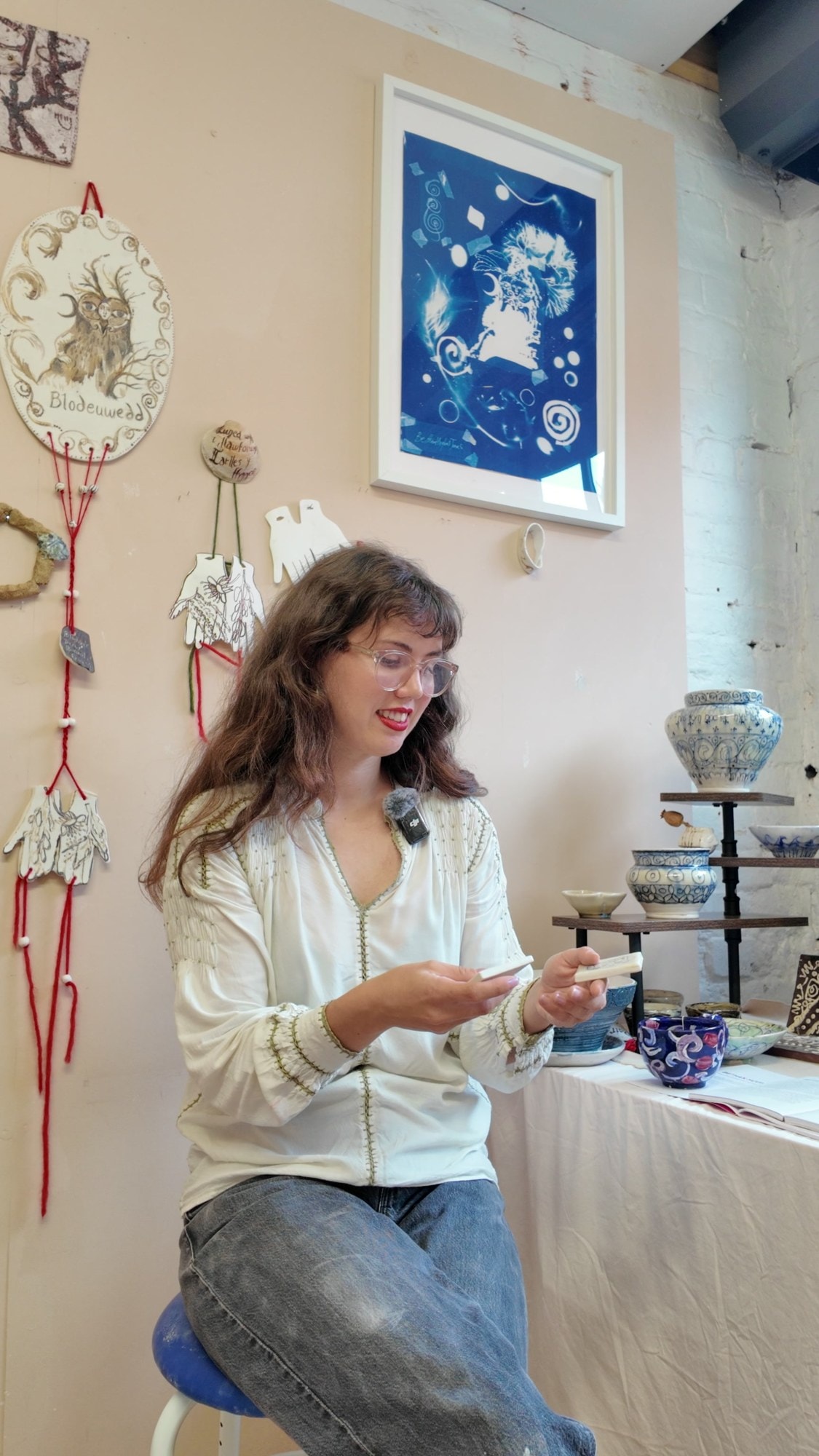
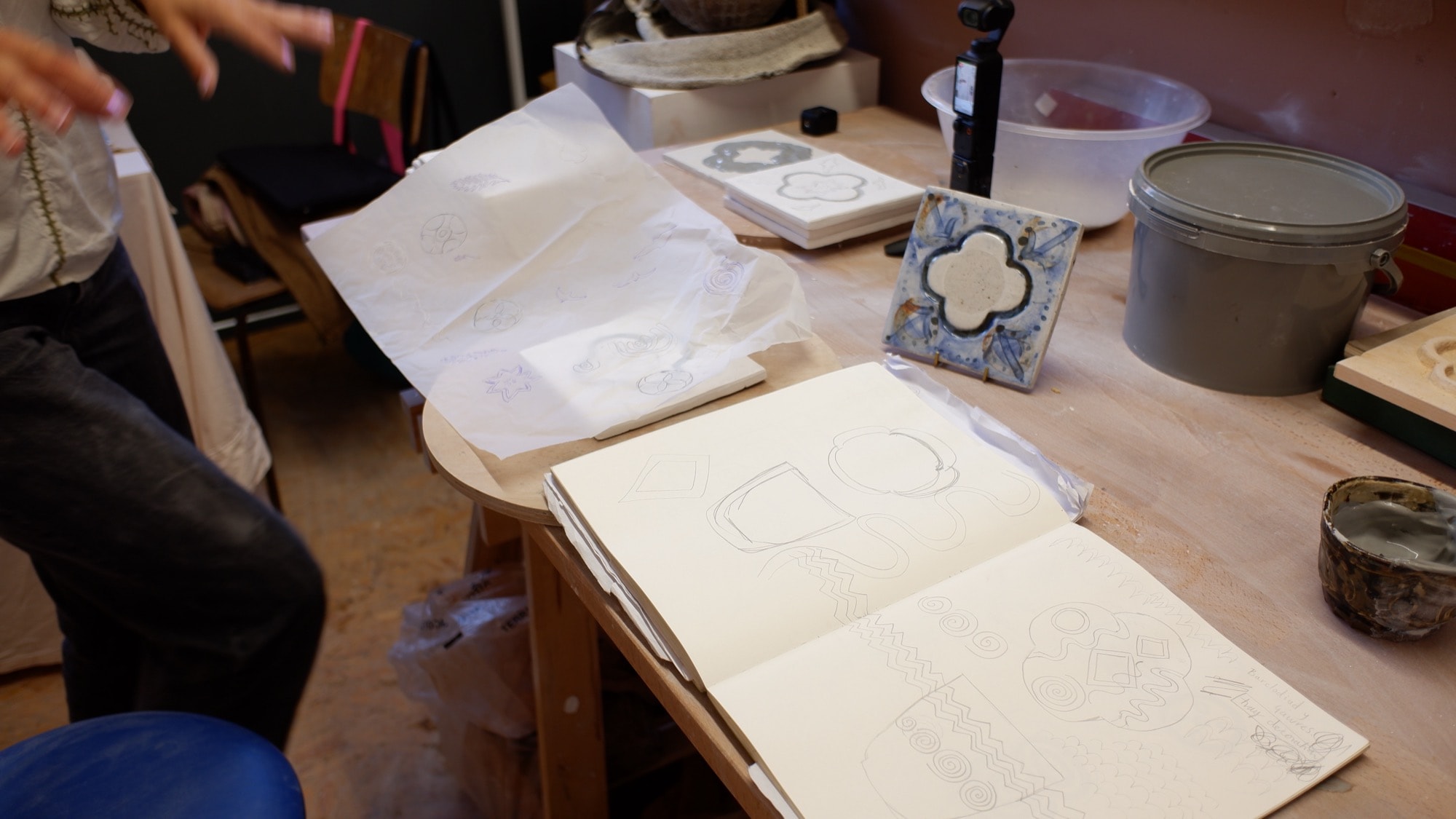
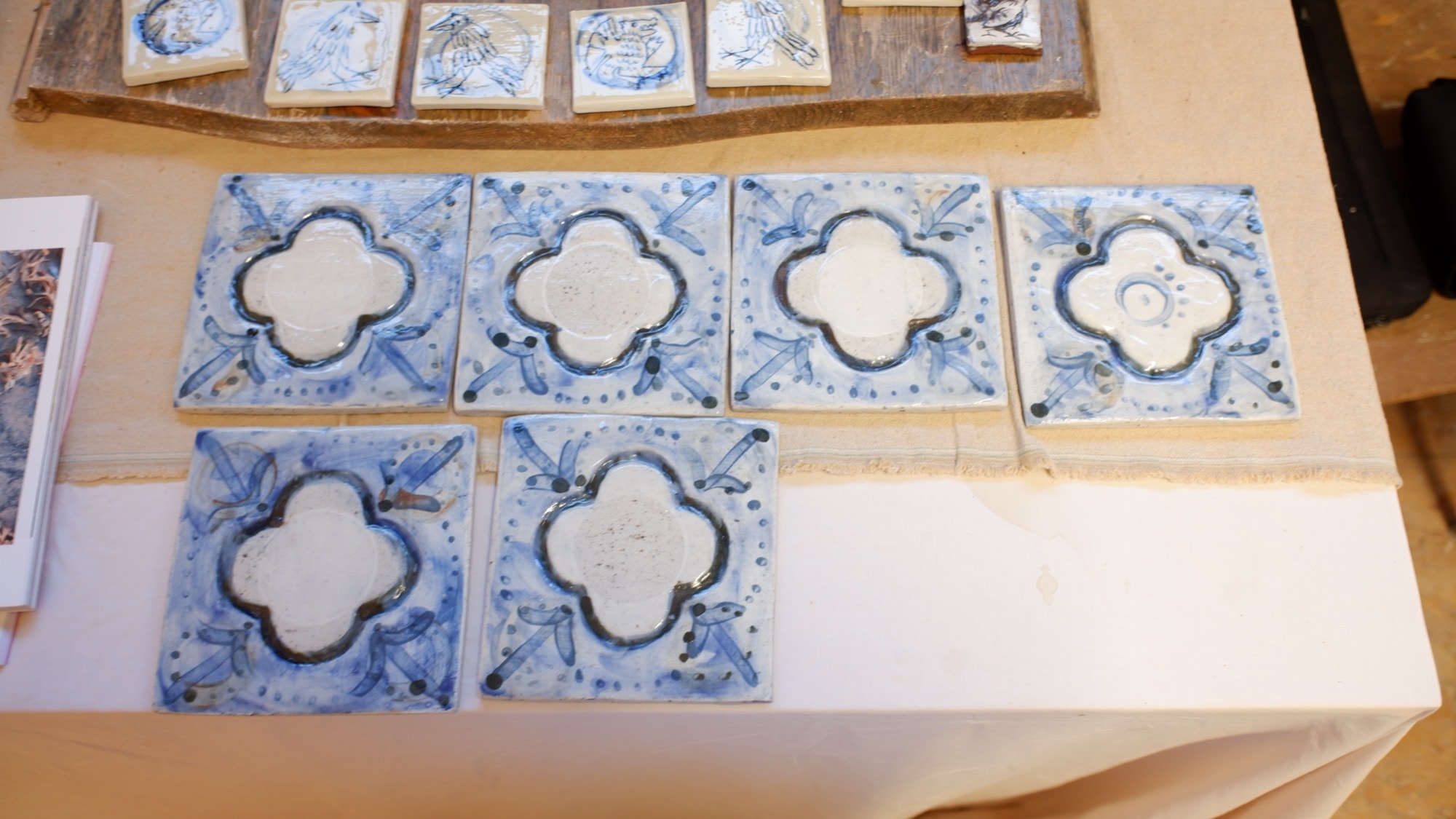
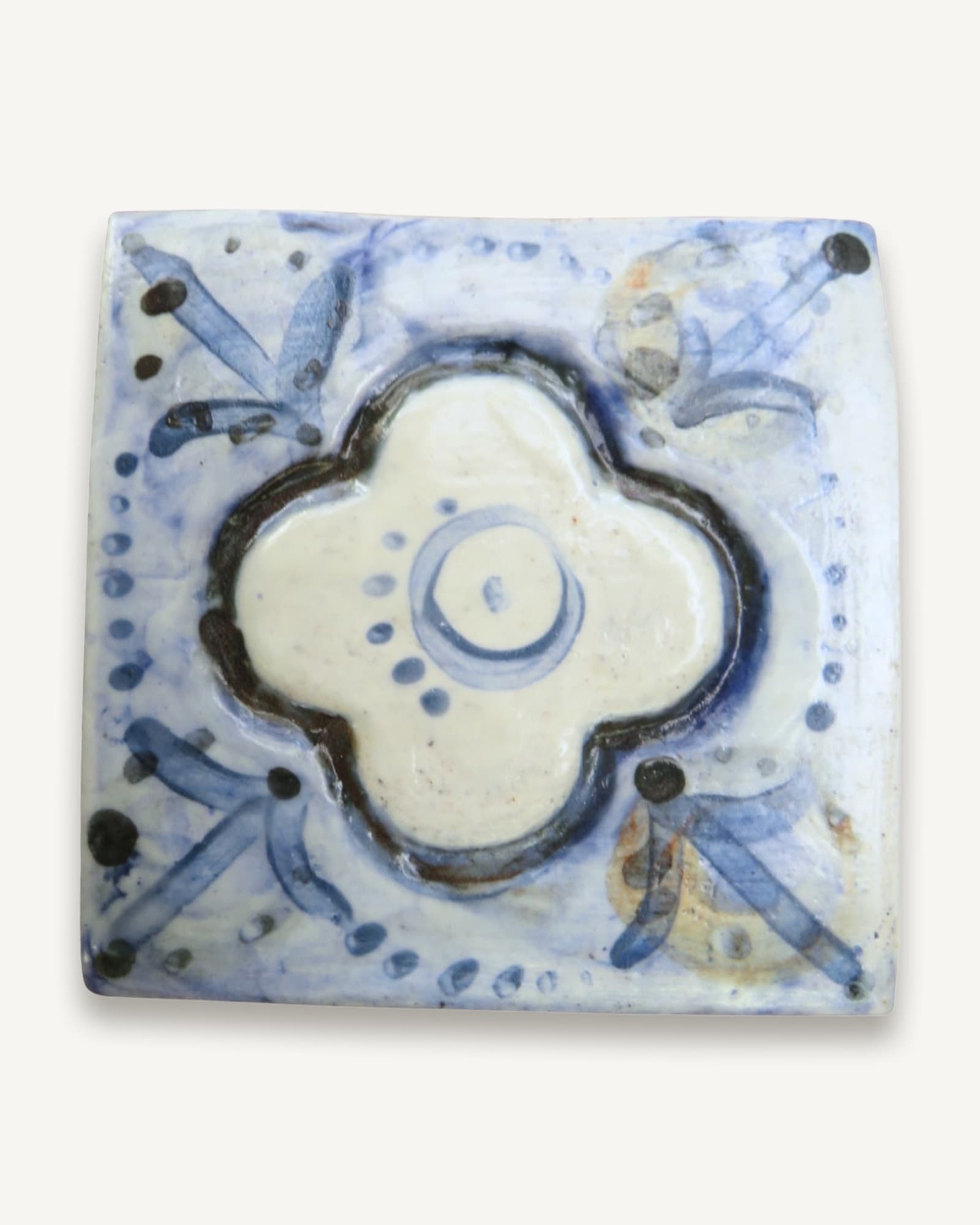
The other influence is the Arts and Crafts movement. William Morris used tiles in his designs, and his argument for irregularity and against mass production is one Bethan holds to in her own practice. She makes in small numbers and is at ease with that: "I want people to recognise that there is a beauty in small-scale production." The one-off tile above was made in response to John Ruskin's ideas and the influence they had on Morris.
HOW SHE MAKES A TILE
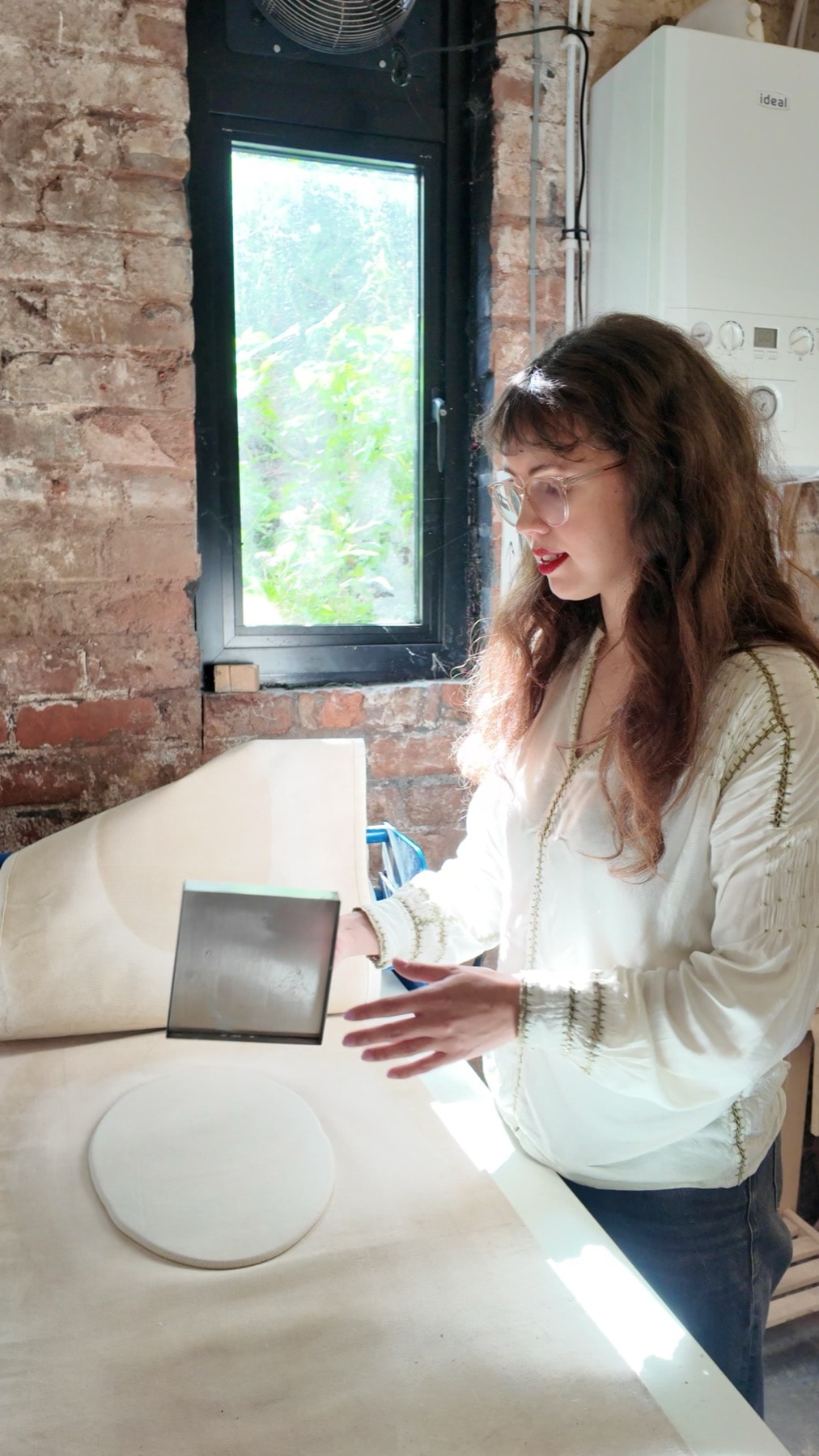
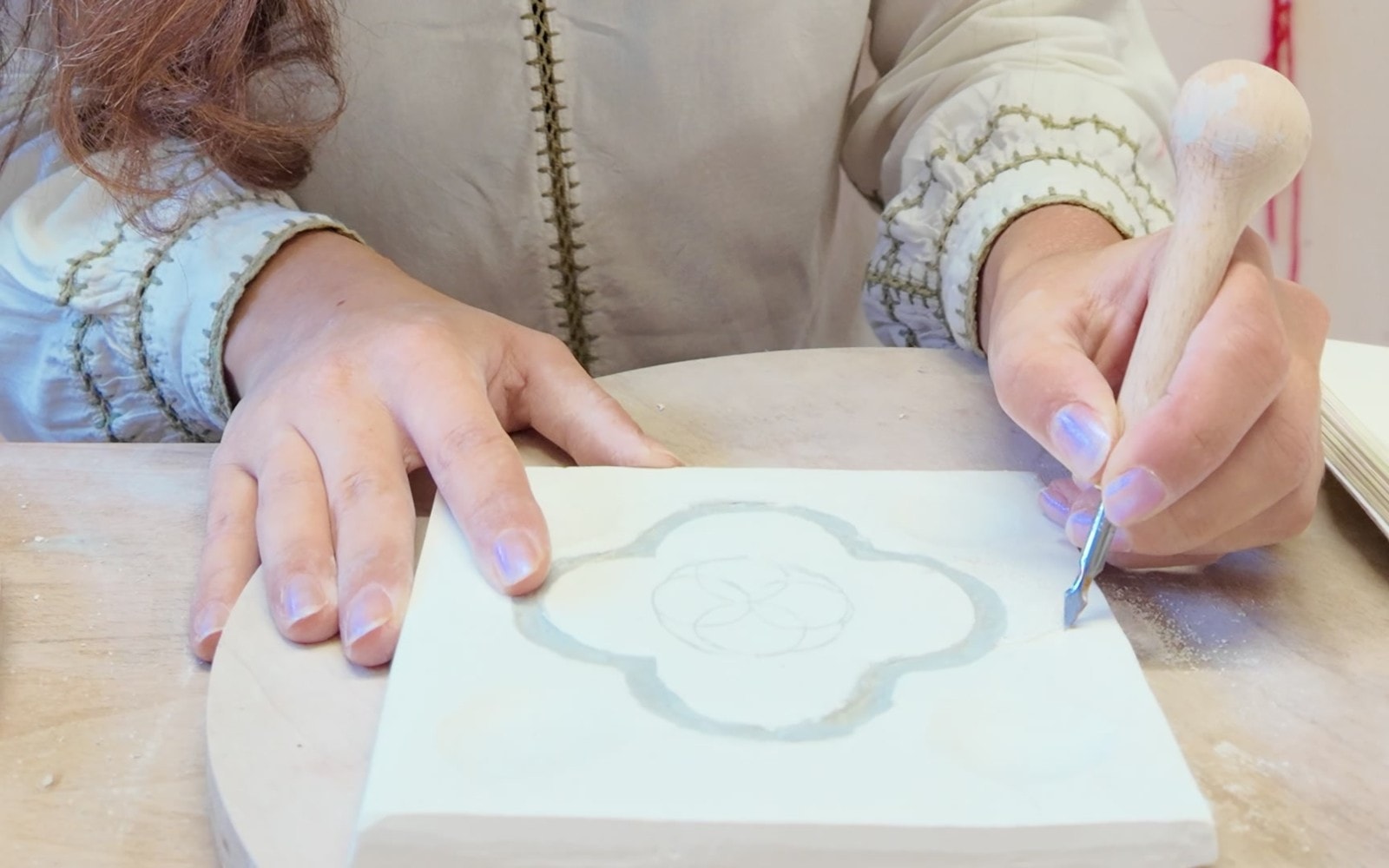
Bethan works in porcelain and reclaims her clay, reusing offcuts until nothing is left, because "it's a finite material". She rolls it out on the slab roller to about two centimetres thick and cuts the squares with a tile cutter. On the same day, while the clay is still soft enough to take a deep impression, she presses in the wooden stamp. Other designs she draws freehand into the surface from her sketchbooks, and she likes a blank tile for exactly that reason: "The white of the porcelain and the flatness of the tile is like a sketchbook page."
The tiles then have to dry slowly and flat, which she says is the hardest part of the making, so she stacks them and turns the whole stack over every day for a week or so, and the smallest need turning every half day. Porcelain dries quickly, and a tile that is left too long lifts at the edges in a way that cannot be undone. "You can't make tiles if you're planning on going away on holiday," she says.
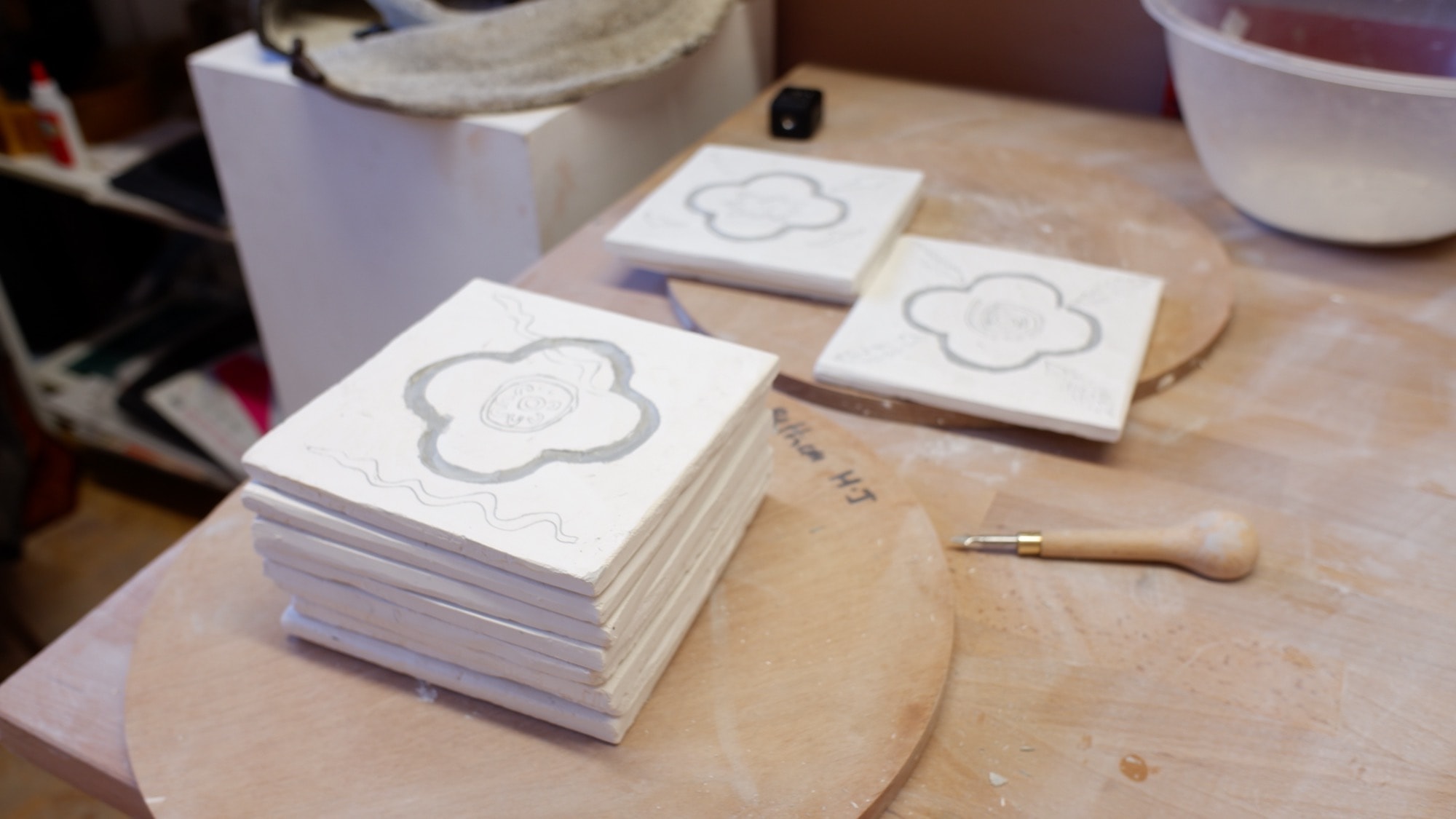
For the inlay she mixes a slip of porcelain powder and ball clay coloured with cobalt, floods it over the stamped design and leaves until the tile is leather-hard, usually the next day, before scraping the surface back. If she scrapes too soon, the wet slip smears across the white. "It's quite a satisfying part of the process," she says. "It's that revelation of what you've made."
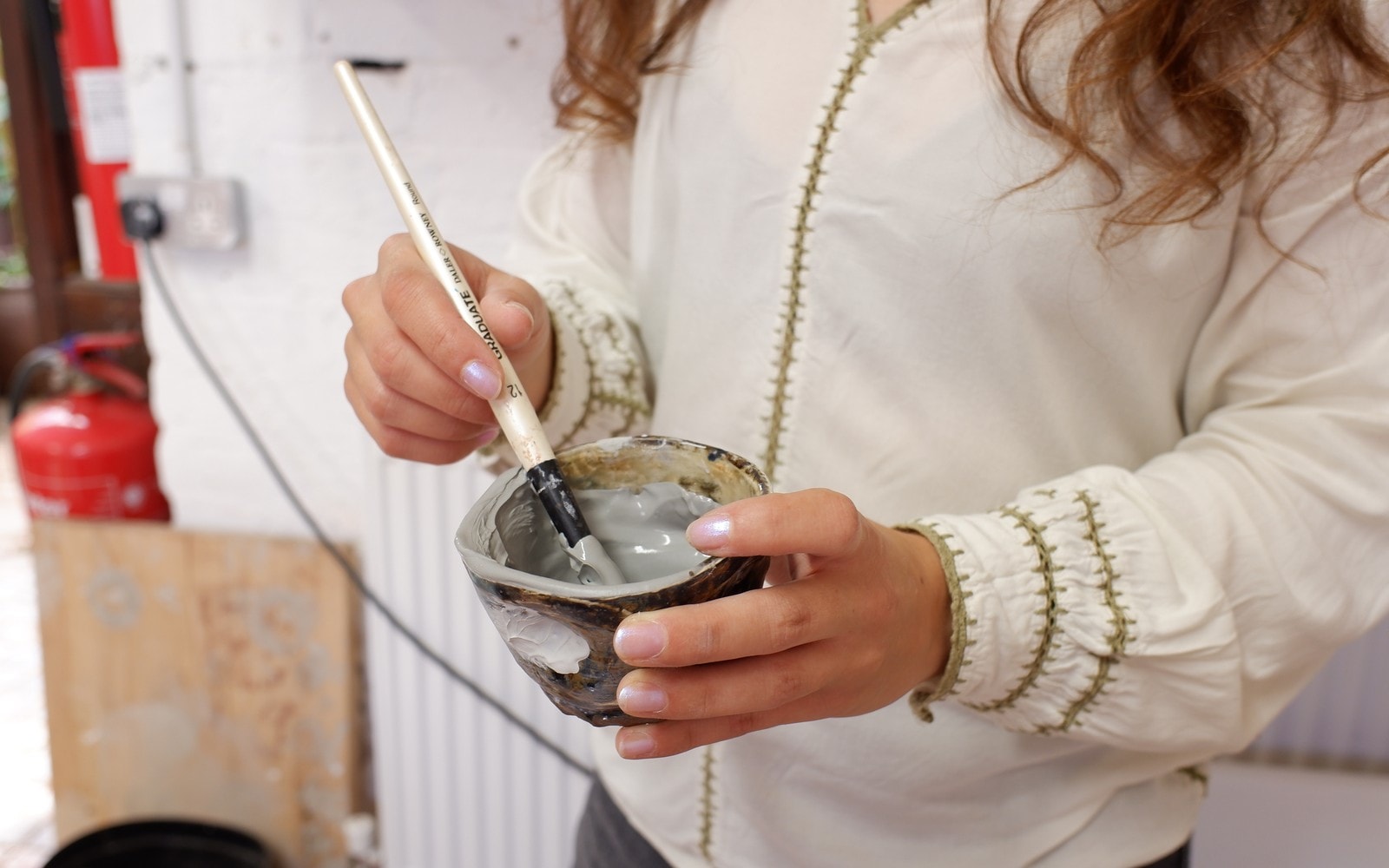
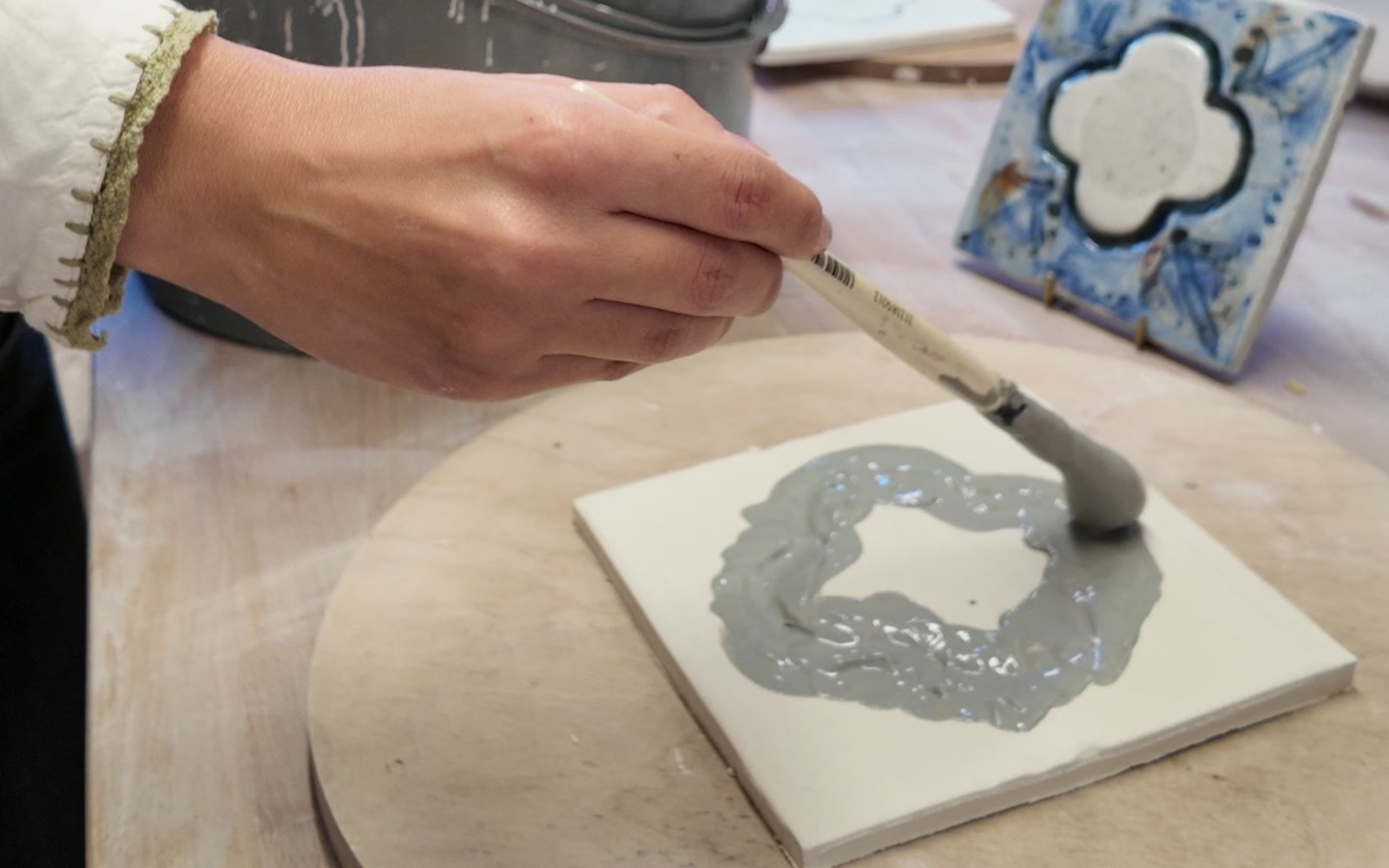
The tiles are bisque fired to about 1,000°C, glazed, and fired again to between 1,220 and 1,260°C, which is hot enough for the porcelain to vitrify and turn faintly translucent. Painted decoration tends to soften and run at those temperatures, and she likes that on some pieces, but a pressed and inlaid line stays sharp. When she wants a crisp design, painting it on and watching it wash away in the kiln is, in her words, "quite disappointing", and that is why she uses the older technique.
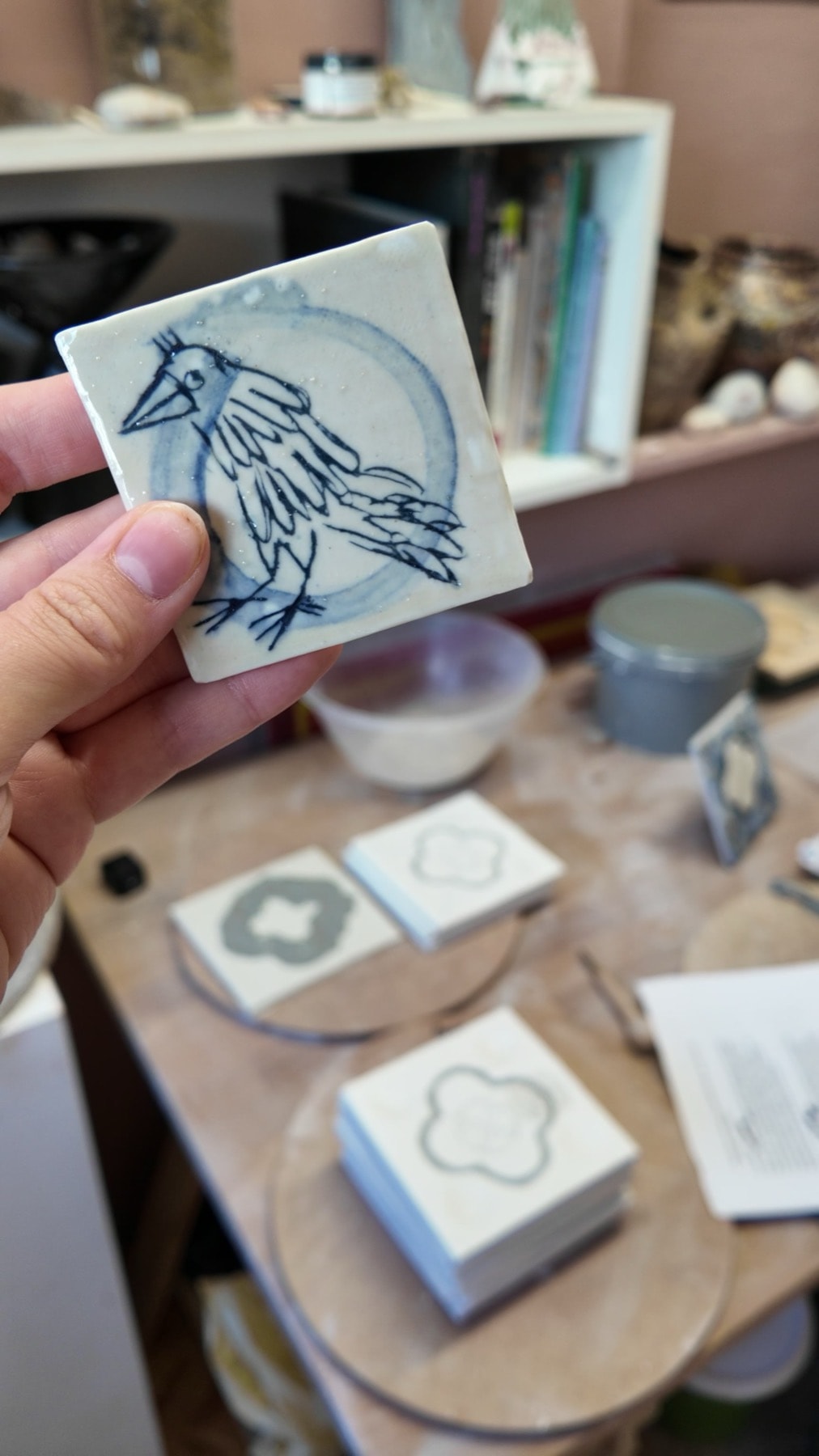
THE CURIOUS ROOK
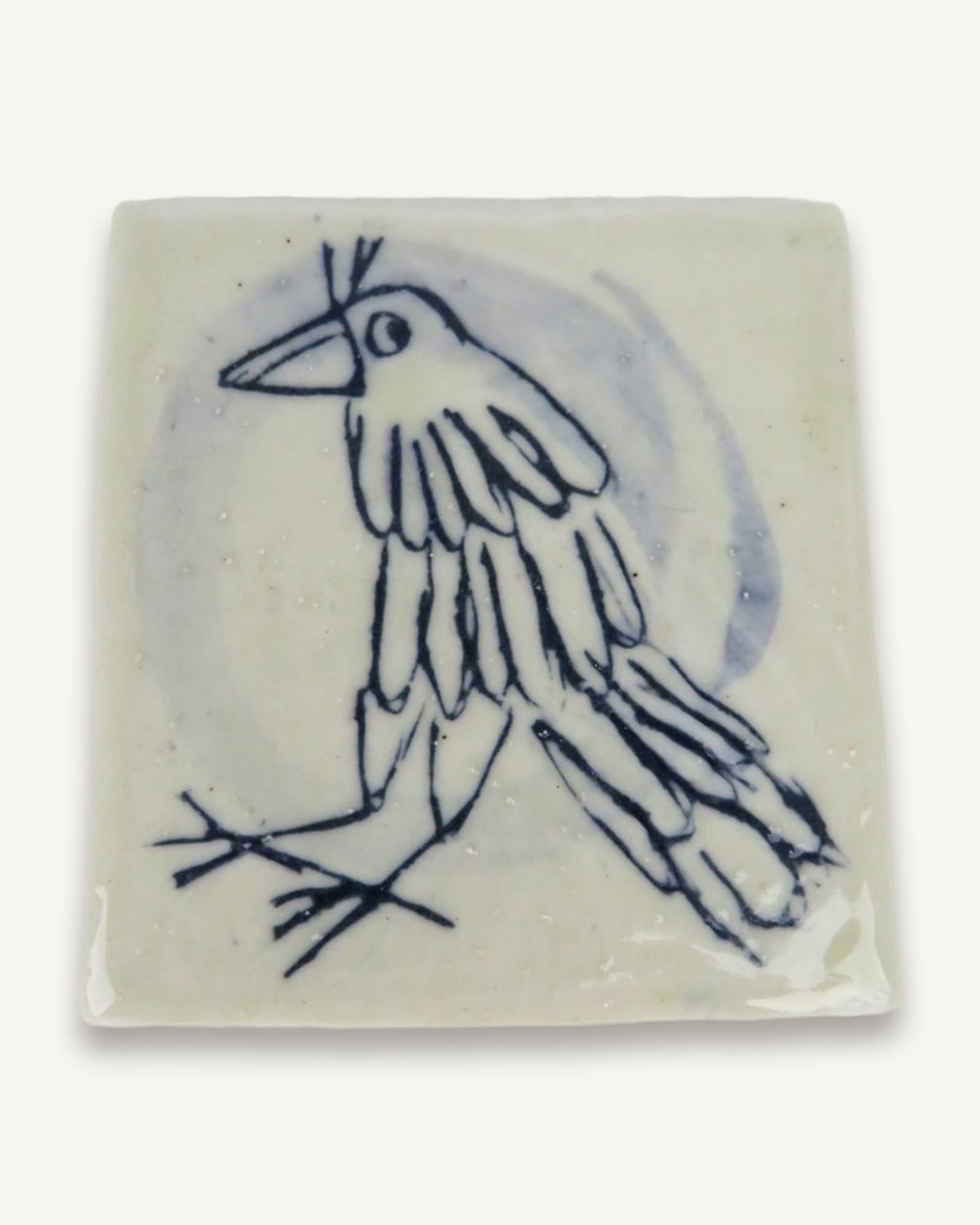
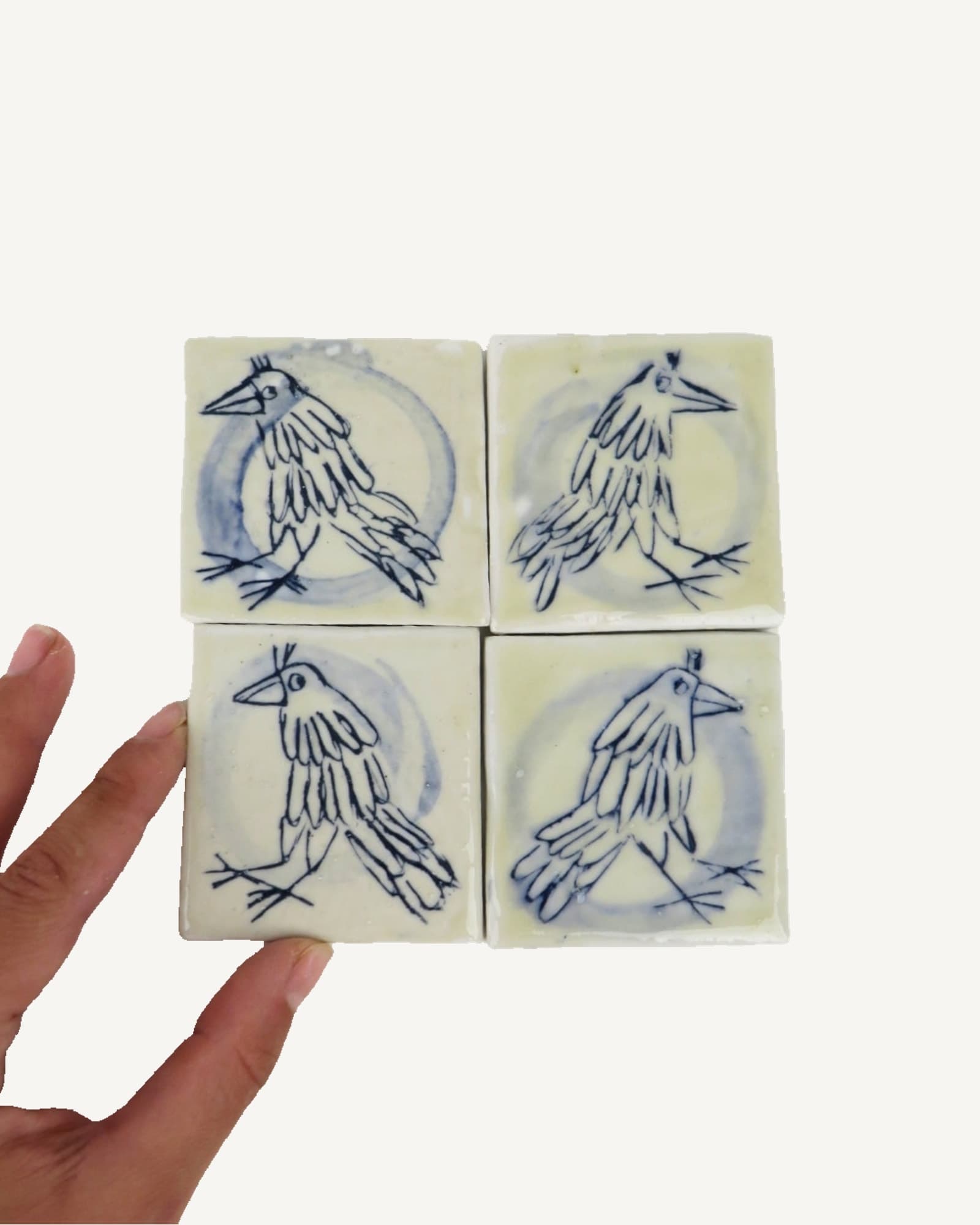
She also makes very small tiles that she calls her curious creatures, and these sell the fastest. The rook came from a beach in County Meath, where rooks were walking about among the visitors while she sat and drew them: "They were almost side-eyeing me, like, why is she sketching us?" Brân, in the name of her business, is Welsh for crow. The dragon is taken from a carving at the Hill of Slane, where St Patrick is said to have lit a fire in defiance of the High King, and she thought it looked "quite an endearing gargoyle".
IS ENCAUSTIC TILE MAKING ENDANGERED?
Heritage Crafts added encaustic tile making to its Red List as critically endangered in 2023, and it remains critically endangered in the 2025 edition. It records between one and five people making their main living from the craft, all of them skilled makers at a single firm, Craven Dunnill Jackfield in Shropshire, along with one apprentice there and between one and five artisans who make encaustic tiles as a side income. None of the places where it lists the craft being practised is in Wales. Among the problems it names are the lack of apprenticeships in ceramics and the rising price of oxides such as cobalt, which Bethan's blue depends on, as demand for electric vehicle batteries has grown.
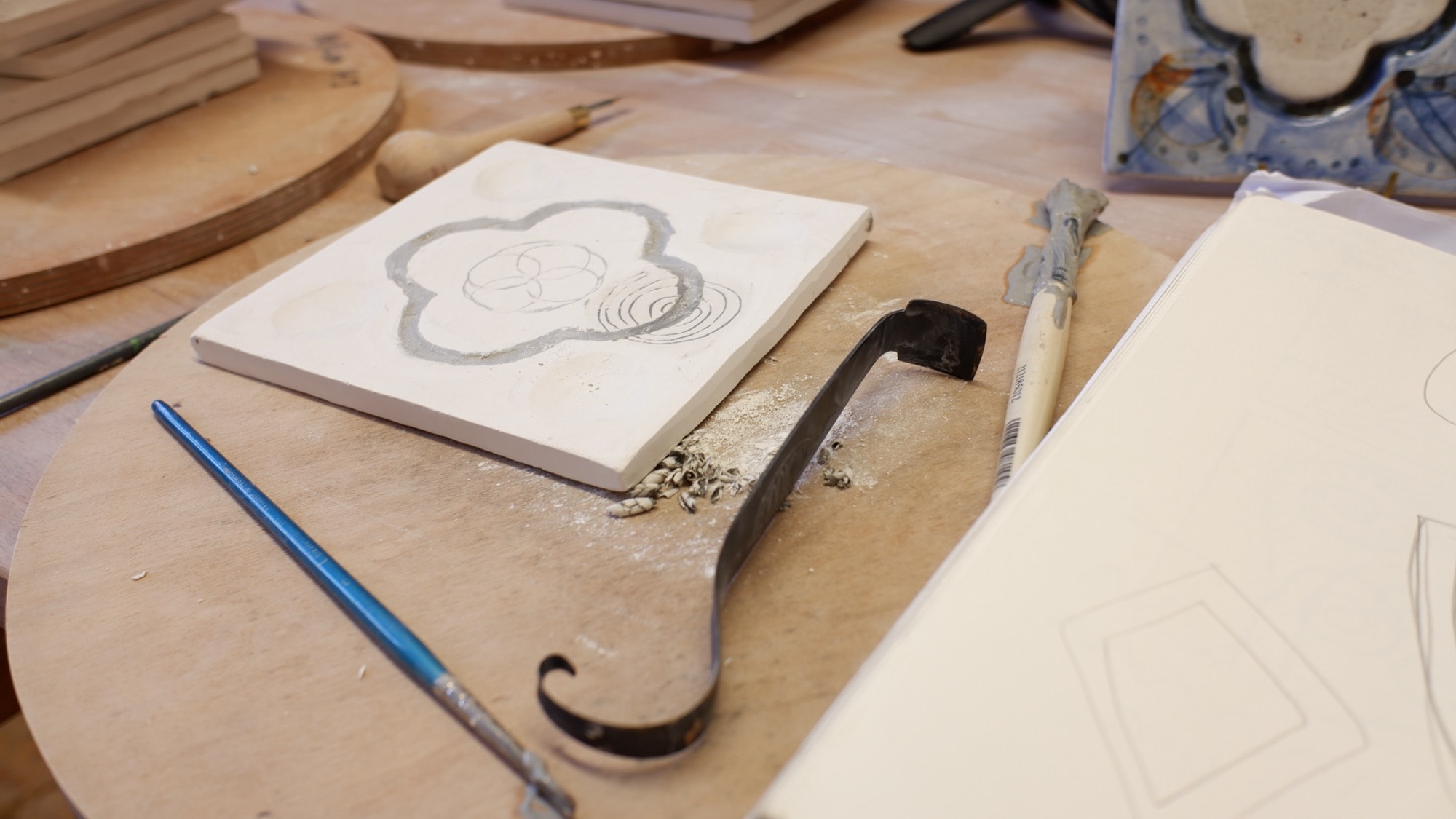
The same entry notes that medieval tilers carved their stamps from woods that would not split or warp, such as cherry, lime or beech, and says it knows of no one routinely making them today. That is the skill Bethan has started teaching herself. She also teaches at Fireworks, in Welsh or English, and she has put the craft forward for the UK's new inventory of living heritage, which began after the UK joined the UNESCO convention in 2024.
She would like to see her tiles used, whether on a kitchen wall, round a fireplace or on a small stand on a shelf, and some of hers have decorated backs so that they can be displayed standing up. "Whoever wants to own one of my tiles can have the freedom to choose how to display it," she says. Next she wants to carve more complex stamps, which she expects to go on learning for a long time: "It's not something that I've reached the end of." You can see more of her work, and ask about a commission, on her maker page.
Pictures: photographs and film stills taken by The Haud at Bethan's studio on 20 September 2026. Red List status, practitioner numbers and history from Heritage Crafts, Red List of Endangered Crafts, 2025 edition, and its encaustic tile making entry. Palace of Westminster figures from Adam Watrobski, "Encaustic Tiles at the Palace of Westminster", Building Conservation. Bryn Celli Ddu from Cadw. Collection figures from Amgueddfa Cymru.
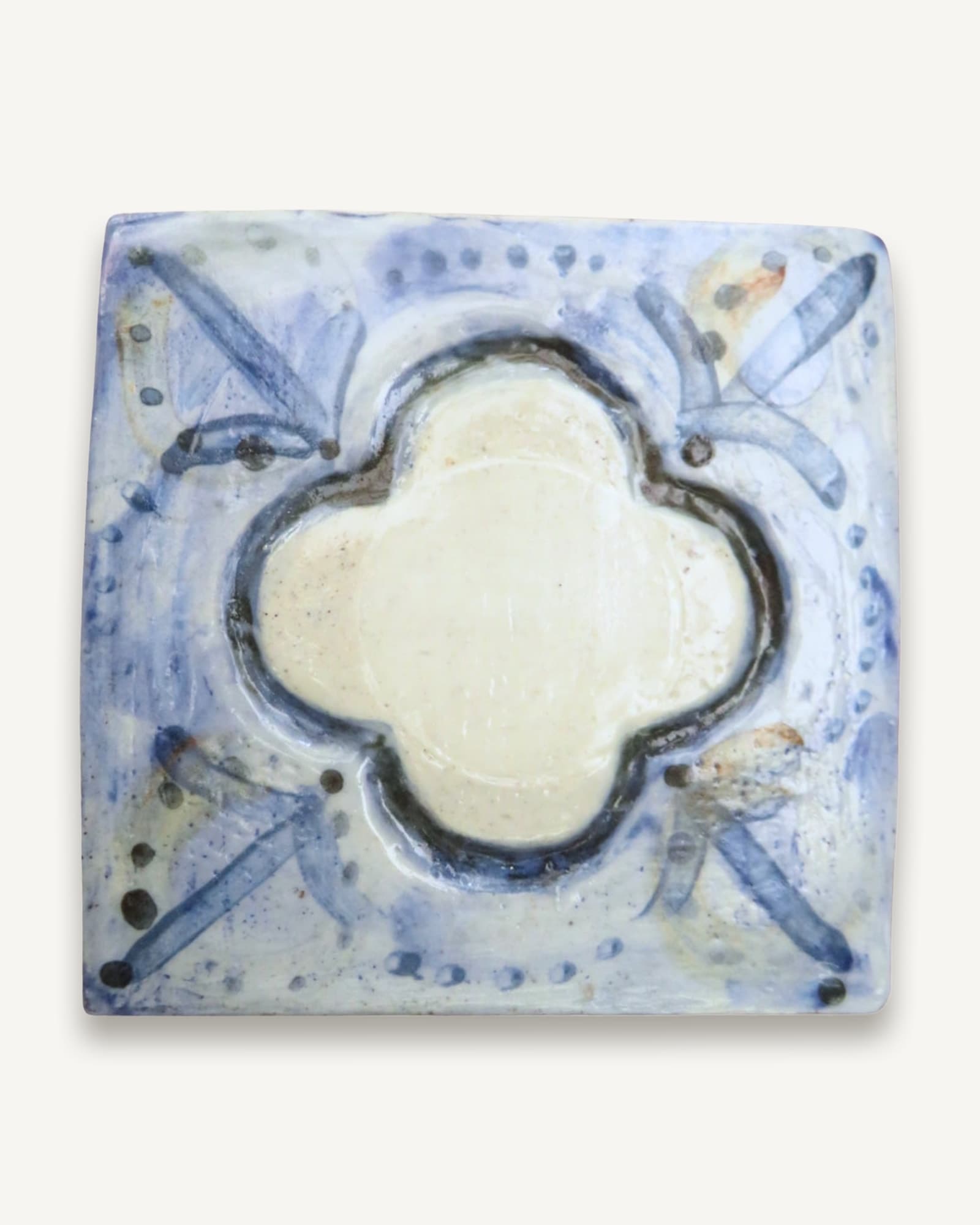
Pieces by Cerameg Traed Bran
More stories like this
One thoughtful email a month, not a marketing torrent. New makers, seasonal edits, and the stories behind the craft.
How we look after your details: privacy policy