

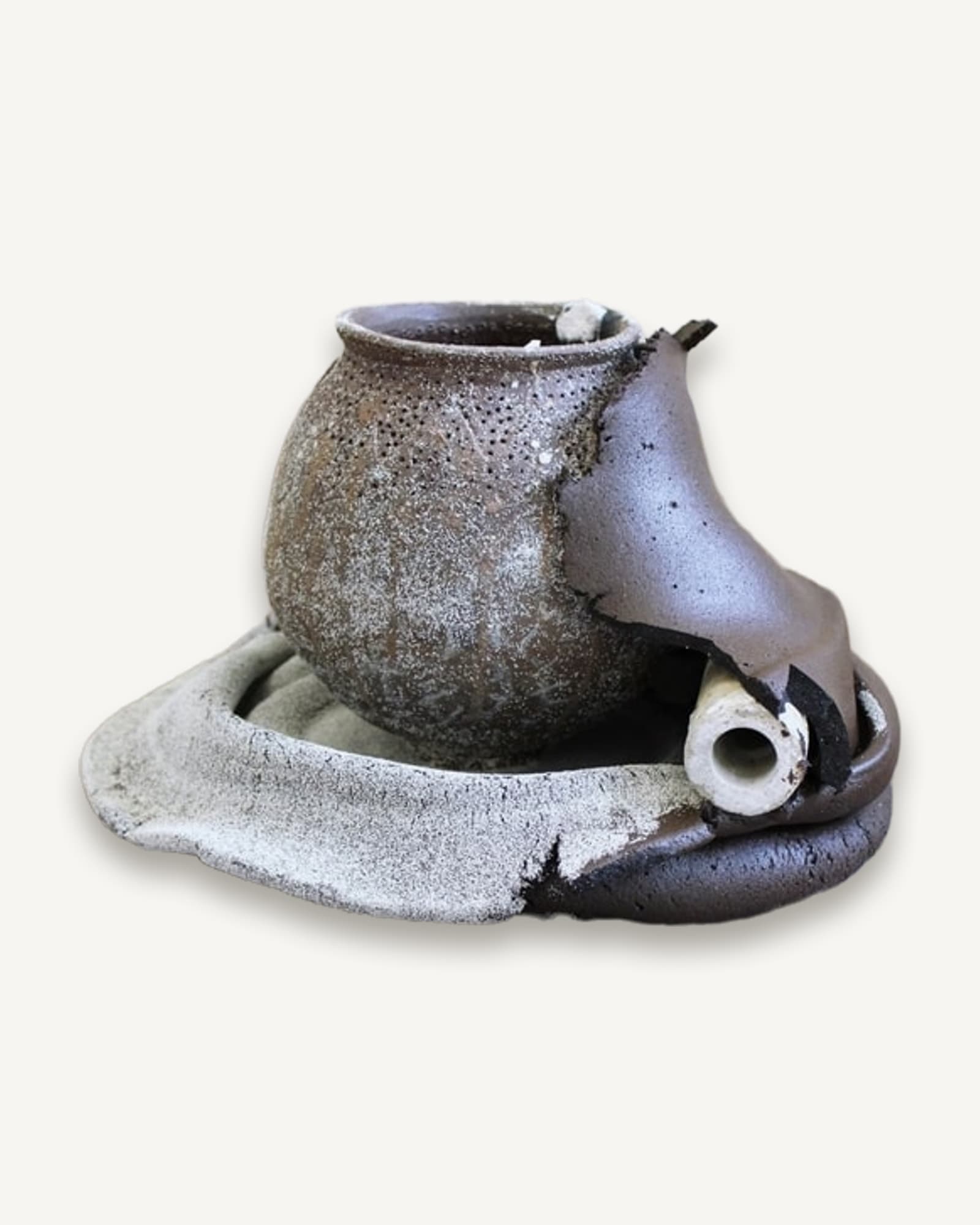
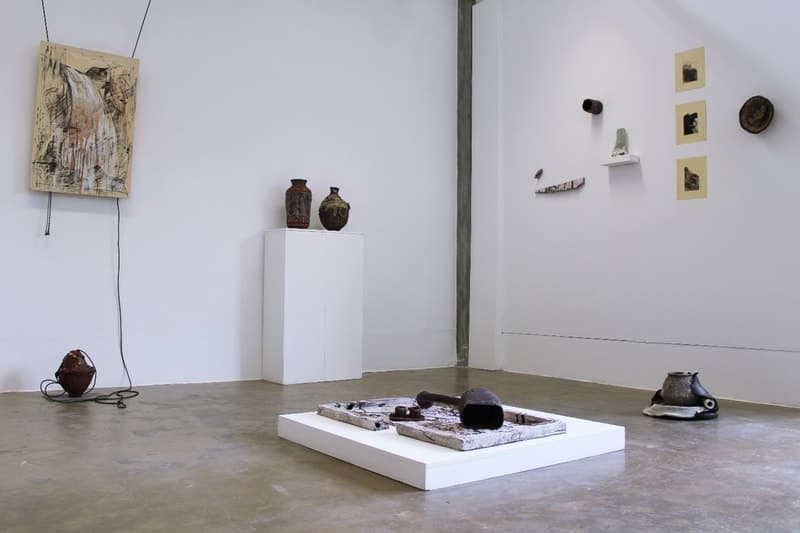
Bespoke commission
Soft launching for UK & US customers.

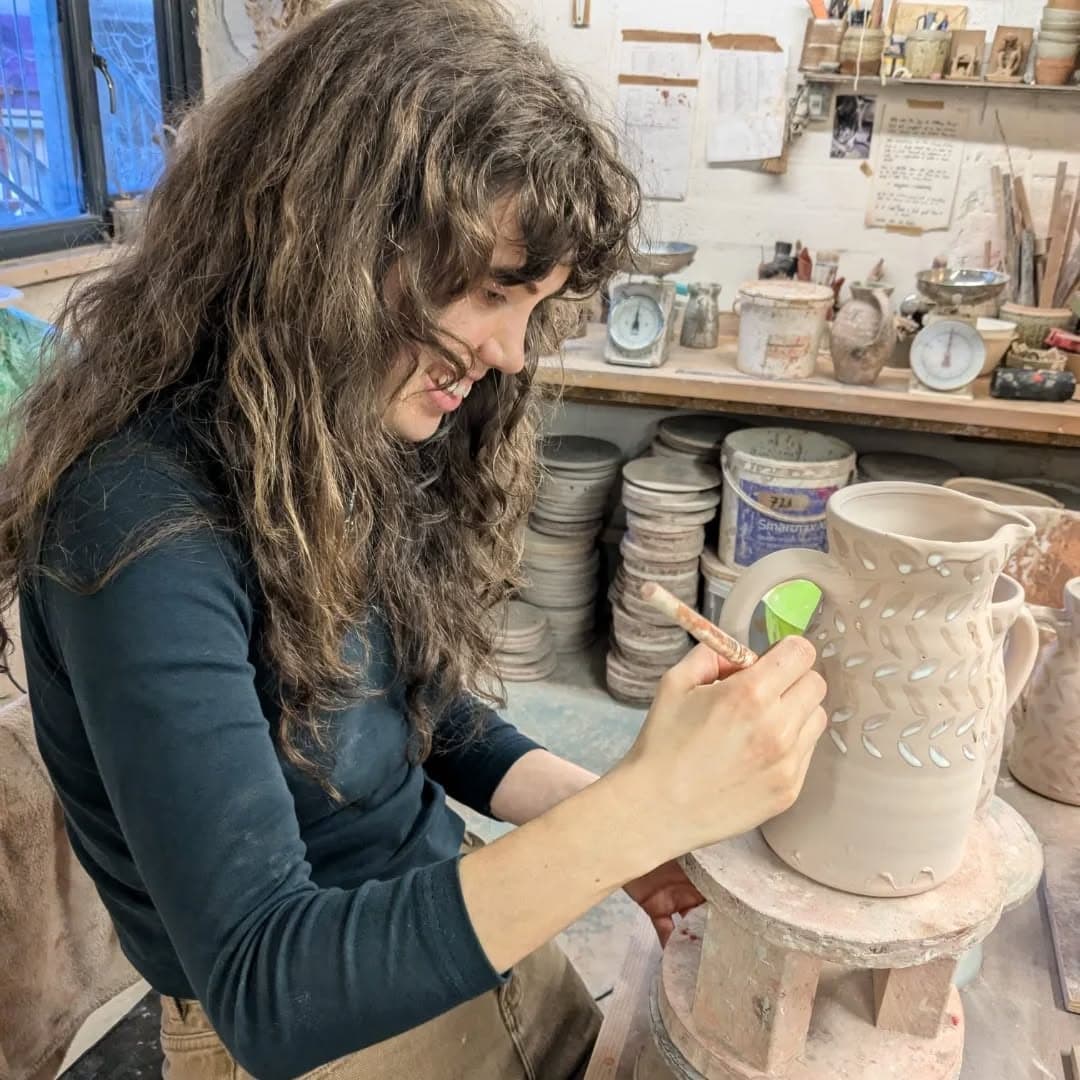
“My process is grounded in sustainability and slow craft, where learning is as important as the final piece.”
Bethan takes commissions and would rather work from her own designs than copy a picture you have found. Tell her the room, the occasion, or the words you want carried, and she will draw something out of her research to suit it. Design is the slow part and it is worth the conversation; once a design is settled the making takes about a fortnight.
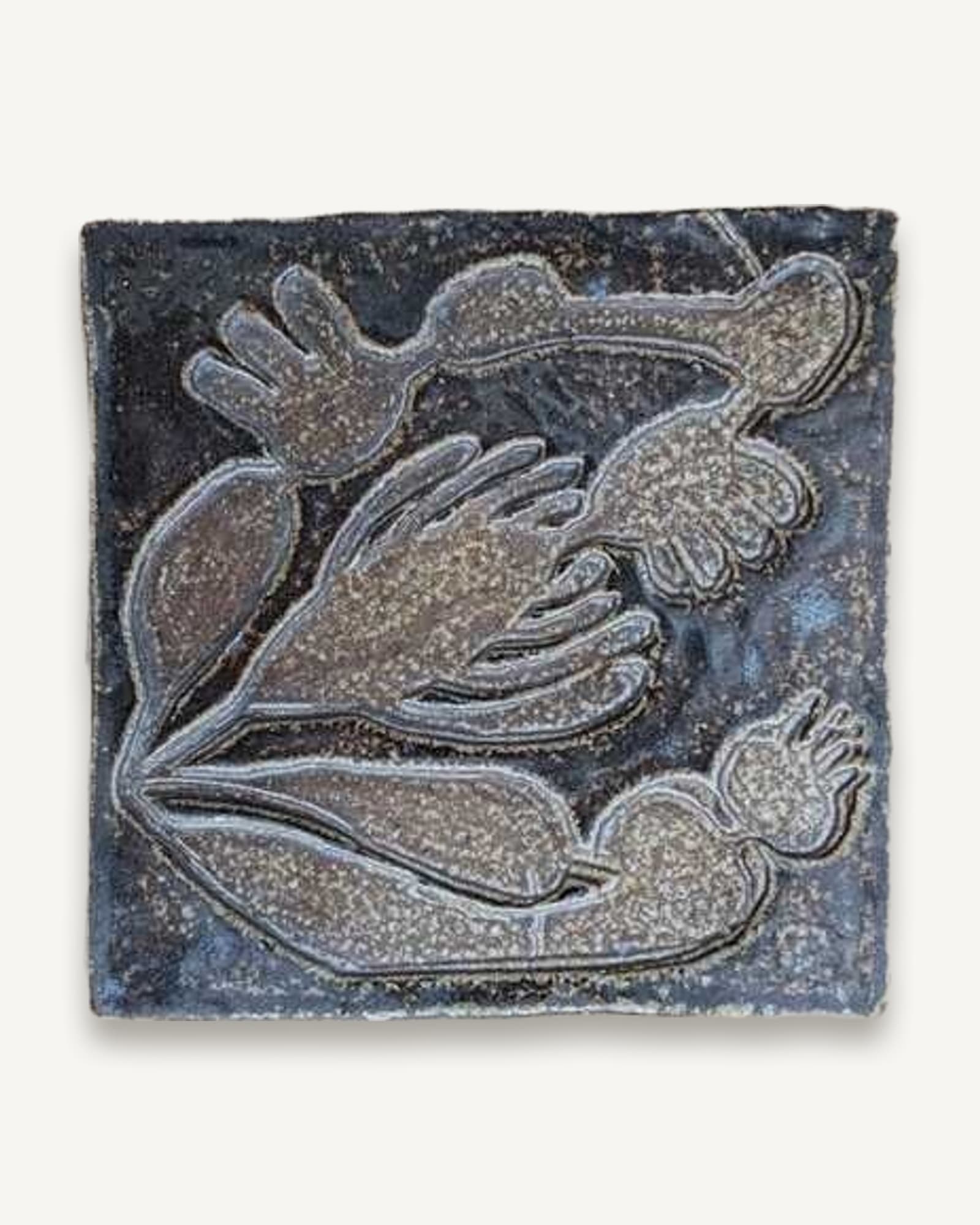
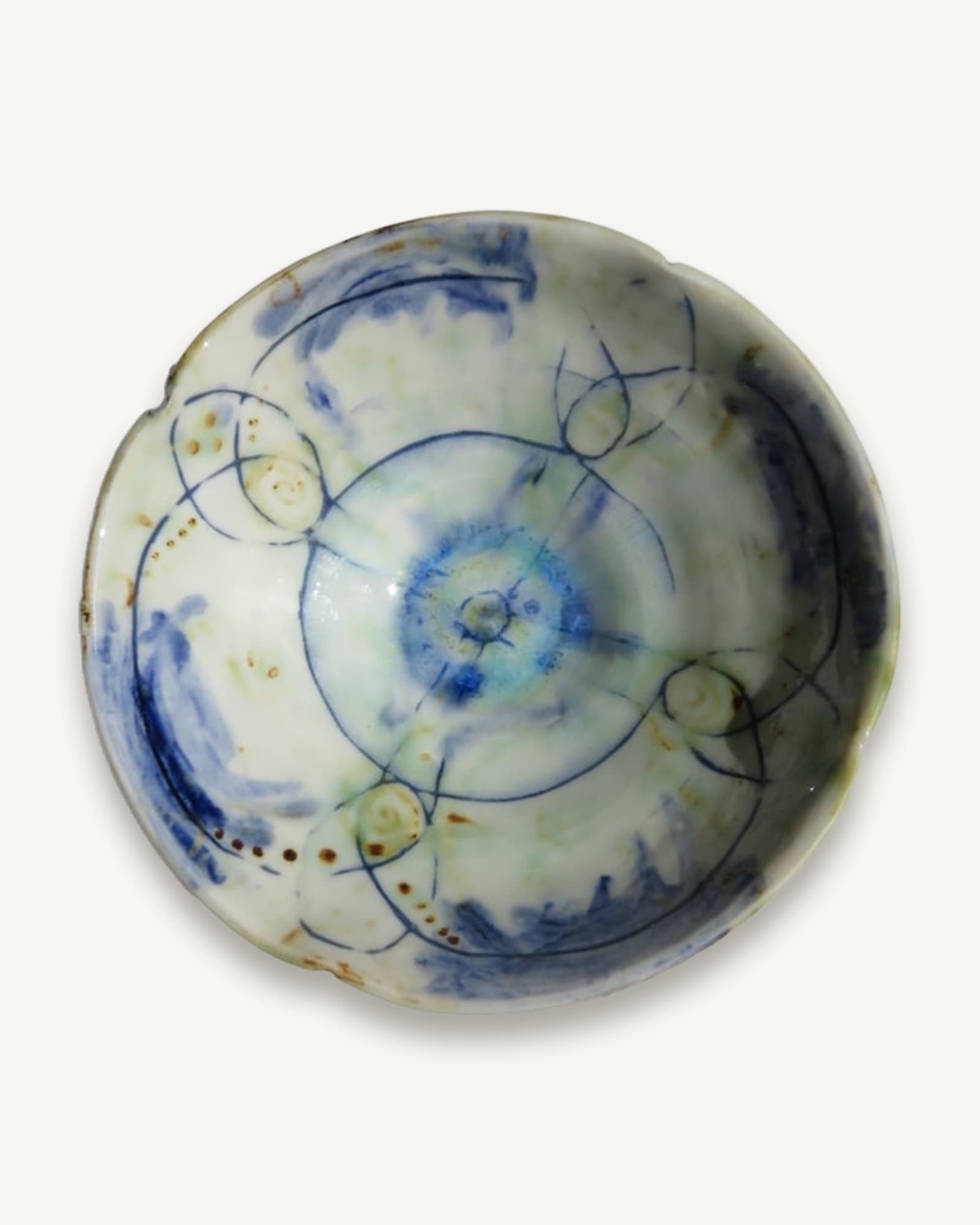
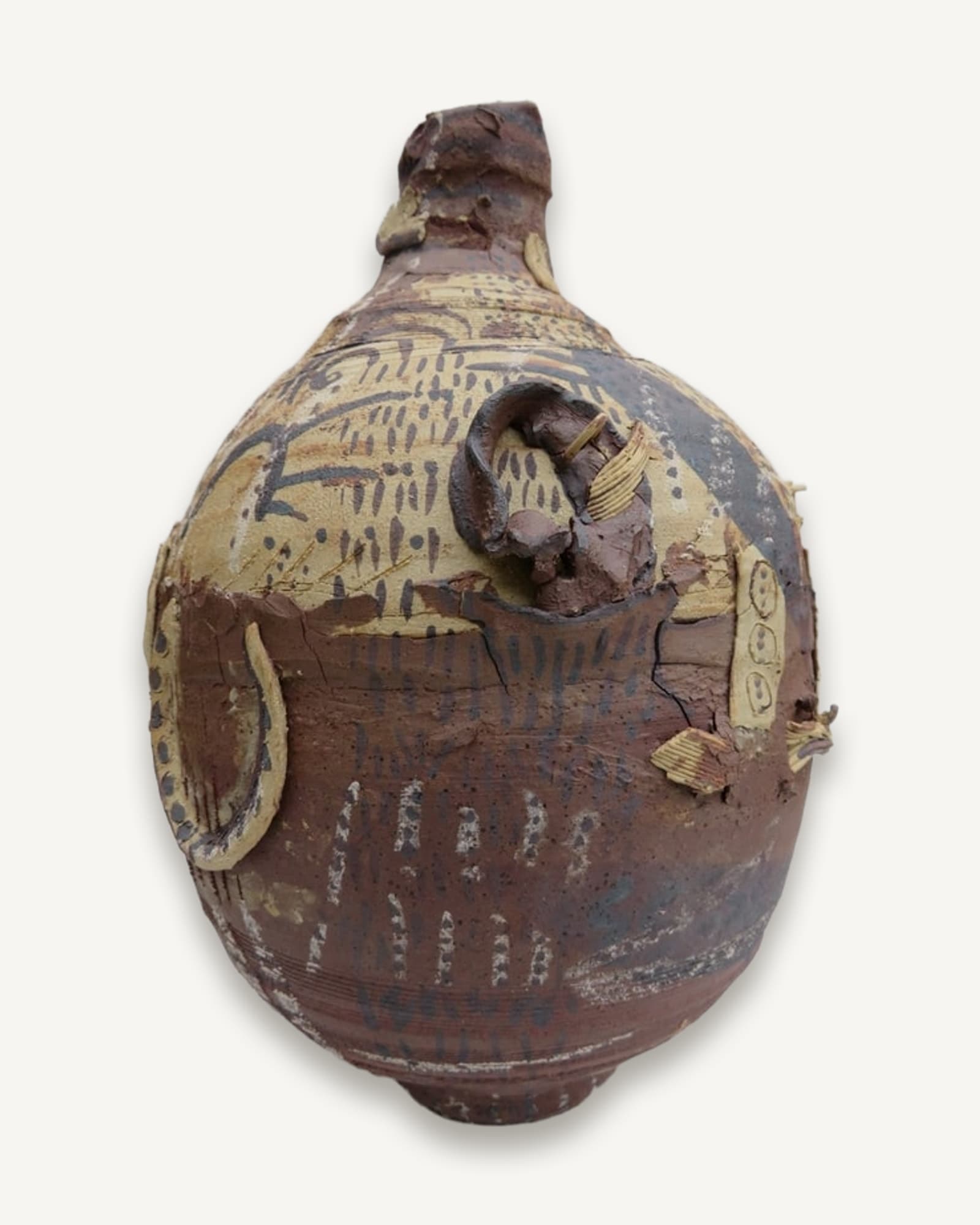
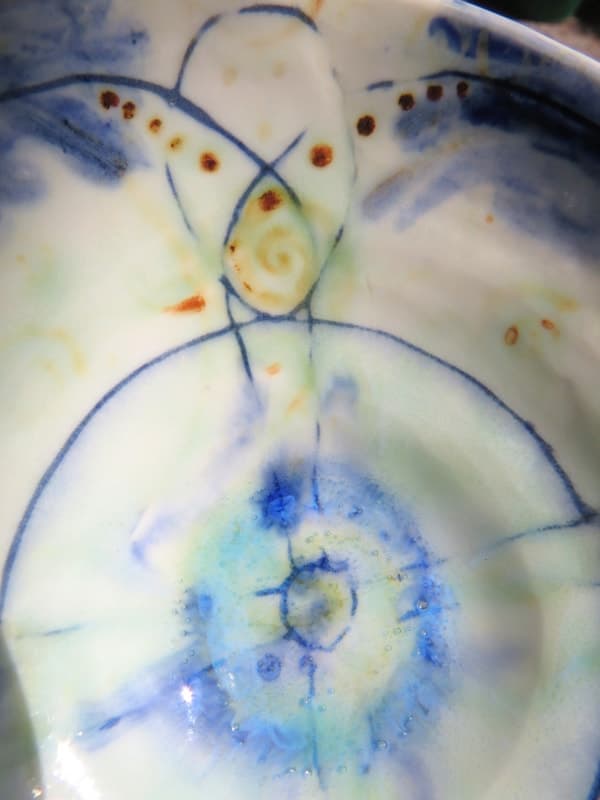
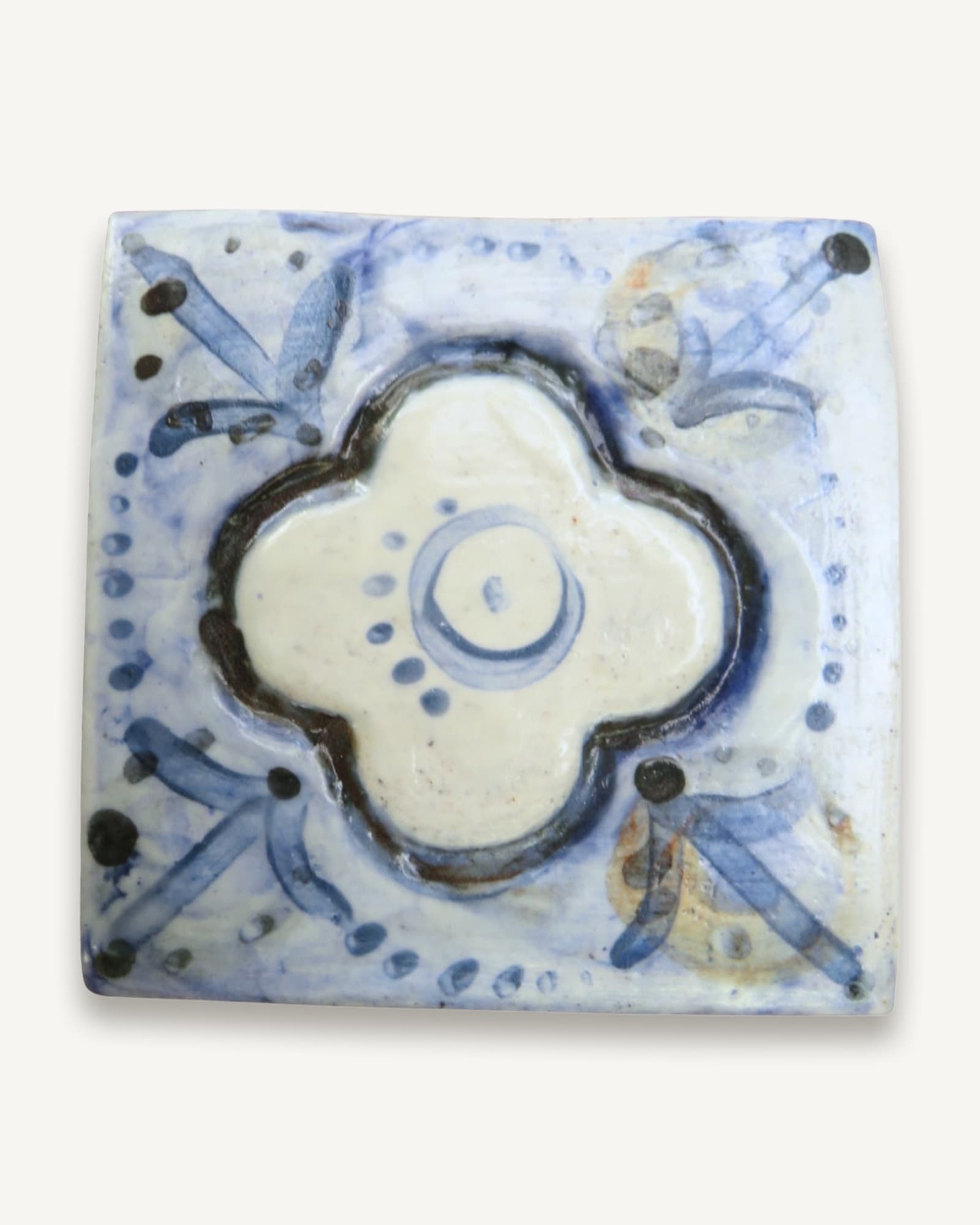
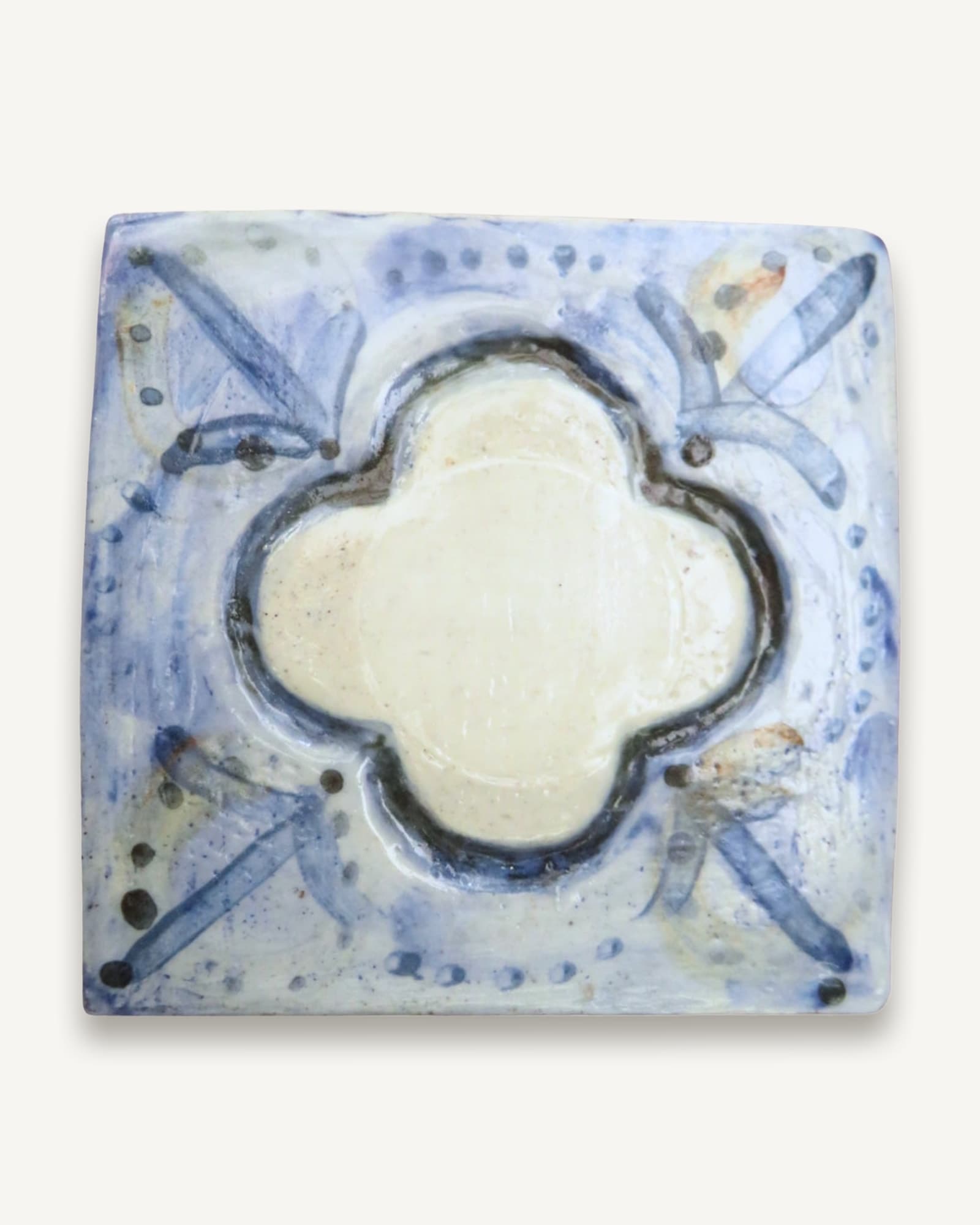
Bethan carves her design into a slab of clay while it is still leather-hard, then floods the carved lines with slip, a liquid clay she colours with cobalt. It dries. Then she scrapes the whole surface off. What is left in the lines is the pattern, and until the scraping is done she does not know whether she has it.
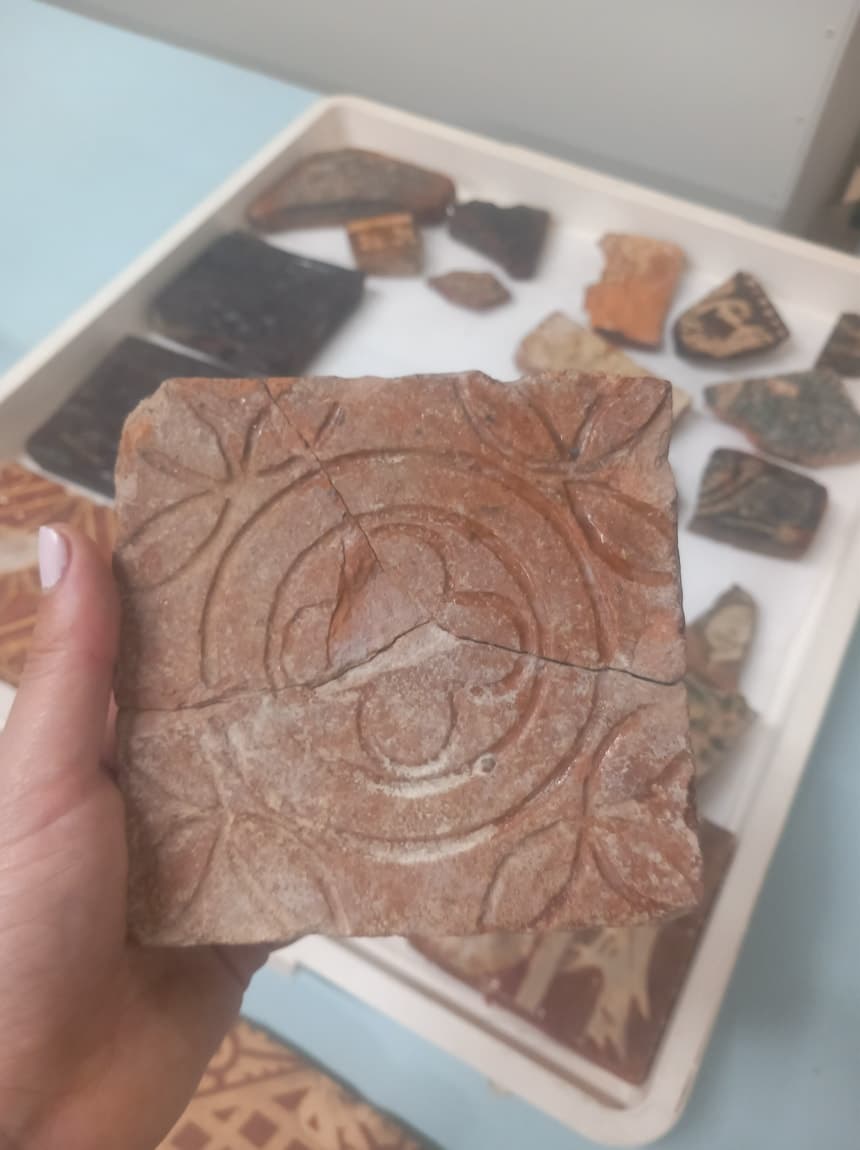
The technique is inlay and the tiles it makes are called encaustic. It is how the floors of medieval Welsh abbeys were laid, and Heritage Crafts now lists it as critically endangered. Bethan picked it deliberately. She has since put the craft forward for Wales's inventory of living heritage, the UNESCO register the UK started building in 2024, entered as Tiles Cerameg.
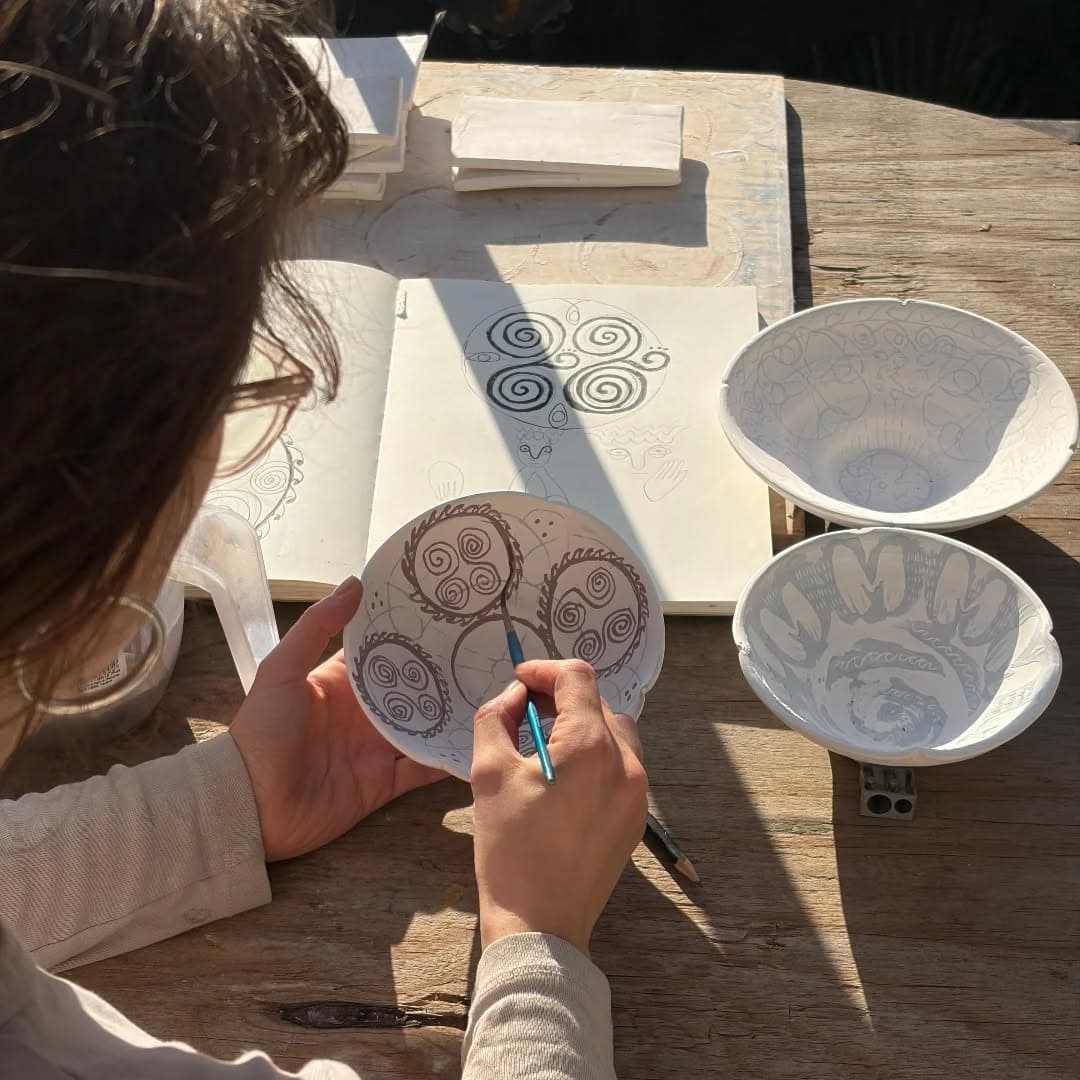
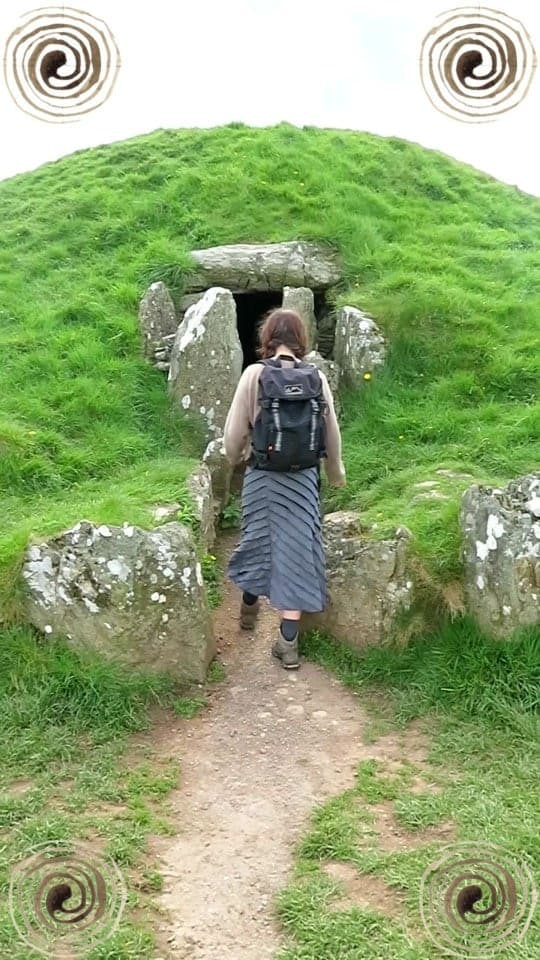
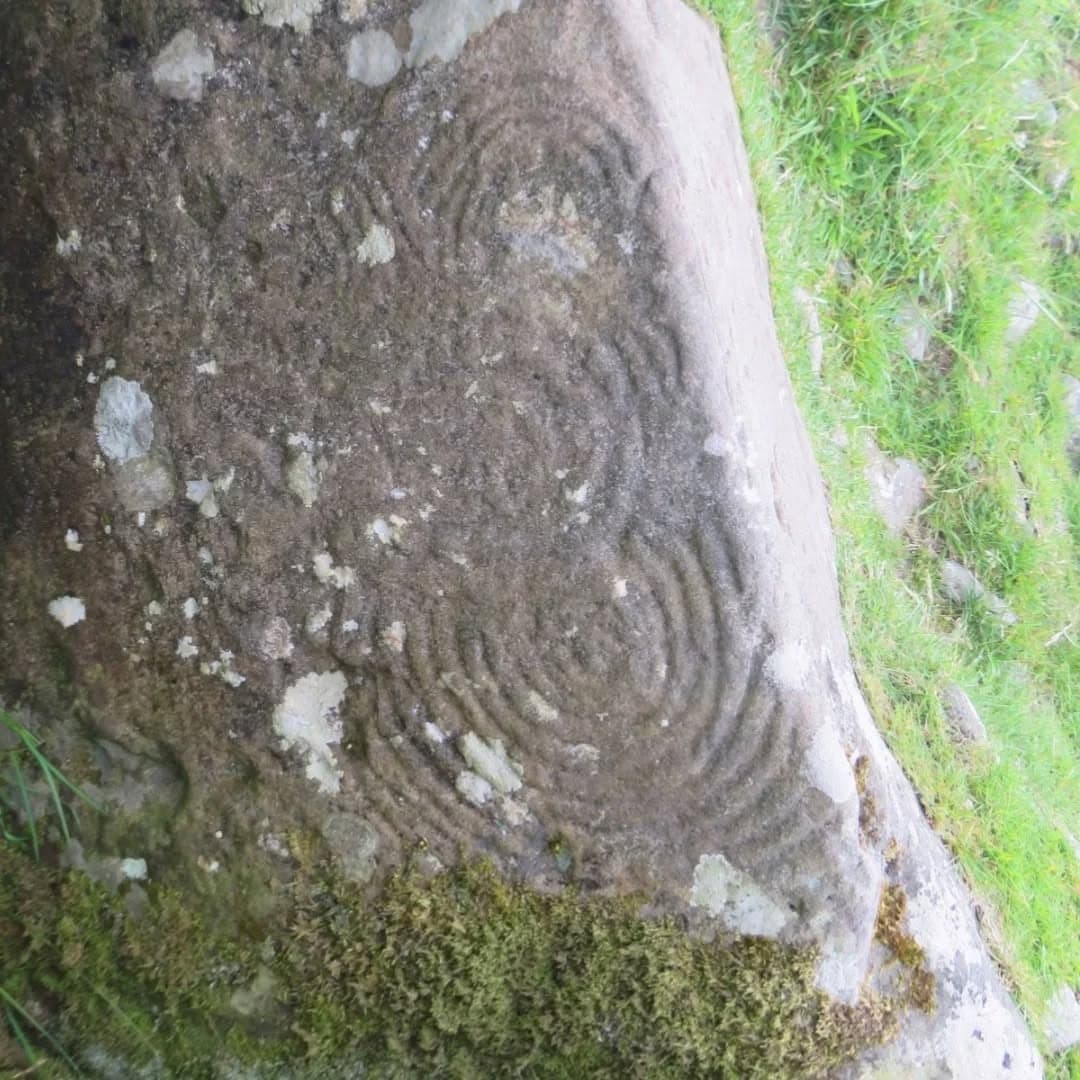
Design takes months; making takes a fortnight. She reads the journal articles, then goes to the archives and the sites: the medieval tile collection at Amgueddfa Cymru, the Neolithic chamber at Bryn Celli Ddu on Ynys Môn, cut so a beam of sun runs the length of it at the winter solstice. Neath Abbey keeps one of the largest collections of medieval floor tiles in Wales behind a locked door, and she has been in. Only then does she sketch.
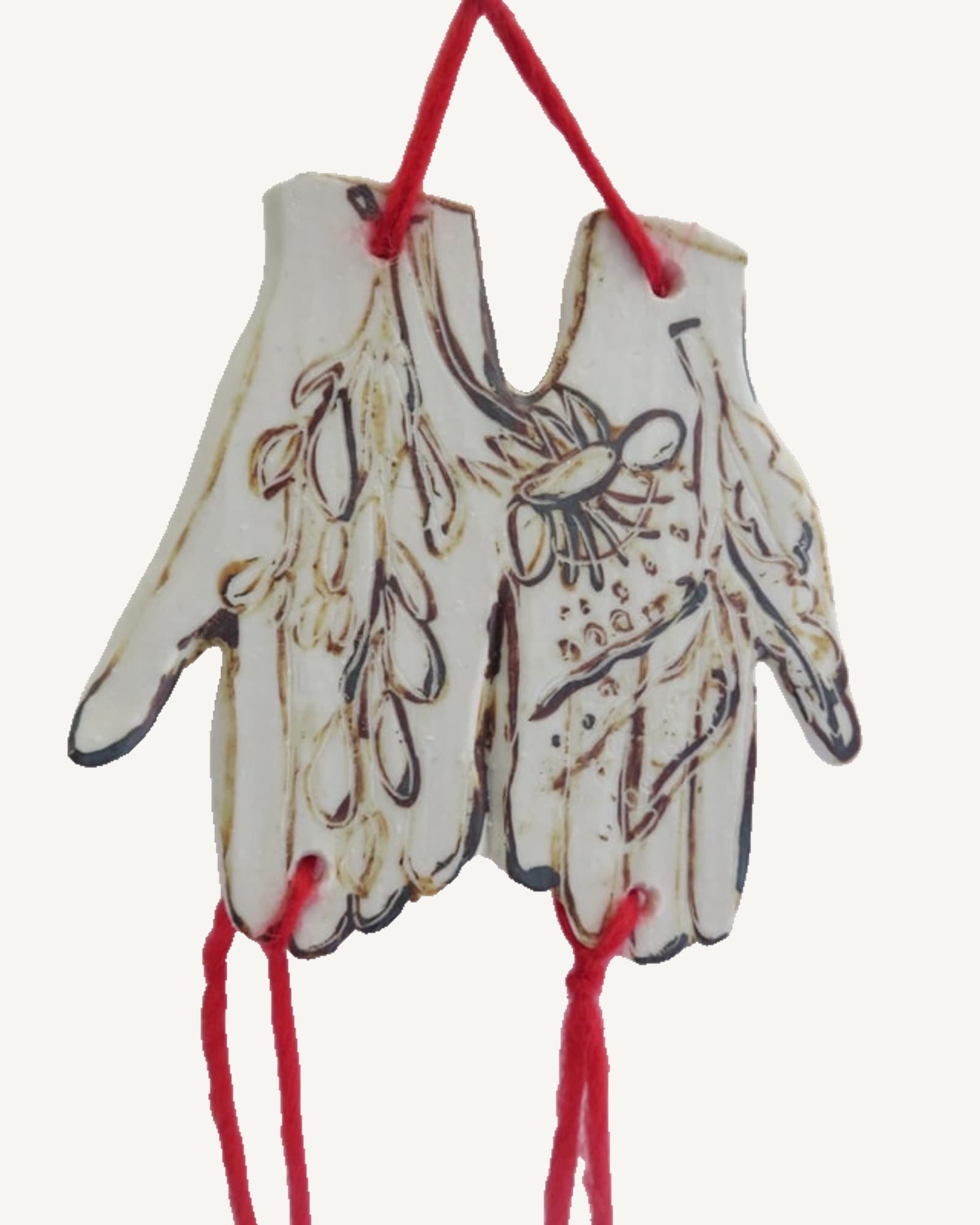
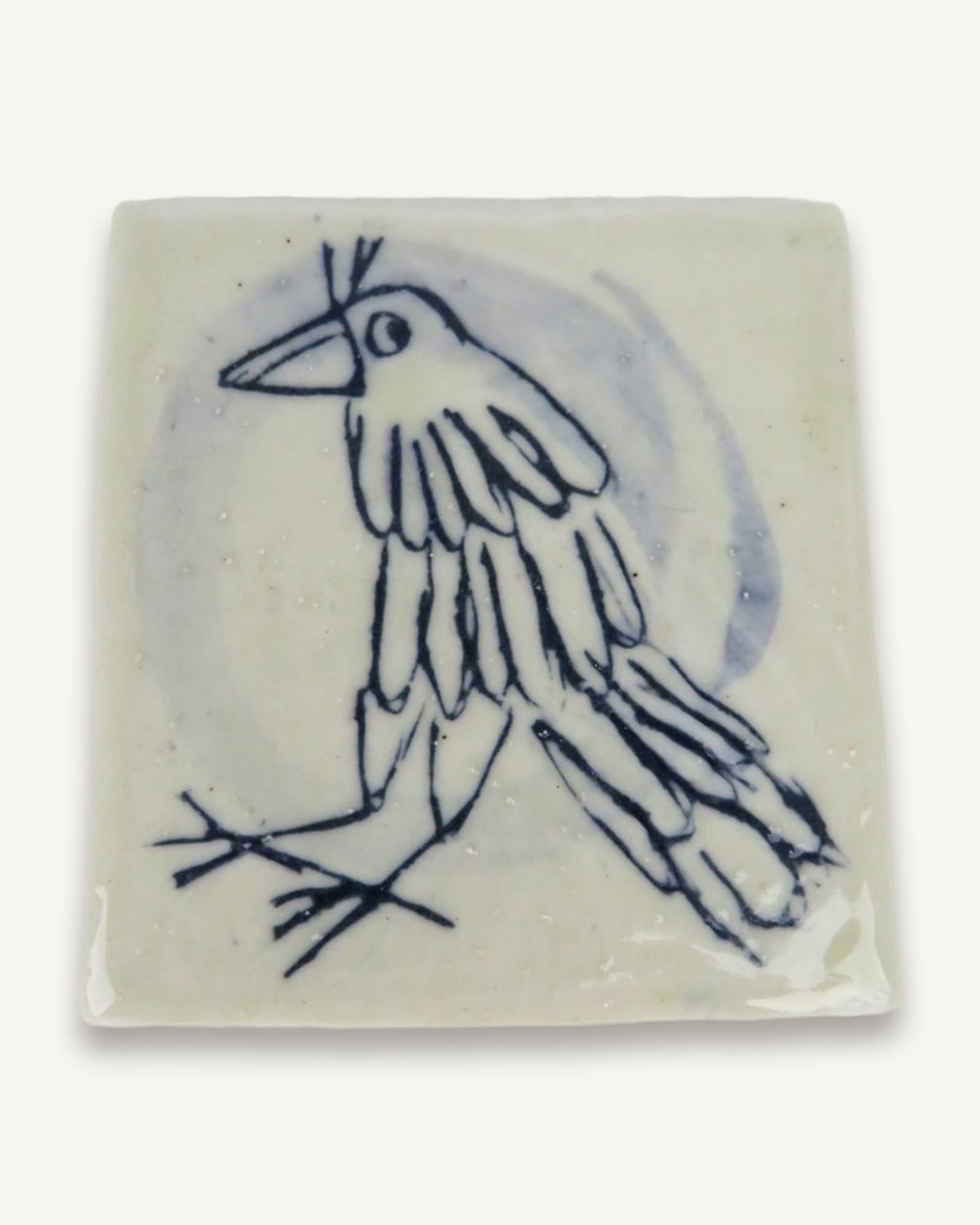
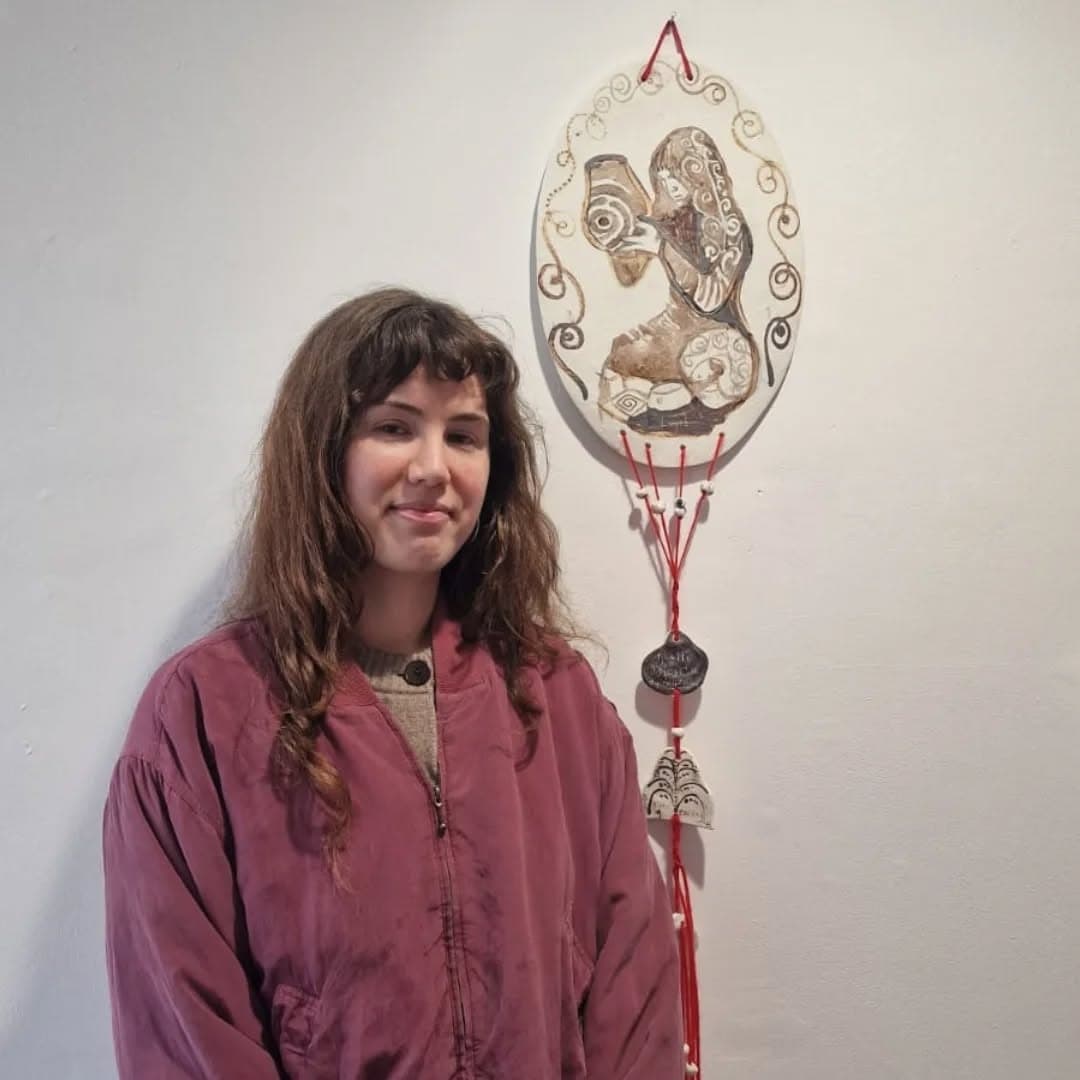
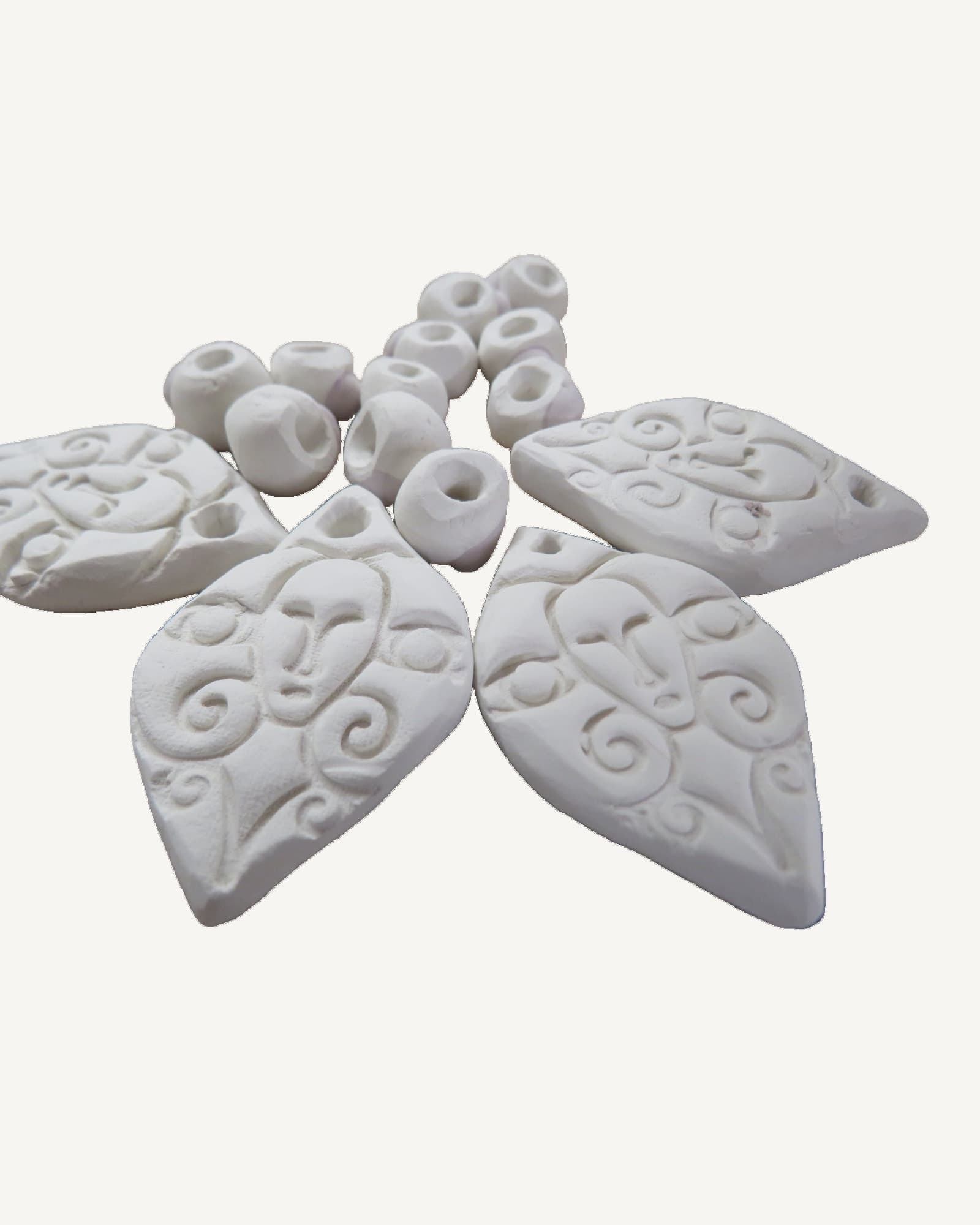
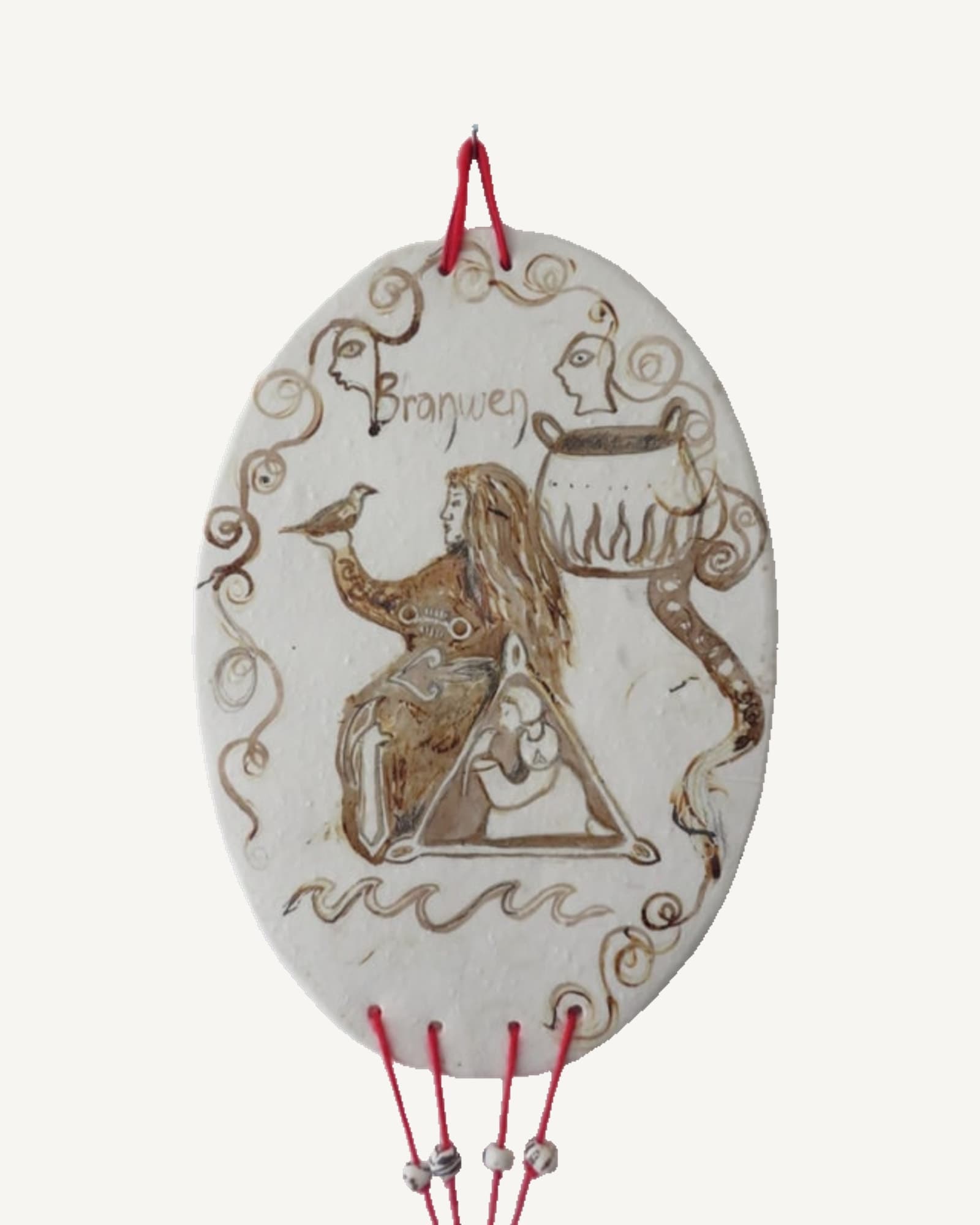
The work that sells is small. She made porcelain tiles stamped with Welsh idioms for the Christmas market at Pontcanna, spread her bet across six sayings, and the one people reached for was Dawnsio ar y Dibyn, dancing on the edge. Not the one she expected. The creature tiles came after, dragons and rooks taken from a gargoyle in Ireland and from the birds on her site visits. The charms are Blodeuwedd, the woman made of flowers in the Mabinogi. Bethan drew that stamp herself, and knots each charm onto cotton cord.
She works in Welsh, and the language is her subject as much as her medium. At an open day at Fireworks she put out a blank tile and a box of letter stamps and asked people to choose a word. Fifty-three of them decorated it, five-year-olds through to people in their seventies, learners alongside first-language speakers. Working in Welsh is also what got her asked to teach Jonathan Davies and Nigel Owens to make a clay trophy on camera. She teaches at the studio too, in either language.
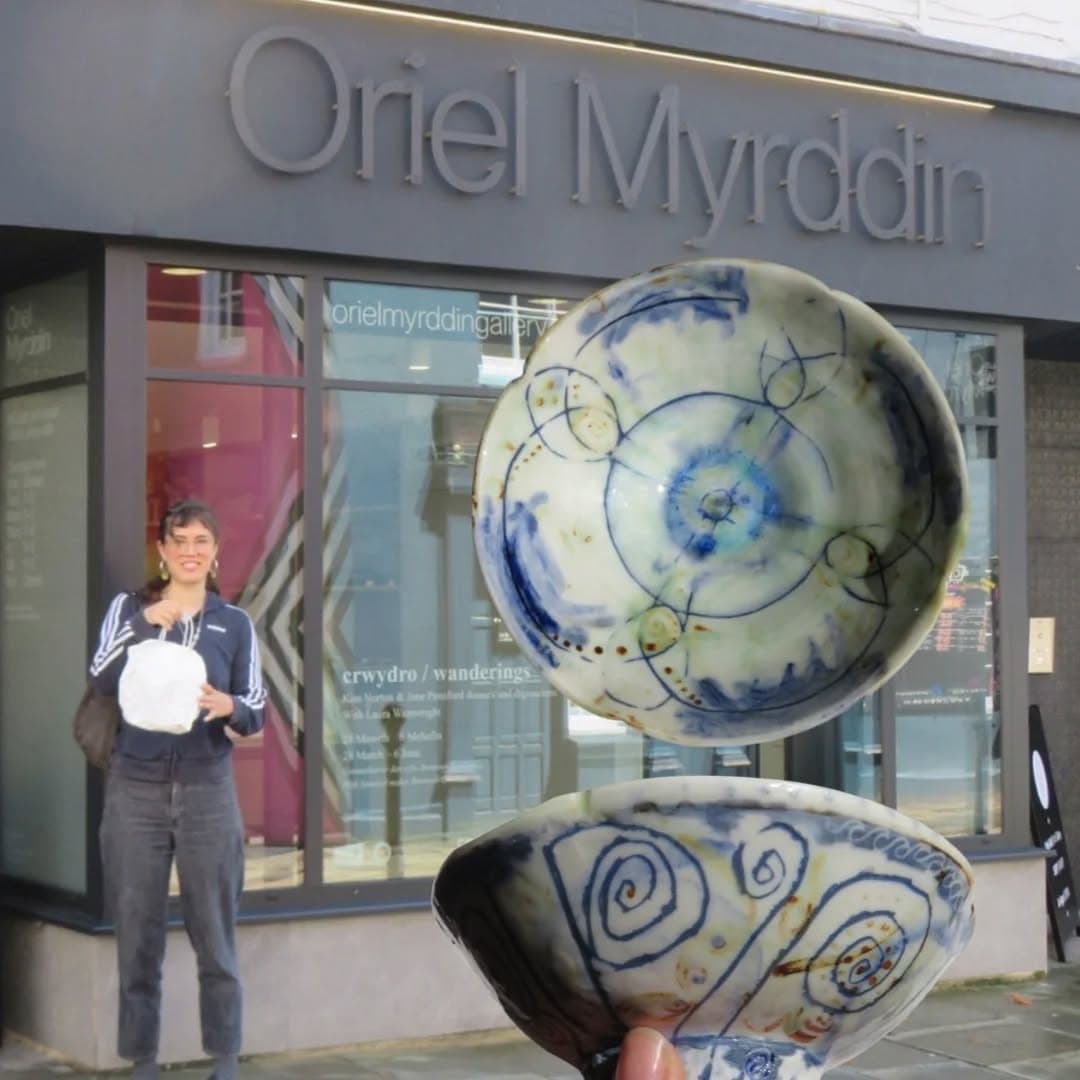
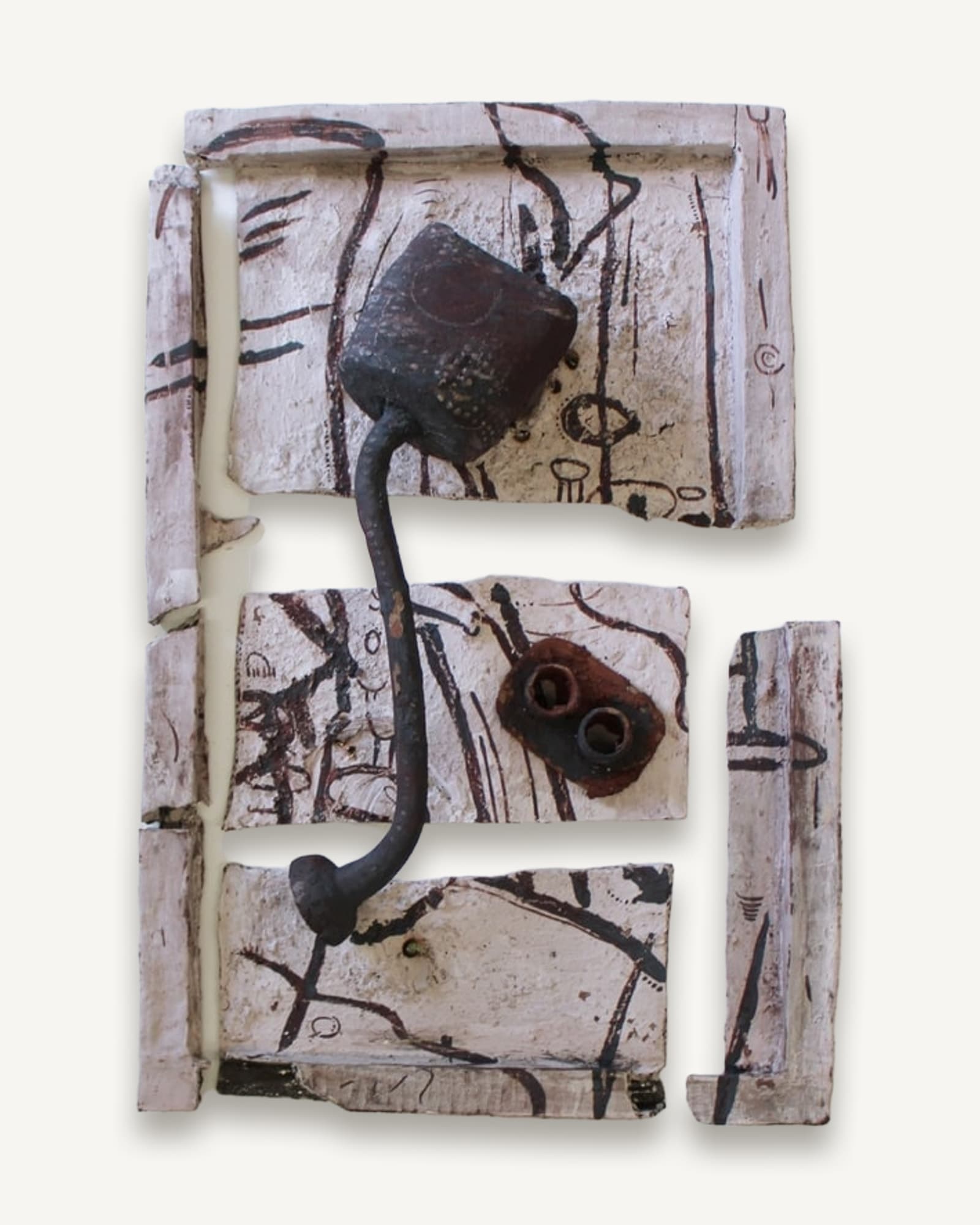
Bethan took a first and then an MA with distinction in ceramics at Cardiff Metropolitan University, and showed five wall pieces in porcelain and Welsh wool at Galeri Caernarfon as Merched y Mabinogi.
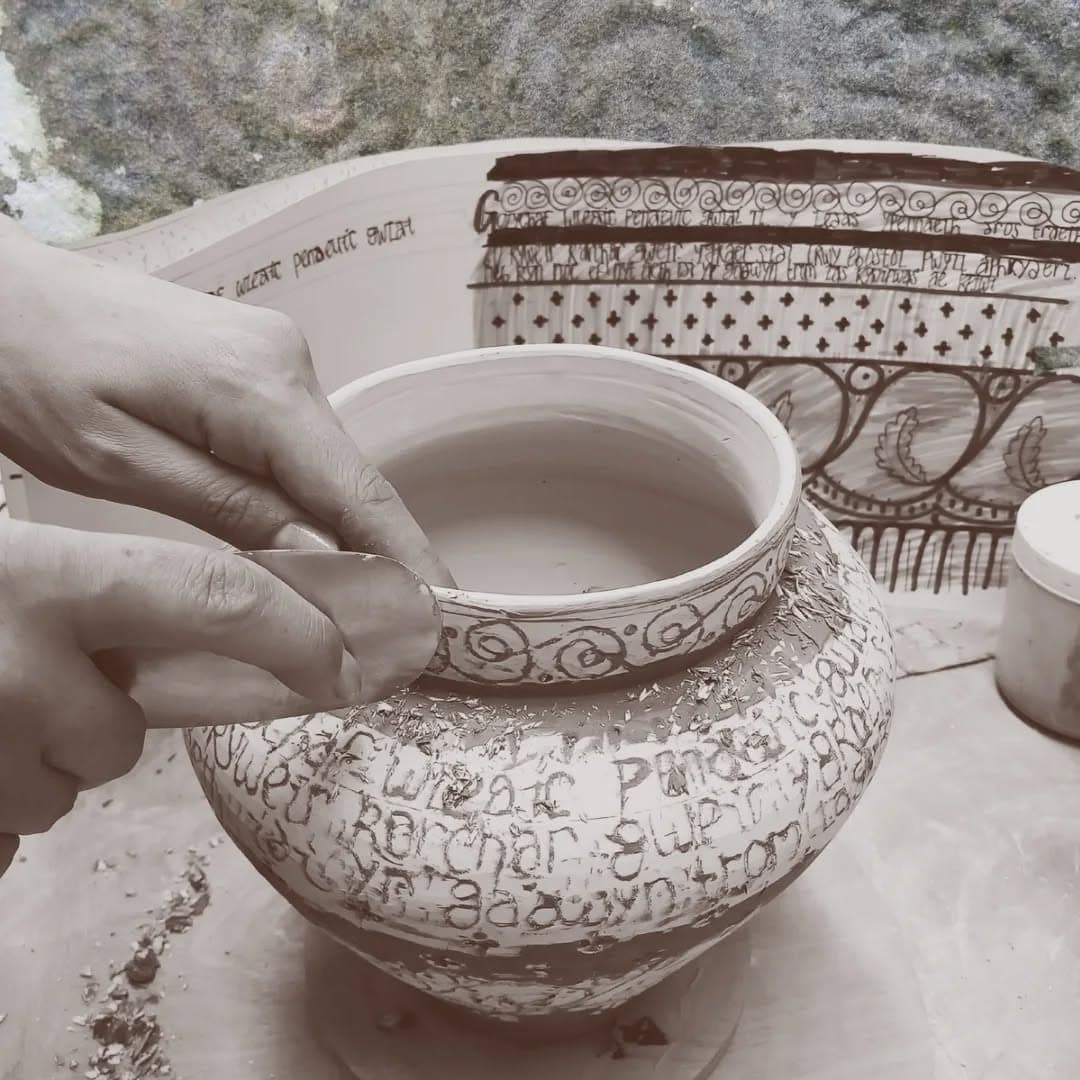
Bethan fell for the throwing room at Cardiff Metropolitan University and stayed for a first in Artist Designer: Maker, then an MA in Ceramics taken with distinction. She spent the year after that working out of communal studios and friends' spaces before taking a room of her own at Fireworks Clay Studios in Cardiff.
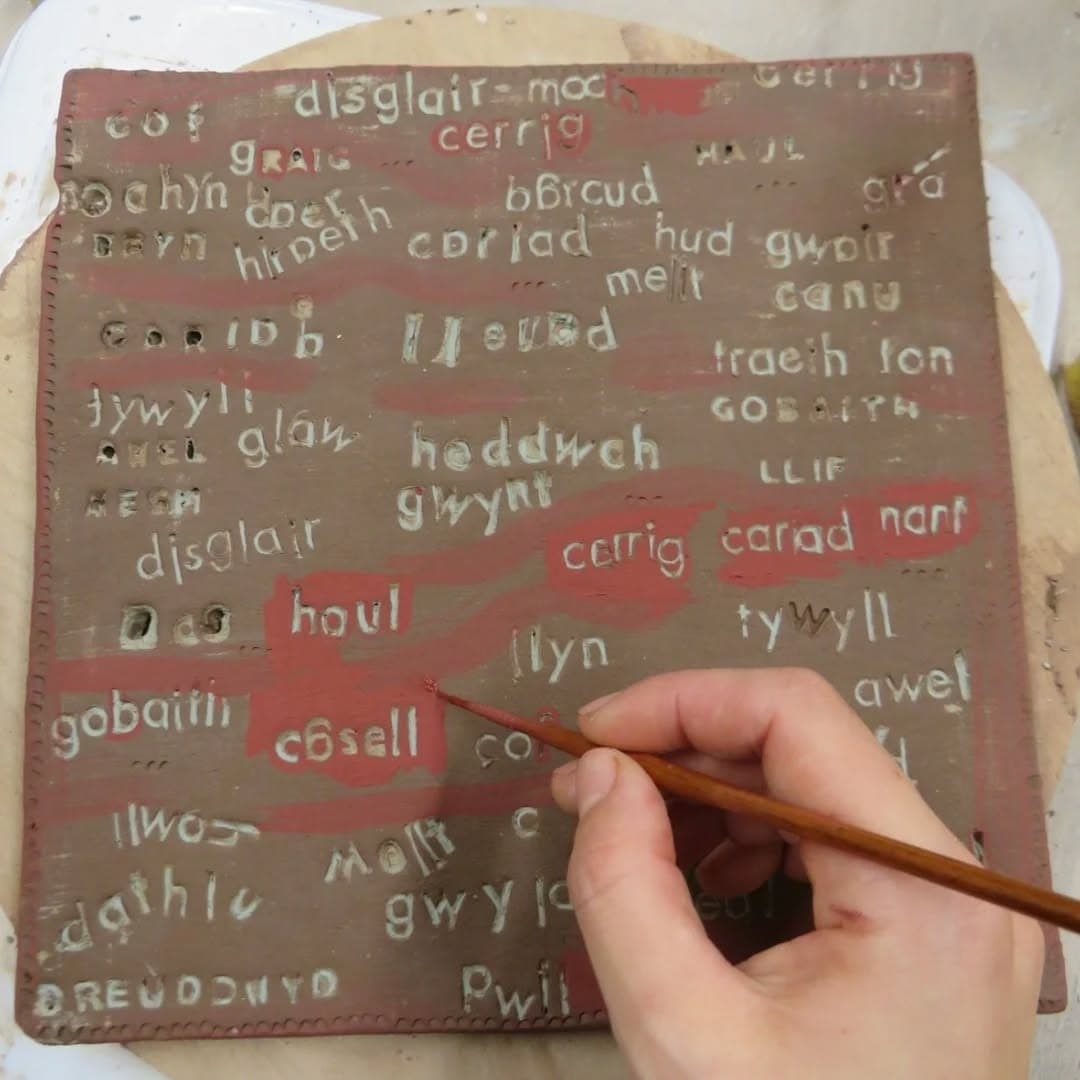
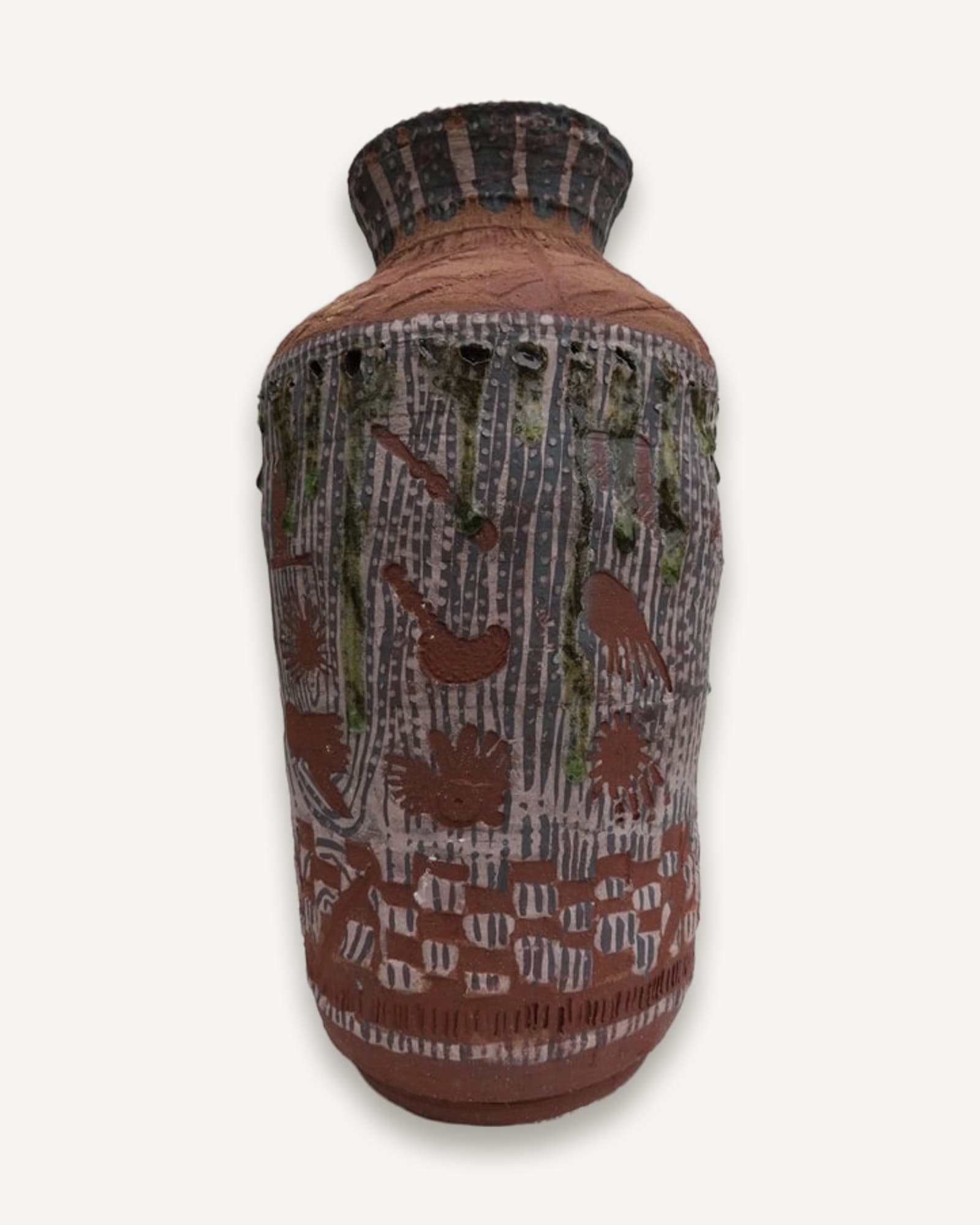
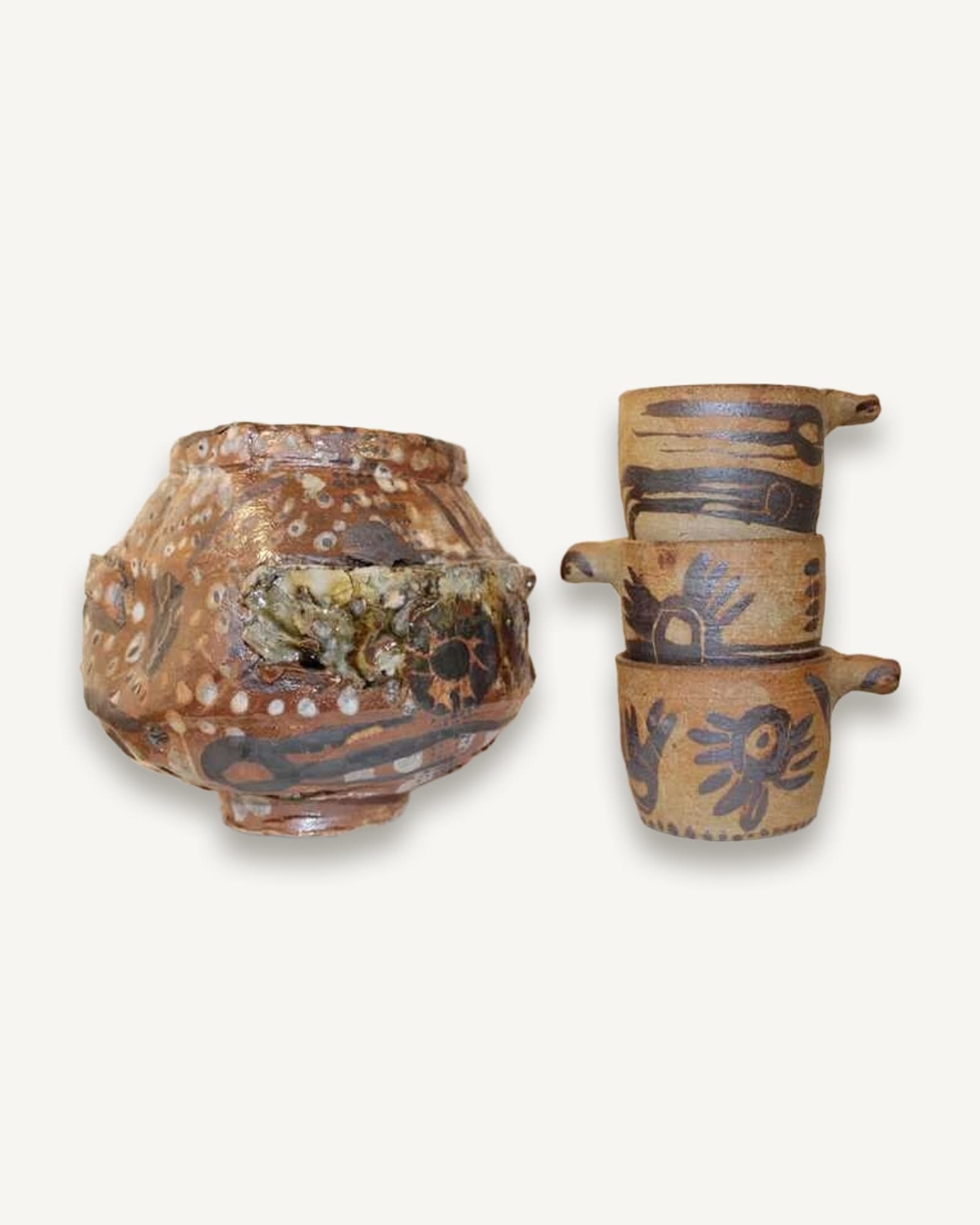
Porcelain and stoneware, with inlay slip mixed from china clay, ball clay and cobalt. A tile is slab-rolled, stamped or carved at leather-hard, filled, dried, scraped back, bisque fired across two days and then fired to 1250°C, with three more days to cool. Her stamps are laser-cut wood and 3D print; she is teaching herself to carve them in wood by hand.