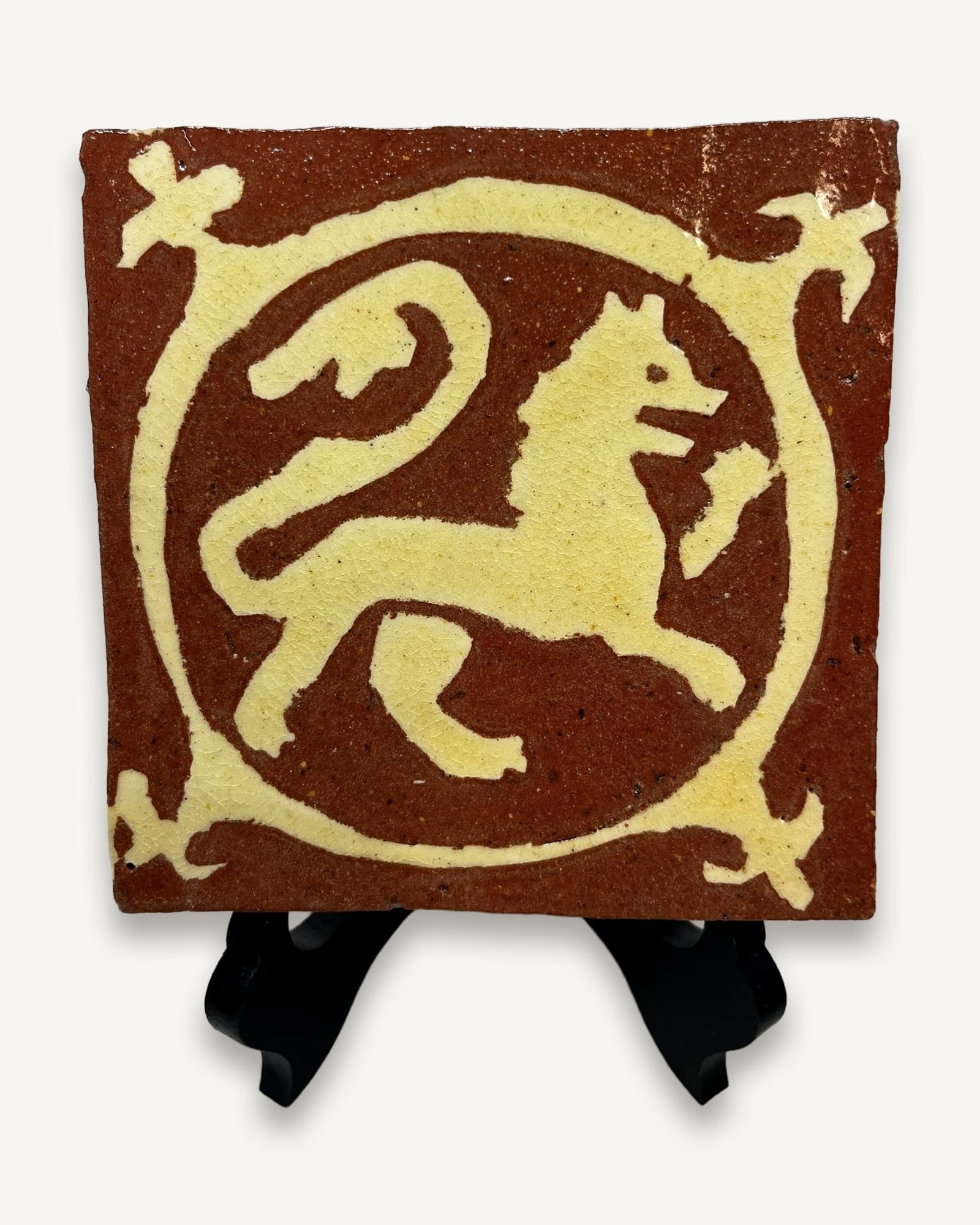
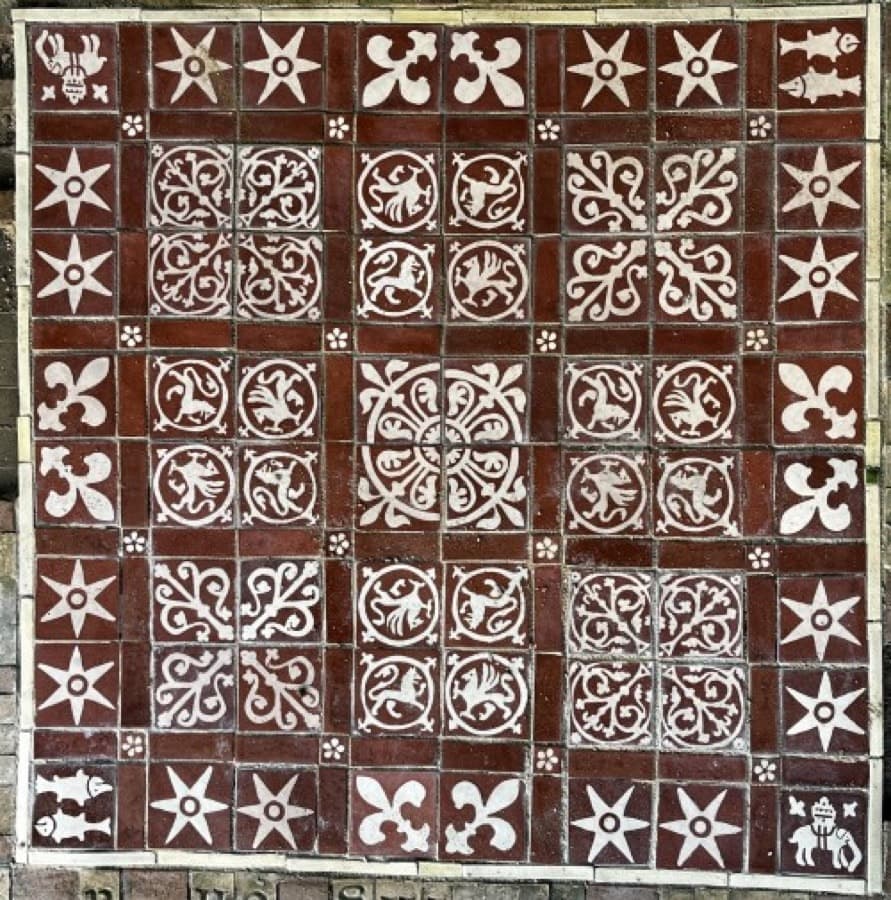
An image of a griffin 'Segreant' from Winchester Cathedral. Also known as a gryphon. It symbolises supreme strength, courage, military leadership, and nobility and may also be an allegory for Jesus Christ. Given such symbolic importance it is found in many collections and medieval pavements in England with different surrounds and quality of carving in the stamp. This is a particularly fine example as would be expected in the then capital of England. Originally this tile was laid near the tomb of William of Wykeham (Bishop of Winchester and Chancellor of England, d 1404) but it has since been moved to near the Lady Chapel just beyond the retrochoir.
A cork or felt backing can be added for £1.00. A wooden stand to display it upright can be added for £5.00.
Glazed with a modern lead frit, in which the lead is chemically bound to silica rather than the raw lead of the medieval originals. Safe for display, walls and floors, but not for food or drink. Safety certificates are available on request.
 Tom Chamberlain
An image of a griffin 'Segreant' from Winchester Cathedral. Also known as a gryphon. It symbolises supreme strength, courage, military leadership, and nobility and may also be an allegory for Jesus Christ. Given such symbolic importance it is found in many collections and medieval pavements in England with different surrounds and quality of carving in the stamp. This is a particularly fine example as would be expected in the then capital of England. Originally this tile was laid near the tomb of William of Wykeham (Bishop of Winchester and Chancellor of England, d 1404) but it has since been moved to near the Lady Chapel just beyond the retrochoir.
A cork or felt backing can be added for £1.00. A wooden stand to display it upright can be added for £5.00.
Glazed with a modern lead frit, in which the lead is chemically bound to silica rather than the raw lead of the medieval originals. Safe for display, walls and floors, but not for food or drink. Safety certificates are available on request.
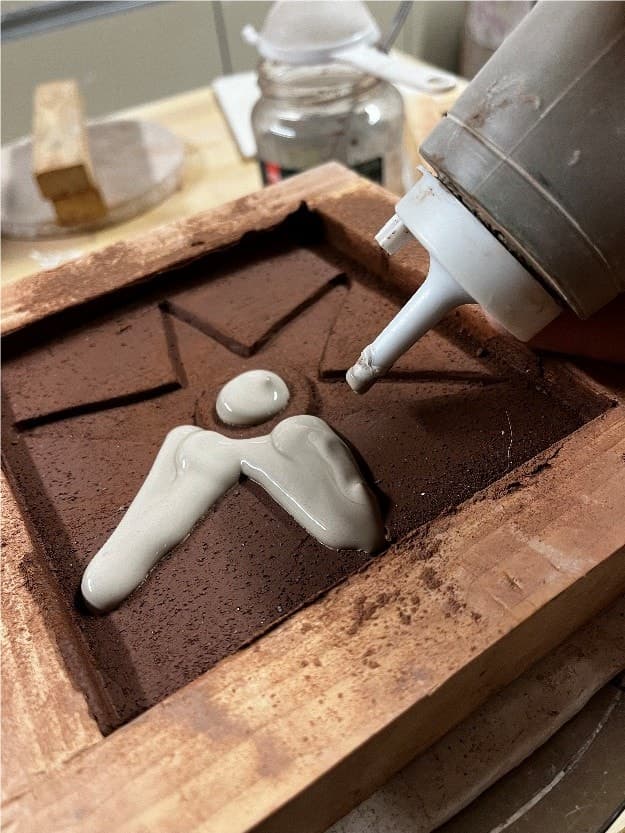
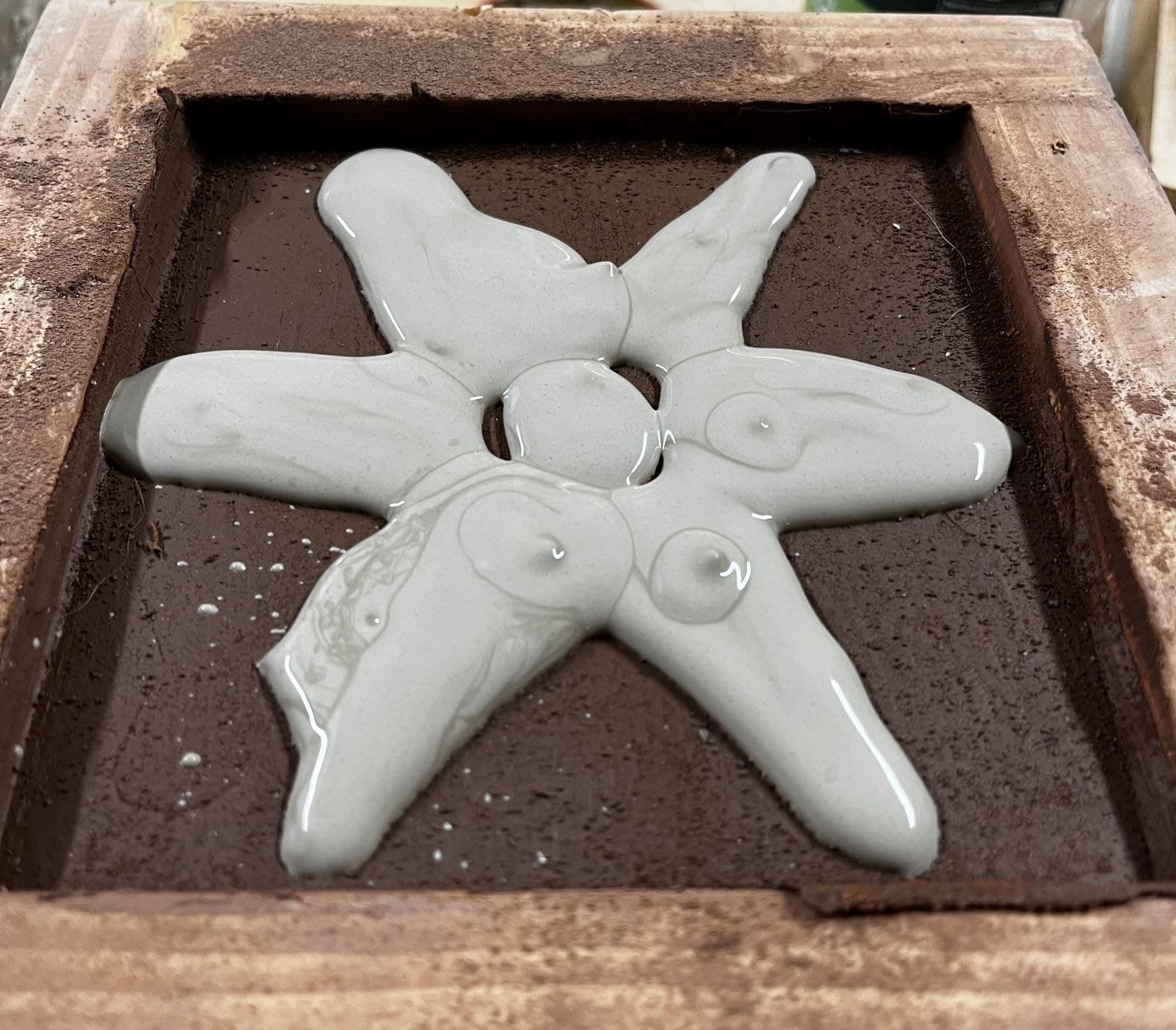
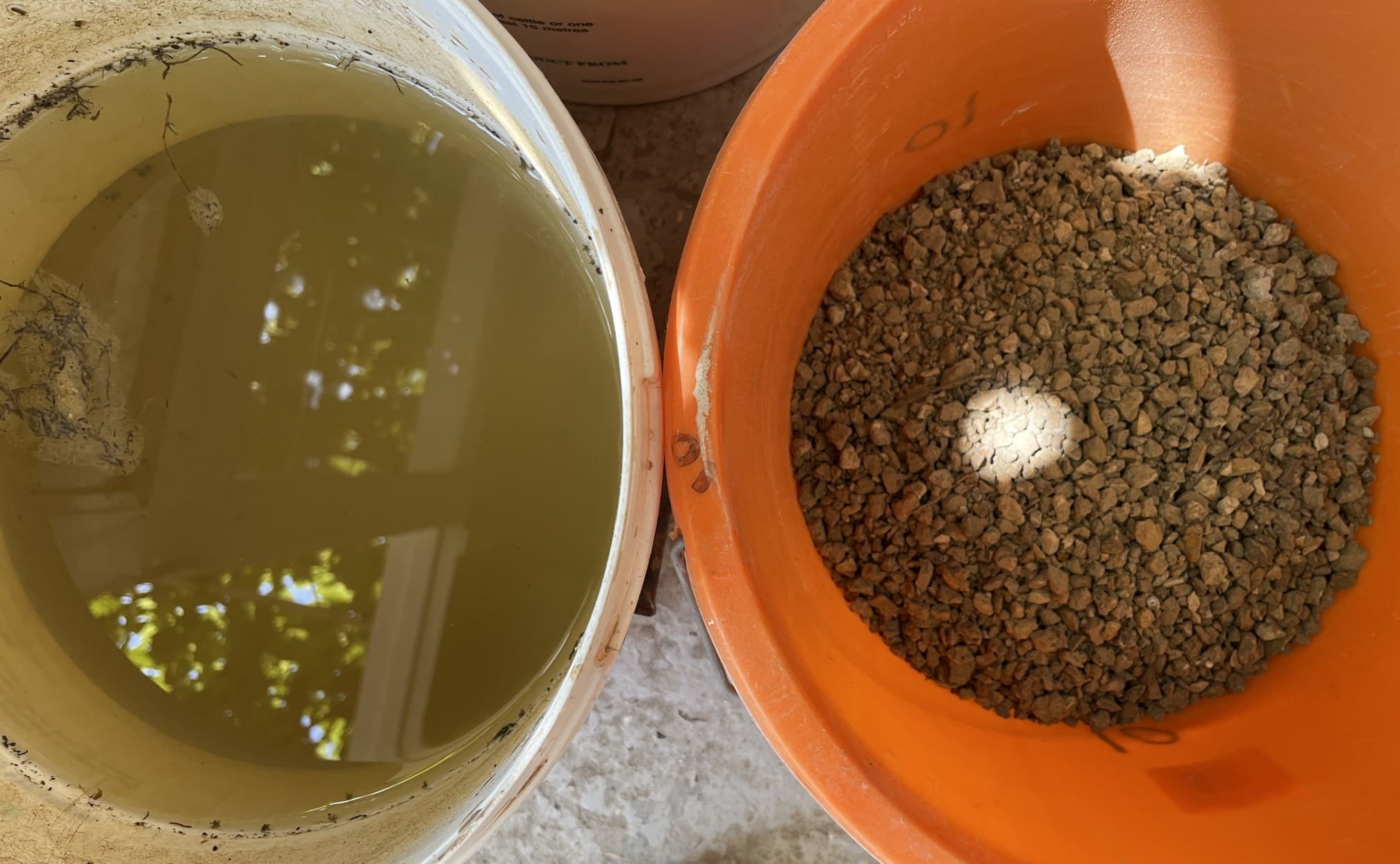
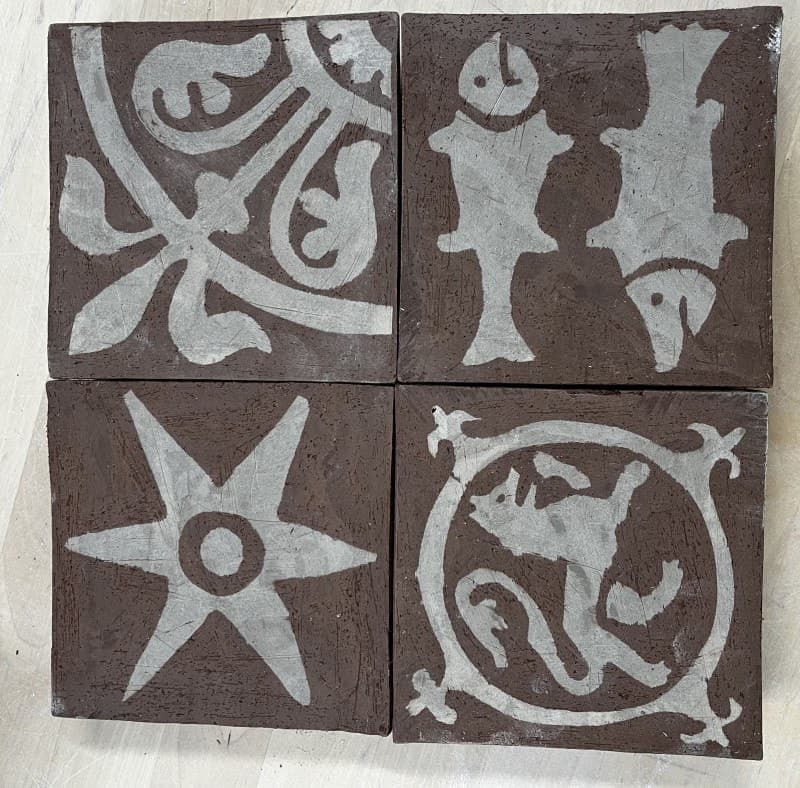
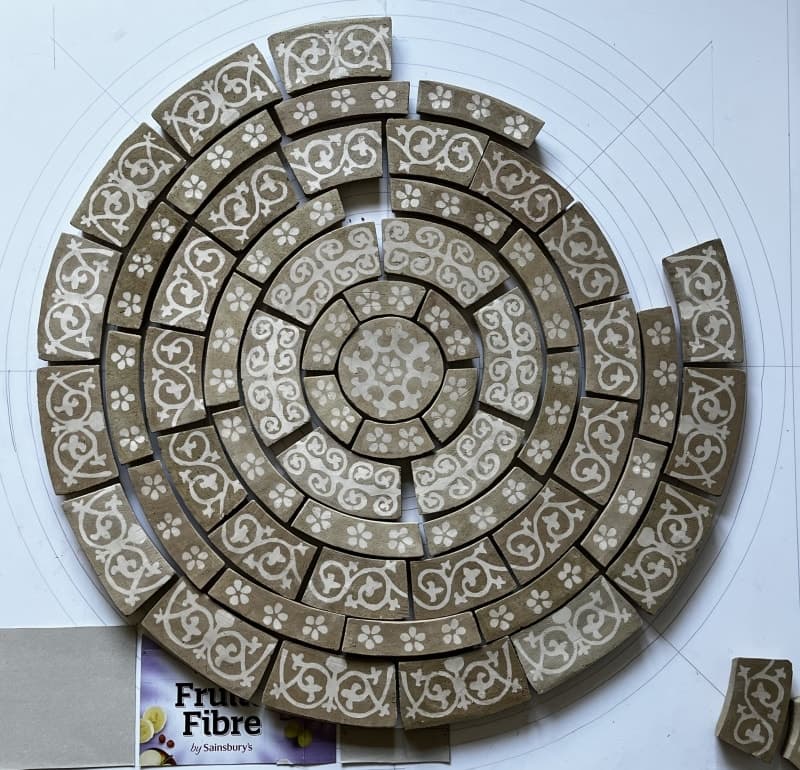
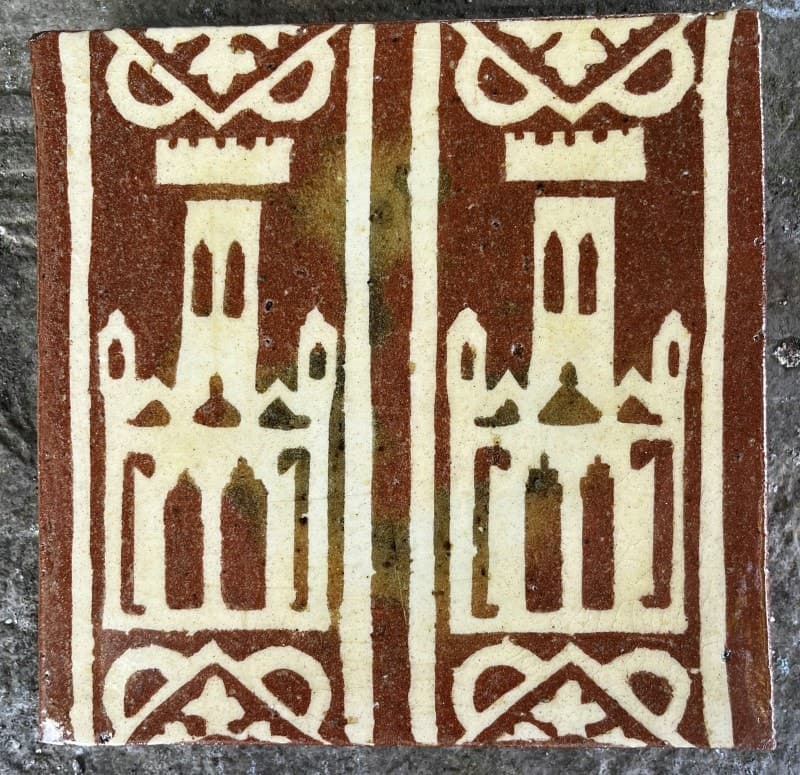
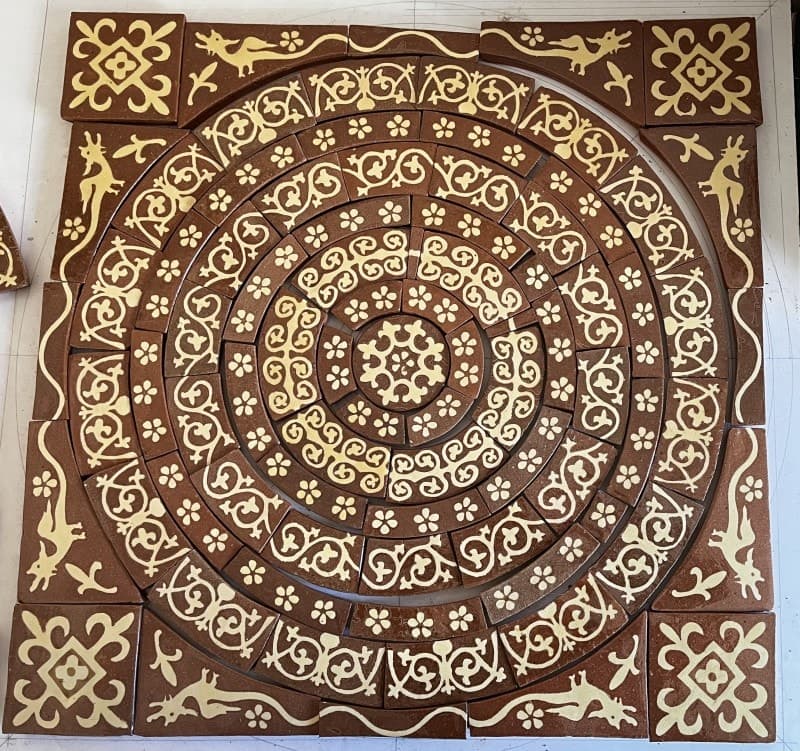
Tom Chamberlain makes floor tiles the way they were made for medieval churches and abbeys. He digs the red clay himself, cuts his own stamps, and has spent the last two years working out the original methods.
Tom Chamberlain makes floor tiles the way they were made for medieval churches and abbeys. He digs the red clay himself, cuts his own stamps, and has spent the last two years working out the original methods.