A set of three juggling balls spun from cotton rope and stitched closed by hand, small enough to nest in a closed hand and weighty enough to throw cleanly. They come in a full rainbow of dyed strands, so each ball reads as a different chord of the same family, or in a trio of one orange, one purple and one green.
Gem Bowes builds each ball the way she builds her leads and doorstops, scaled down and reshaped: cotton fibre hand-spun under controlled tension in her Cambridge workshop, then finished to a particular firmness, solid enough to land cleanly in a catch and soft enough that a missed one is forgiving. The hand-stitching is both the closing detail and the structural seam that holds the ball under the constant low-grade shock of being thrown and caught.
A usable practice set that sits comfortably on a shelf when not in flight. Each ball is hand-spun and hand-stitched, so colour distribution, exact weight and firmness vary slightly between sets. Wipe clean with a damp cloth and let them dry before storing; indoor use is best, as outdoor surfaces will mark the cotton over time.

A set of three juggling balls spun from cotton rope and stitched closed by hand, small enough to nest in a closed hand and weighty enough to throw cleanly. They come in a full rainbow of dyed strands, so each ball reads as a different chord of the same family, or in a trio of one orange, one purple and one green.
Gem Bowes builds each ball the way she builds her leads and doorstops, scaled down and reshaped: cotton fibre hand-spun under controlled tension in her Cambridge workshop, then finished to a particular firmness, solid enough to land cleanly in a catch and soft enough that a missed one is forgiving. The hand-stitching is both the closing detail and the structural seam that holds the ball under the constant low-grade shock of being thrown and caught.
A usable practice set that sits comfortably on a shelf when not in flight. Each ball is hand-spun and hand-stitched, so colour distribution, exact weight and firmness vary slightly between sets. Wipe clean with a damp cloth and let them dry before storing; indoor use is best, as outdoor surfaces will mark the cotton over time.


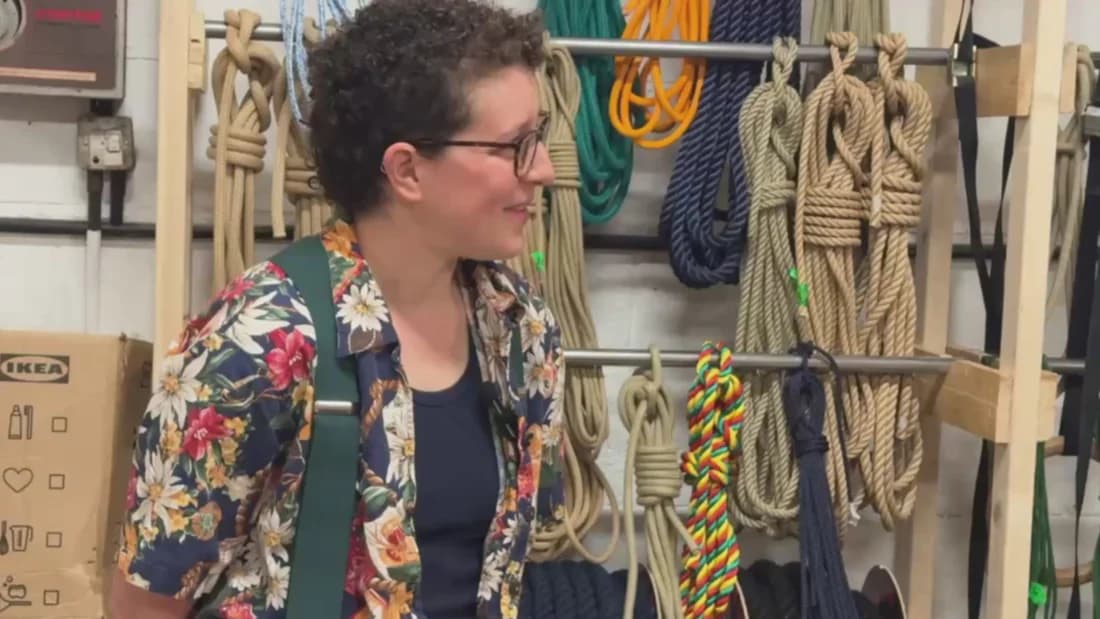
Gem Bowes learned to make rope at Arthur Beale, the Shaftesbury Avenue chandlery that has been splicing line since 1500-something. She works now from a Cambridge studio, hand-spinning flax and dead-stock yarn for dog leads, doorstops, juggling balls.