Have a question for Alandale Glass? Sign in to ask.
Sign in to ask a question“The whole process is very time consuming and can't be rushed.”
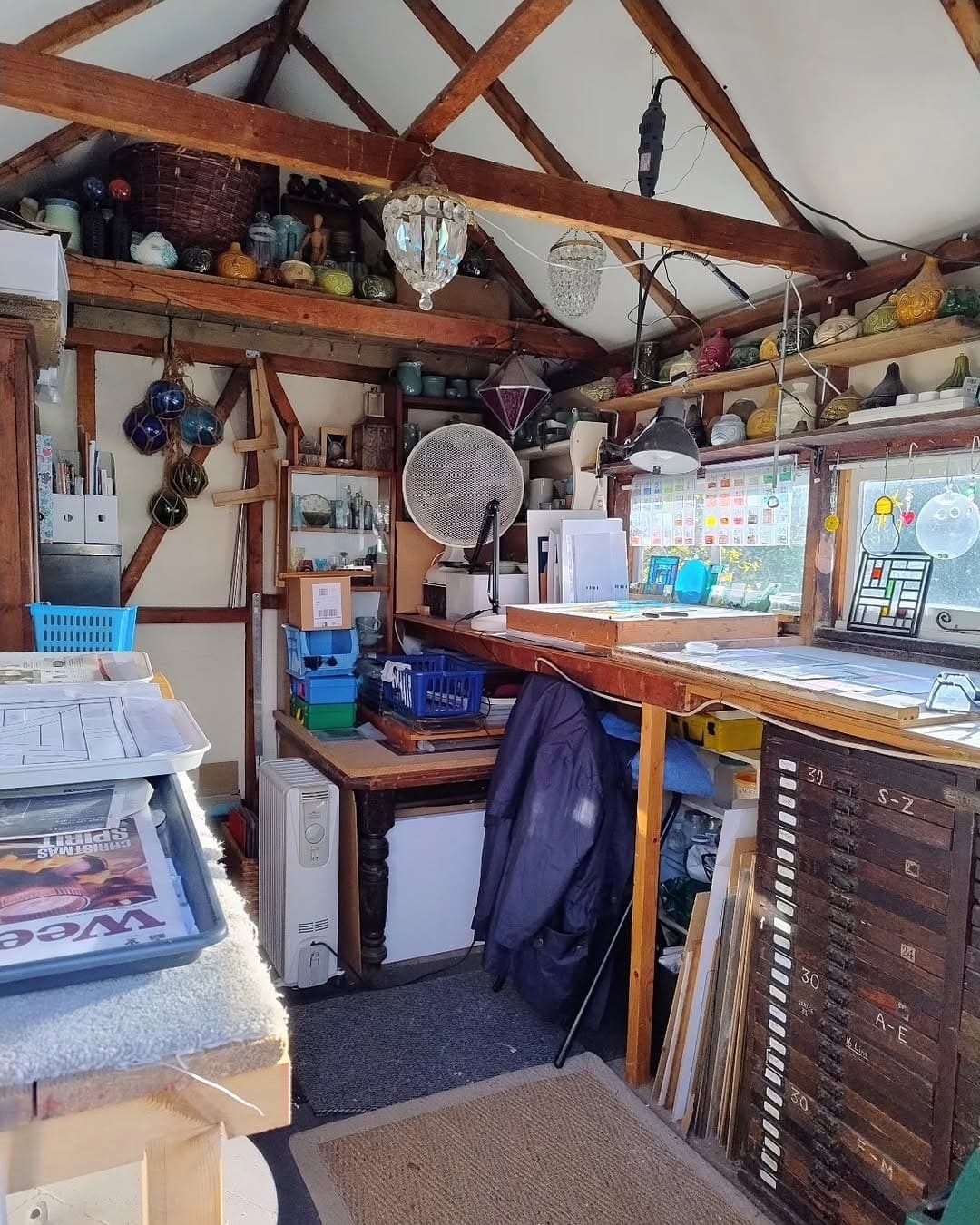
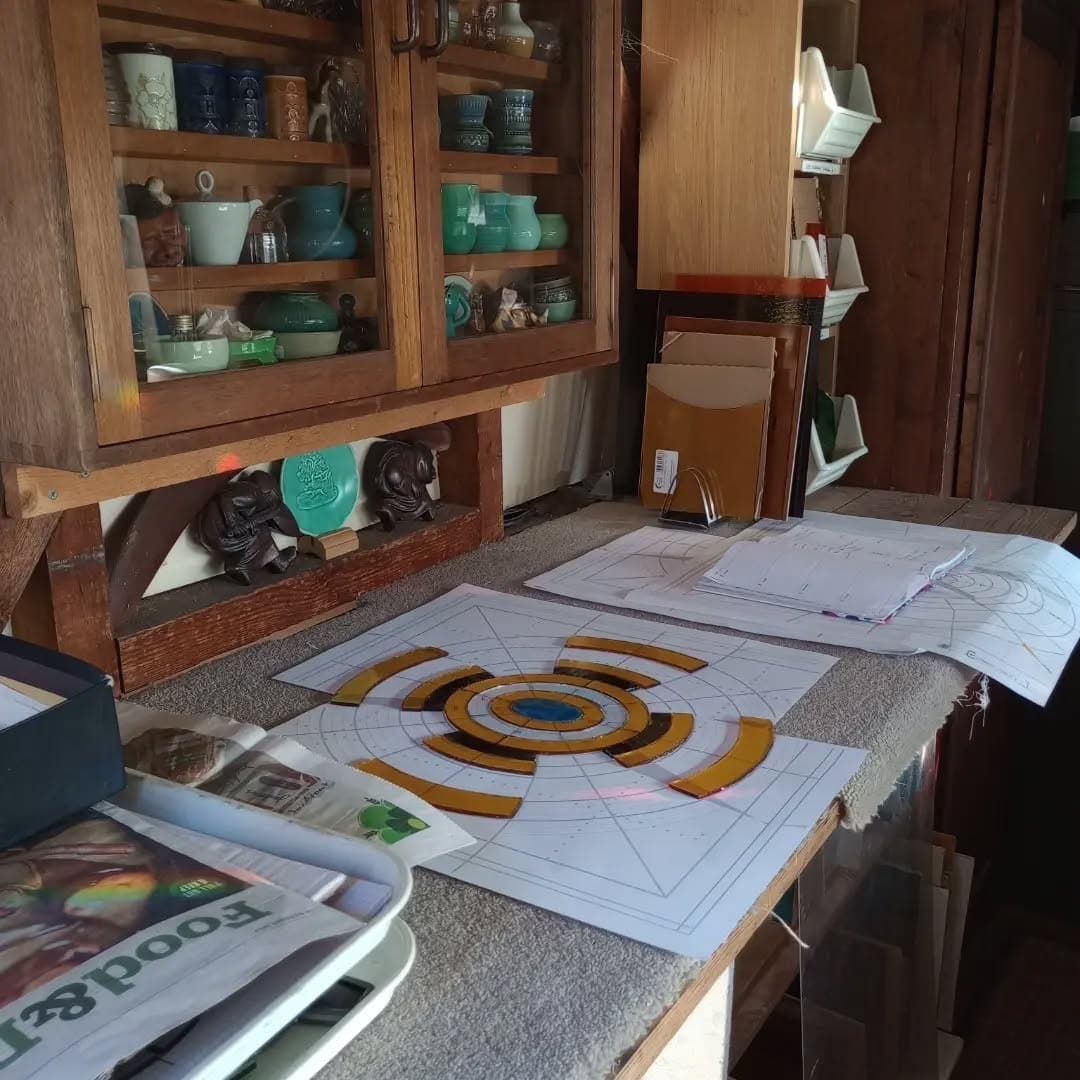
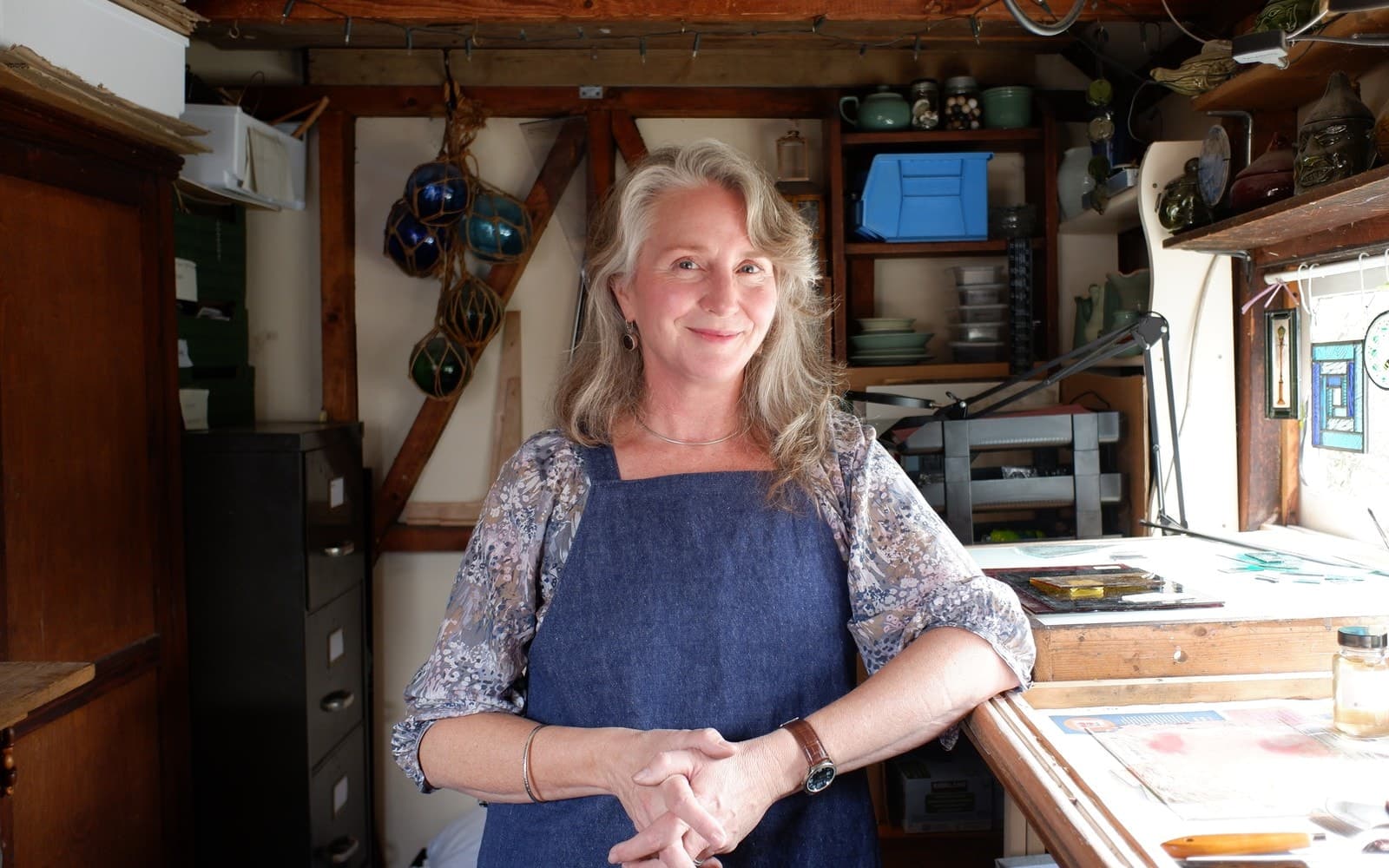
Mary Corkery makes stained glass in a workshop at the bottom of her garden near Harrow. She got there by accident. "I learned how to do it on a weekend course back in 1996 and loved it immediately," she says.
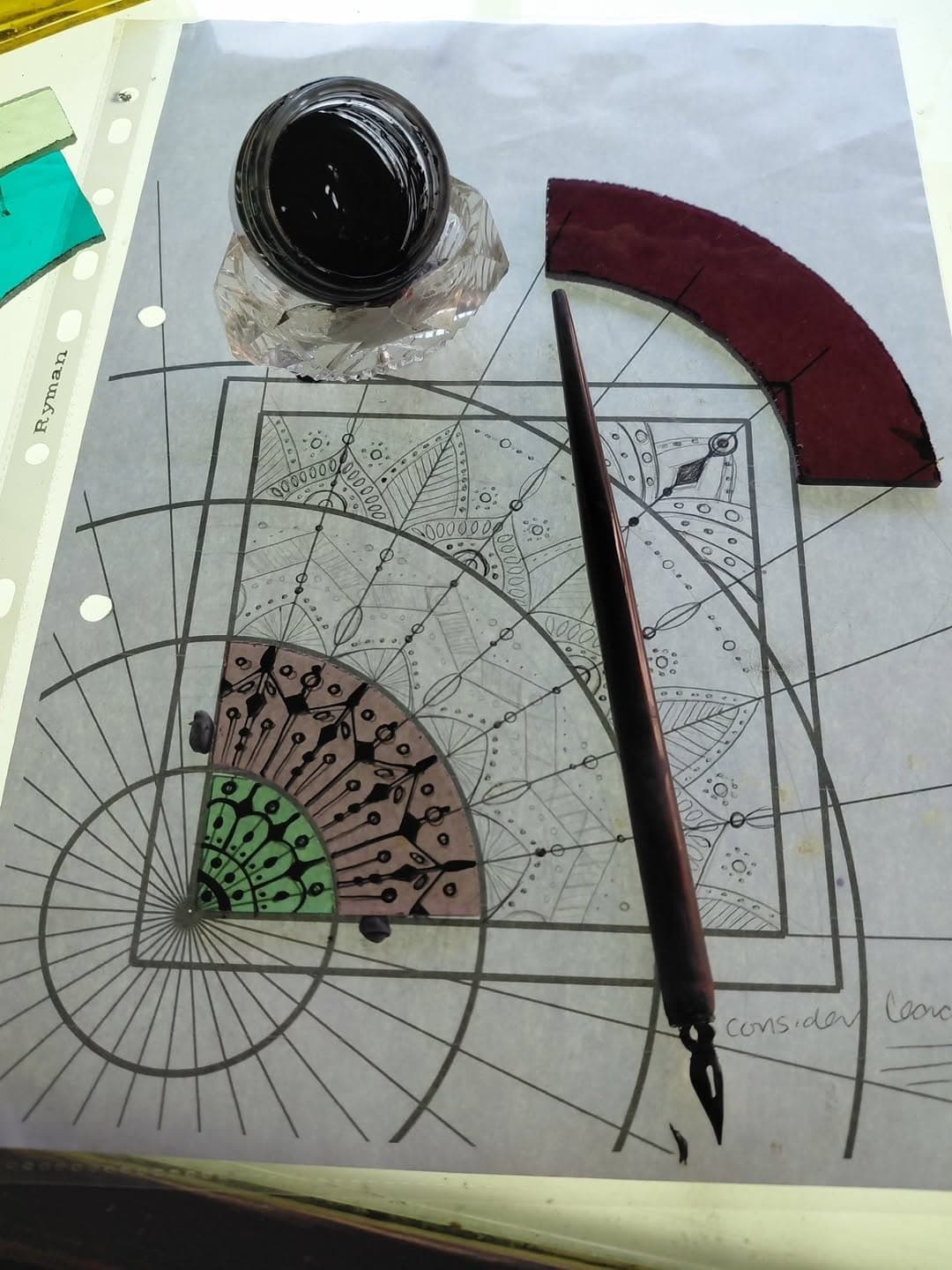
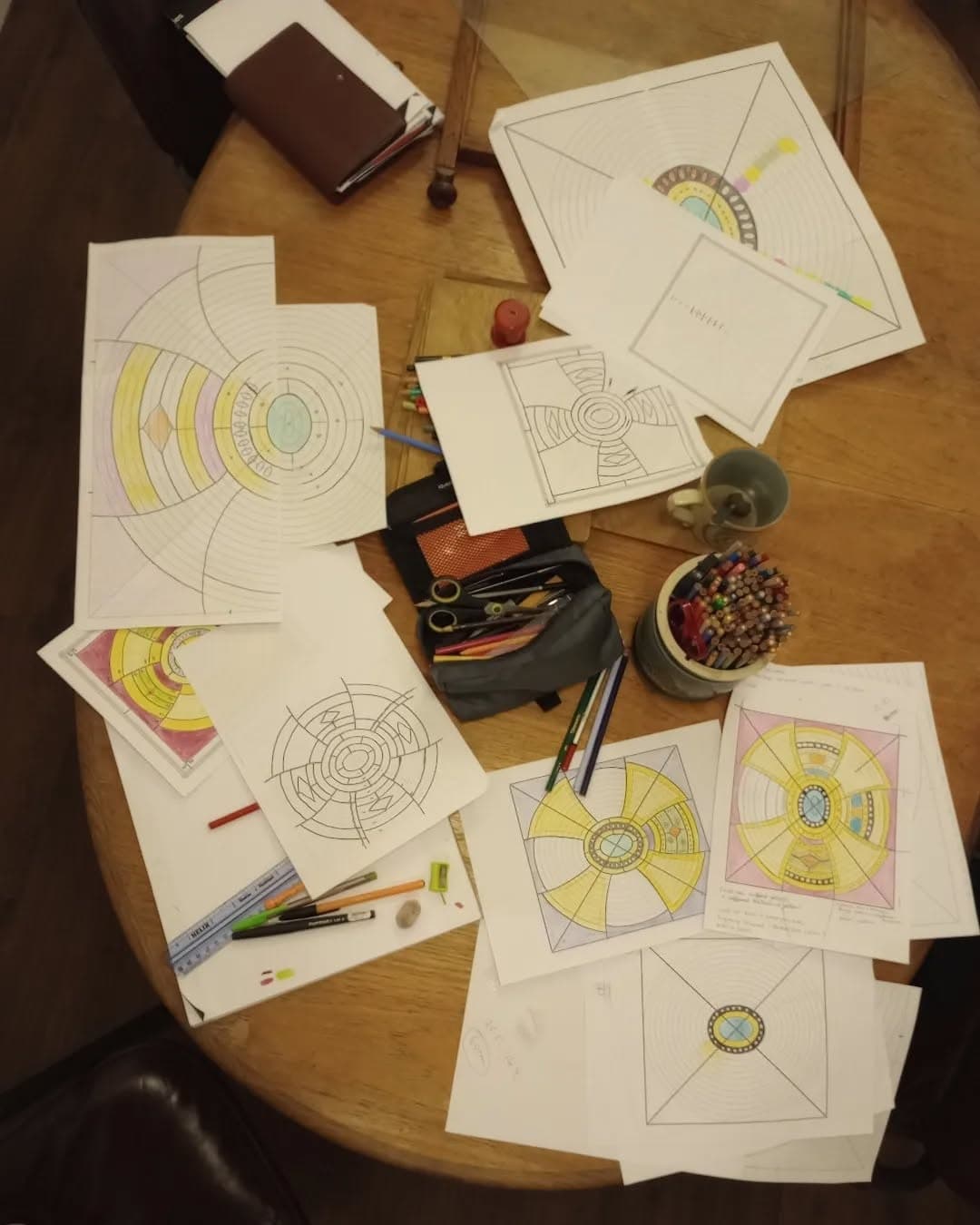
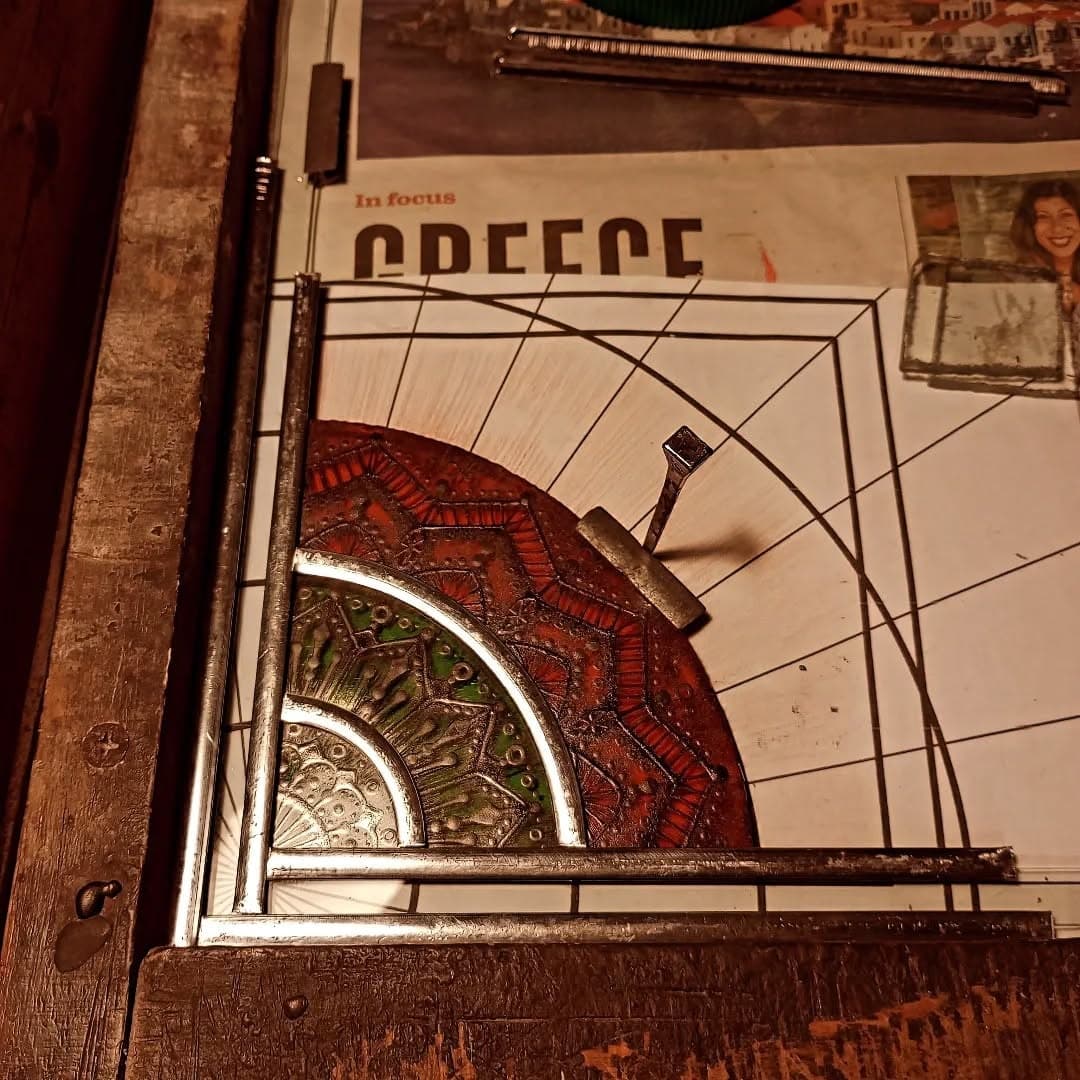
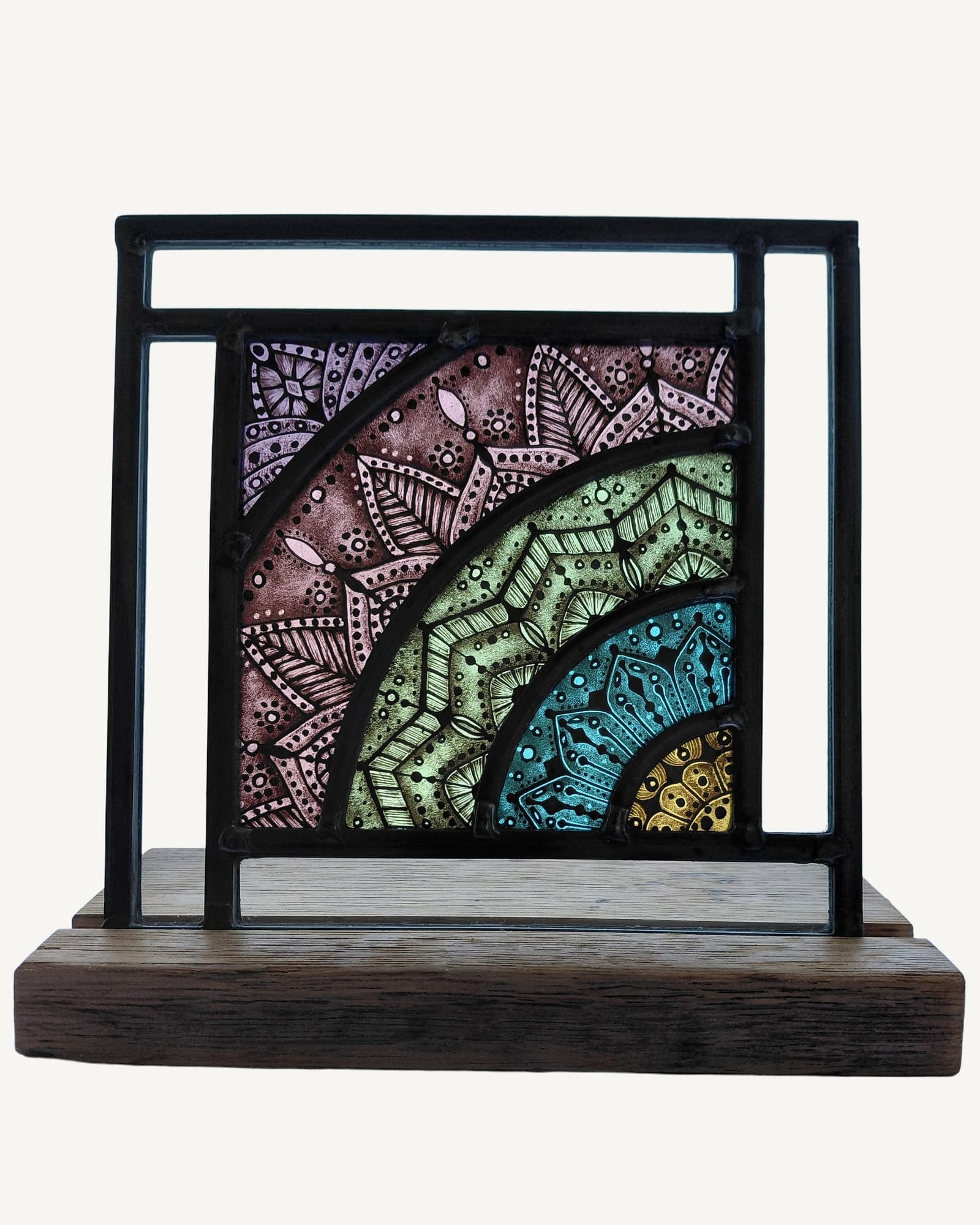
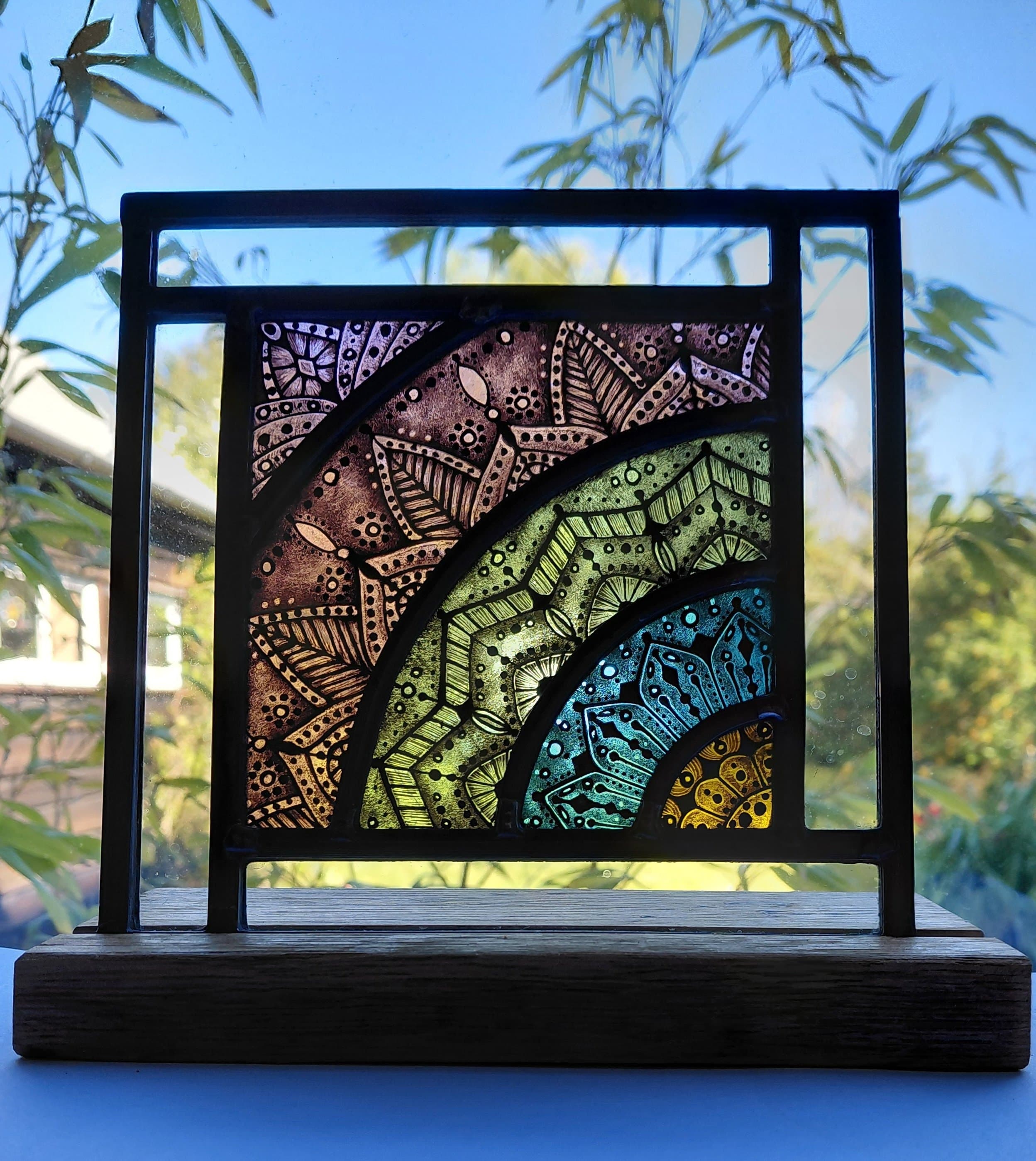
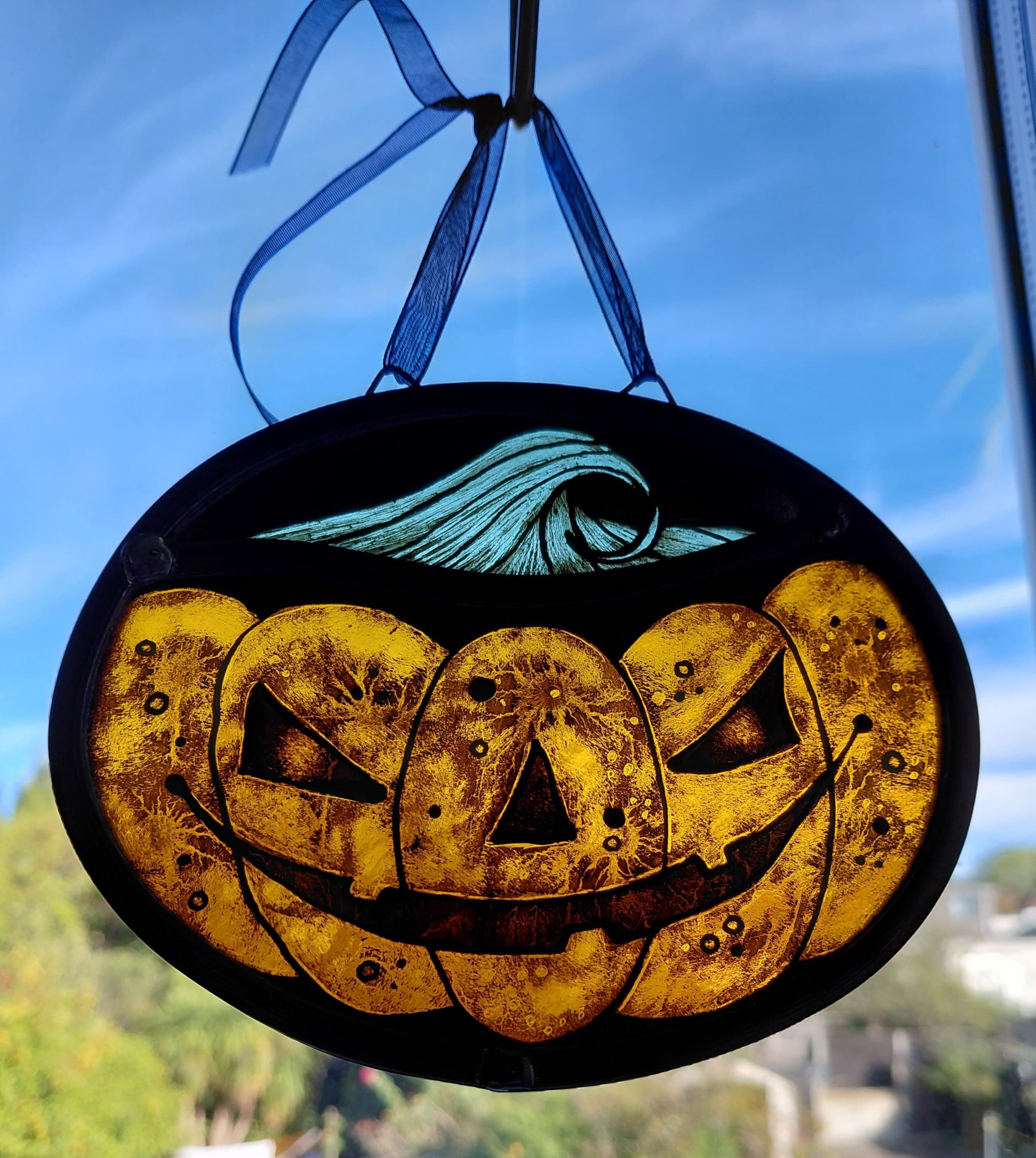
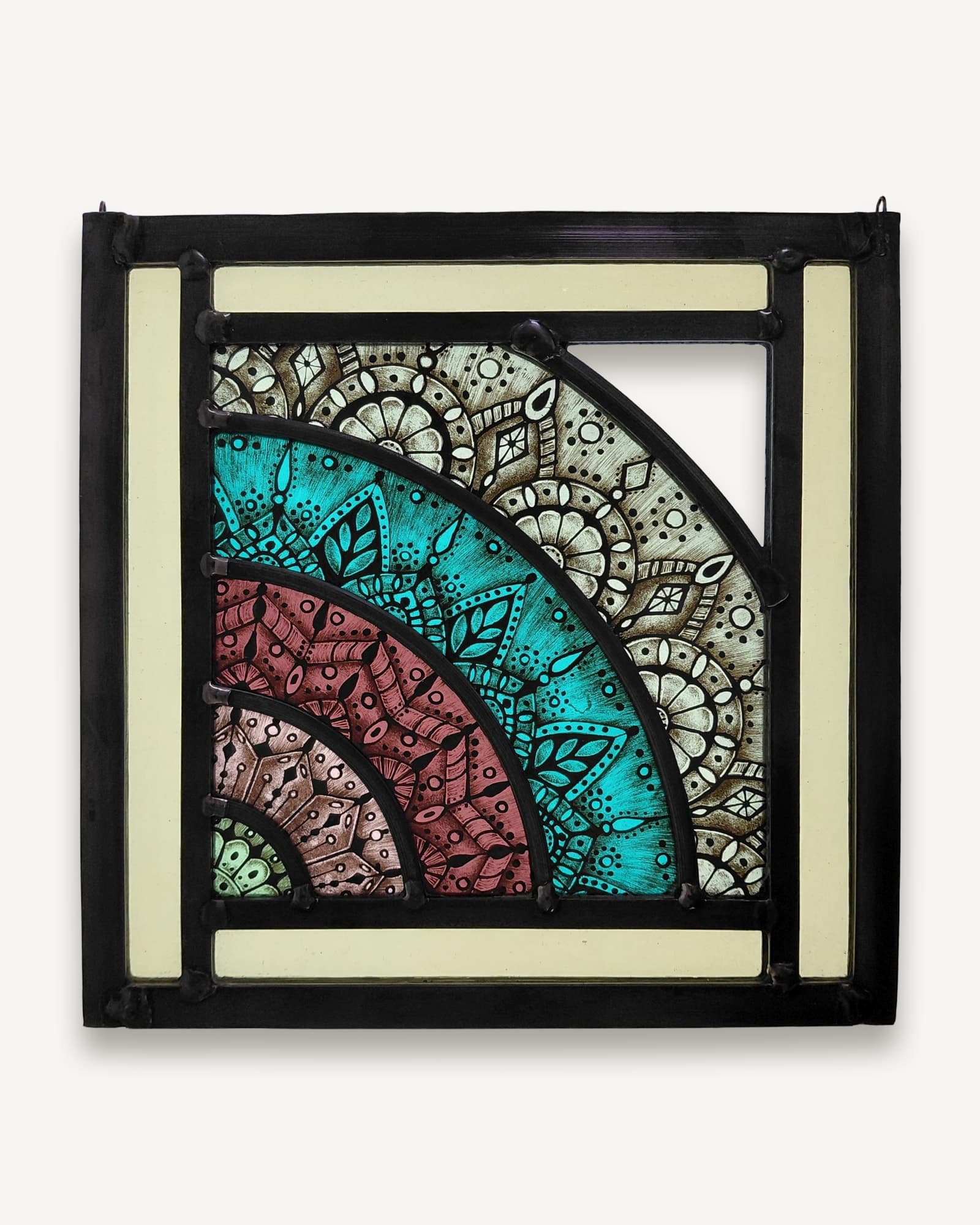
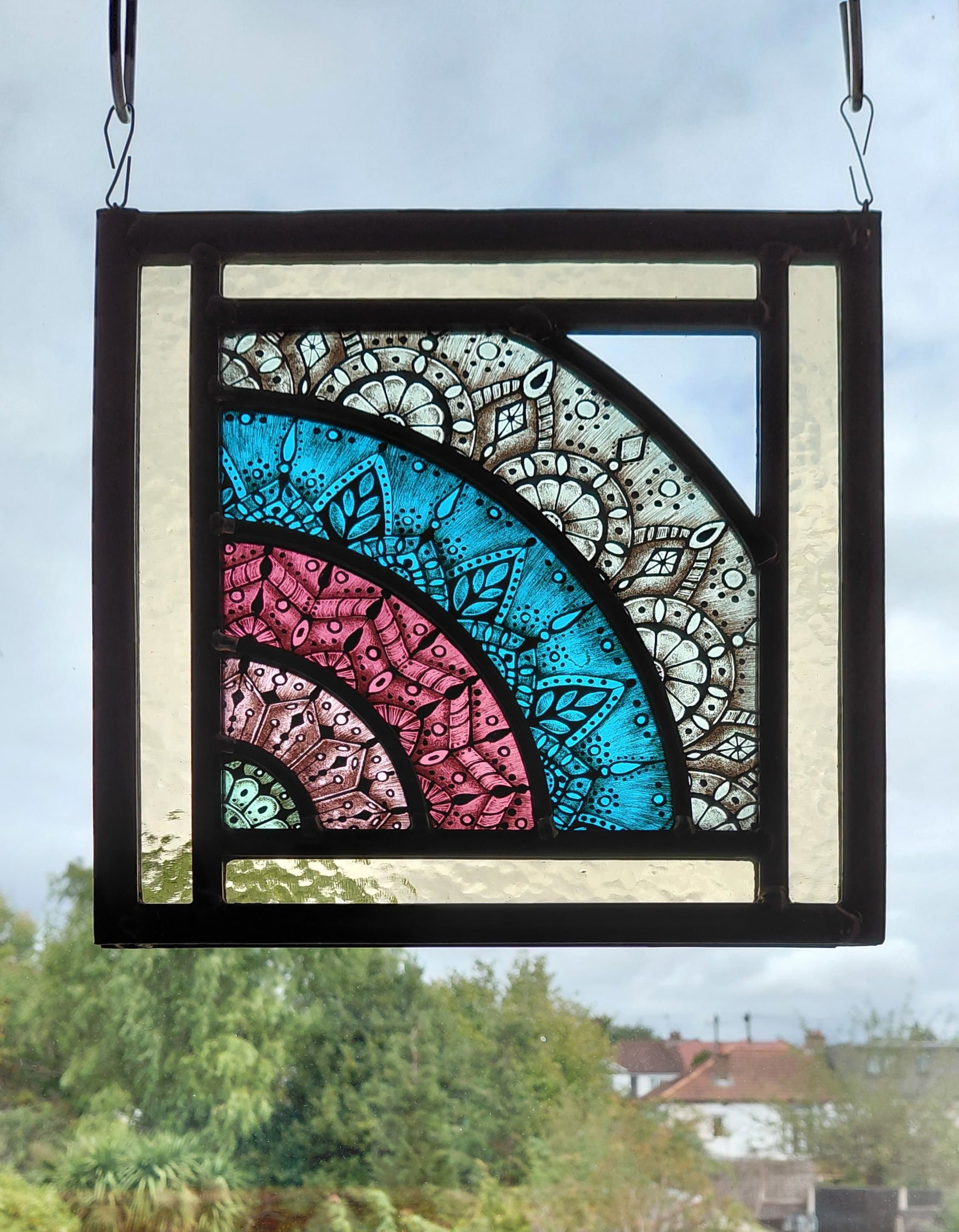
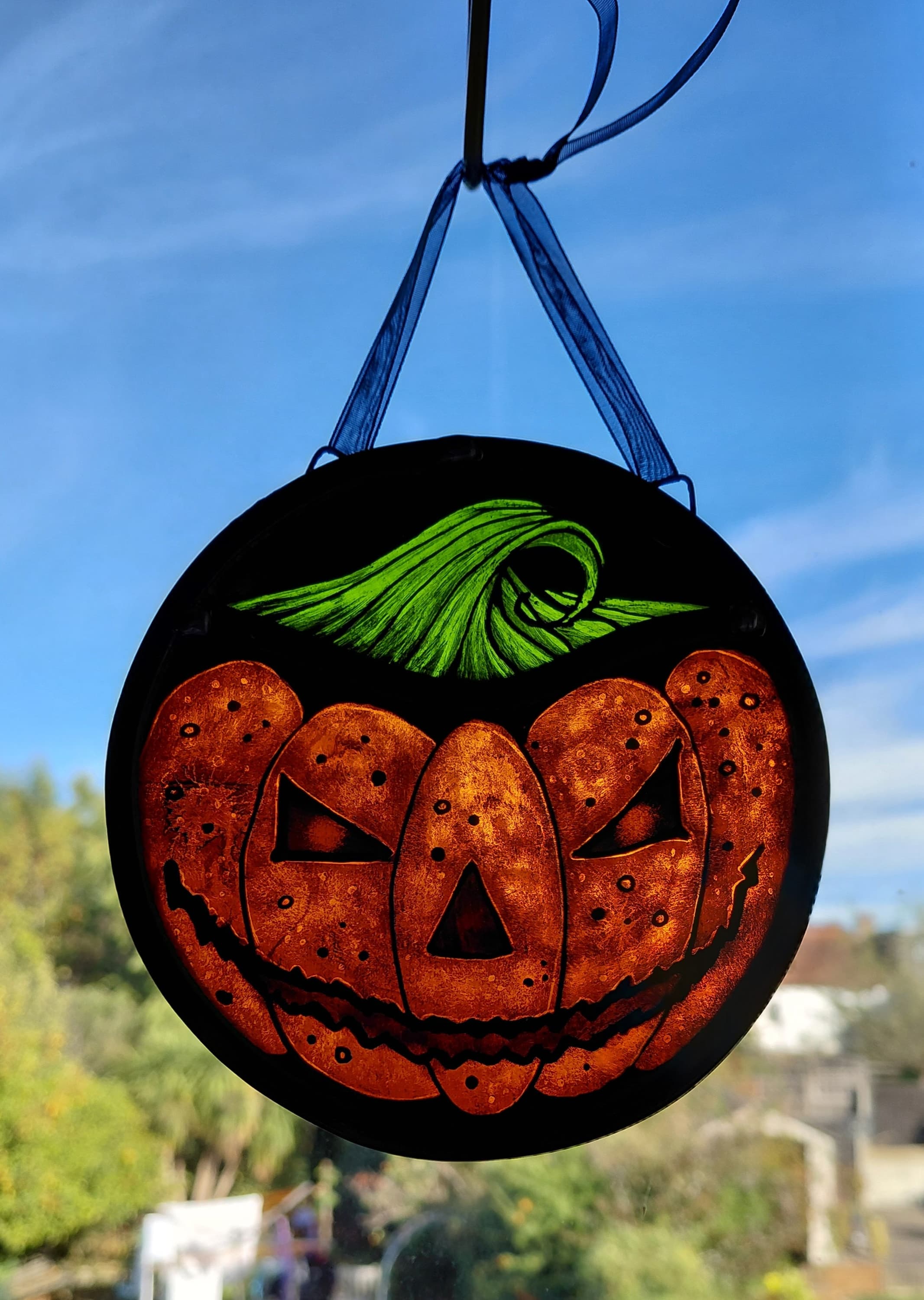
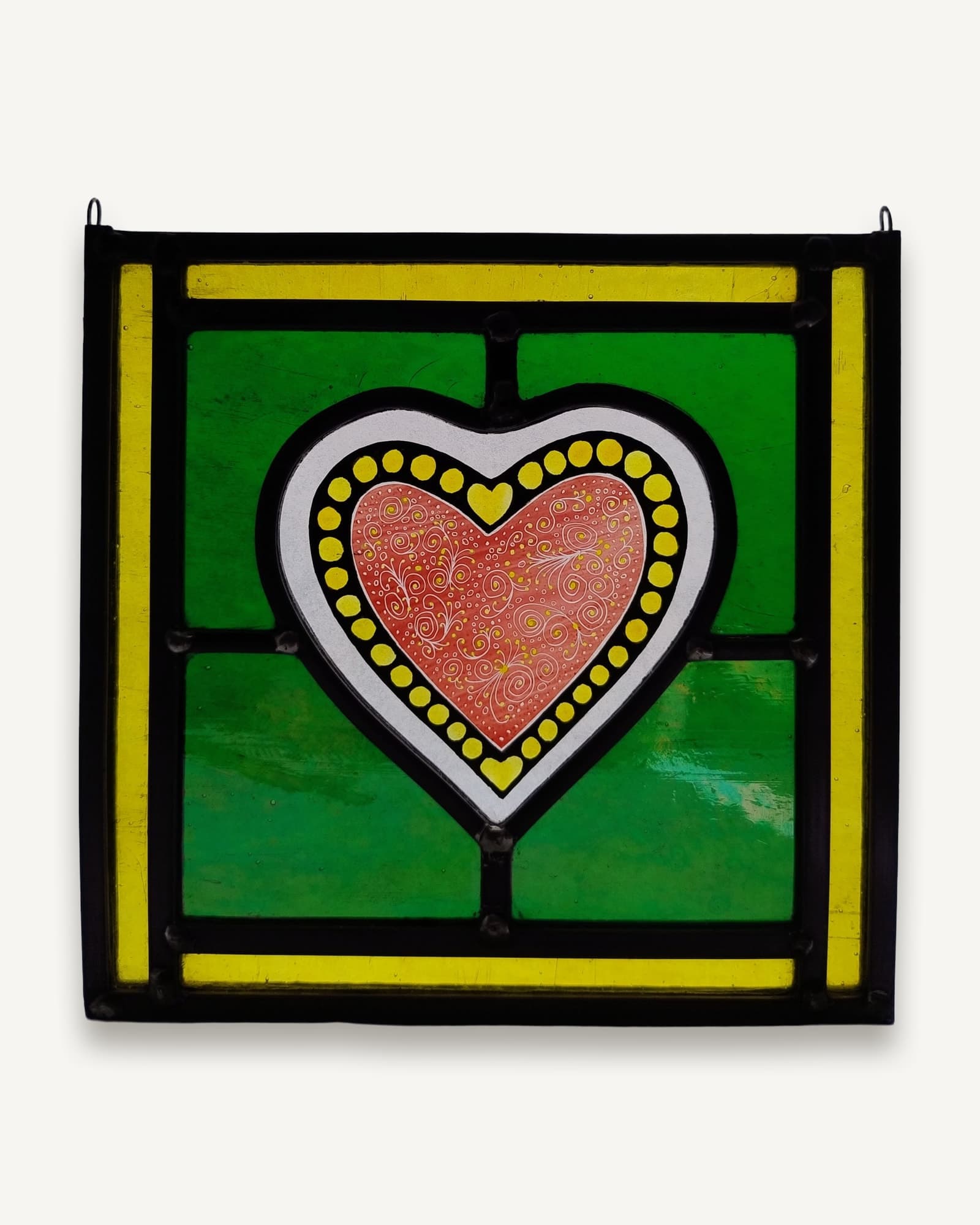
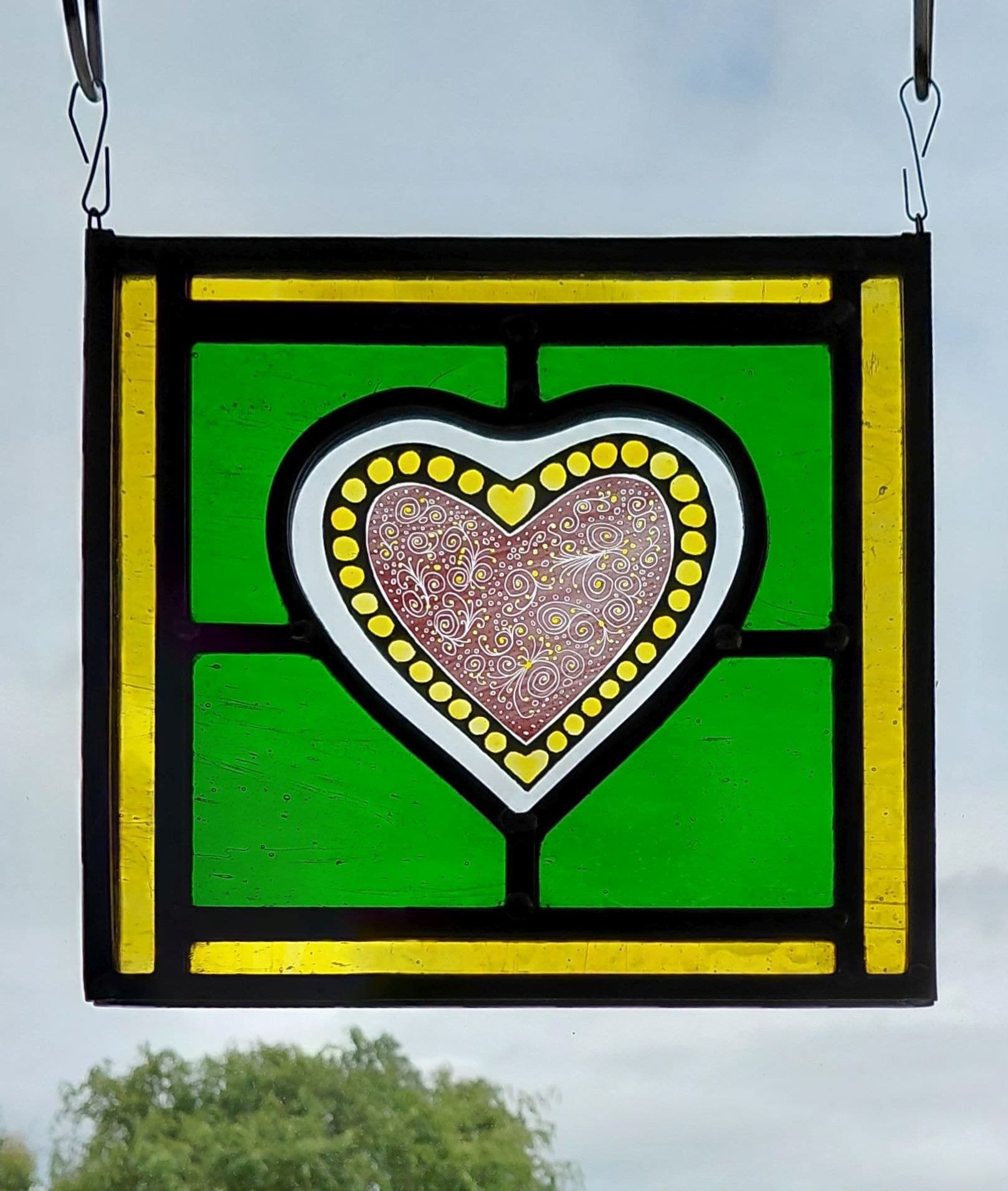
Most stained glass is cut and leaded and that is the end of it. Mary paints hers. She works from doodles and sketches before converting them into precise cutting patterns. Once the glass is cut, the detail goes on in layers and every layer is fired onto the glass in a kiln, often several firings for one panel, before the piece is leaded up, cemented and polished. Glass and lead, worked the way they have been for centuries. It cannot be hurried; some pieces take weeks.
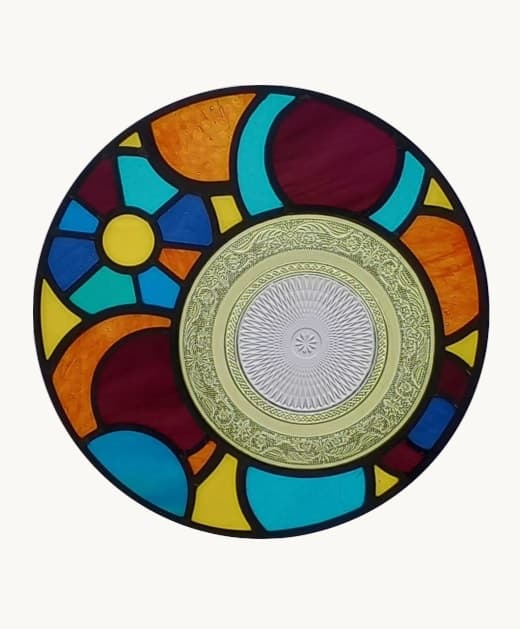
She sometimes builds panels around glass that has already had a life: a slice of agate at the centre of a leaded circle, a Victorian pot lid, a pressed-glass plate whose pattern throws light when the sun is behind it. The painted work allows for greater expression and can be abstract or figurative: root vegetables in painted borders, a wheatsheaf, a spaniel, or an intricate pattern.
She makes decorative panels and ornaments, sometimes framed using recycled wood, for display in the home rather than in churches, small enough to hold and detailed enough to reward standing close. Stained glass at the scale of a home.
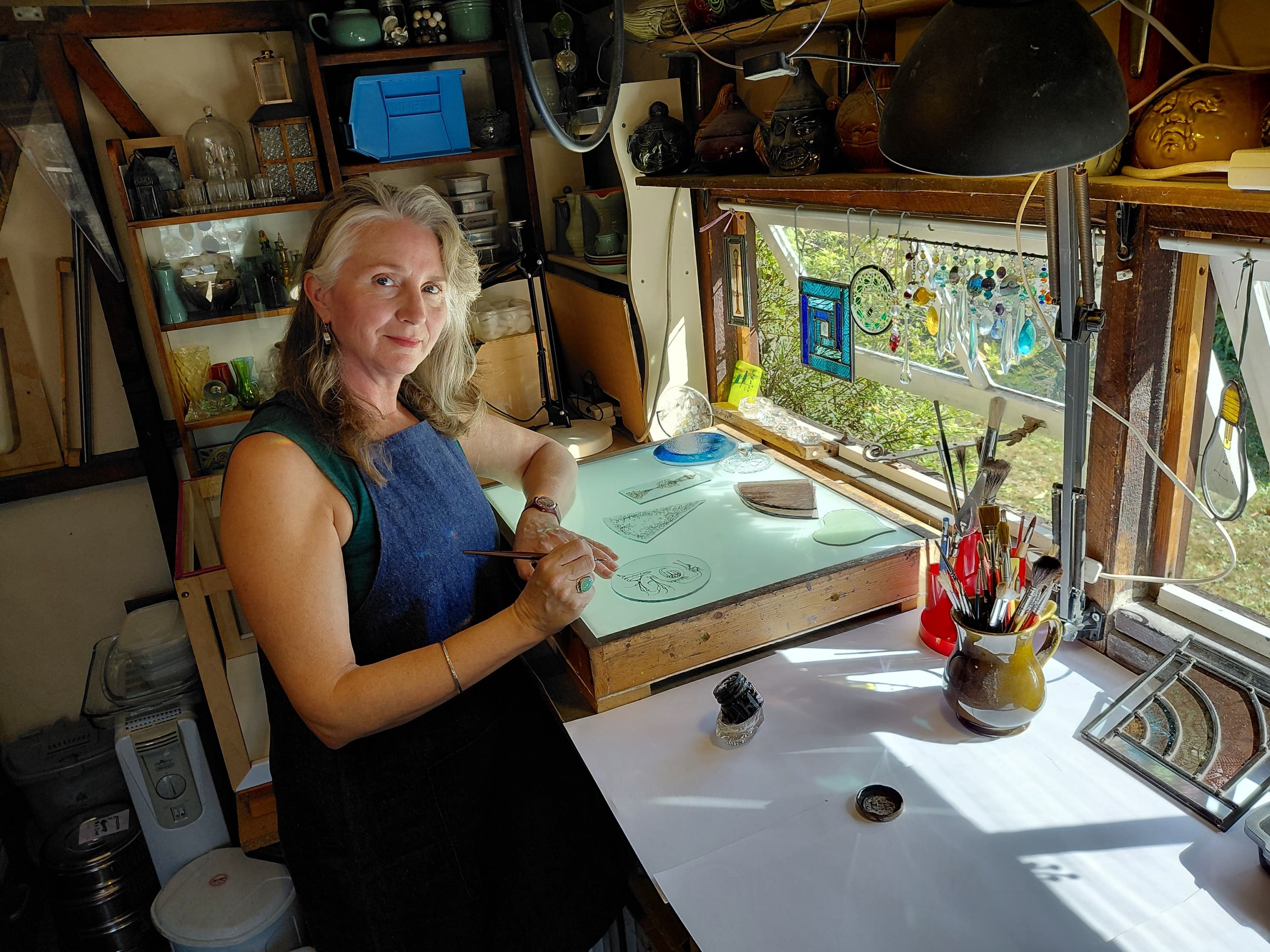
Whilst looking for a creative outlet, she came across a short leaded light course being run locally and signed up not expecting it to dominate her future. Within weeks she had equipped herself with the tools necessary to practice and experiment. Several years later she attended a stained glass course which introduced her to painting and kiln work presenting her with endless new possibilities. She has since since joined the British Society of Master Glass Painters and the Contemporary Glass Society.
There is always something new to learn and she wants to have a go at glass engraving next.
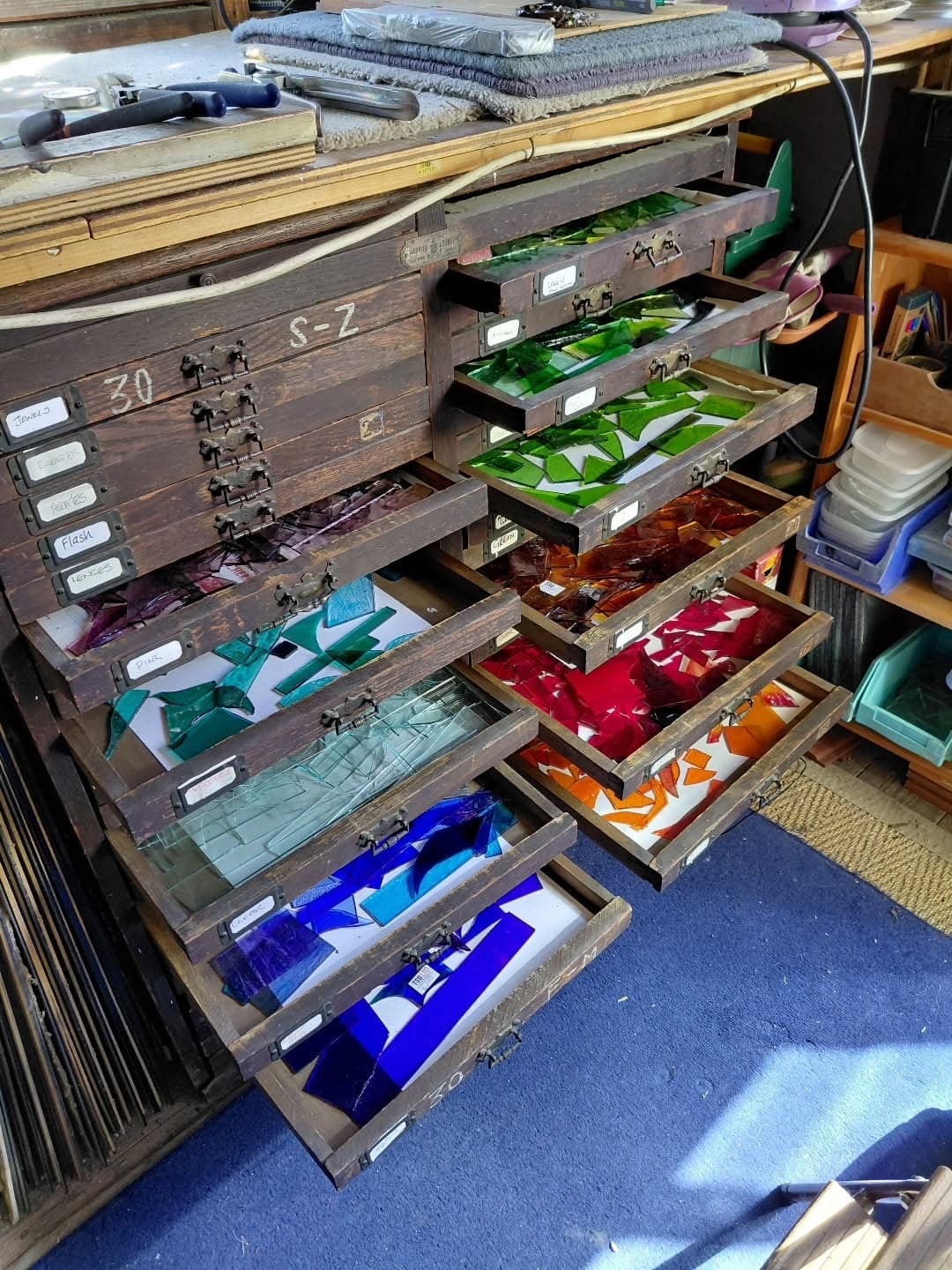
Glass and lead. The painted detail is fired onto the glass in a kiln, layer by layer, which is what makes it permanent; a single panel can go through the kiln several times over. Mary also sets older glass into her leadwork, agate slices and Victorian pressed-glass plates and pot lids among it. Frames for the larger panels are built from recycled wood. Materials are sourced from specialist suppliers around the UK.