

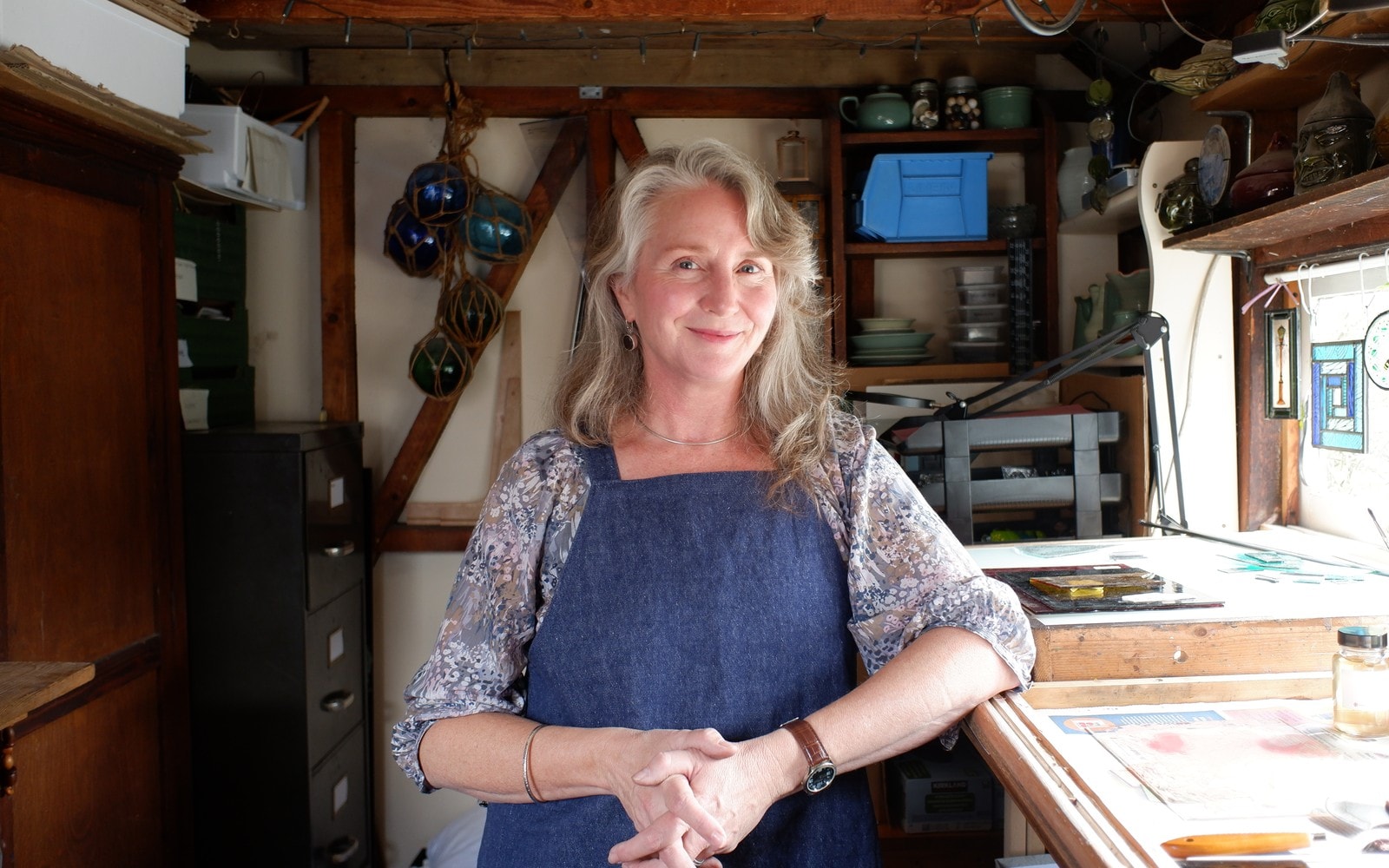
The Bench | Mary Corkery and the endangered art of stained glass
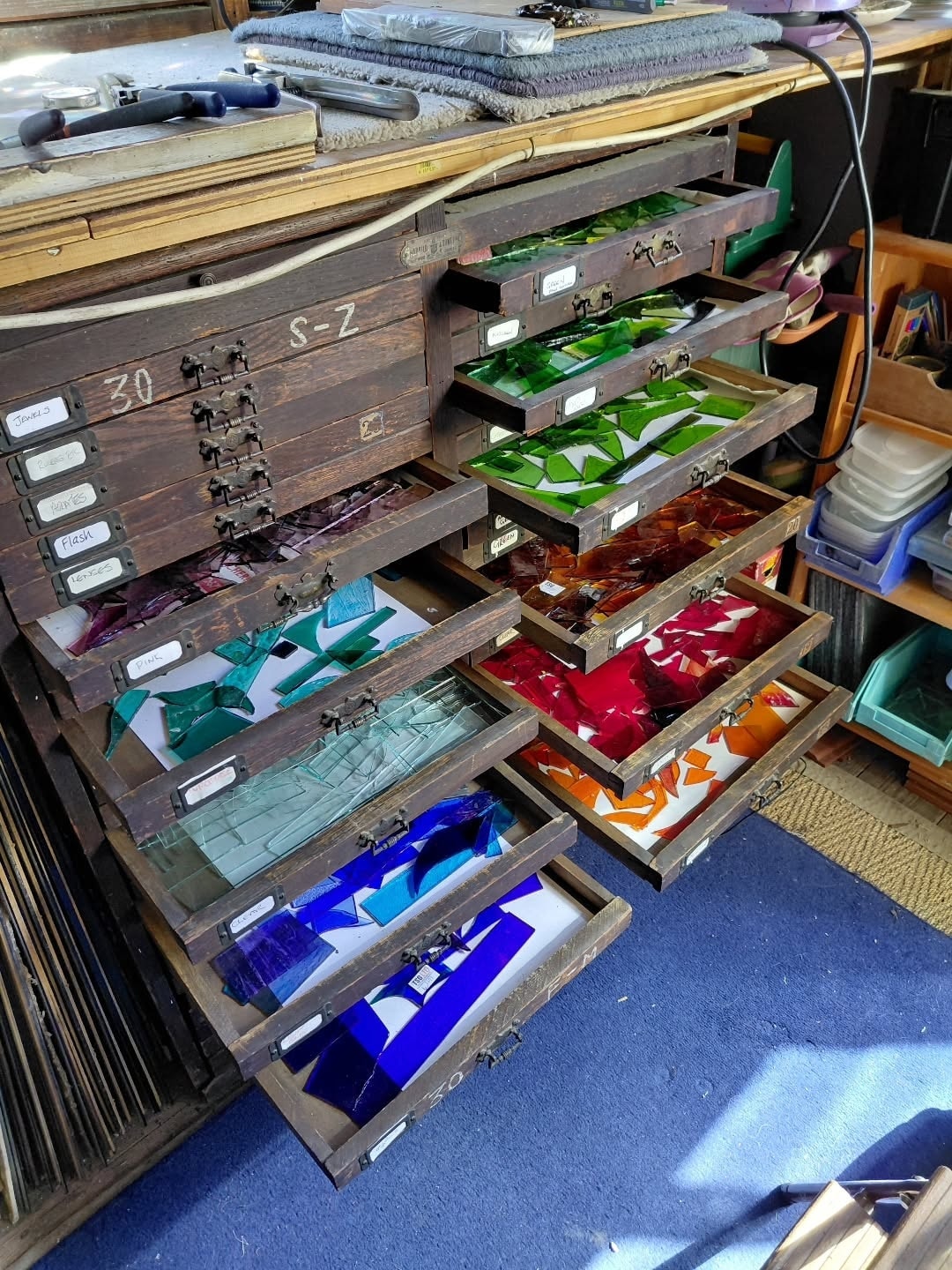
Mary Corkery has a sheet of red glass that she has kept for about twenty years and never cut. "I've never cut into it because it's my favourite," she told me when I visited her workshop at the bottom of her garden near Harrow in September. The shed is full of glass like that, stored in an old plan chest whose drawers she describes as "a bit rickety, but I love them". Most of it does get cut, painted, fired and set in lead, and she has been doing that, on her own, for about thirty years.
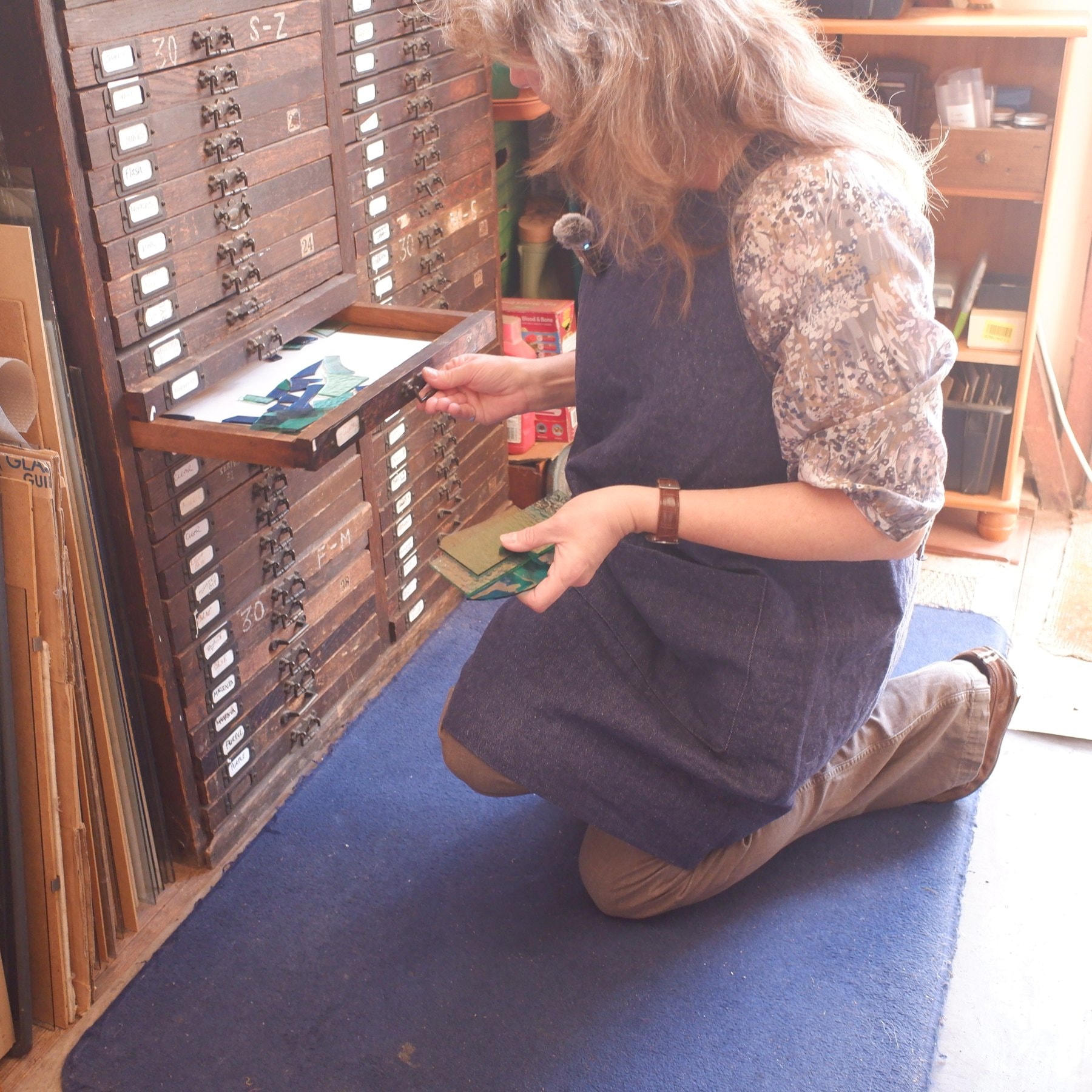
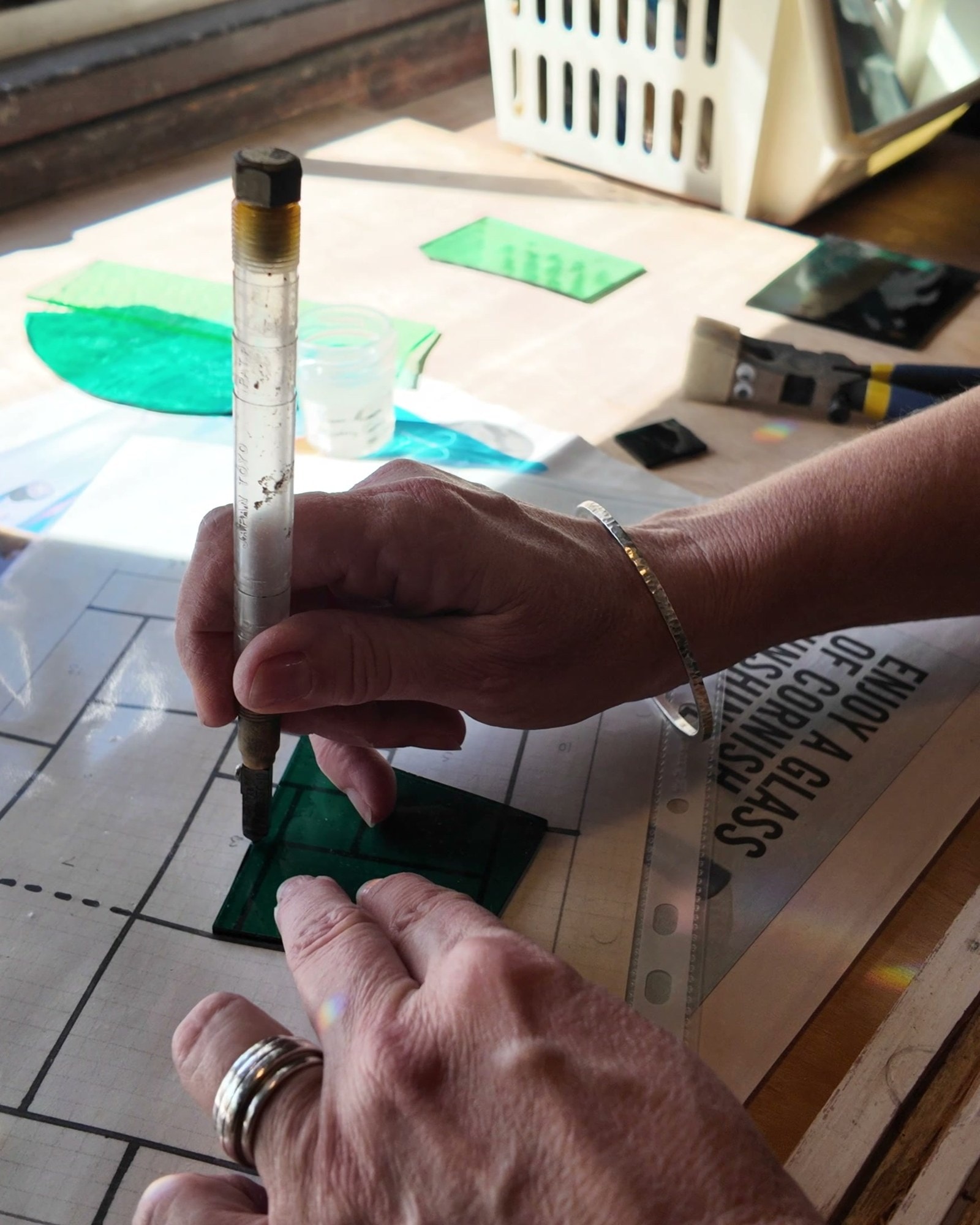
Mary cuts, leads and cements every panel by hand, and paints and fires most of them too. That is the traditional way of making a stained glass window, and it is one of the oldest crafts still practised in Britain. It is also one that Heritage Crafts lists as Endangered. This is her story, and the story of the craft she found through a leaflet.
A LEAFLET AT A FAIR
Mary picked up a leaflet at a fair for a weekend course at a local college, and by the end of that weekend everyone on it had made a panel. "I learned how to do it on a weekend course back in 1996 and loved it immediately," she says. "After that I just went off and practised and practised." She still has some of the first things she made, and she is honest about them: "My soldering is just dreadful. The soldering iron was obviously not hot enough."
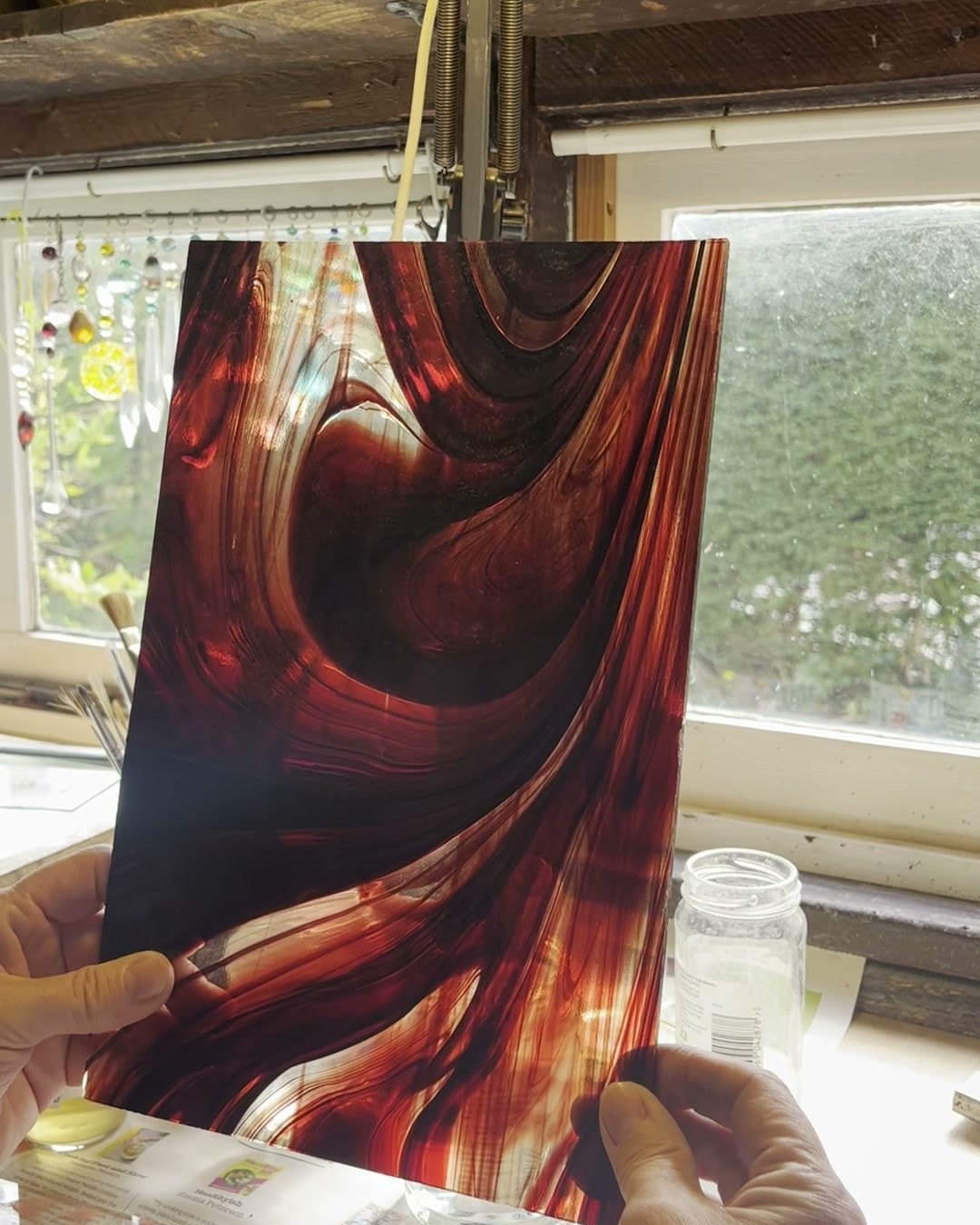
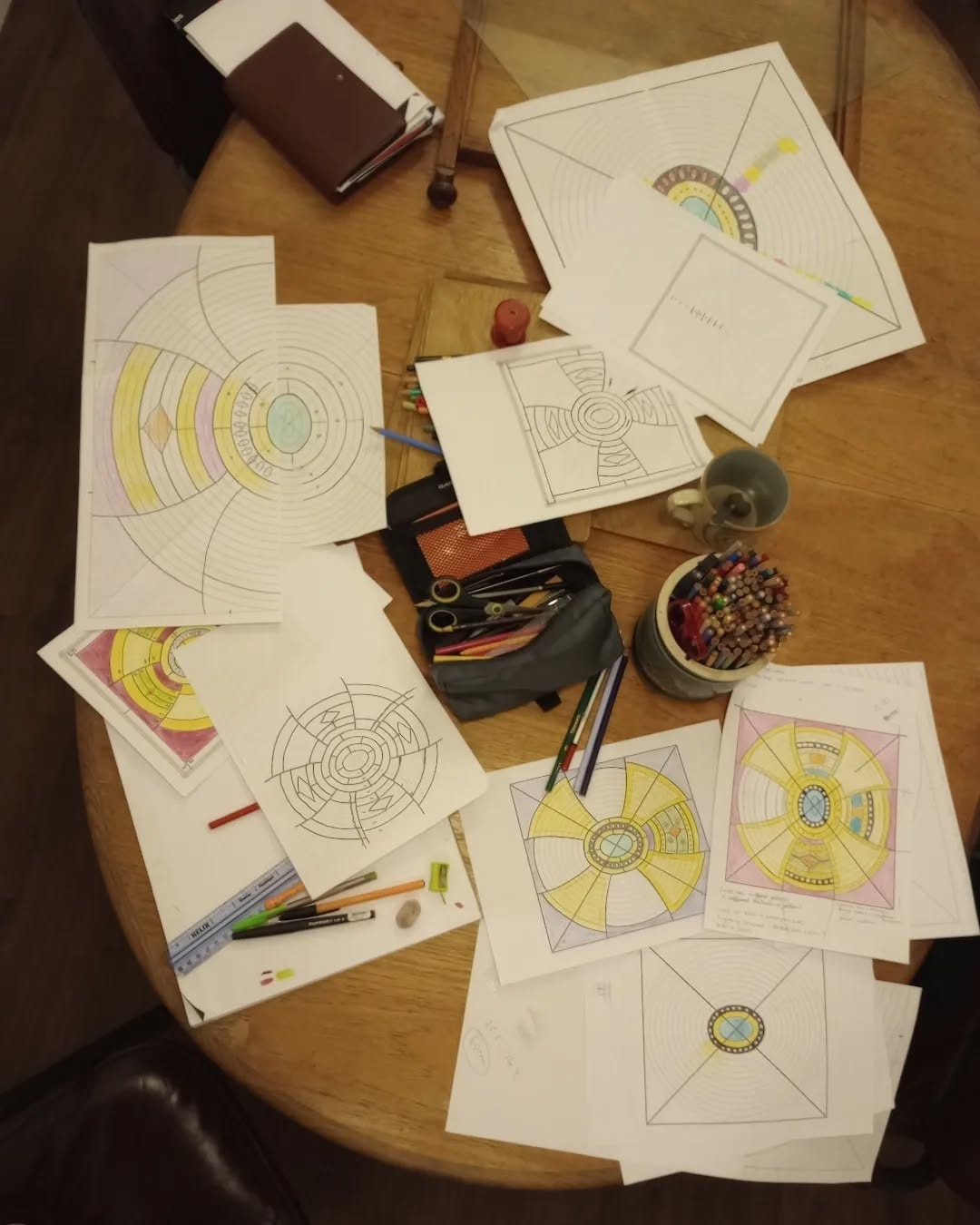
A few years later a second course taught her to paint on glass and fire it in a kiln, and that changed what she could make. One of her first commissions was a set of front door panels for an Edwardian house, surround and side window included, and it took her about a year. "I often wonder if it's still there," she says.
GLAZIERS FIRST CAME HERE IN 674
What Mary learned on that weekend course arrived in Britain more than thirteen hundred years ago. In 674 Benedict Biscop, building a monastery at Wearmouth, sent to Gaul for glaziers, craftsmen who, as Bede wrote down, were "at this time unknown in Britain". St Paul's at Jarrow was finished in 685, and its small round window is often called the oldest stained glass window in the world. Excavations there and at Wearmouth have turned up more than two thousand fragments of seventh and eighth century glass.
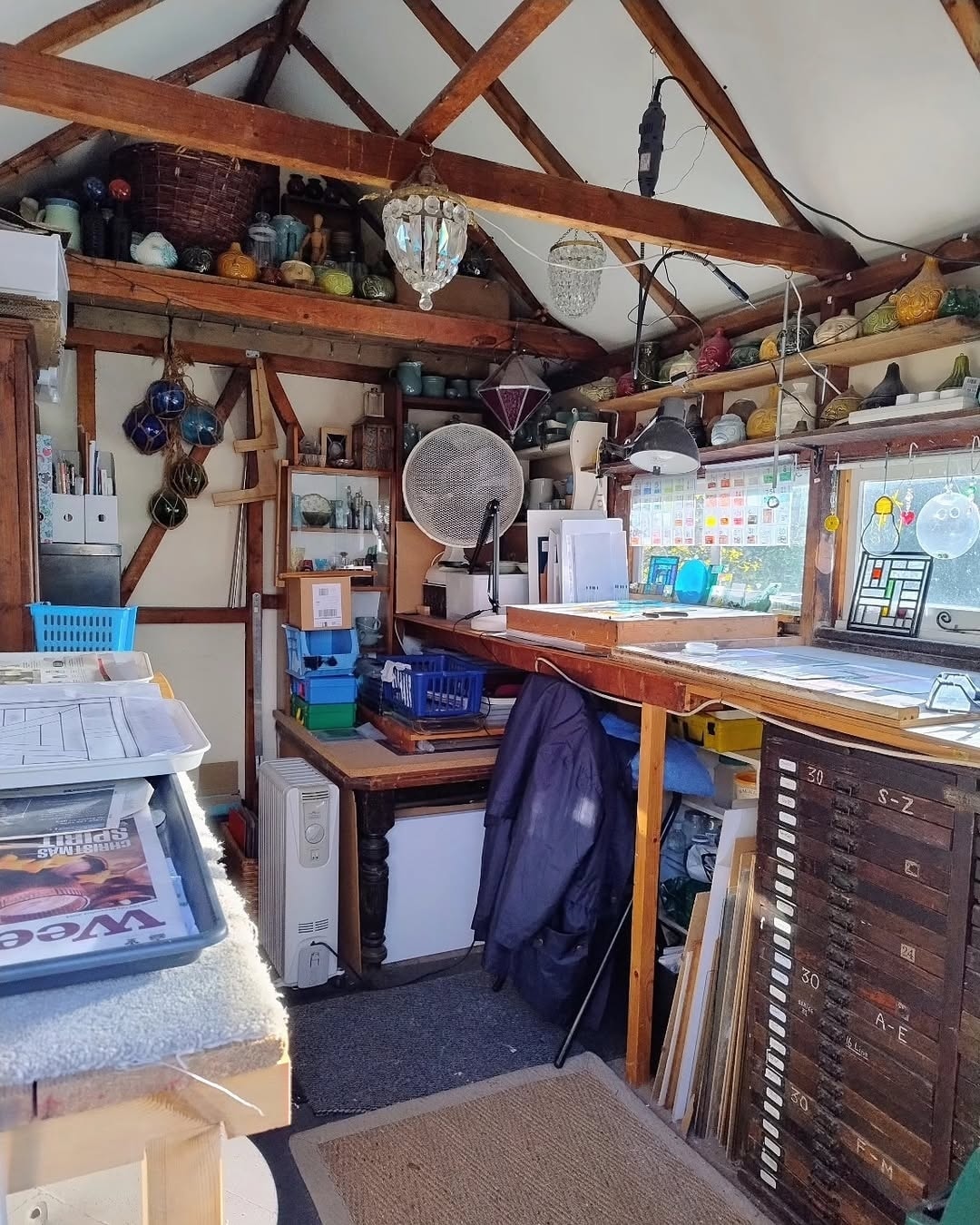
In the twelfth century a German monk called Theophilus wrote one of the earliest manuals for the craft, and the basic method he described has hardly changed since. A drawing is made at full size, glass is cut to fit it, detail is painted on and fired, and the pieces are joined with lead. That is still the order Mary works in, in a shed with gaps in the floorboards and a plug-in radiator for the winter.
PAINT THAT BECOMES GLASS
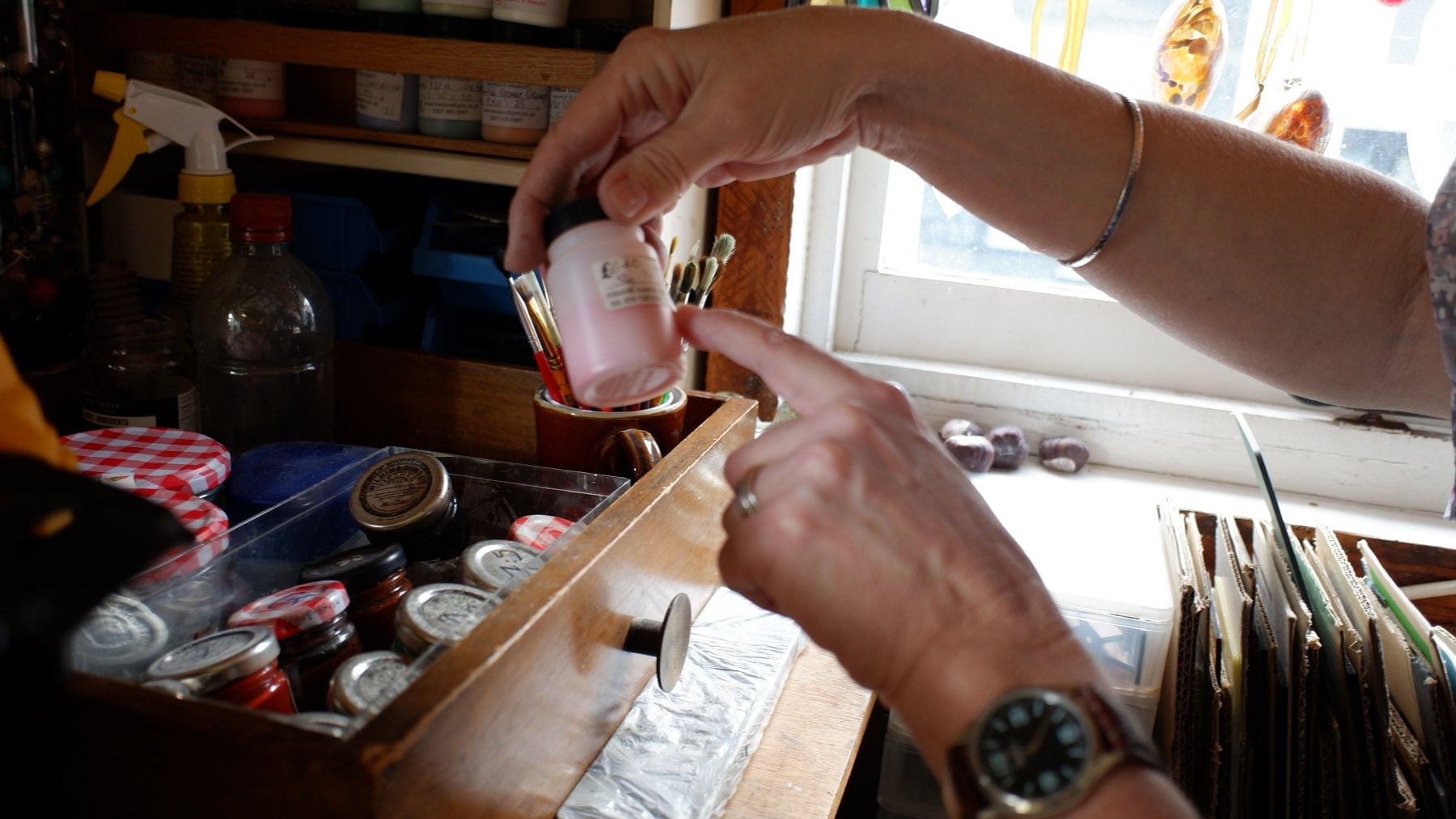
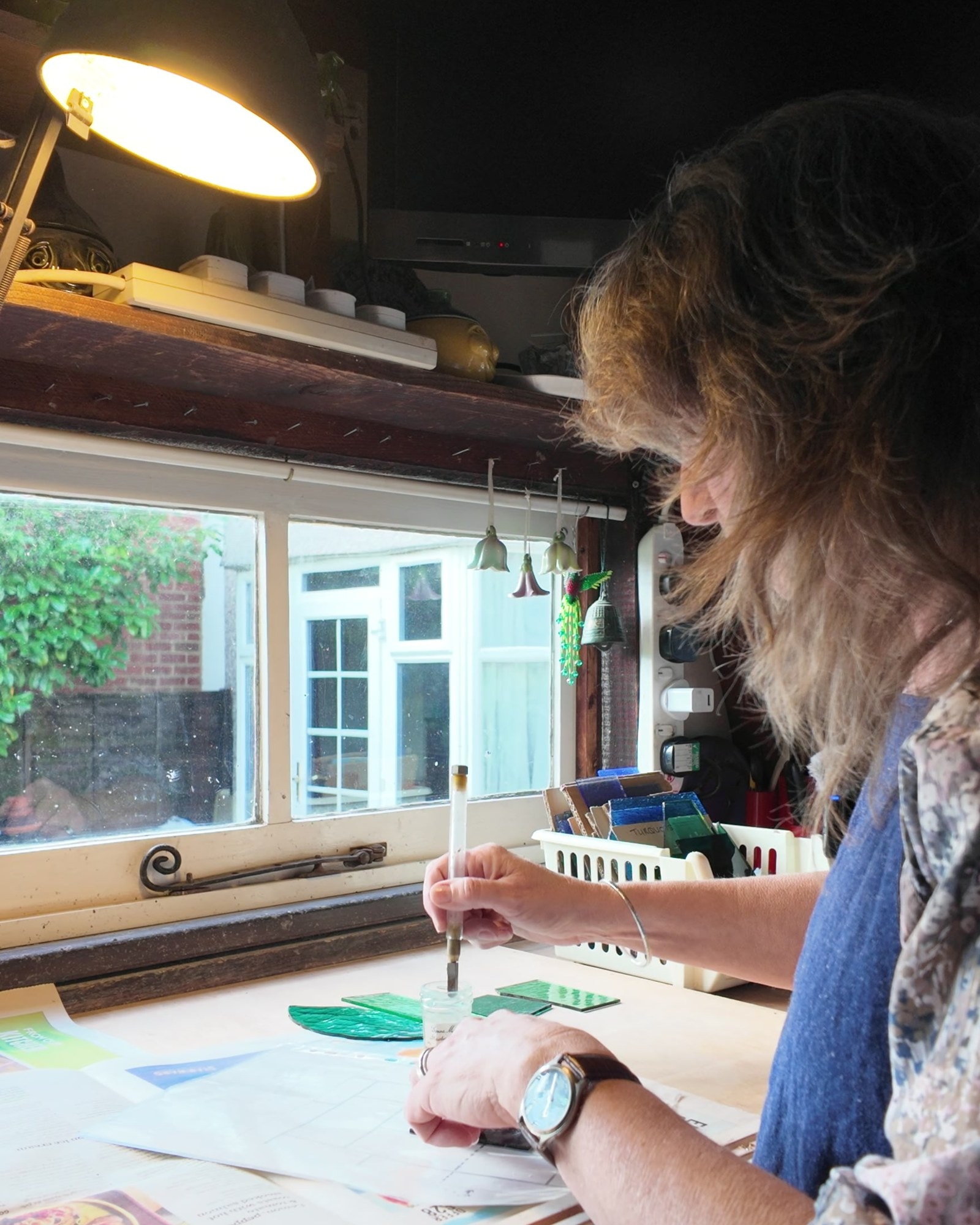
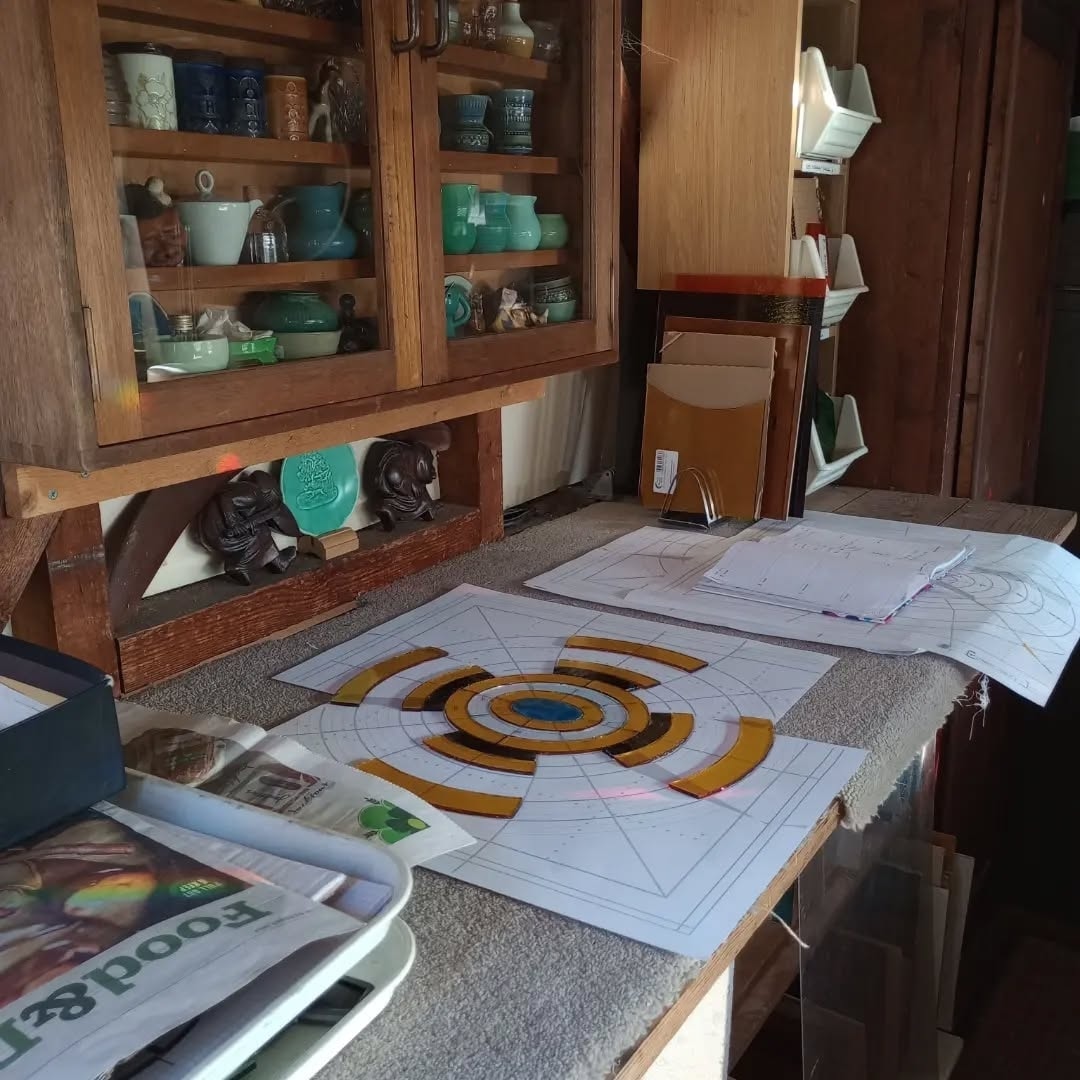
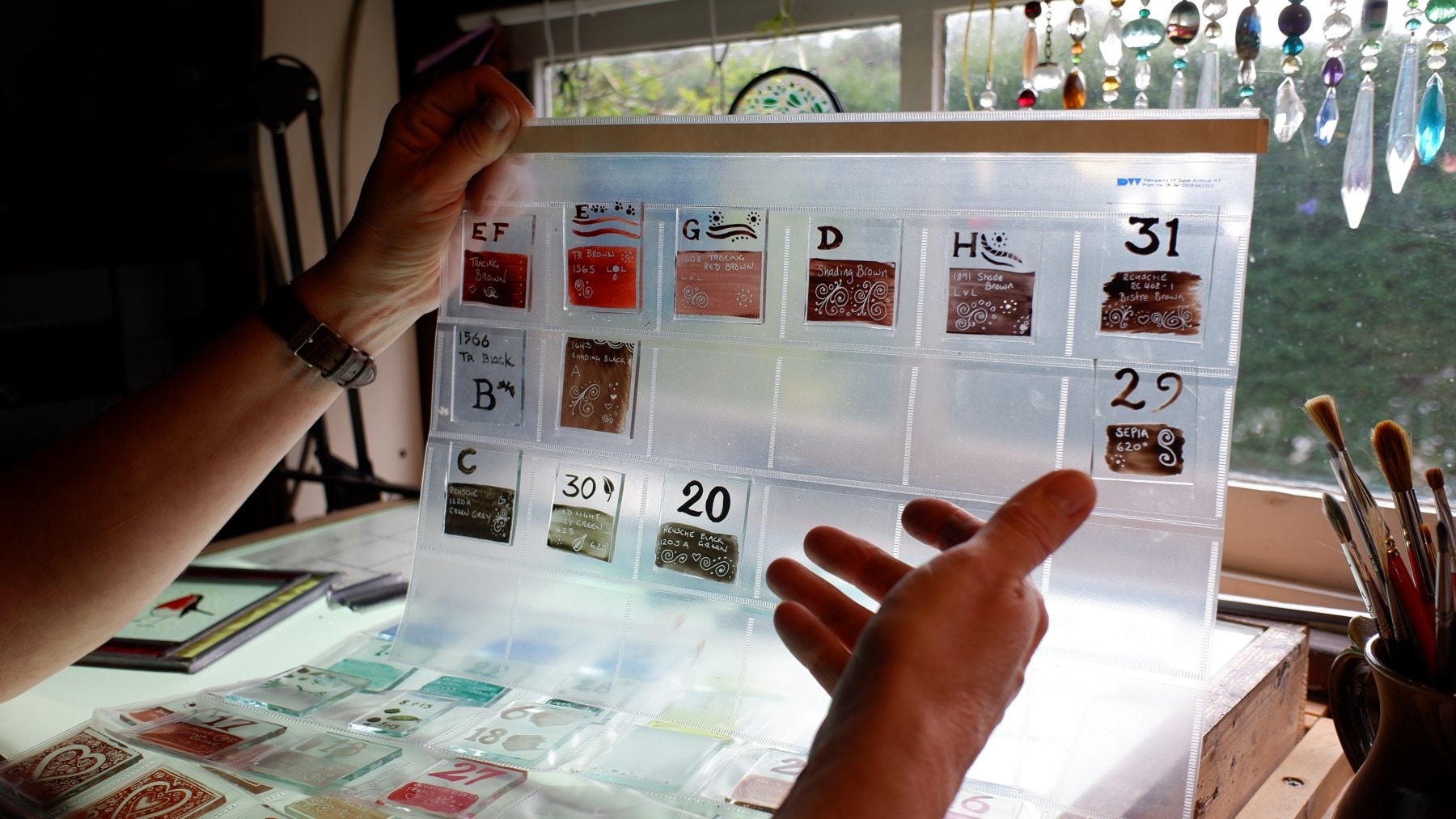
The painting is the part most people have never seen done. Mary mixes her paint, which is ground glass coloured with metal oxides, until it is "like single cream", then puts it on with a very small brush or a dip pen. The traditional colours are black and brown, and she uses them for outlines and shading. "I do an awful lot of dots and dashes, because I love a tiny pattern. It is my favourite thing to do."
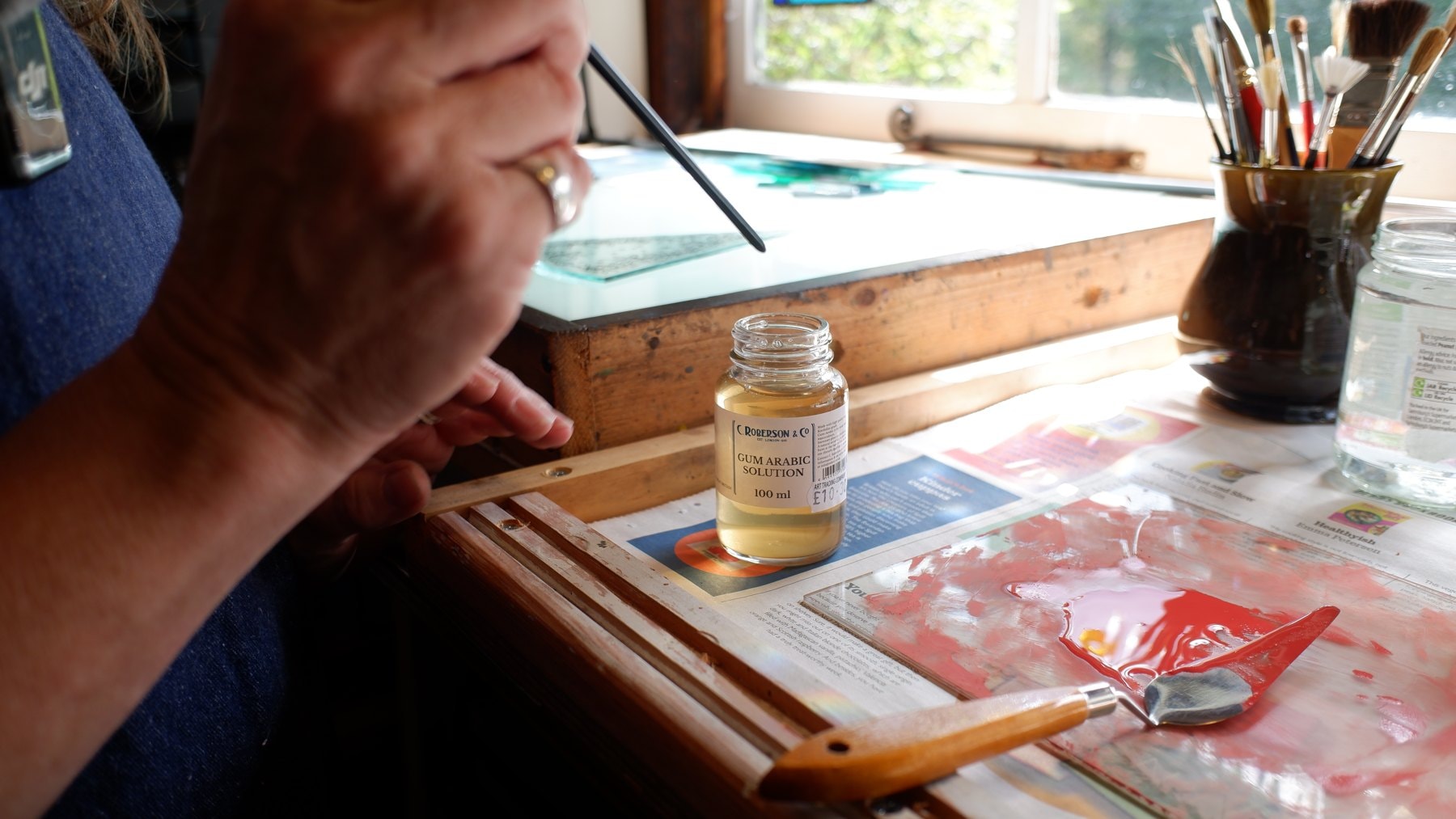
Each layer has to be fired in the kiln before the next one goes on, or the wet paint lifts the dry. The kiln is a pottery kiln with two shelves, and she tends to leave it on overnight, which has its advantages: "I'll come out here to open the door in the winter and it'll be so snuggly." It then takes a day to cool, so a small robin that has been through the kiln four times has taken the best part of a week. "The small things take just as long as the big things," she says.
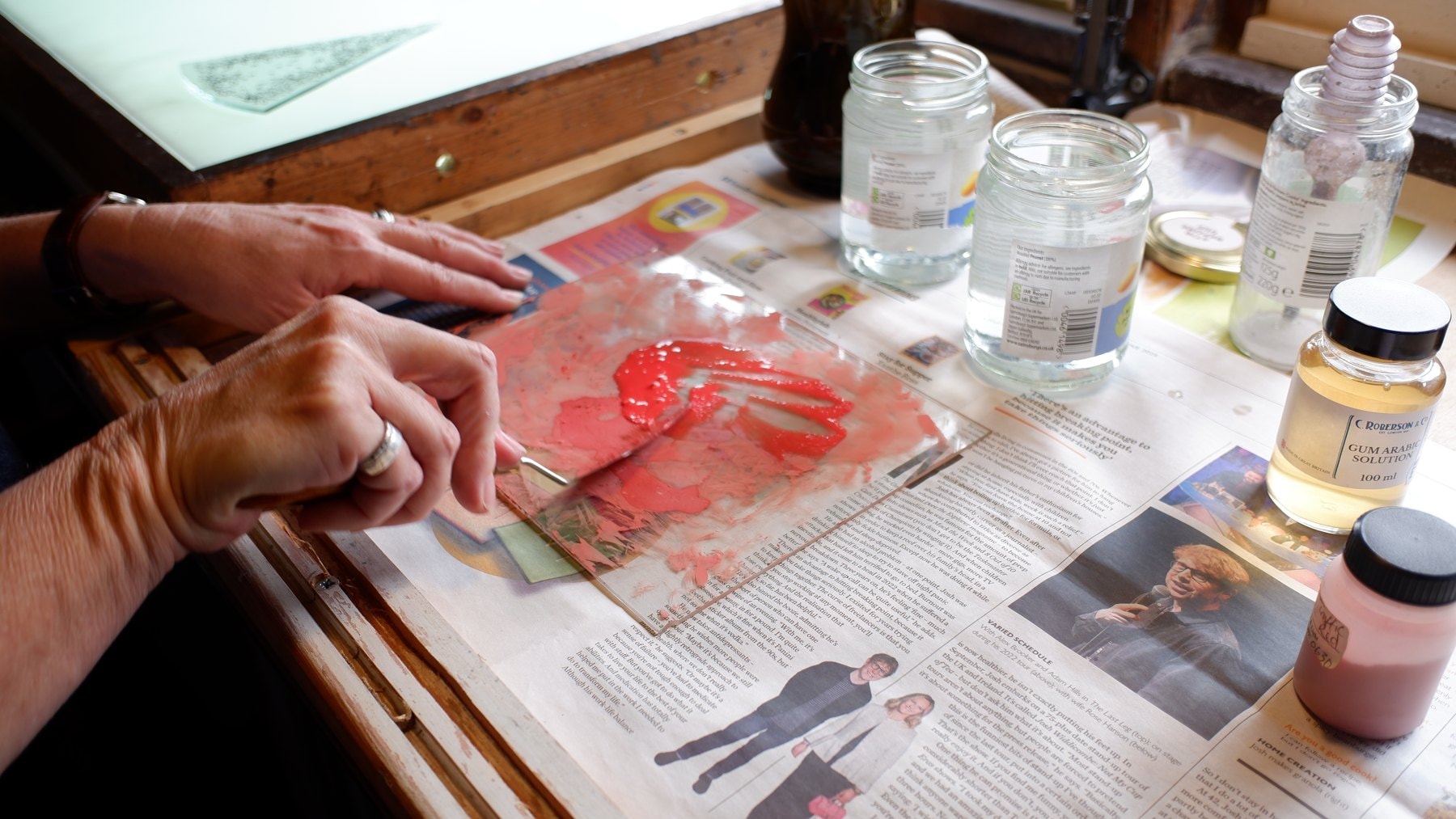
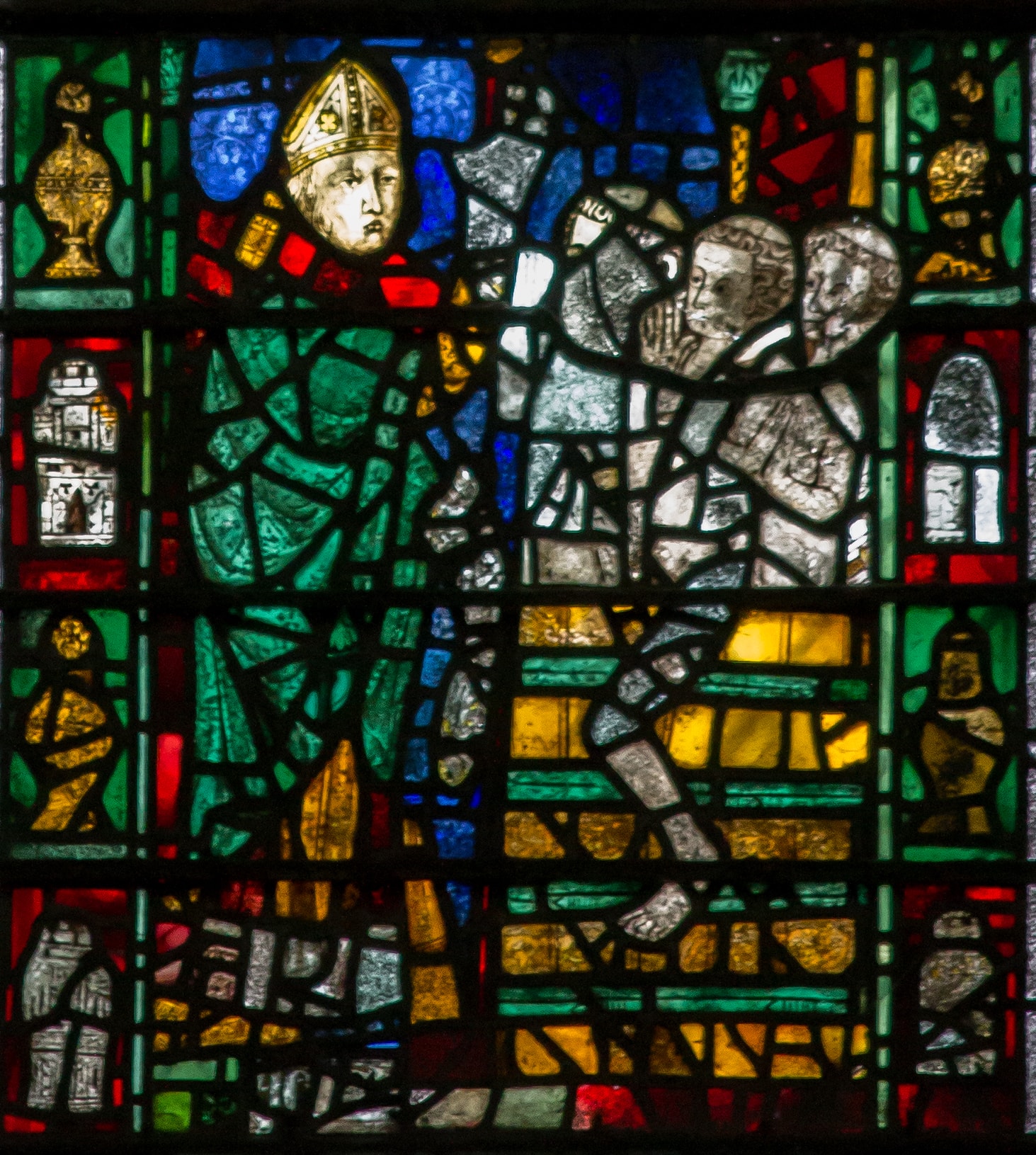
The yellows in her work have a history of their own, because in the fourteenth century glaziers found that silver compounds, washed onto clear glass and fired, turn it yellow or amber, and that silver stain gave the craft its name. "That is the thing that actually goes into the glass," Mary explains. "That's where the term stained glass comes from." Before it, one piece of glass meant one colour, and every change of colour needed another line of lead.
THE FIRST TIME SHE HOLDS IT UP
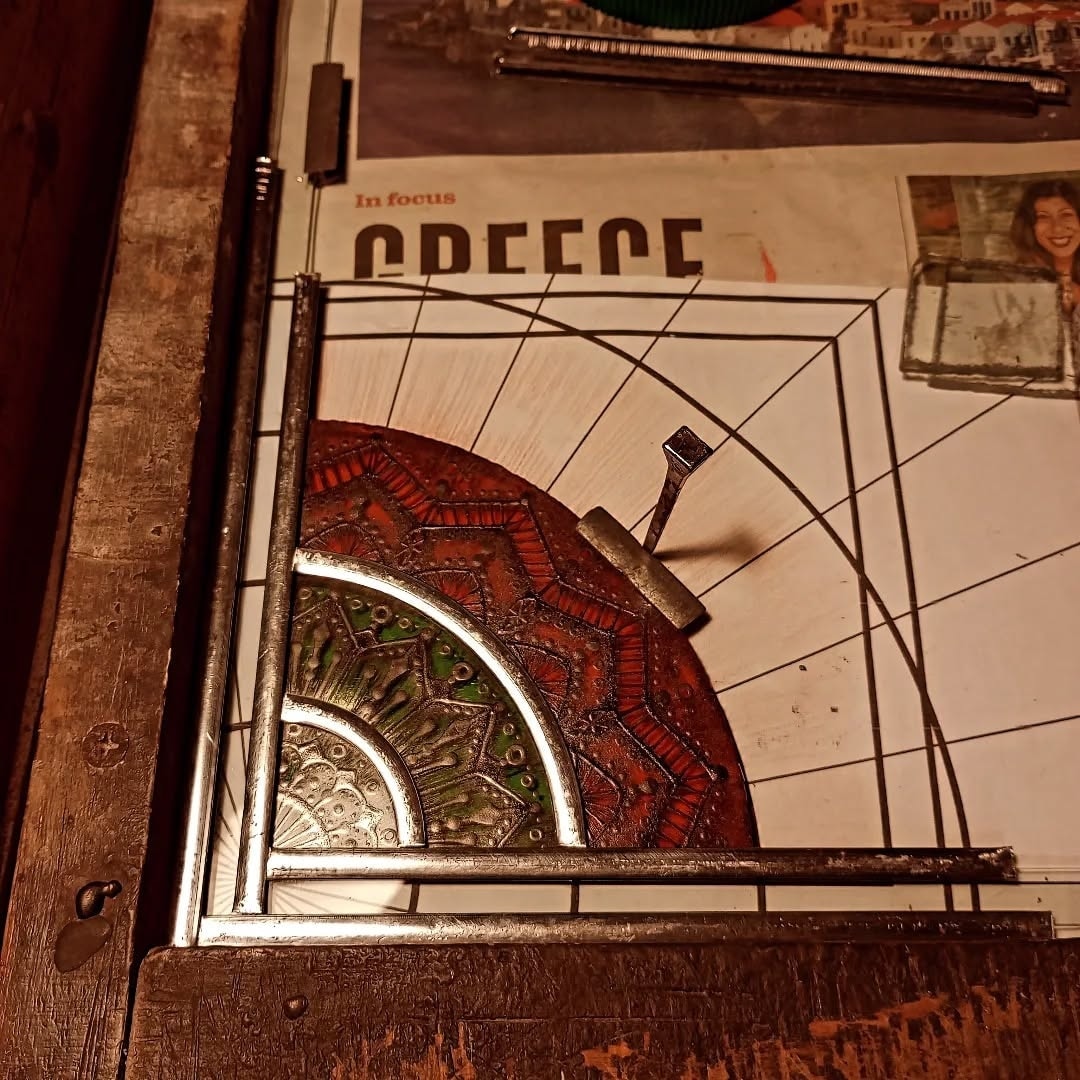
Lead comes to her in coils, in her preferred widths of 5mm to 12mm, and has to be stretched straight before it is used. "The magic bit is when you stretch it and it goes rigid and takes all the kinks out of it." The pieces are fitted around the painted glass over the drawing, soldered at every joint, and then cemented with a putty she describes as "like black honey", worked in with a nail brush to seal the panel and make it strong.
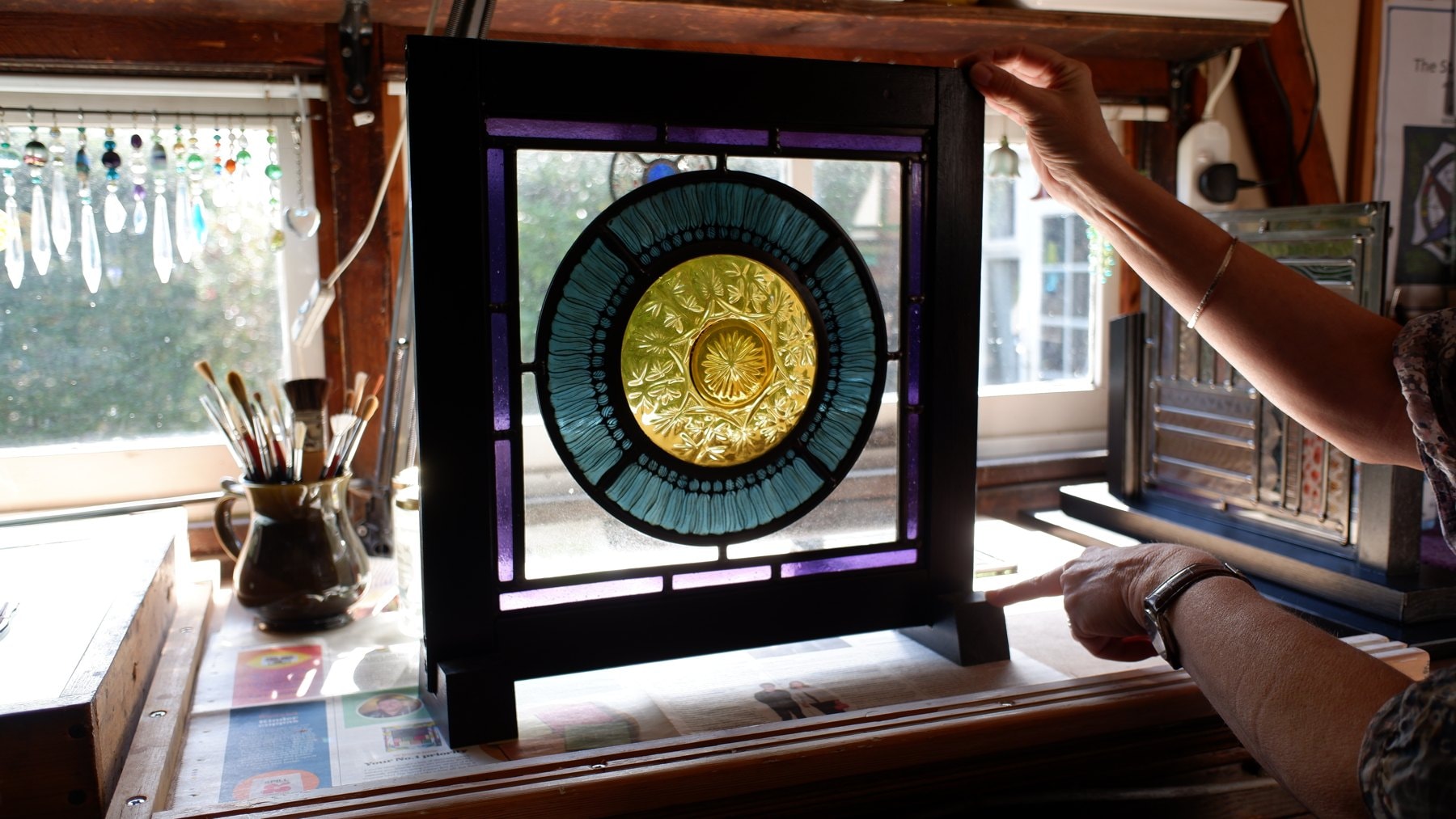
She only finds out whether a panel has worked once it is finished. "Once it's soldered and you can hold it up to the window, it's the first time you see if you've really made the right choices with your glass." Unlike a painter, she cannot go back and add more, because "once it's done it's done". She admits she does not always enjoy the making itself: "It's not till I've completely finished that I can love them." The moment she likes best is the last one, "when you've cleaned it up and you hold it up for the first time".
IS STAINED GLASS ENDANGERED?
The craft has come close to disappearing before, at the Reformation, when glass painters lost their main customer when church imagery was destroyed, and for a long time afterwards there was more work replacing broken windows than making new ones.
This time the risk is a shortage of people who can do the work. Heritage Crafts added historic stained glass window making to its Red List in 2023, and the 2025 edition still lists it as Endangered. Between 21 and 50 people in the UK make their main living from it. Of those surveyed, 41 per cent expect to retire within ten years, and 74 per cent said the courses that trained them no longer exist. Swansea is now the only place in the country teaching glass at architectural scale. Mary has seen the same thing from her bench: "You used to be able to go to college and learn how to do it. You're more likely to find someone who's just doing it from their shed like me who'll teach you."
The materials are thinning out too. English Antique Glass in Birmingham, the last workshop in Britain blowing flat glass by mouth, stopped production in 2022, and Mary says she has "lost several suppliers" over the years. The work is also lonely, and she says so: "It's such a solitary thing doing this that you don't really see other people," she says, which is part of why being chosen for exhibitions matters to her. Her work has been shown in the British Society of Master Glass Painters' online and touring exhibitions, and this summer a piece of hers was accepted for an exhibition at the International Festival of Glass in St Helens and printed in its catalogue. "That might be my biggest achievement so far," she says.
STAINED GLASS FOR A HOME
Mary's panels are made for windows at home rather than in churches, and most are small enough to hold. She uses a lot of greens and yellows, rarely blue, and she loves orange. Some are built around glass that has had another life, such as a slice of agate, a Victorian pot lid or a pressed-glass plate, and the larger ones are framed in recycled wood. She takes her ideas from the Arts and Crafts movement and from the patterns on old ceramics, and the window that moves her most is at Coventry Cathedral. "It's the only one that's ever actually made me cry."
She is a member of the British Society of Master Glass Painters and the Contemporary Glass Society, and you can see more of her work on her maker page. Next she would like to learn engraving, and one day she hopes to have a bigger workshop.
Pictures: workshop and process photographs courtesy of Alandale Glass. Detail of window sXXIX at York Minster, photograph by J. Hannan-Briggs for Geograph Britain and Ireland, CC BY-SA 2.0. Red List status and practitioner figures from Heritage Crafts, Red List of Endangered Crafts, 2025 edition, published 13 May 2025.
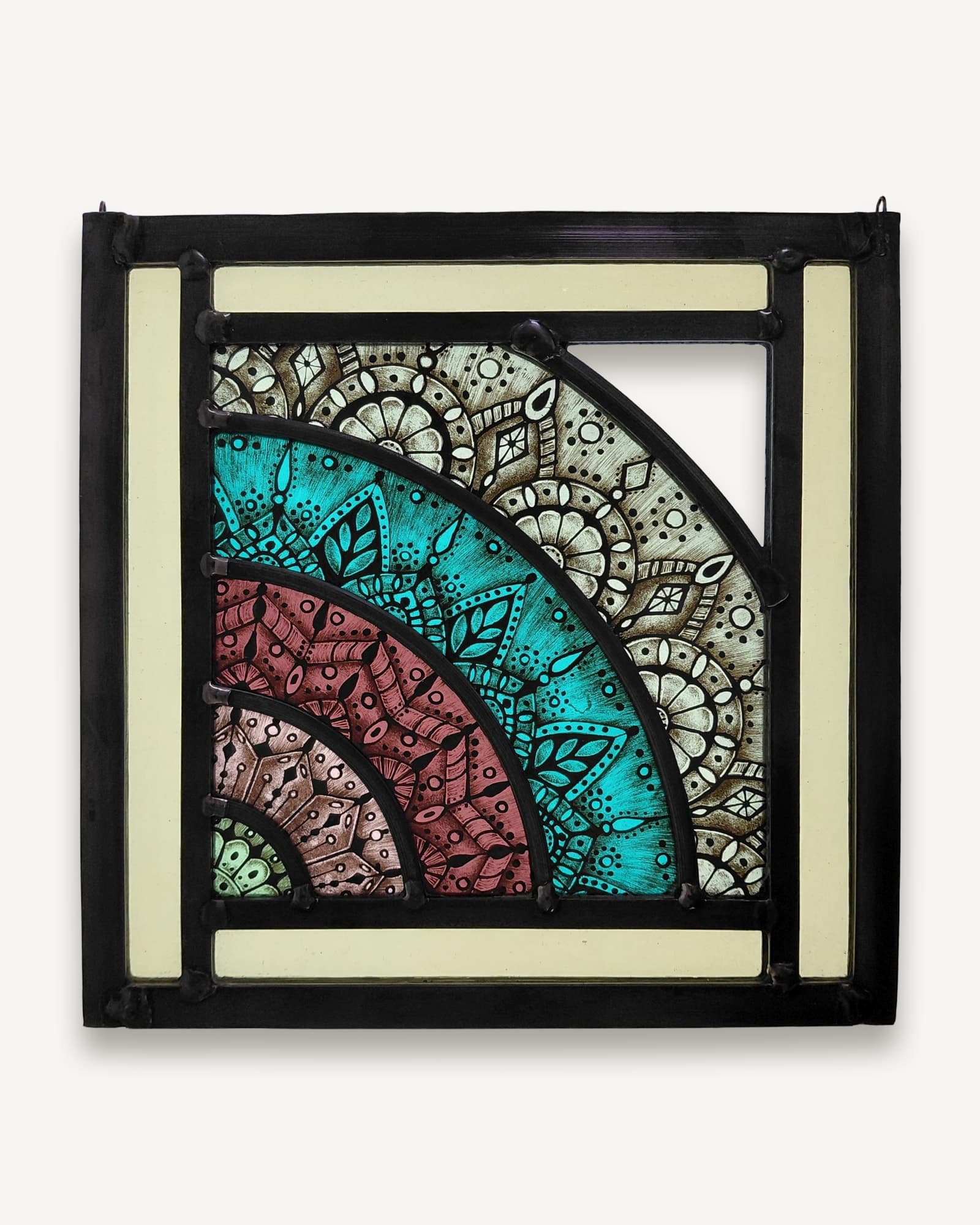
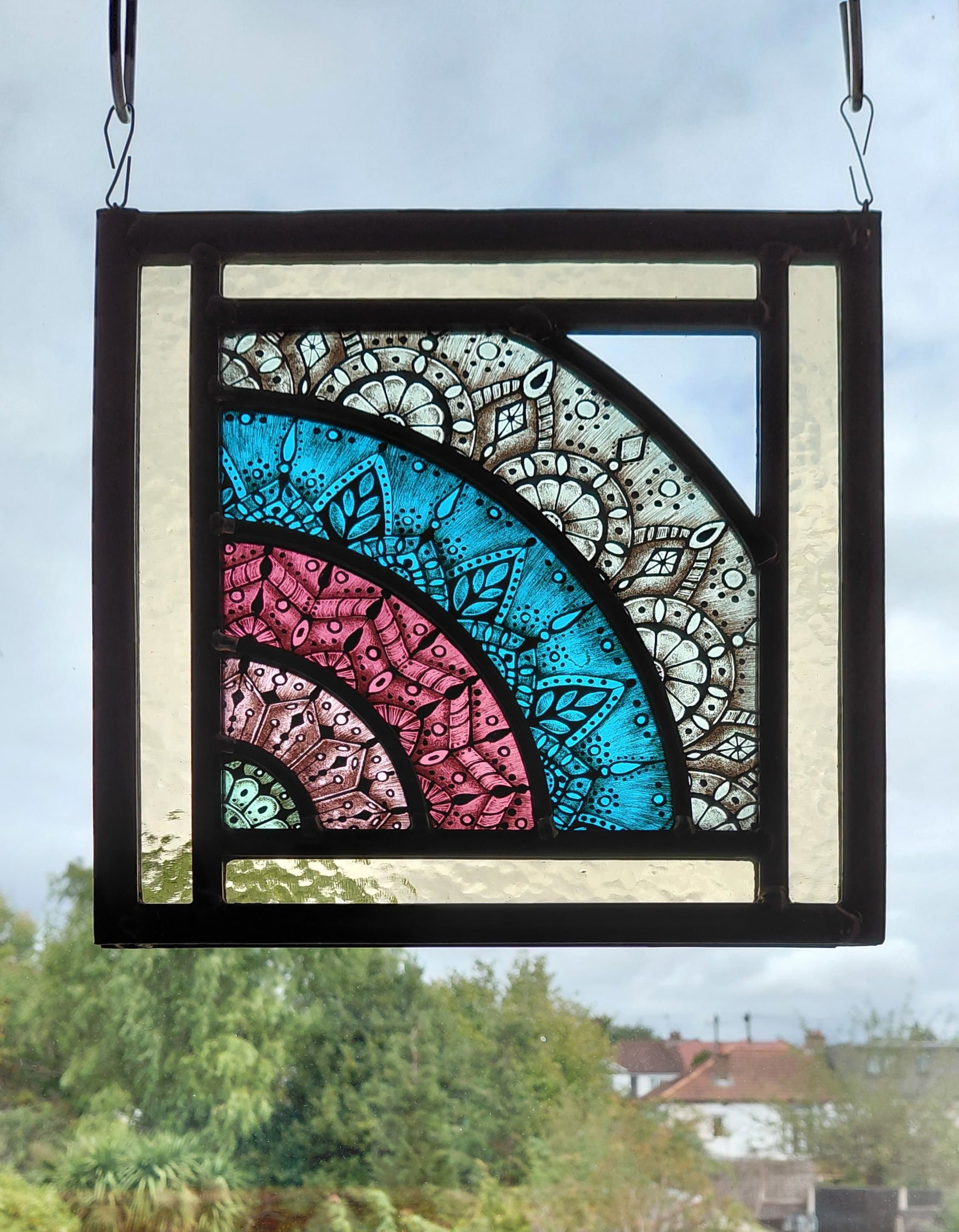
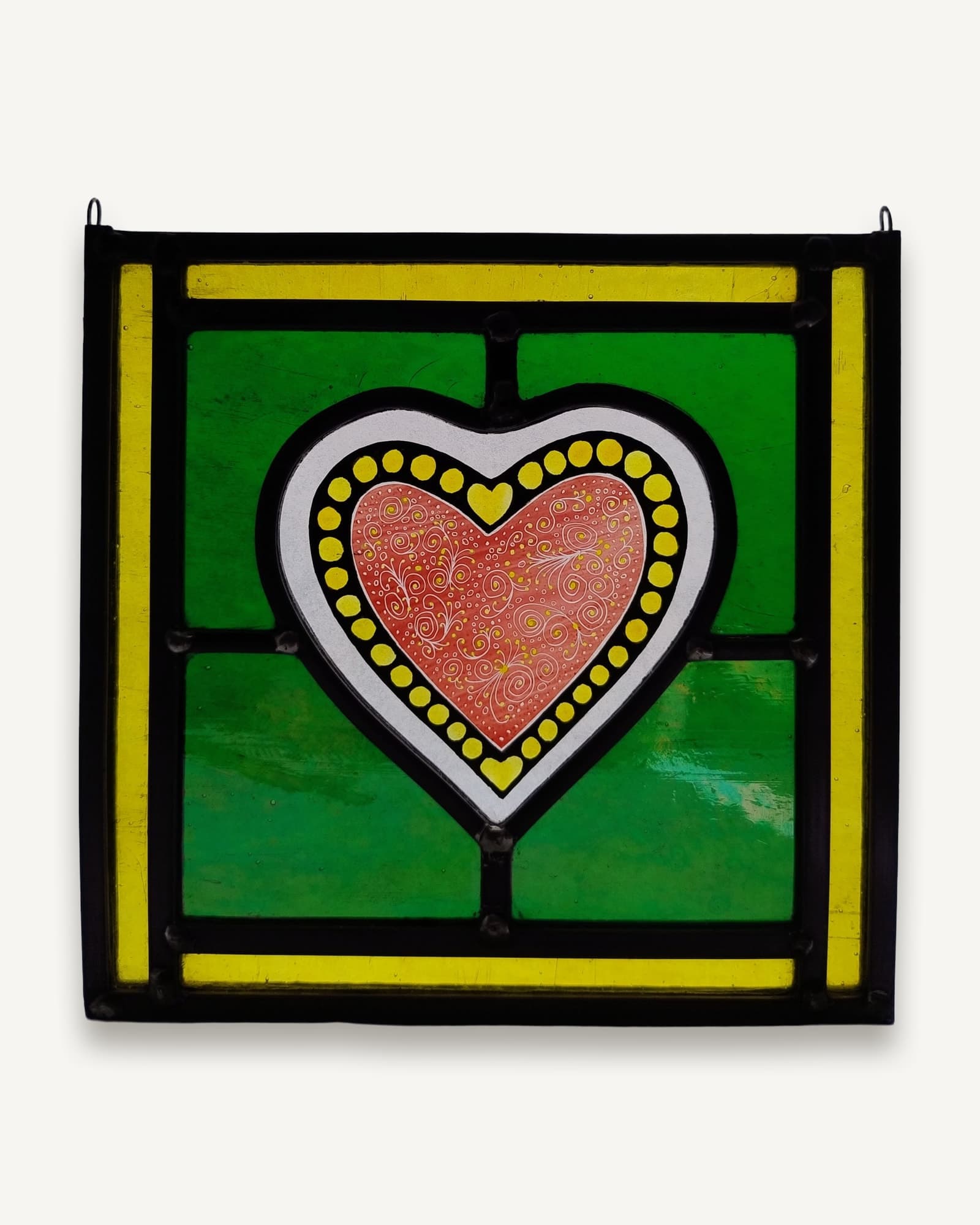
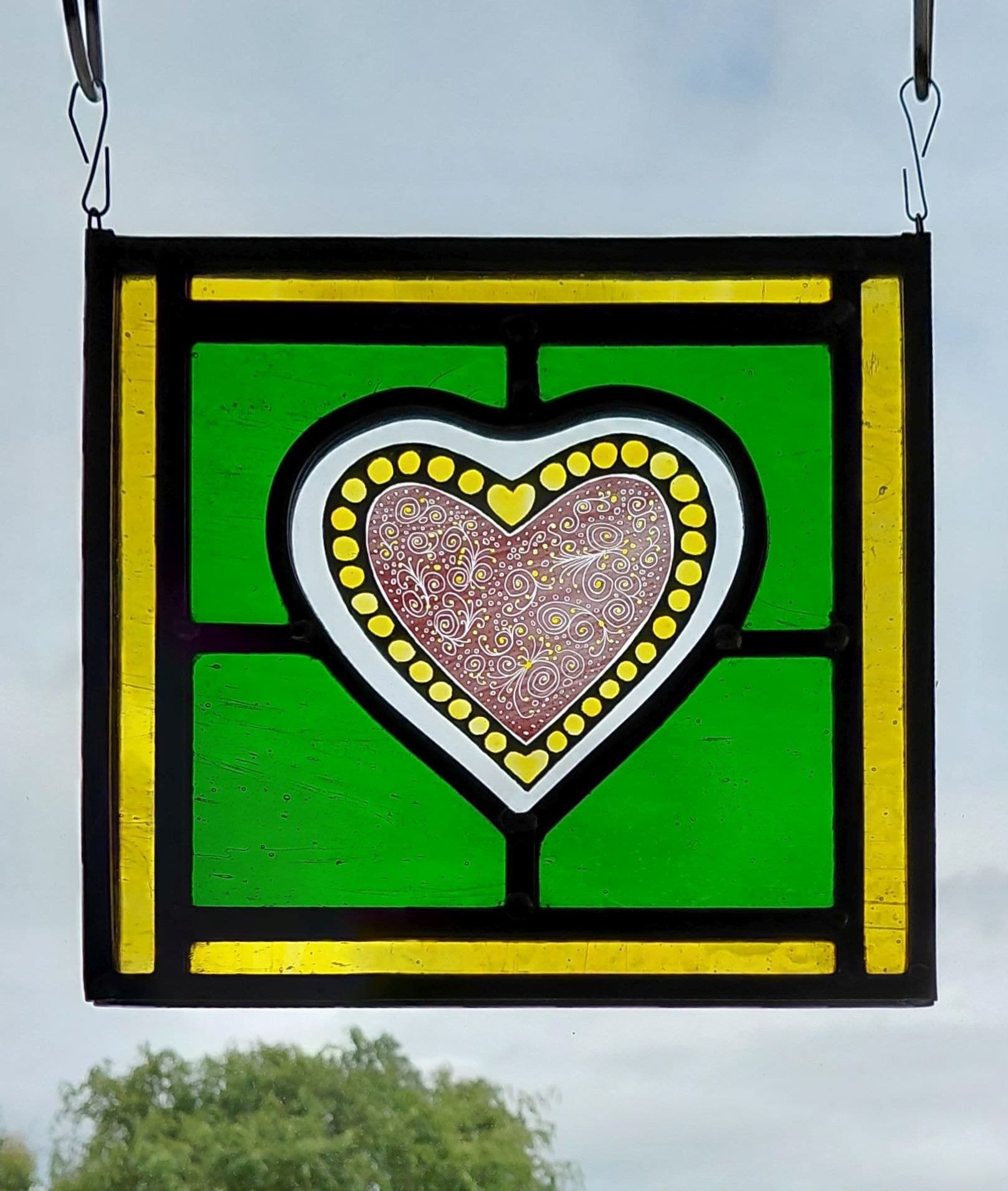
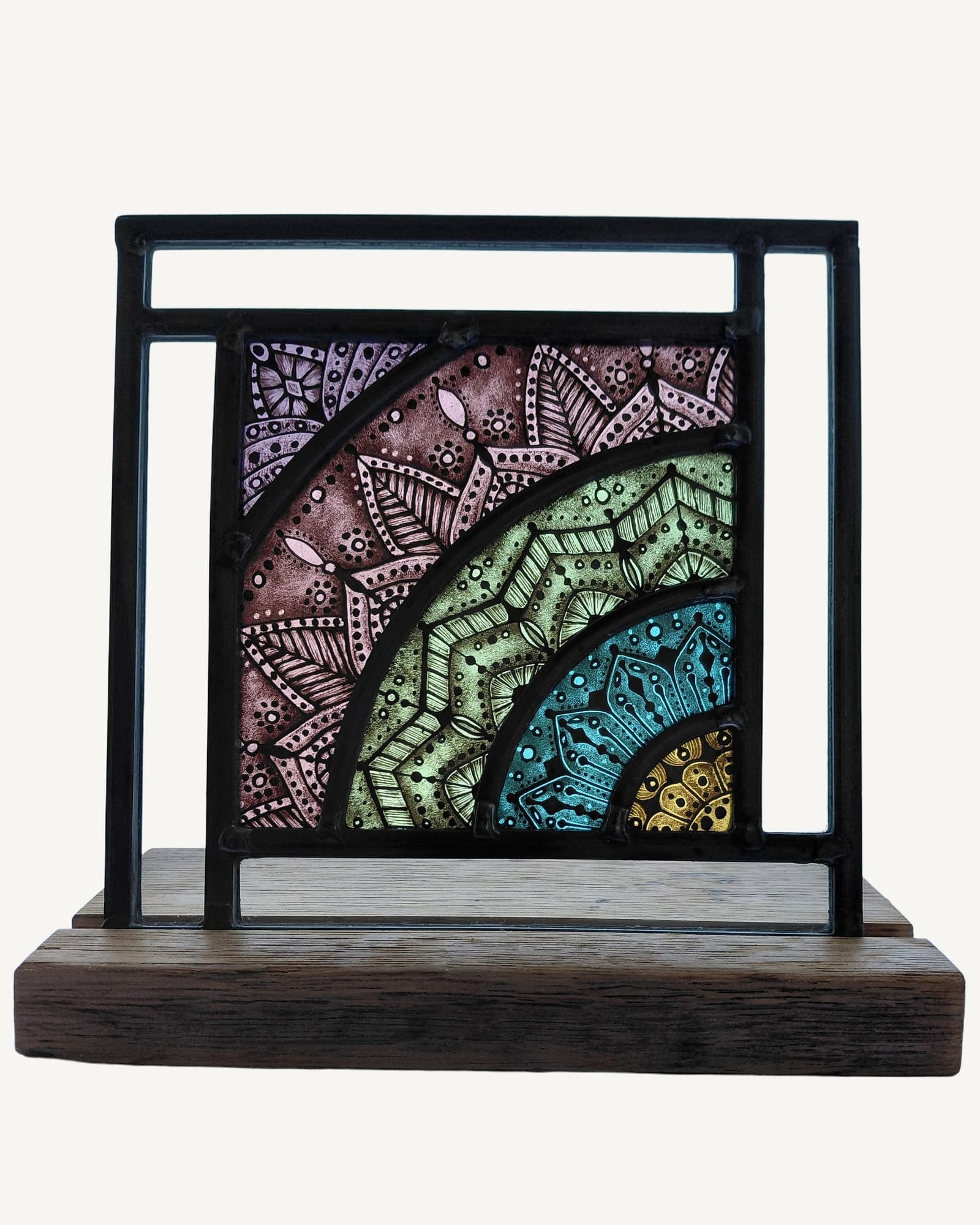
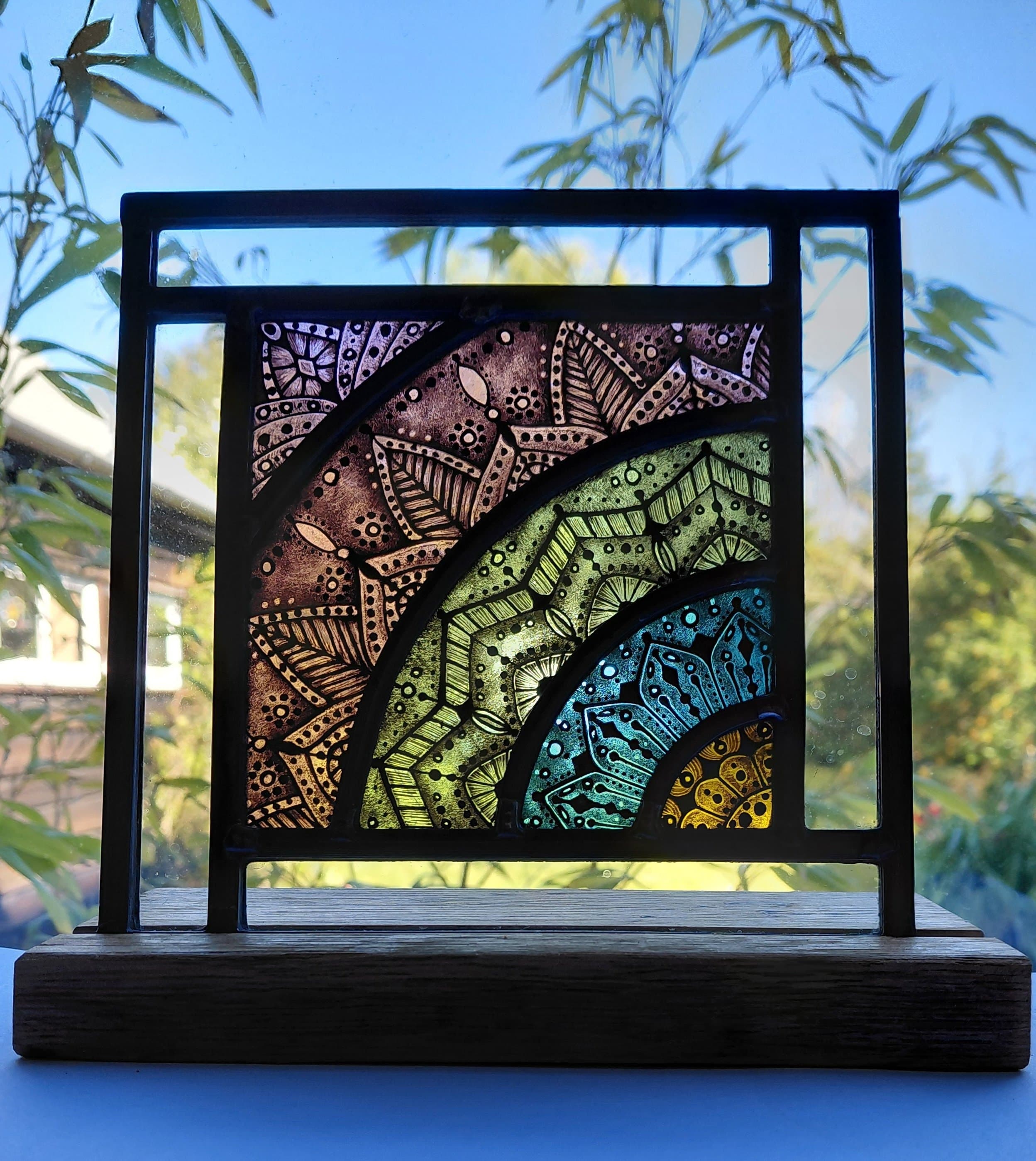
Pieces by Alandale Glass
More stories like this
One thoughtful email a month, not a marketing torrent. New makers, seasonal edits, and the stories behind the craft.
How we look after your details: privacy policy