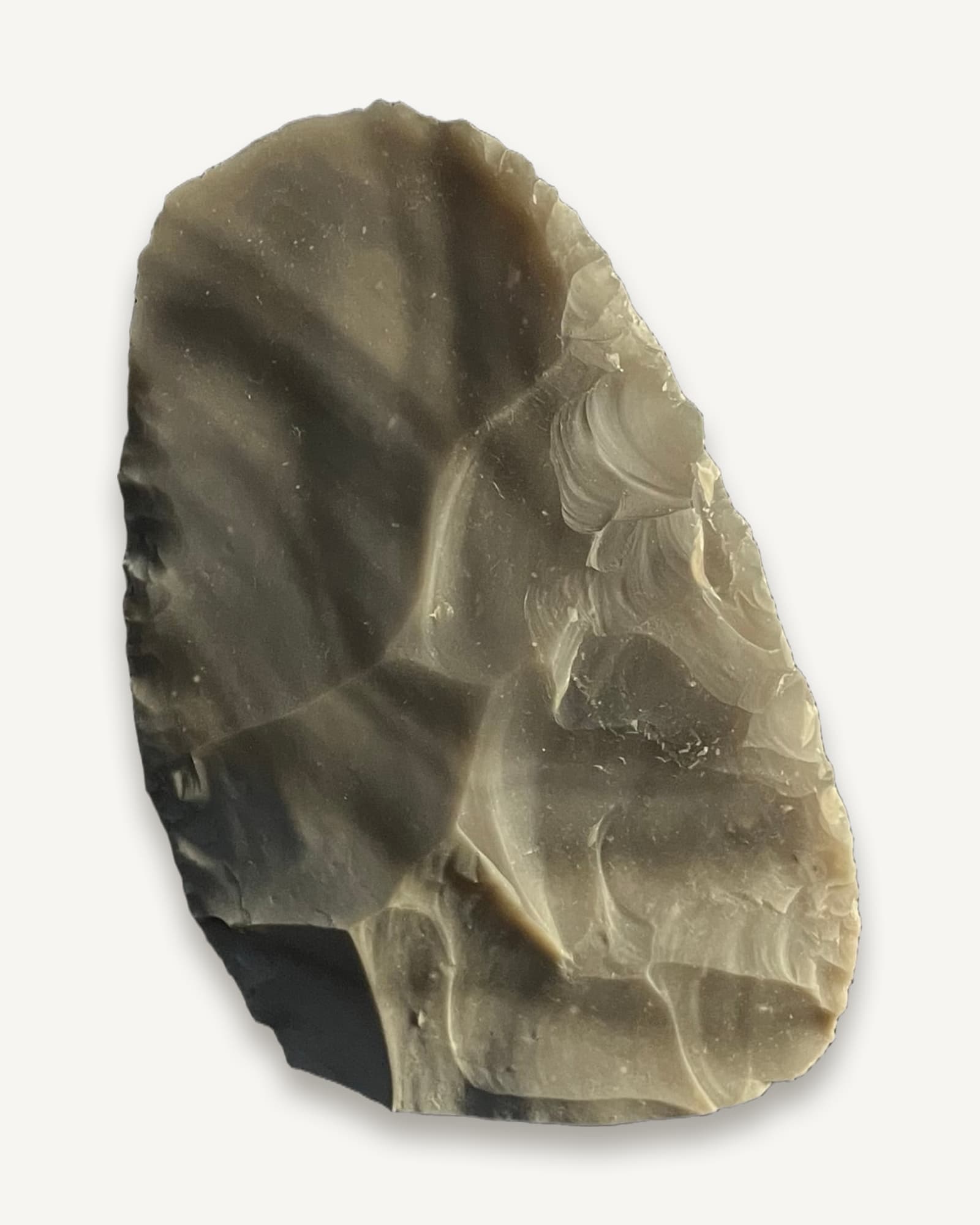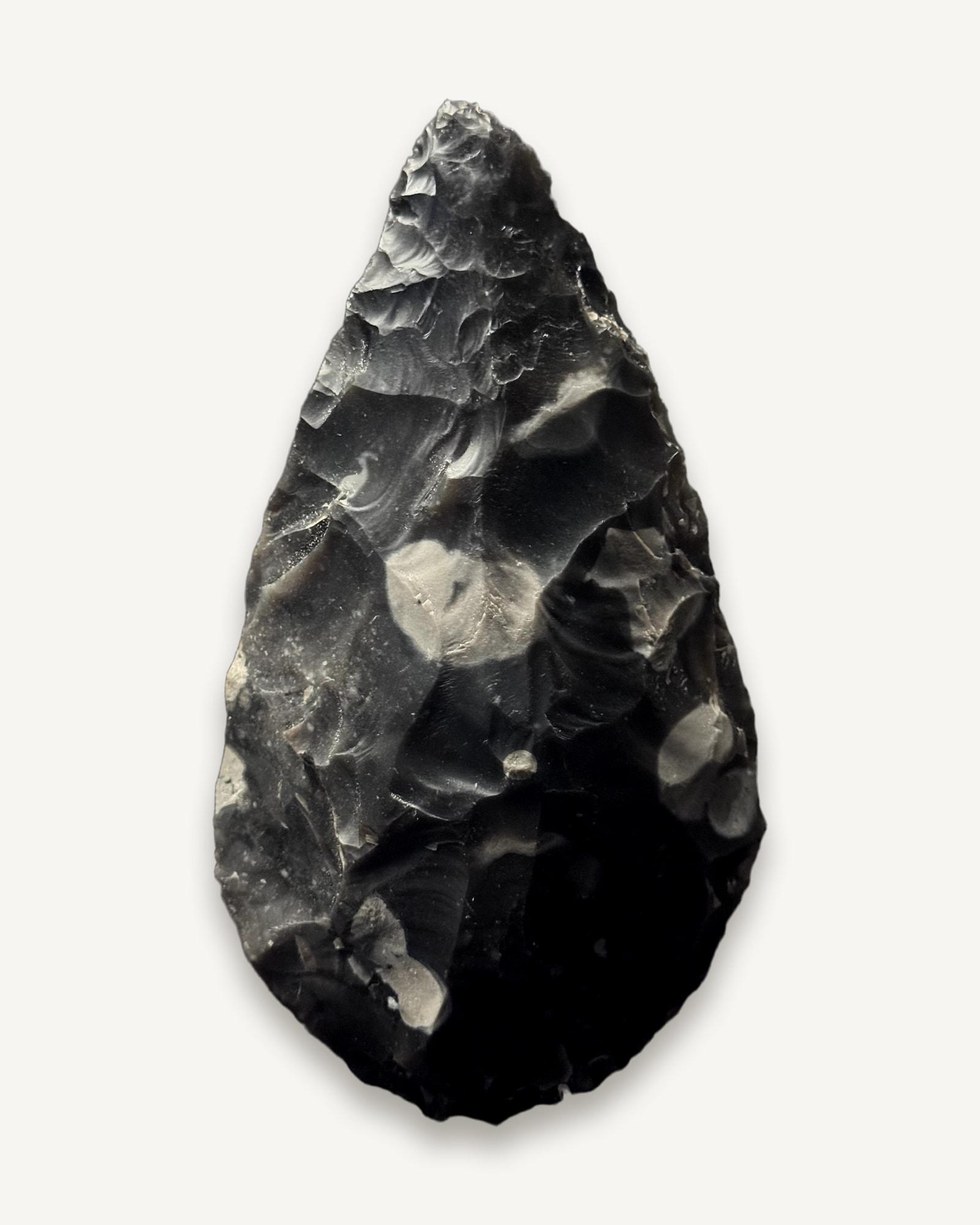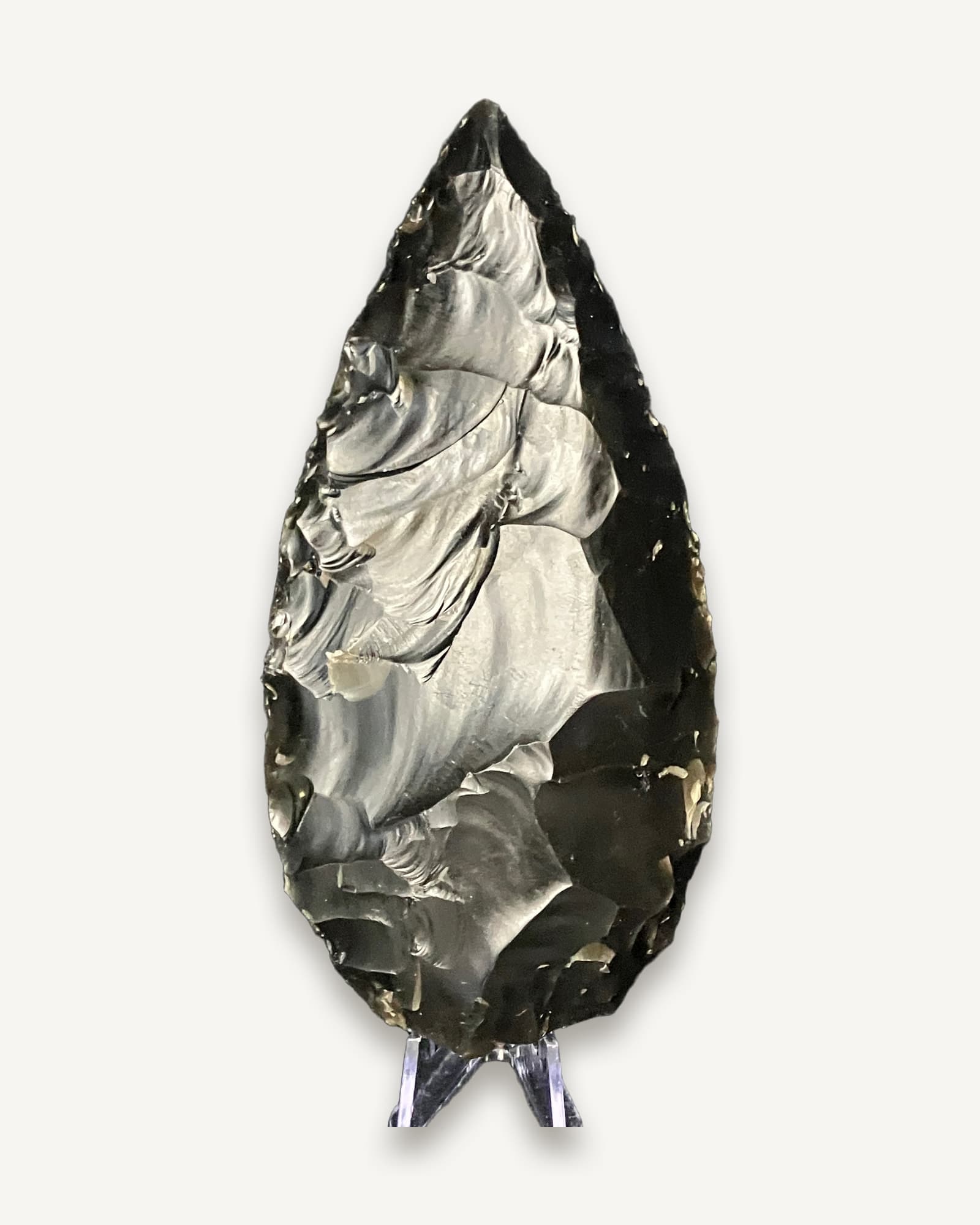
A long, narrow biface in black obsidian, the volcanic glass prized by stone age people for its sharpness. The surface is glossy and the flake scars are smooth and shell-like.
James Francis knapped it by hand in Kent. Obsidian does not occur in Britain, which makes it a rare material to work here, and it breaks more cleanly and more sharply than flint.
No two pieces knap the same way, so this exact biface will not be made again. Obsidian edges are very sharp, so handle it with care.
 James Francis · Prehistoric Crafts
A long, narrow biface in black obsidian, the volcanic glass prized by stone age people for its sharpness. The surface is glossy and the flake scars are smooth and shell-like.
James Francis knapped it by hand in Kent. Obsidian does not occur in Britain, which makes it a rare material to work here, and it breaks more cleanly and more sharply than flint.
No two pieces knap the same way, so this exact biface will not be made again. Obsidian edges are very sharp, so handle it with care.
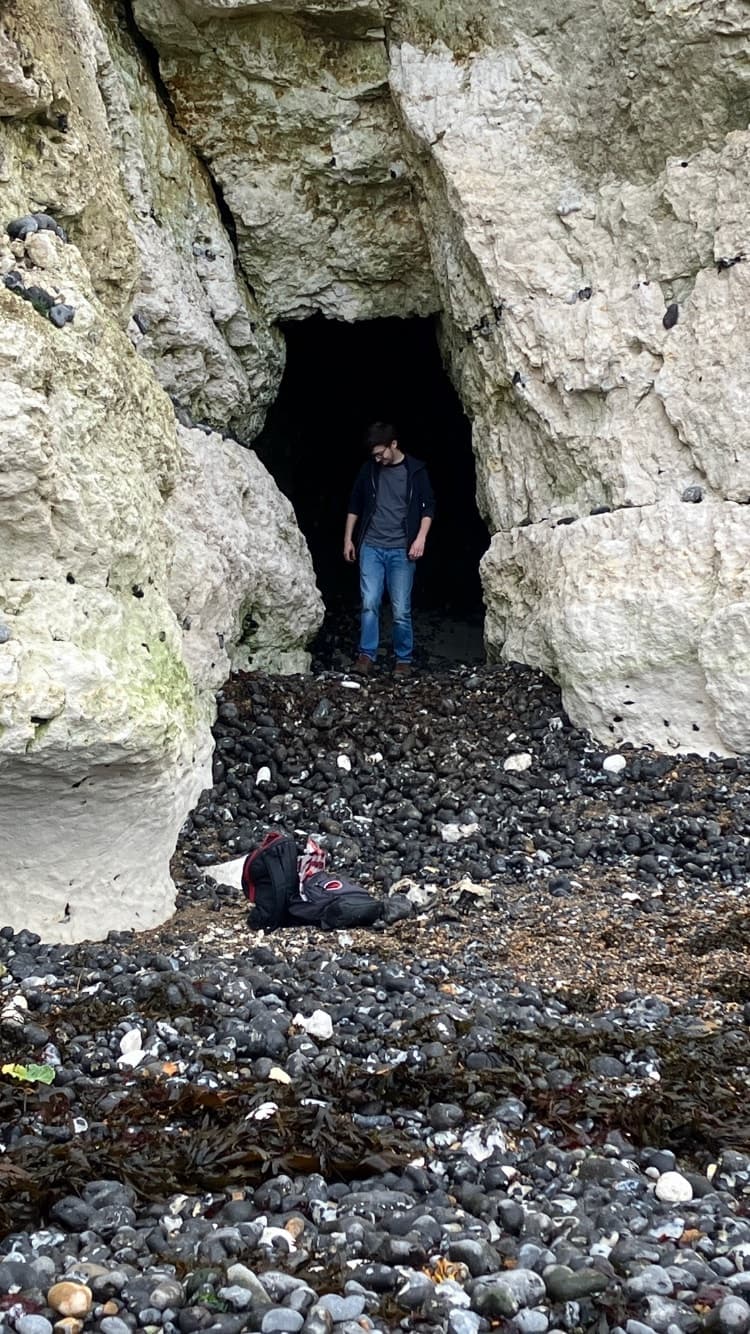
Stone age technology replicated by journeyman knapper and experimental archaeologist. Experience the greatest revolutions in the history of mankind.

Stone age technology replicated by journeyman knapper and experimental archaeologist. Experience the greatest revolutions in the history of mankind.