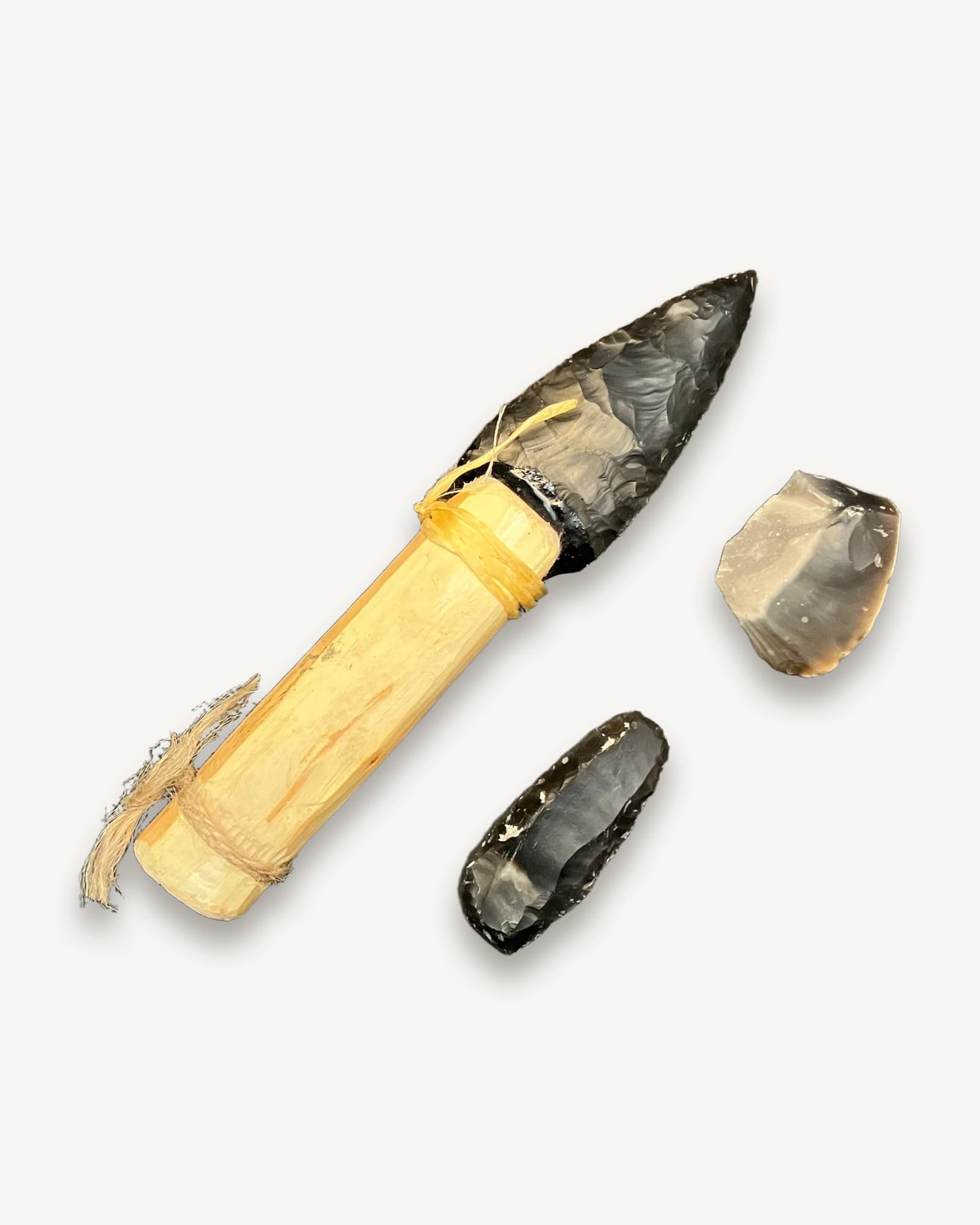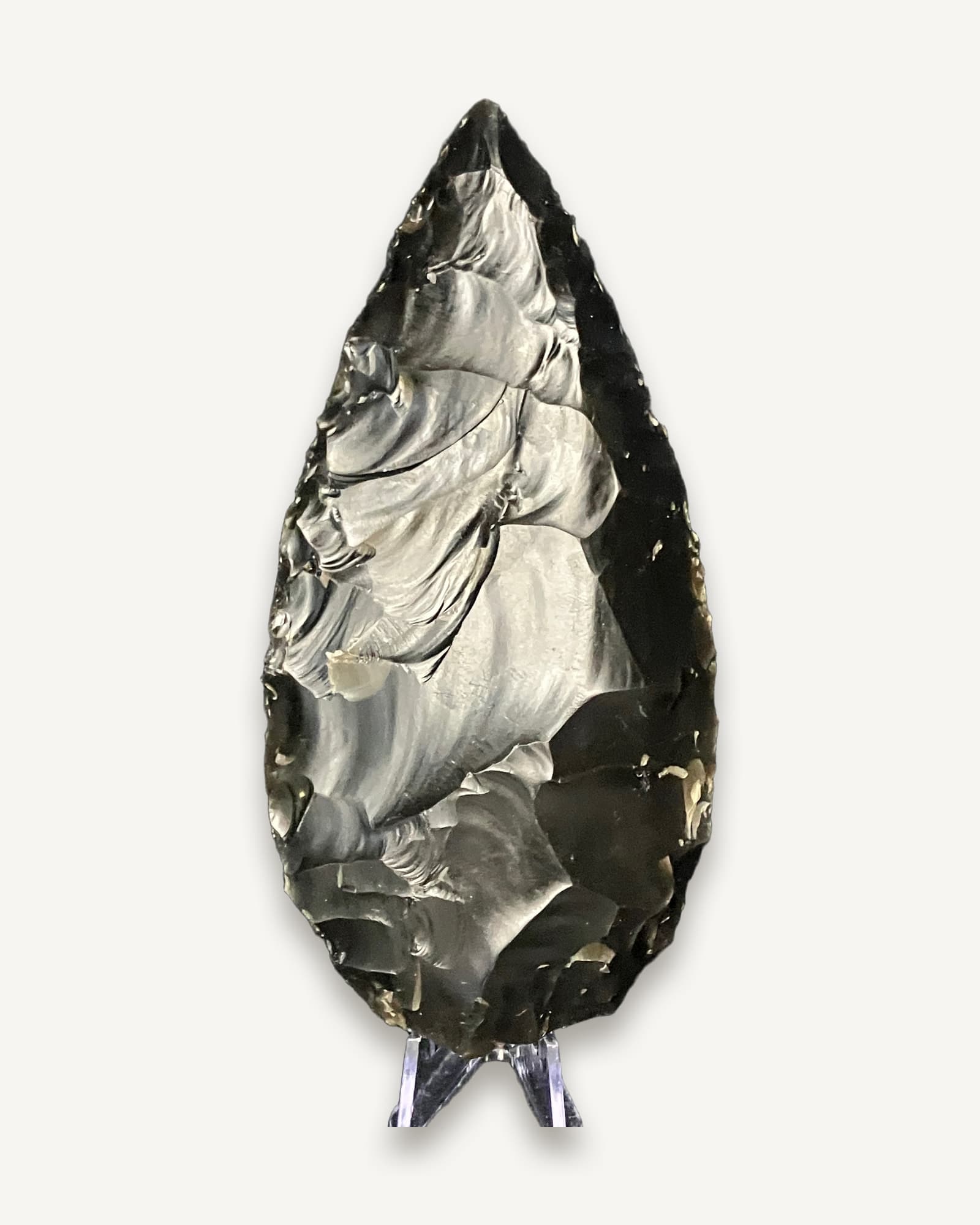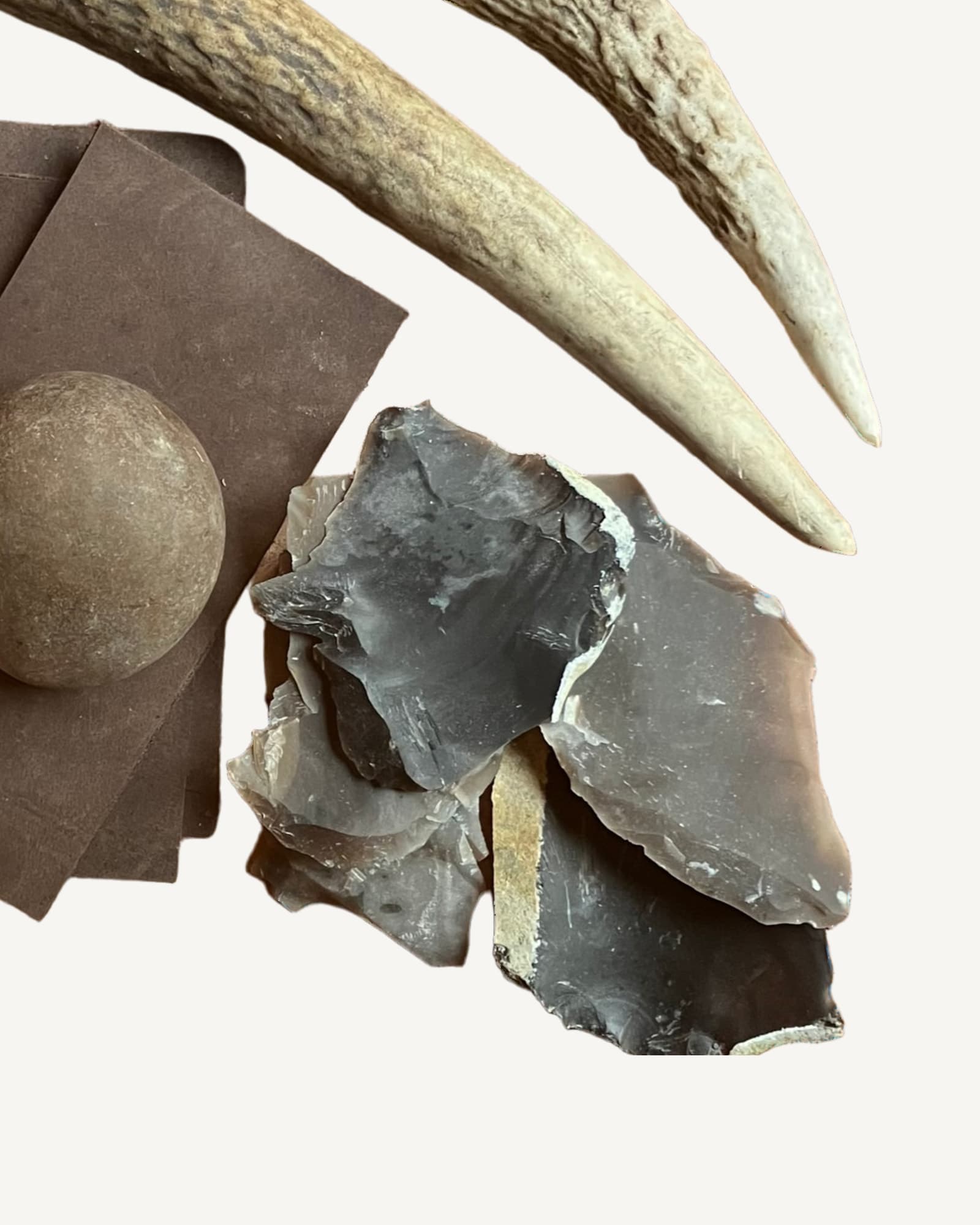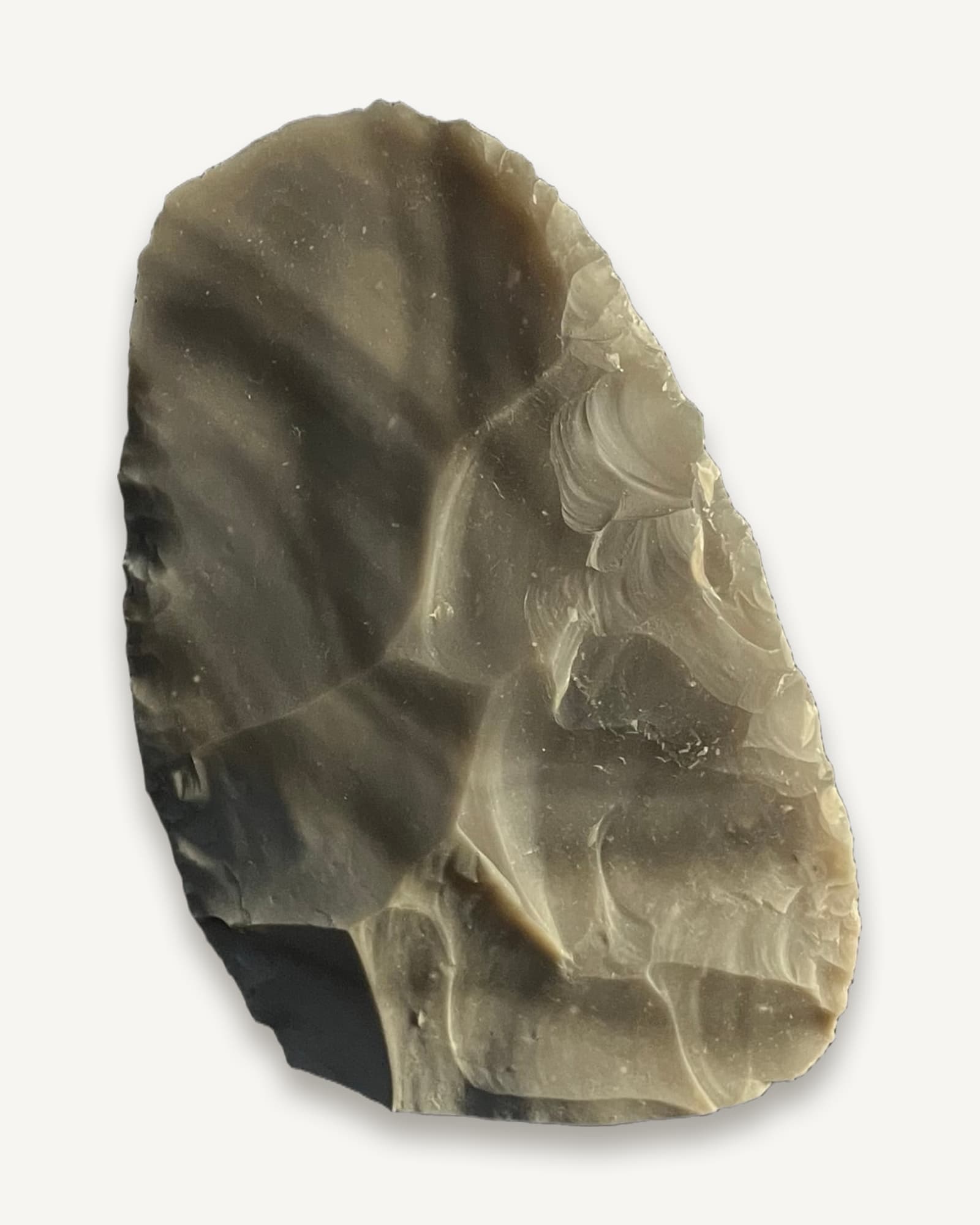
This Neanderthal cleaver has a remarkable banded flint pattern, with unique gradient colouring. It has still been knapped to be 100% functional tool using Mousterian industry techniques. The Mousterian industry is most closely associated with Homo-Neanderthalensis: the core is prepared in order to set up the release of one flake that already has the shape/edge of the required tool. In this case, the Tranchet cutting edge. We would class this particular tool as a Cleaver because it has a horizontal cutting edge which is perpendicular to the longest side of the tool, as opposed to the pointed tips of Acheulean Hand Axes.
The Mousterian industry is most prominent between 300,000 to 40,000 years ago, and was followed by the Aurignacian Industry of the Homo-Sapien (that's you and me). As such, Mousterian techniques were lost to deep time, waiting to be rediscovered by the flint knappers of today.
The material of this Cleaver is Flint from a clay-with-flints deposit, which are typically too brittle to knap. That is why this example is special, and its colours so unique. This is part of my one off collection - Stone tools as Art.
 James Francis · Prehistoric Crafts
Arrives Wed 11 Nov, UK delivery from £3.88
This Neanderthal cleaver has a remarkable banded flint pattern, with unique gradient colouring. It has still been knapped to be 100% functional tool using Mousterian industry techniques. The Mousterian industry is most closely associated with Homo-Neanderthalensis: the core is prepared in order to set up the release of one flake that already has the shape/edge of the required tool. In this case, the Tranchet cutting edge. We would class this particular tool as a Cleaver because it has a horizontal cutting edge which is perpendicular to the longest side of the tool, as opposed to the pointed tips of Acheulean Hand Axes.
The Mousterian industry is most prominent between 300,000 to 40,000 years ago, and was followed by the Aurignacian Industry of the Homo-Sapien (that's you and me). As such, Mousterian techniques were lost to deep time, waiting to be rediscovered by the flint knappers of today.
The material of this Cleaver is Flint from a clay-with-flints deposit, which are typically too brittle to knap. That is why this example is special, and its colours so unique. This is part of my one off collection - Stone tools as Art.
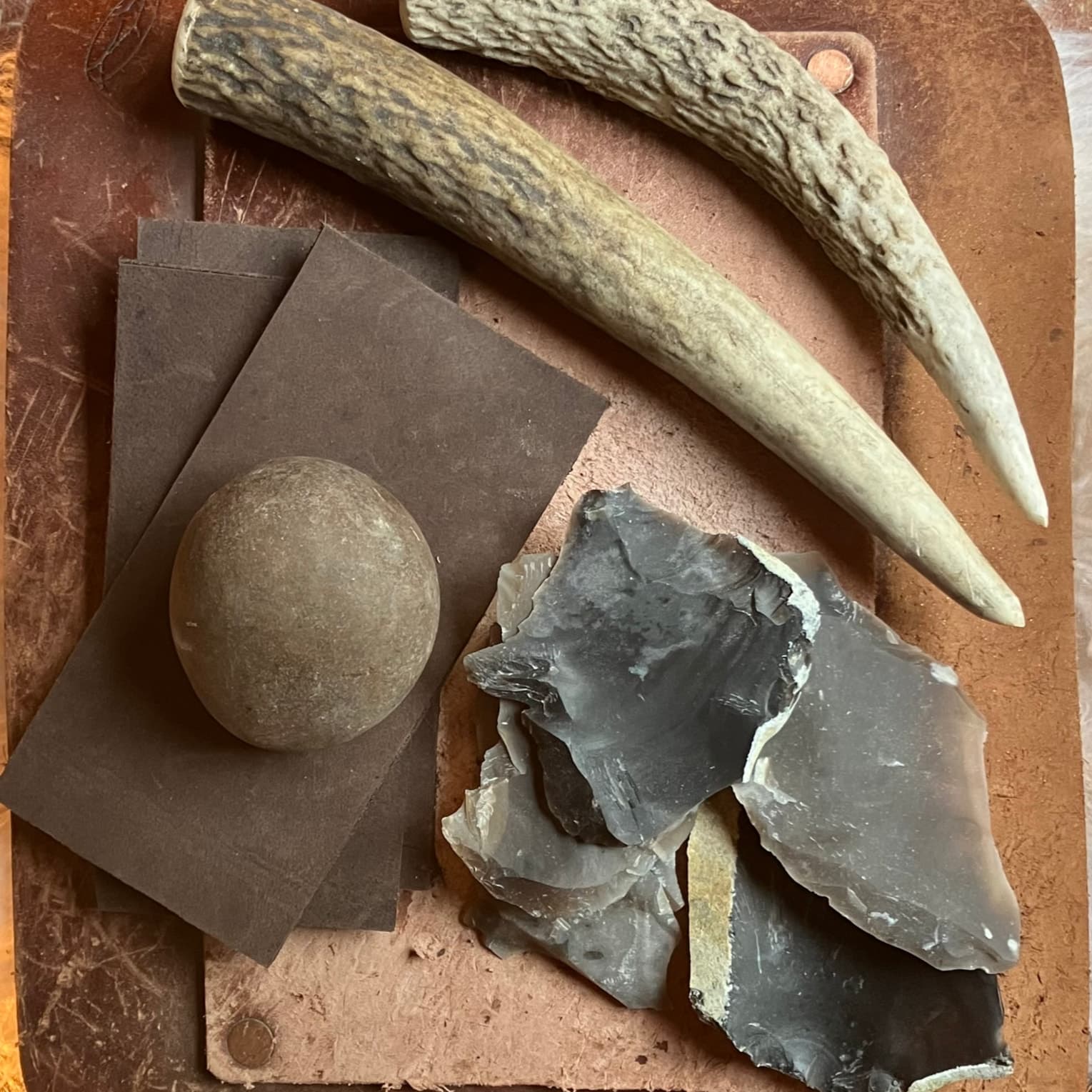
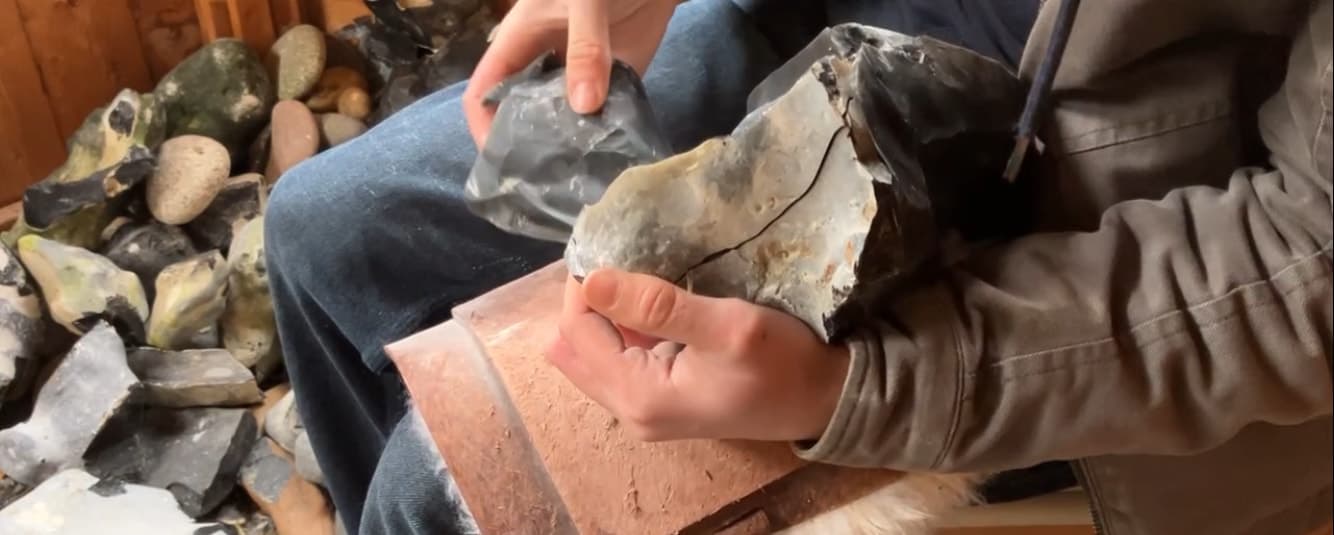
Stone age technology replicated by journeyman knapper and experimental archaeologist. Experience the greatest revolutions in the history of mankind.
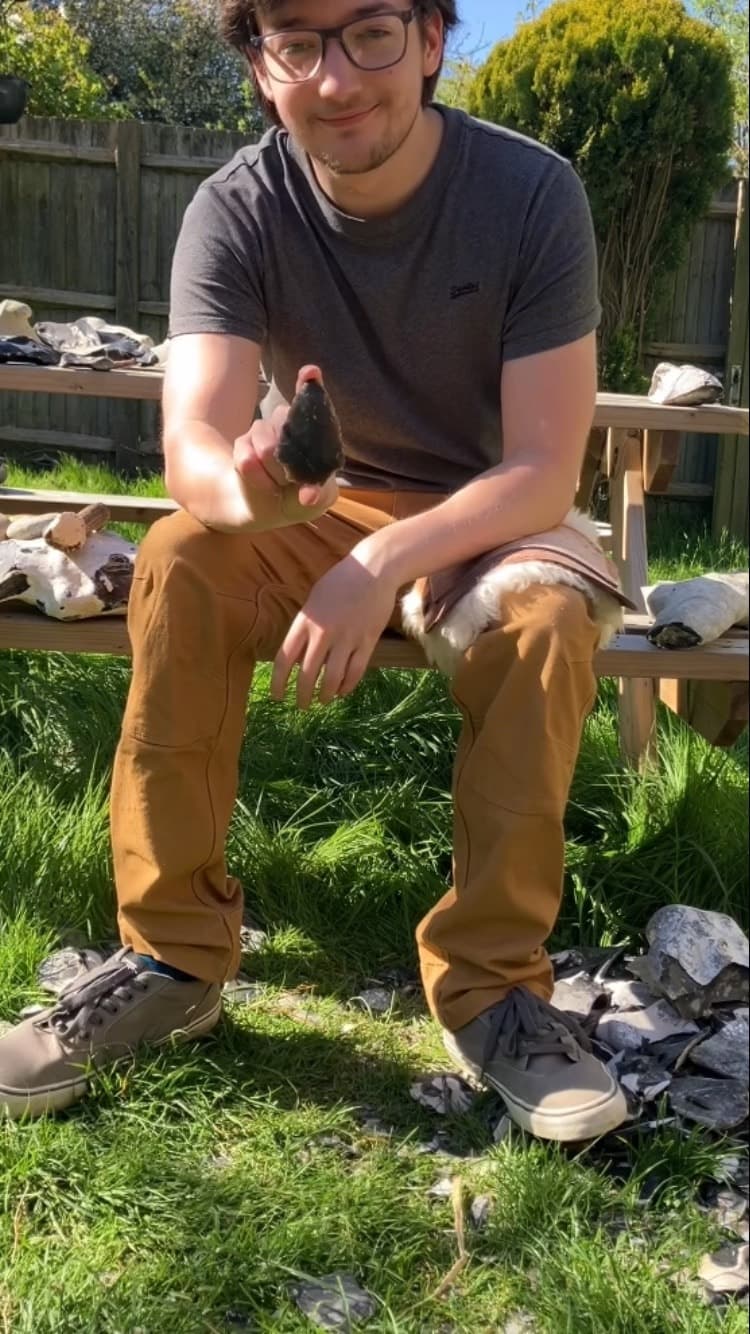
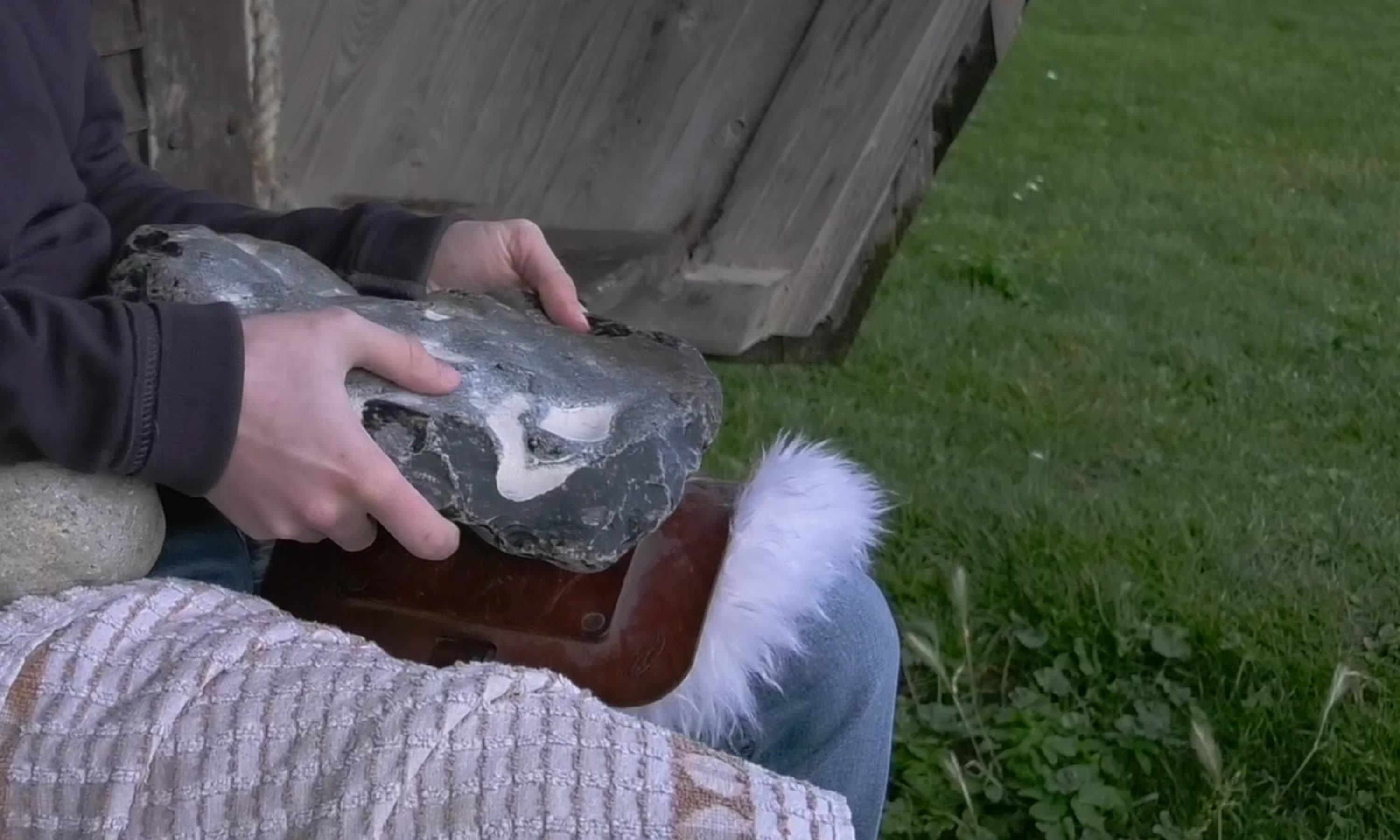
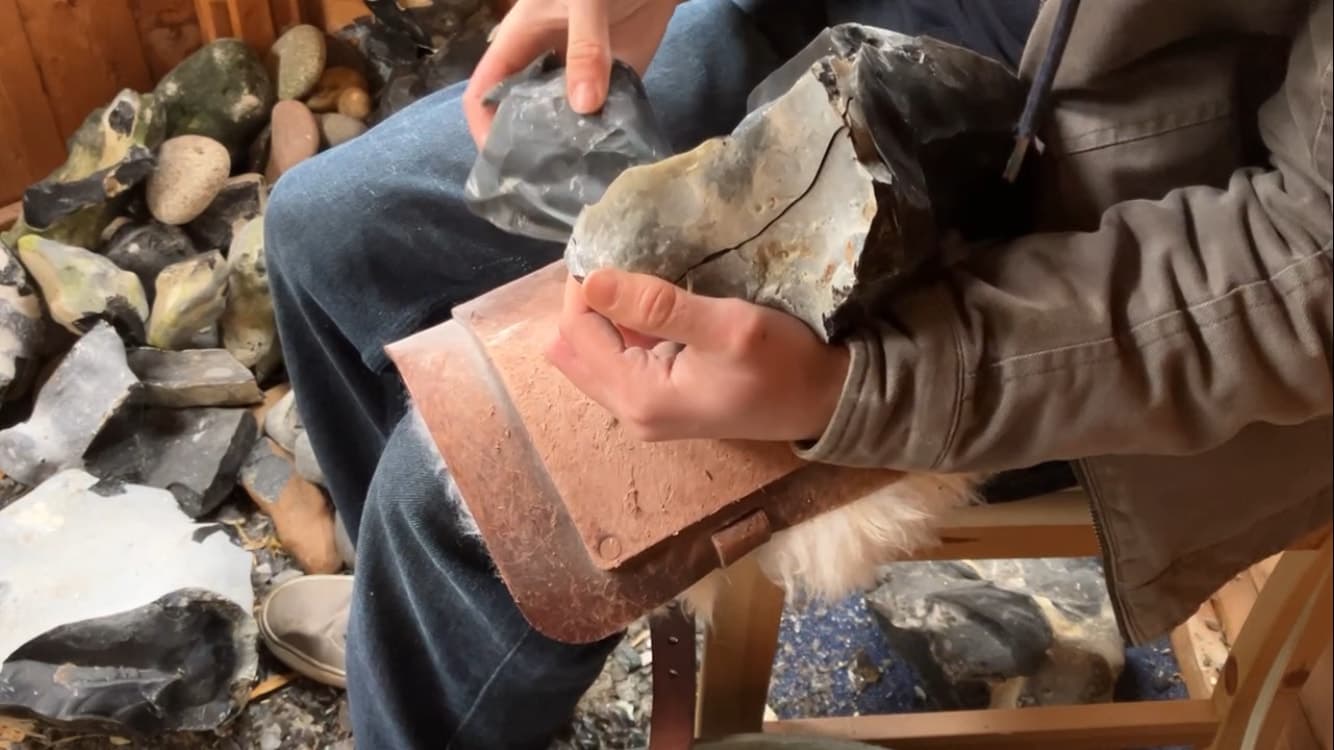
Stone age technology replicated by journeyman knapper and experimental archaeologist. Experience the greatest revolutions in the history of mankind.