Soft launching for UK & US customers.Soft launching for UK and US customers. New makers arriving all summer.
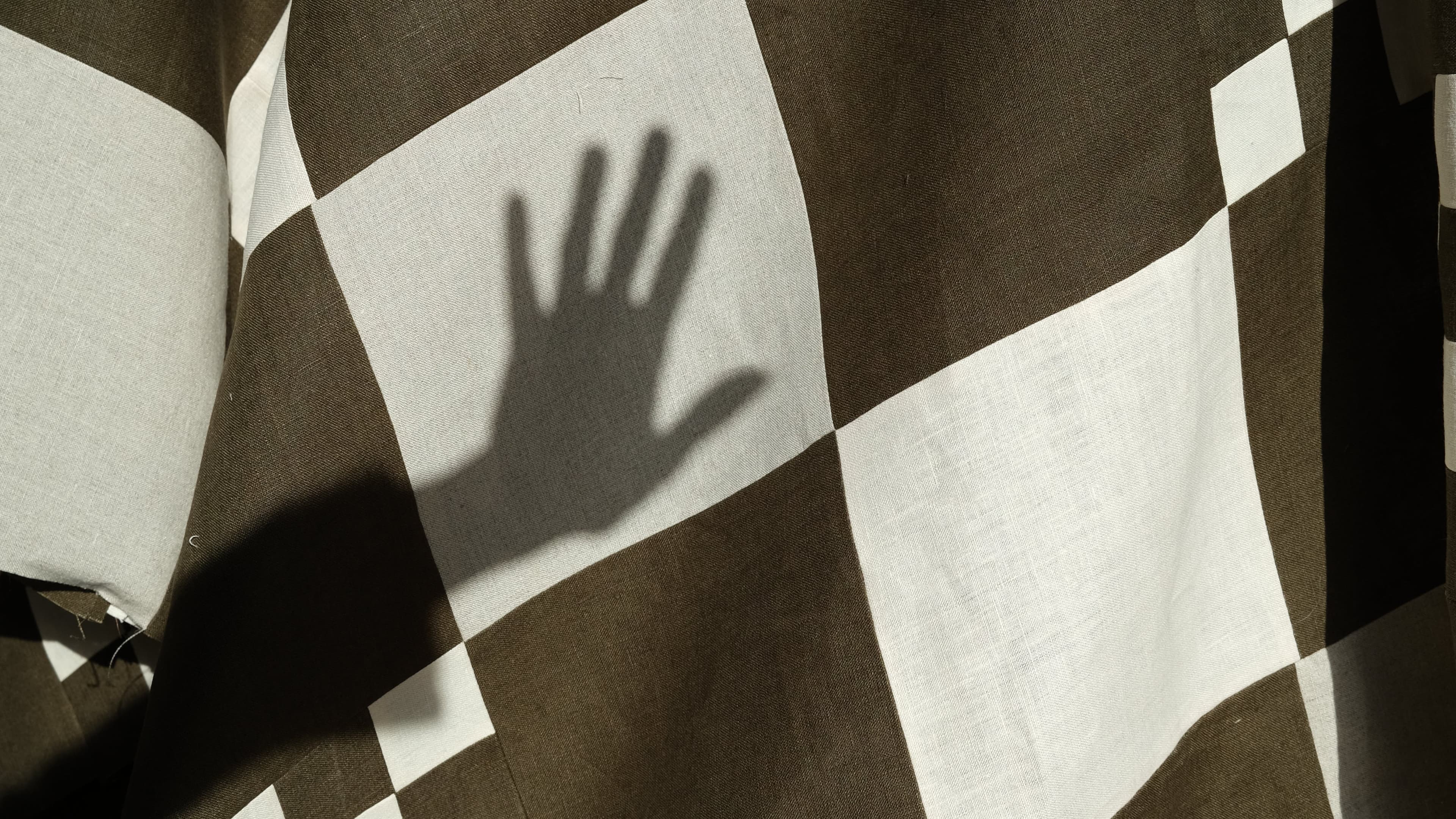
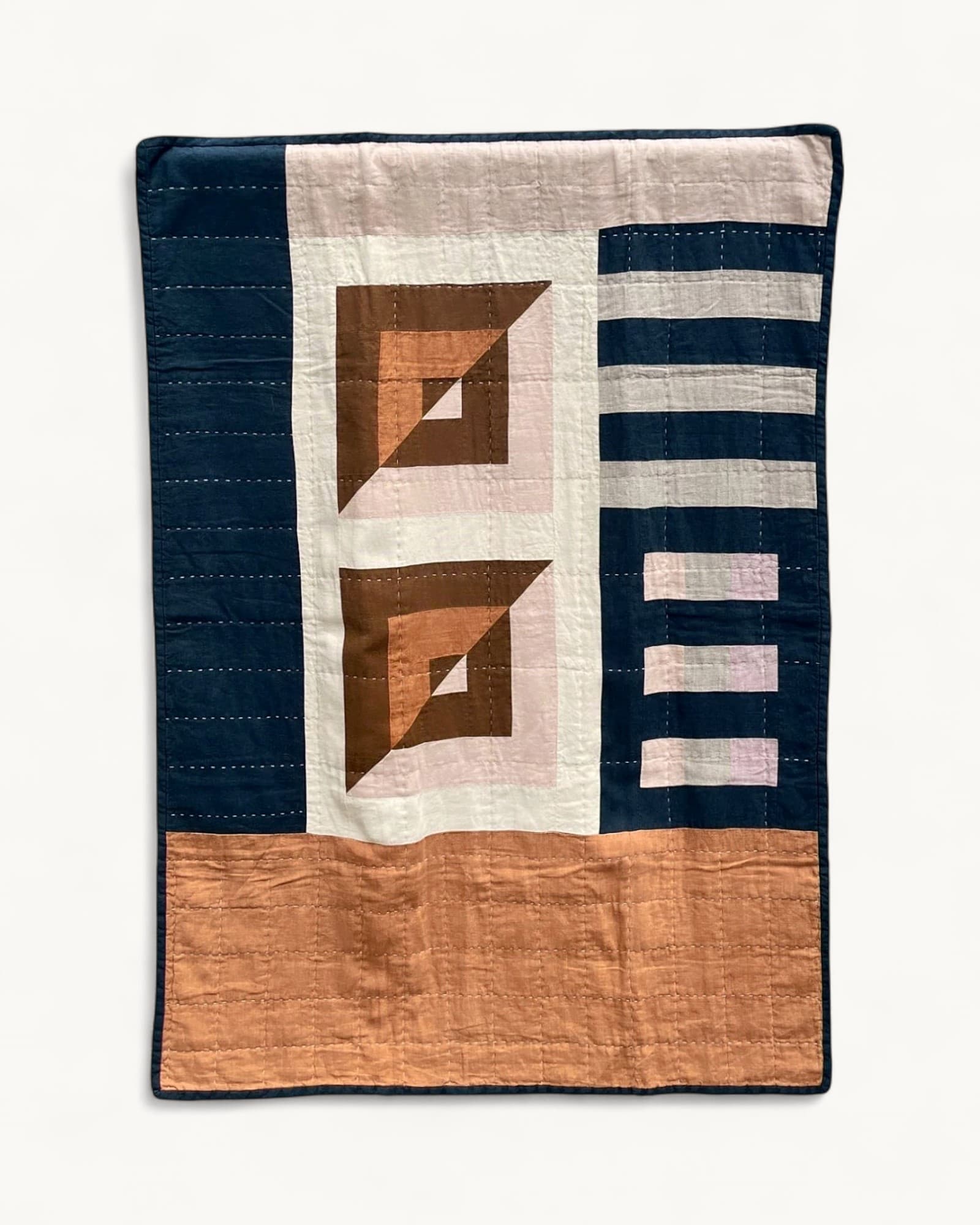
The largest piece in Slow Progress. A double-bed quilt at 160 by 200 cm, set out in a checkerboard. Both faces are repurposed cotton, with cotton-bamboo mix batting between them. It is the kind of quilt that takes weeks of evenings to make and is meant to be slept under for a couple of decades.
The checkerboard is a deliberate choice. It is the patchwork form that the Bauhaus textile artists Elyn looks to, Anni Albers and Sophie Taeuber-Arp, returned to most often. A grid of squares is the simplest possible composition and the hardest one to get right, because nothing else is doing the work. The piecing has to land. The hand quilting has to hold the geometry rather than soften it.
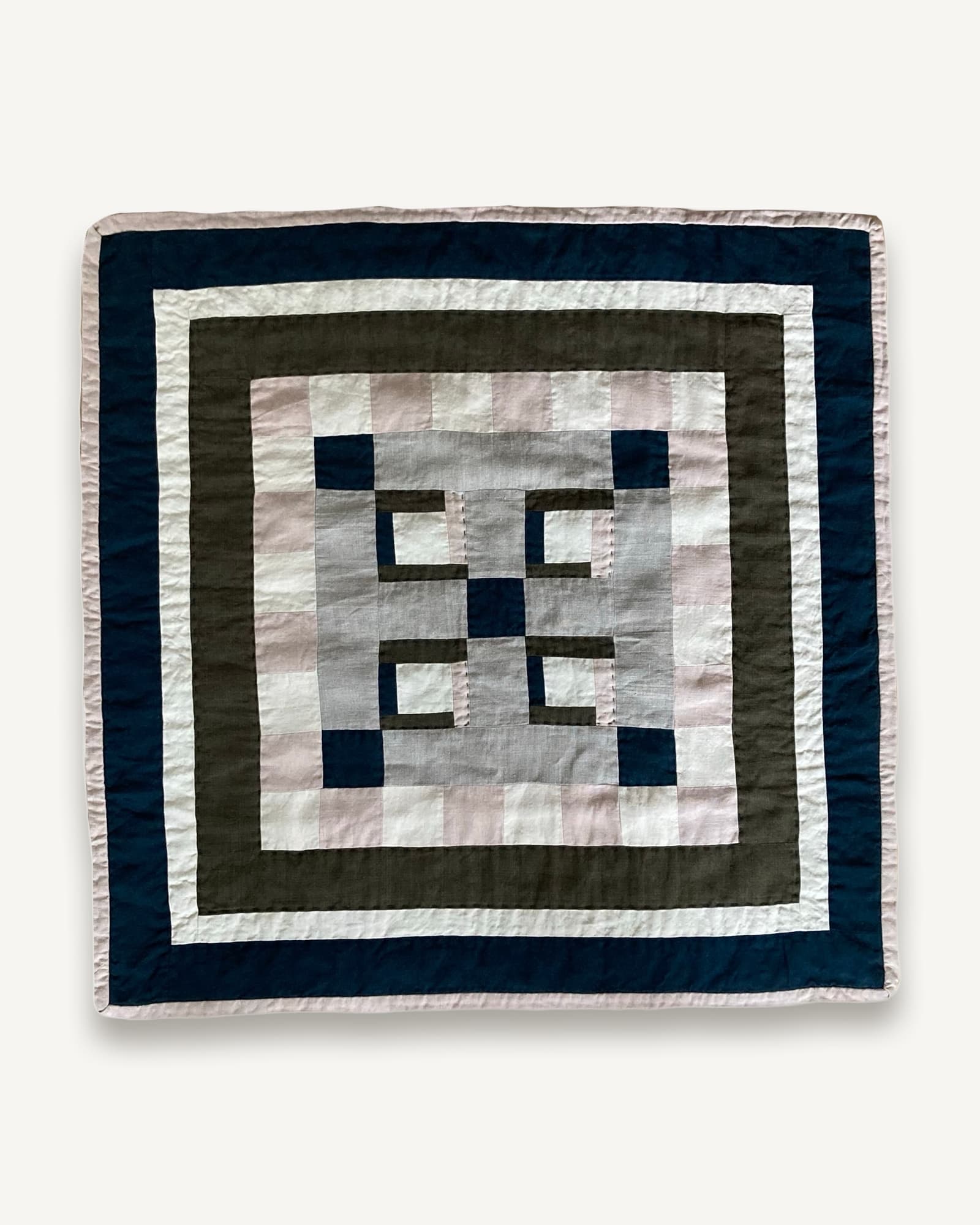
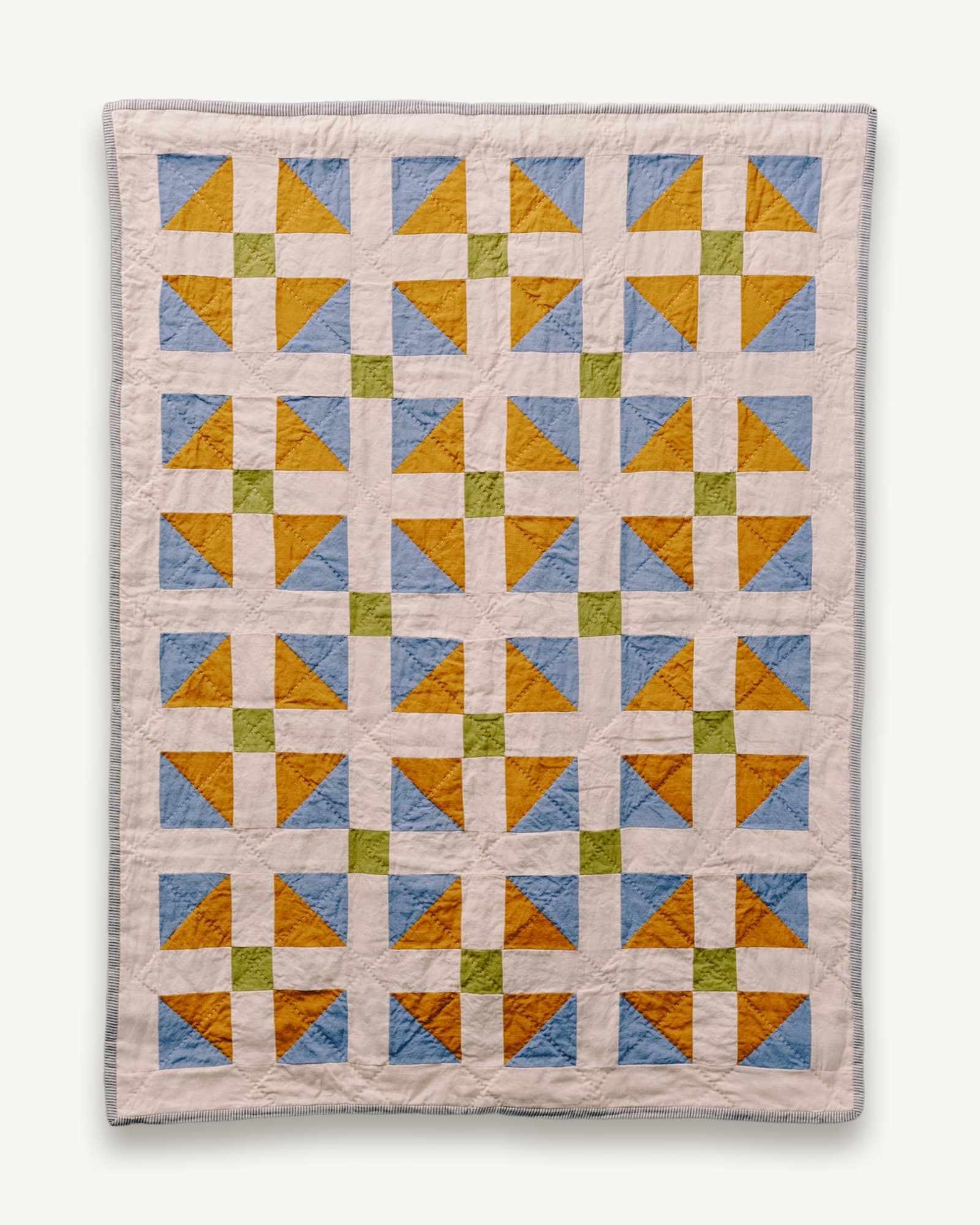
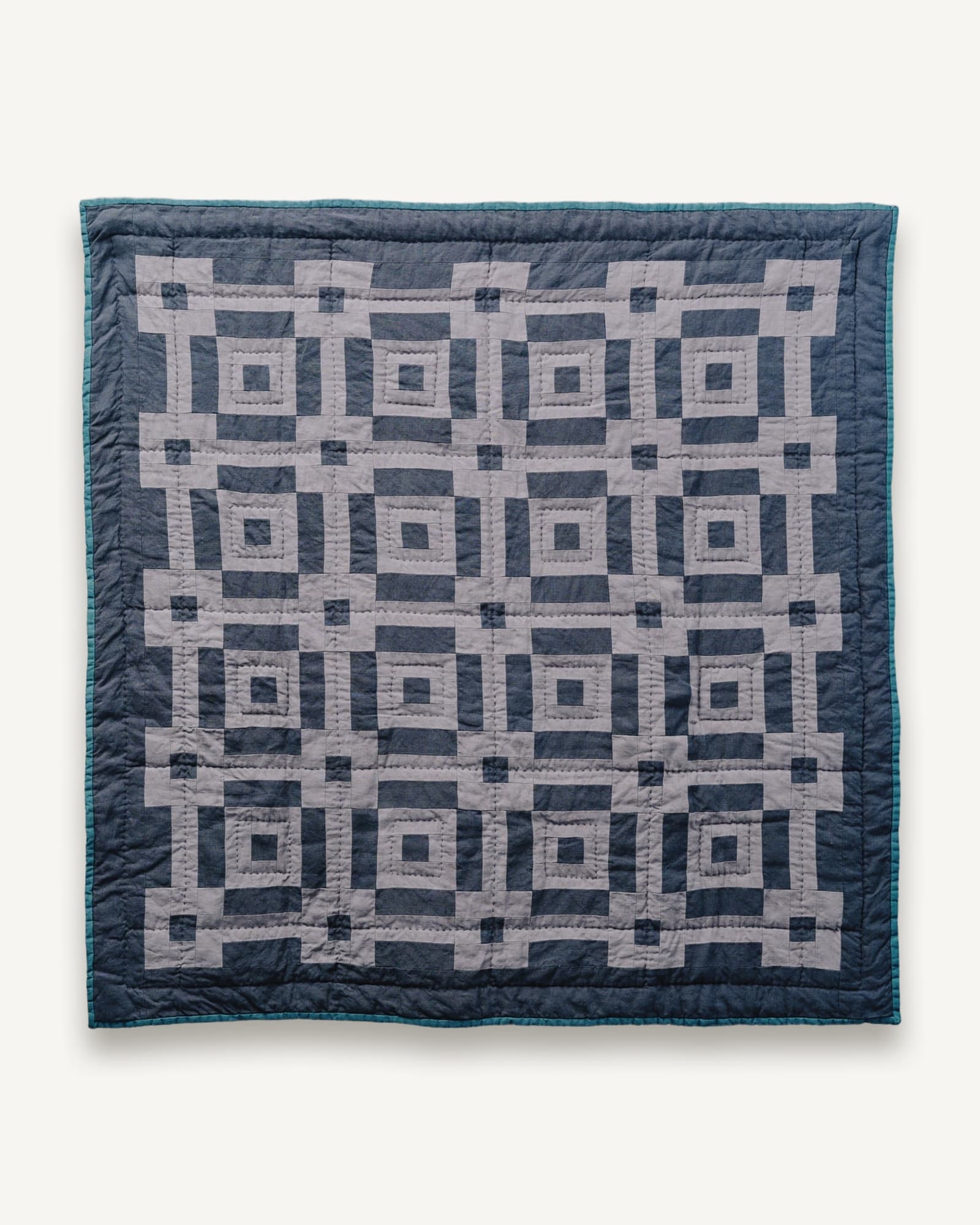
Elyn pieces the top and the back on the machine for a clean grid, then sandwiches the batting and quilts the layers together by hand. The binding is stitched on by machine and turned and finished by hand. The repurposed cotton means the colour story is a little softer than a freshly-dyed bolt would give, which suits the form.
This is a single, finished piece. The composition will not be remade. At this scale, it is the kind of object that lives with you.

The largest piece in Slow Progress. A double-bed quilt at 160 by 200 cm, set out in a checkerboard. Both faces are repurposed cotton, with cotton-bamboo mix batting between them. It is the kind of quilt that takes weeks of evenings to make and is meant to be slept under for a couple of decades.
The checkerboard is a deliberate choice. It is the patchwork form that the Bauhaus textile artists Elyn looks to, Anni Albers and Sophie Taeuber-Arp, returned to most often. A grid of squares is the simplest possible composition and the hardest one to get right, because nothing else is doing the work. The piecing has to land. The hand quilting has to hold the geometry rather than soften it.
Elyn pieces the top and the back on the machine for a clean grid, then sandwiches the batting and quilts the layers together by hand. The binding is stitched on by machine and turned and finished by hand. The repurposed cotton means the colour story is a little softer than a freshly-dyed bolt would give, which suits the form.
This is a single, finished piece. The composition will not be remade. At this scale, it is the kind of object that lives with you.


Elyn Middleton makes patchwork quilts and wall hangings in linen, from her living room in Sheffield. Her patterns come from post-war architecture and from the Bauhaus textile artists, Anni Albers and Sophie Taeuber-Arp.