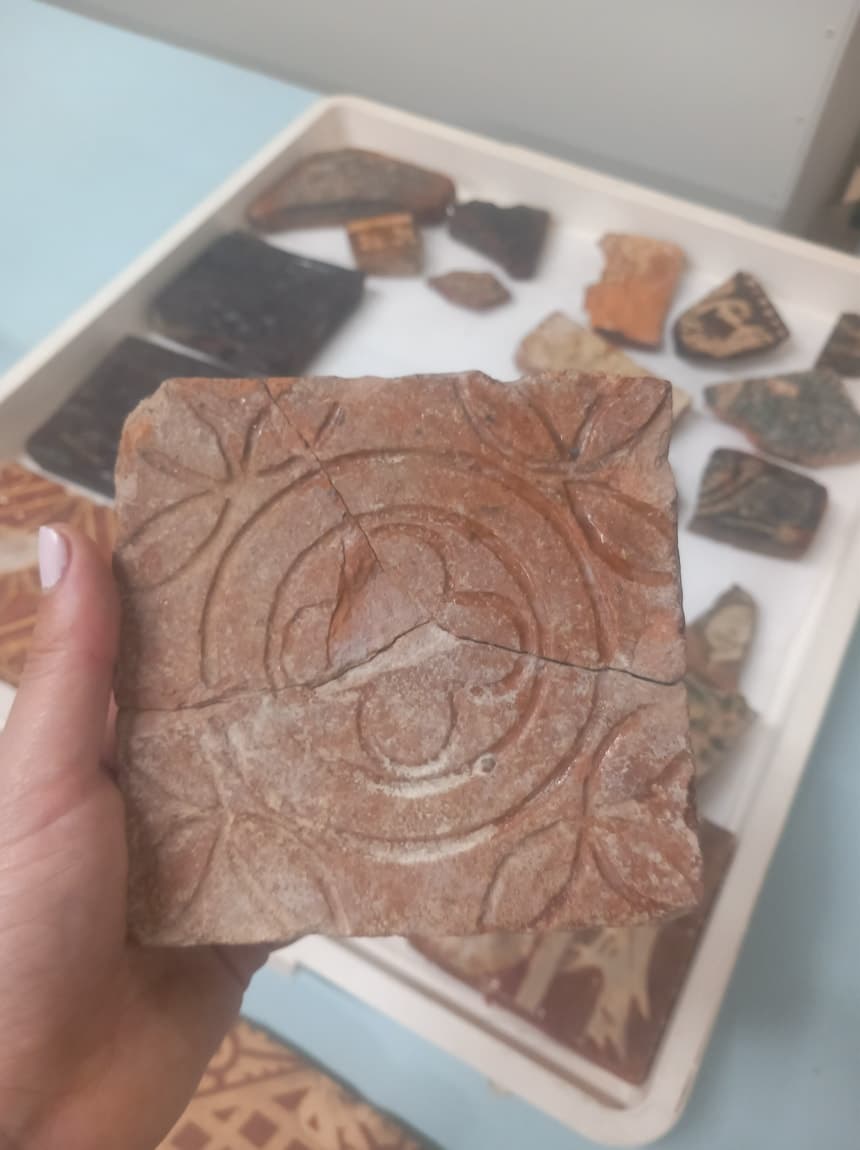
I learned about encaustic tiles at Neath Abbey from the book The Medieval Tiles of Wales. I contacted Cadw, who are responsible for Neath Abbey. I spent the afternoon with Bill Zajac the Neath Abbey historian, discussing the medieval tiles in the under croft of Neath Abbey. Learning how the tiles were made was very interesting, and I decided to do more research to learn how to use the same technique in my craft practice.
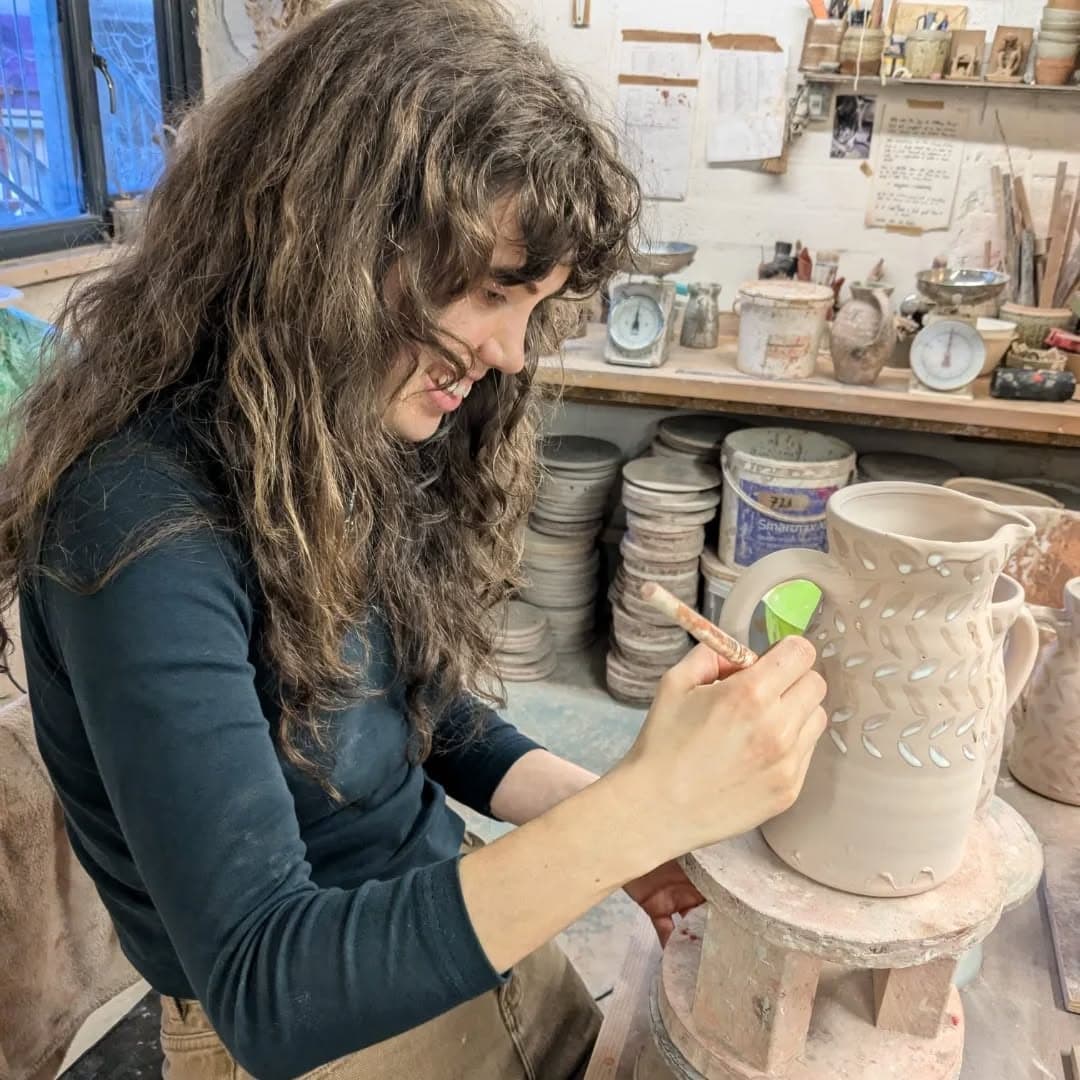
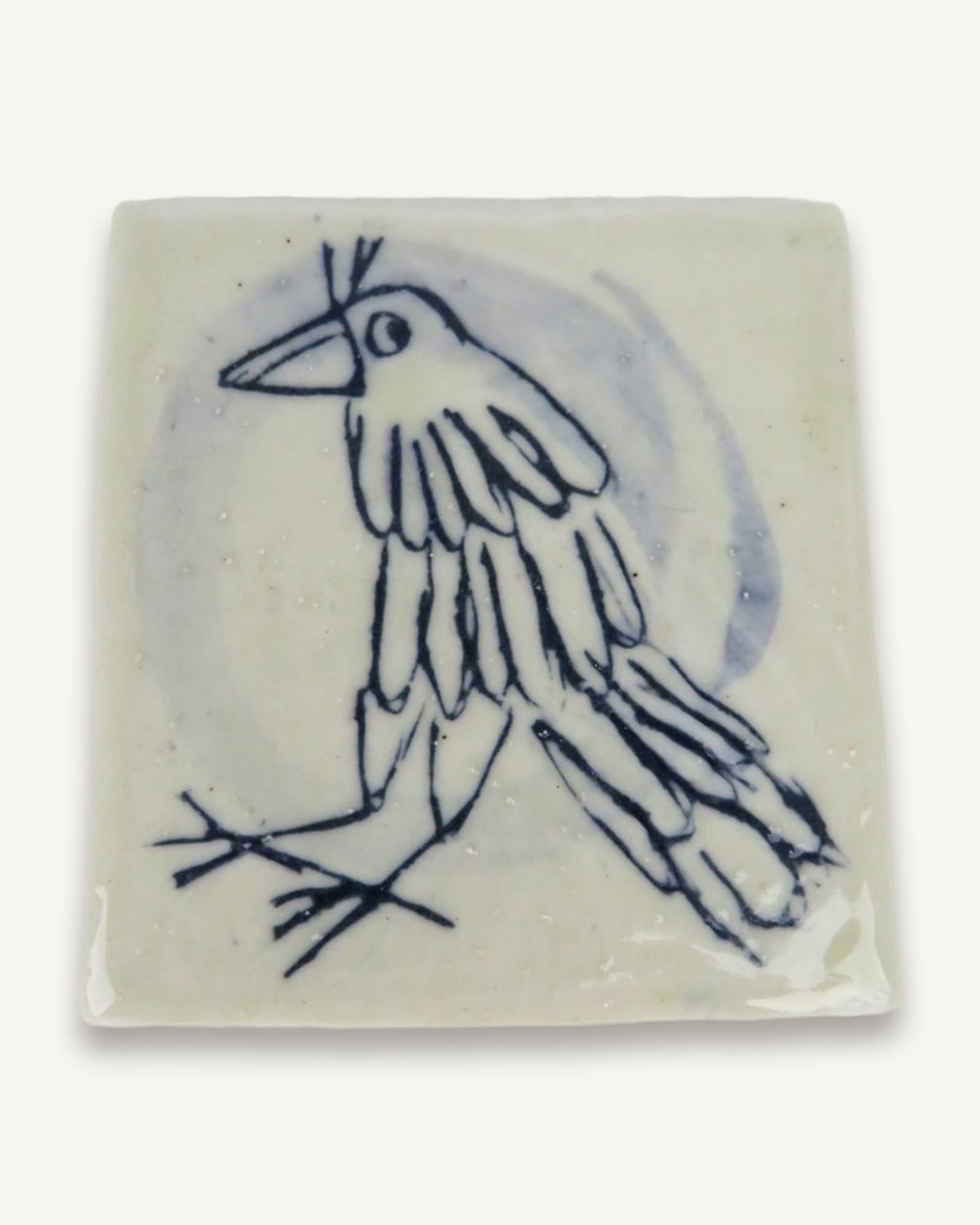
Each tile begins with a wooden stamp that I carved by hand. Using second-hand carving tools, I carved my quatrefoil design into wood. I press the stamp into the clay to create the pattern, which is then filled with contrasting clay slip. I apply the glaze with a paintbrush to create expressive marks.

I learned about encaustic tiles at Neath Abbey from the book The Medieval Tiles of Wales. I contacted Cadw, who are responsible for Neath Abbey. I spent the afternoon with Bill Zajac the Neath Abbey historian, discussing the medieval tiles in the under croft of Neath Abbey. Learning how the tiles were made was very interesting, and I decided to do more research to learn how to use the same technique in my craft practice.
Each tile begins with a wooden stamp that I carved by hand. Using second-hand carving tools, I carved my quatrefoil design into wood. I press the stamp into the clay to create the pattern, which is then filled with contrasting clay slip. I apply the glaze with a paintbrush to create expressive marks.


Bethan Lowri Hughes Jones carves a pattern into wet clay, floods the hollow with coloured slip, then scrapes the surface back to find out whether it worked. She works in Welsh, from a studio at Fireworks Clay Studios in Cardiff, and she will teach you the method as well as sell you the result.