




Crit. endangeredSOLD
Soft launching for UK & US customers.

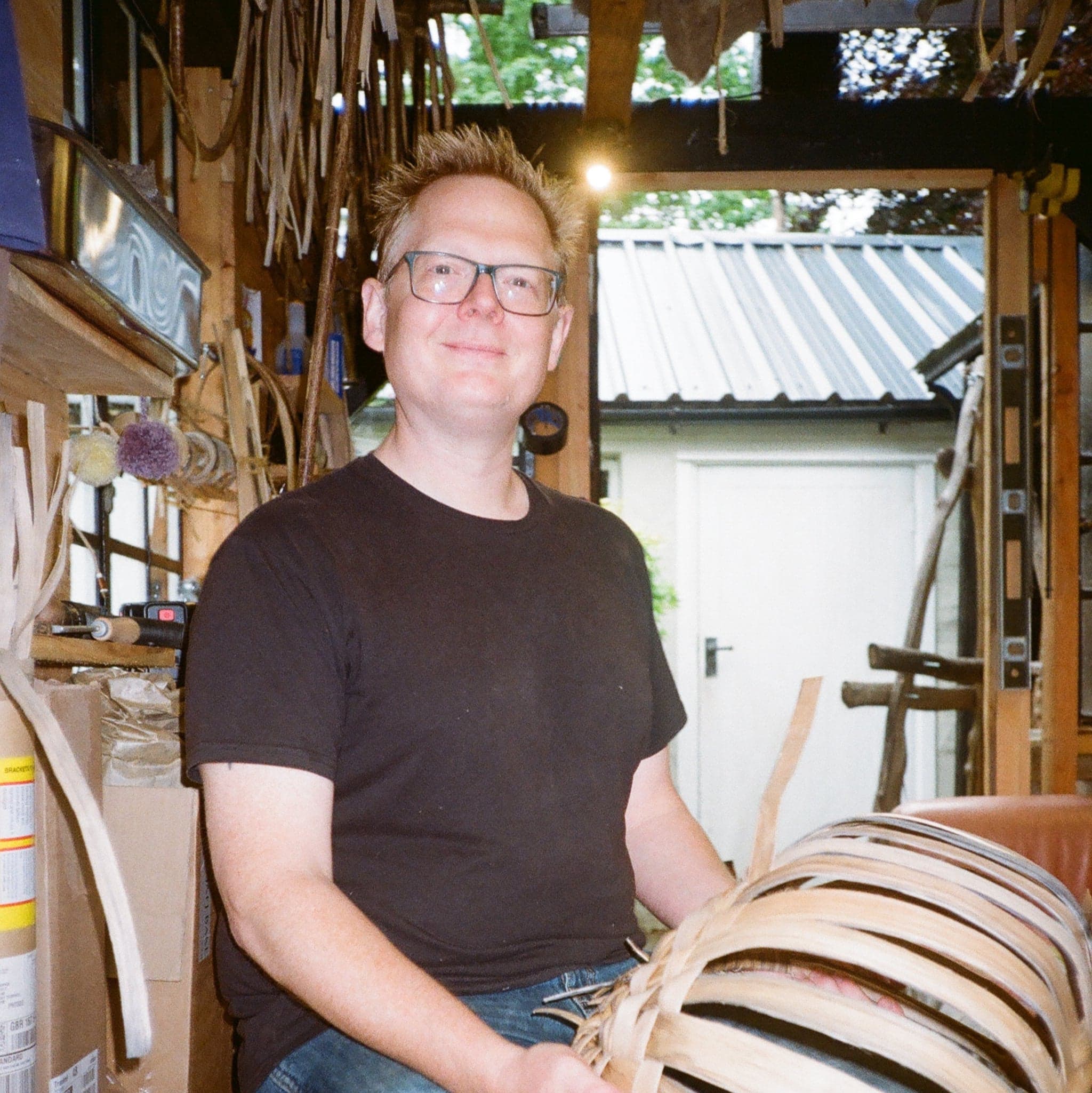
“I am The Bumbling Basketeer and I make oak and hazel baskets in my workshop here in rural Perthshire.”
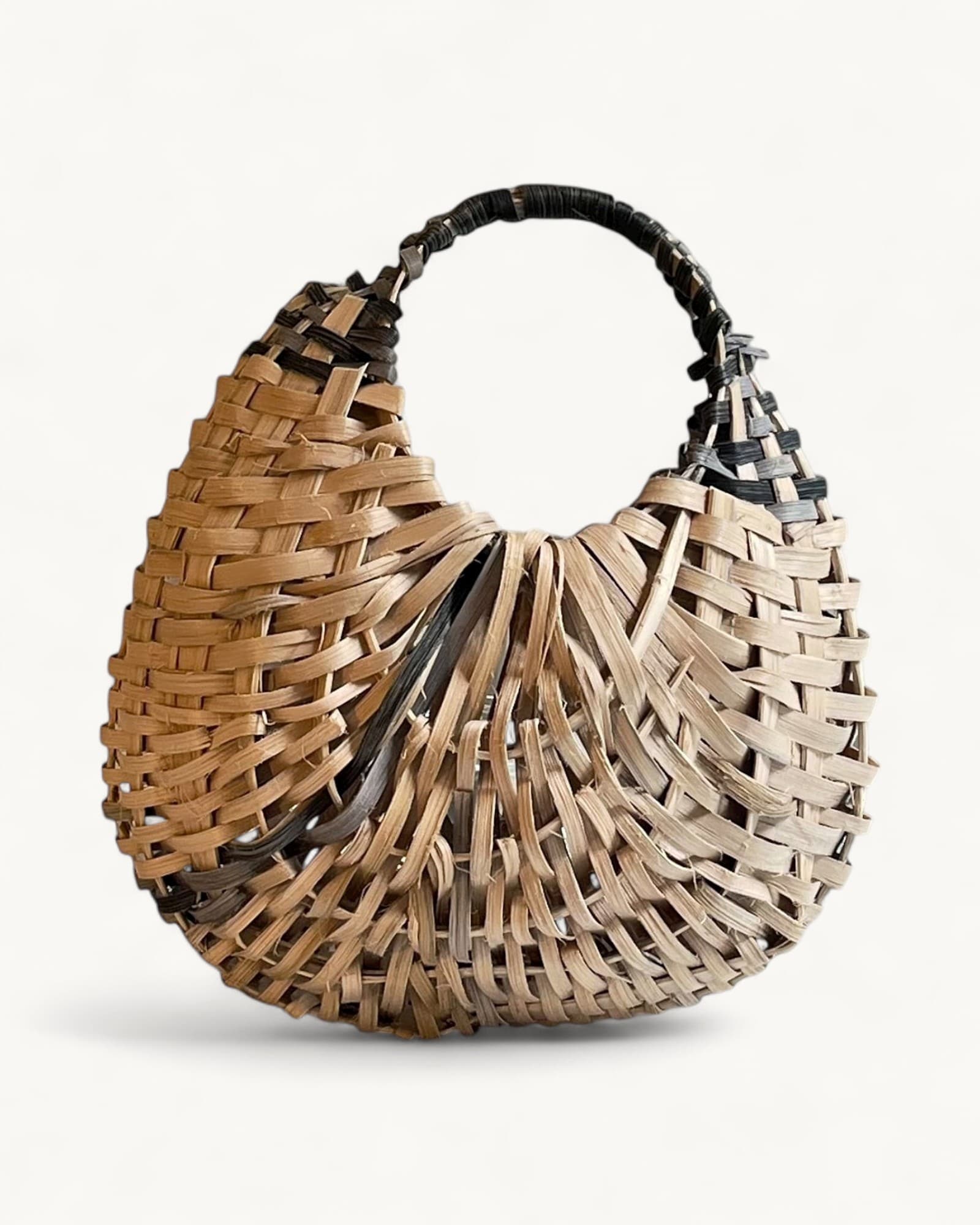
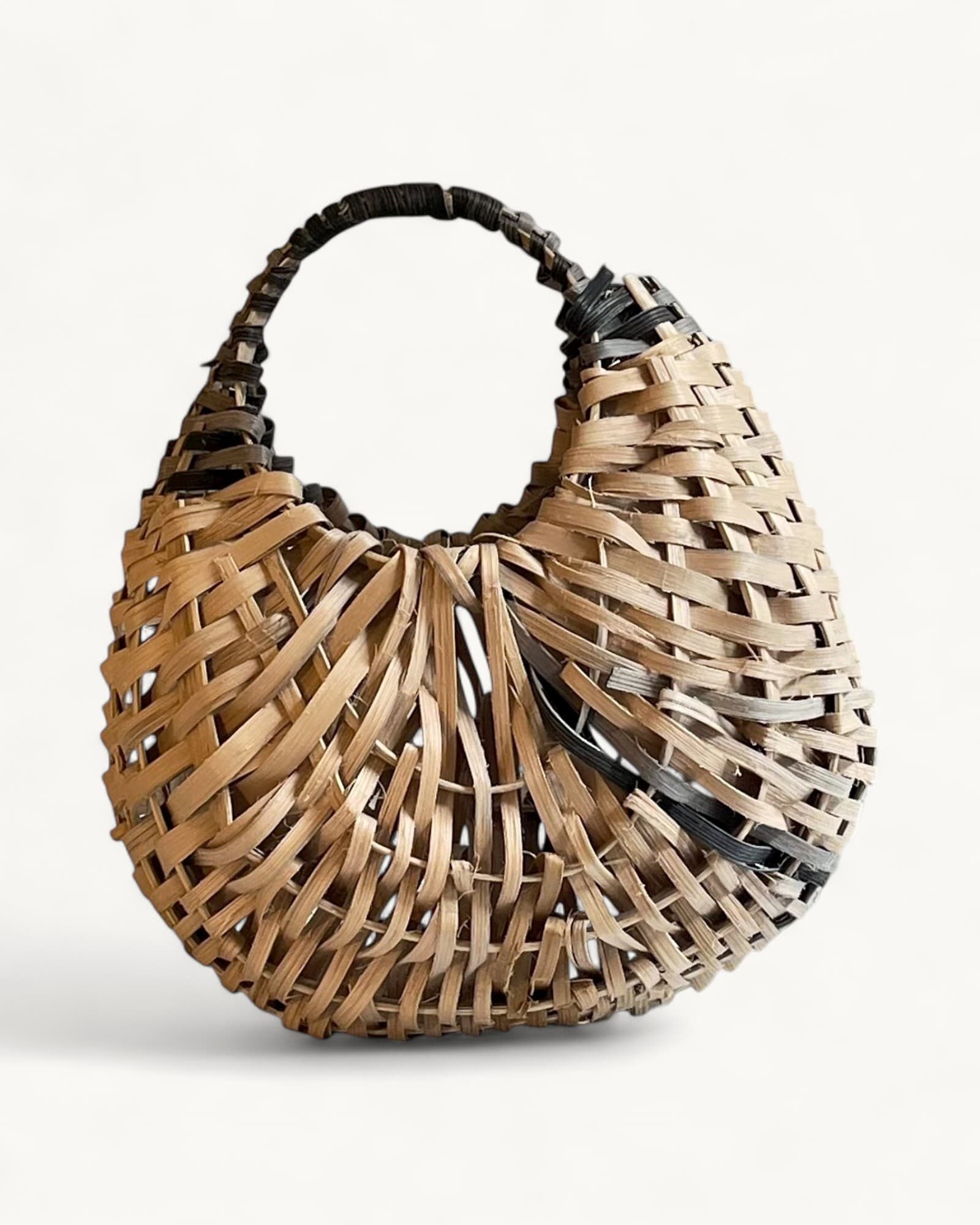
Simon Cooper is the only oak swill basket maker left in Scotland. There are perhaps a handful of practitioners across the whole of the UK, and the craft sits on the Heritage Crafts Red List as critically endangered. The work he does in a small workshop in Crieff, Perthshire, is what stands between this tradition and the end of it.
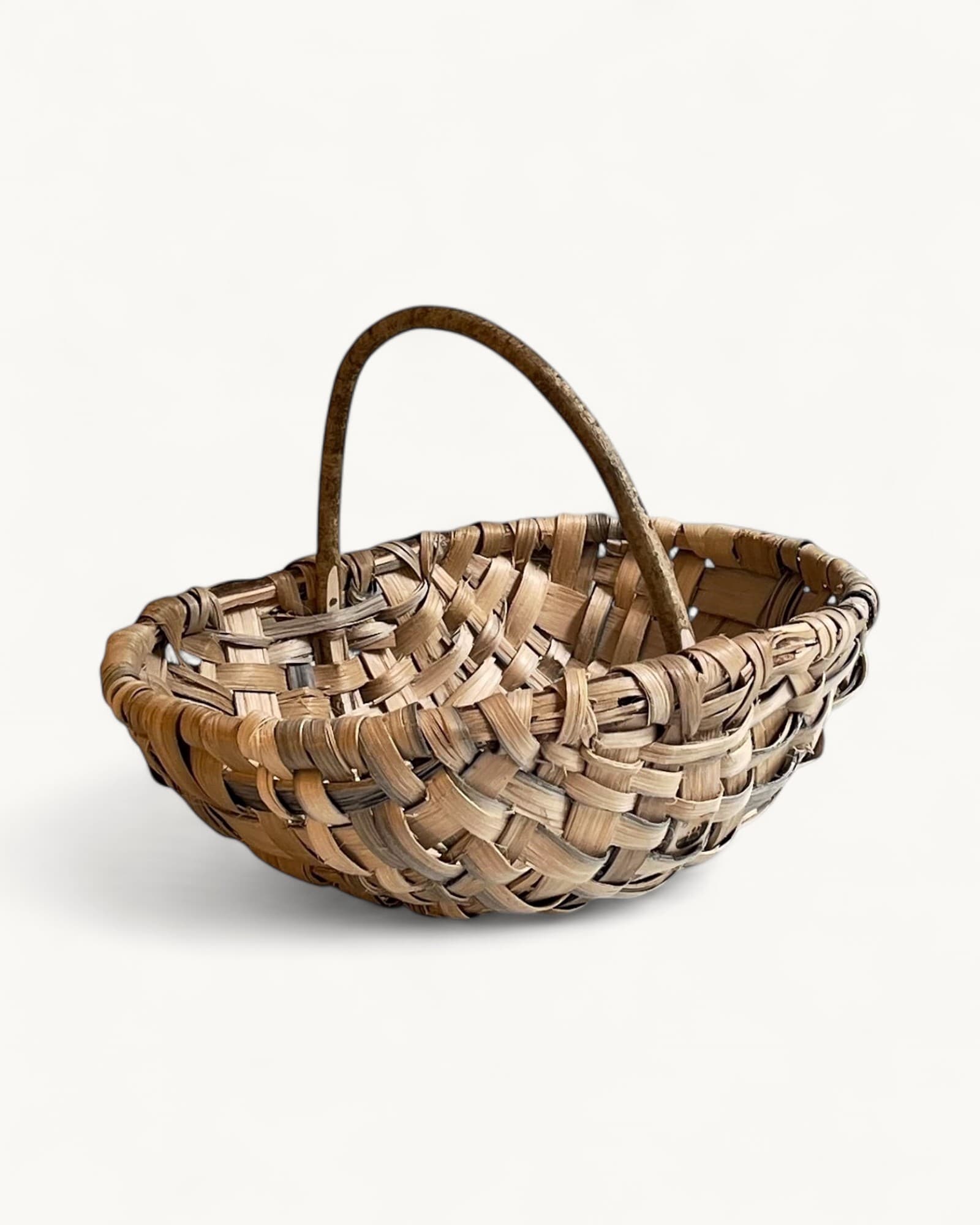
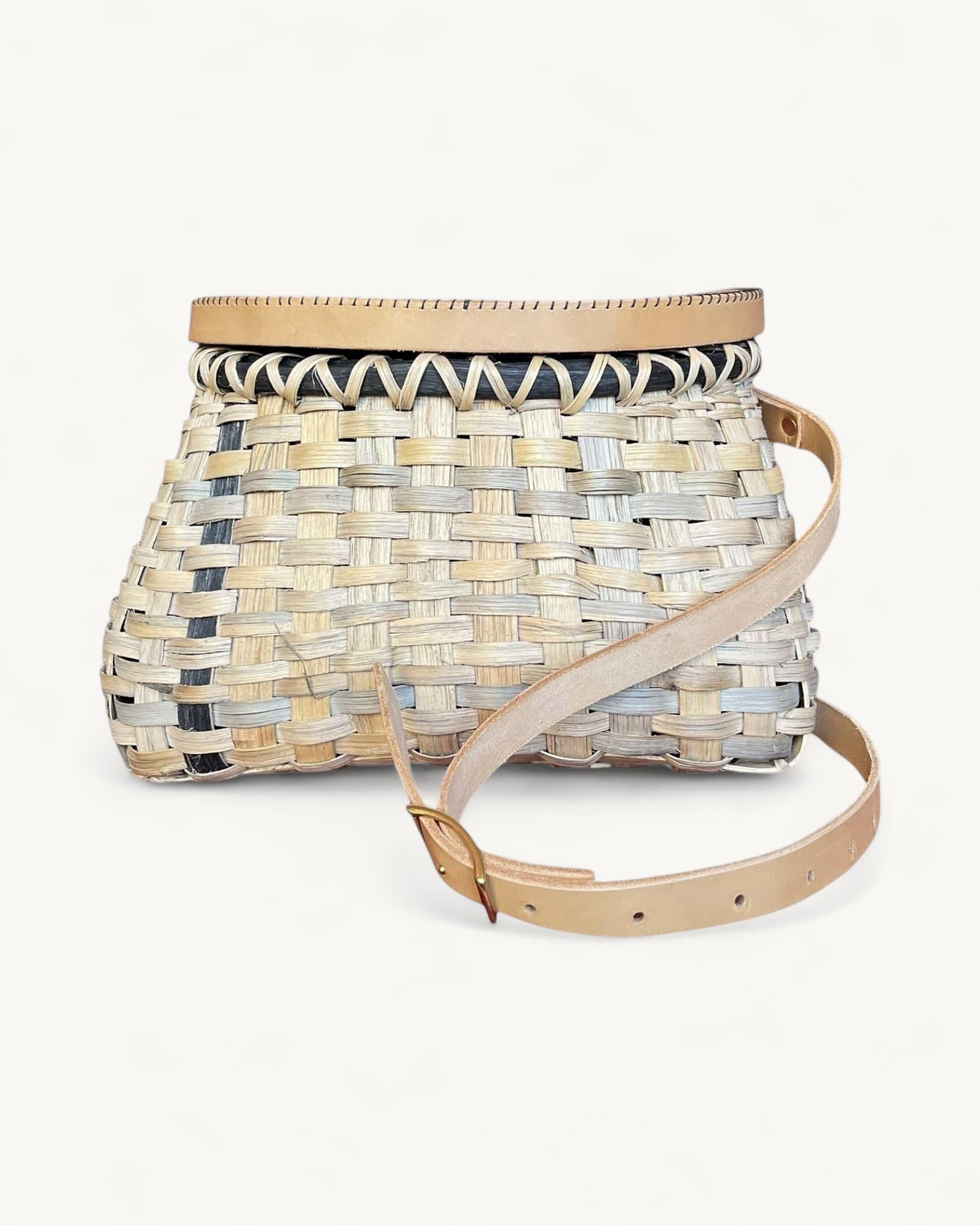
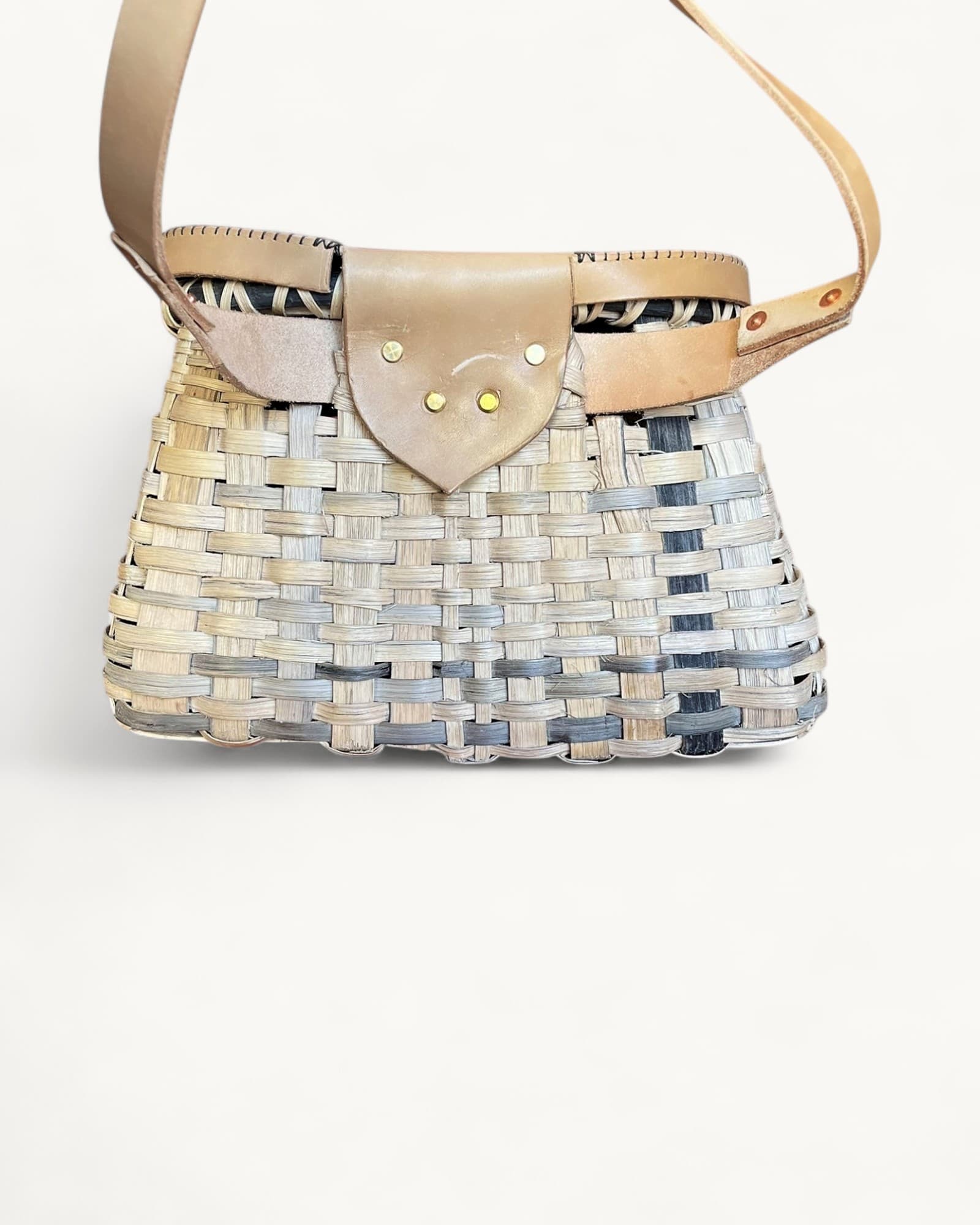
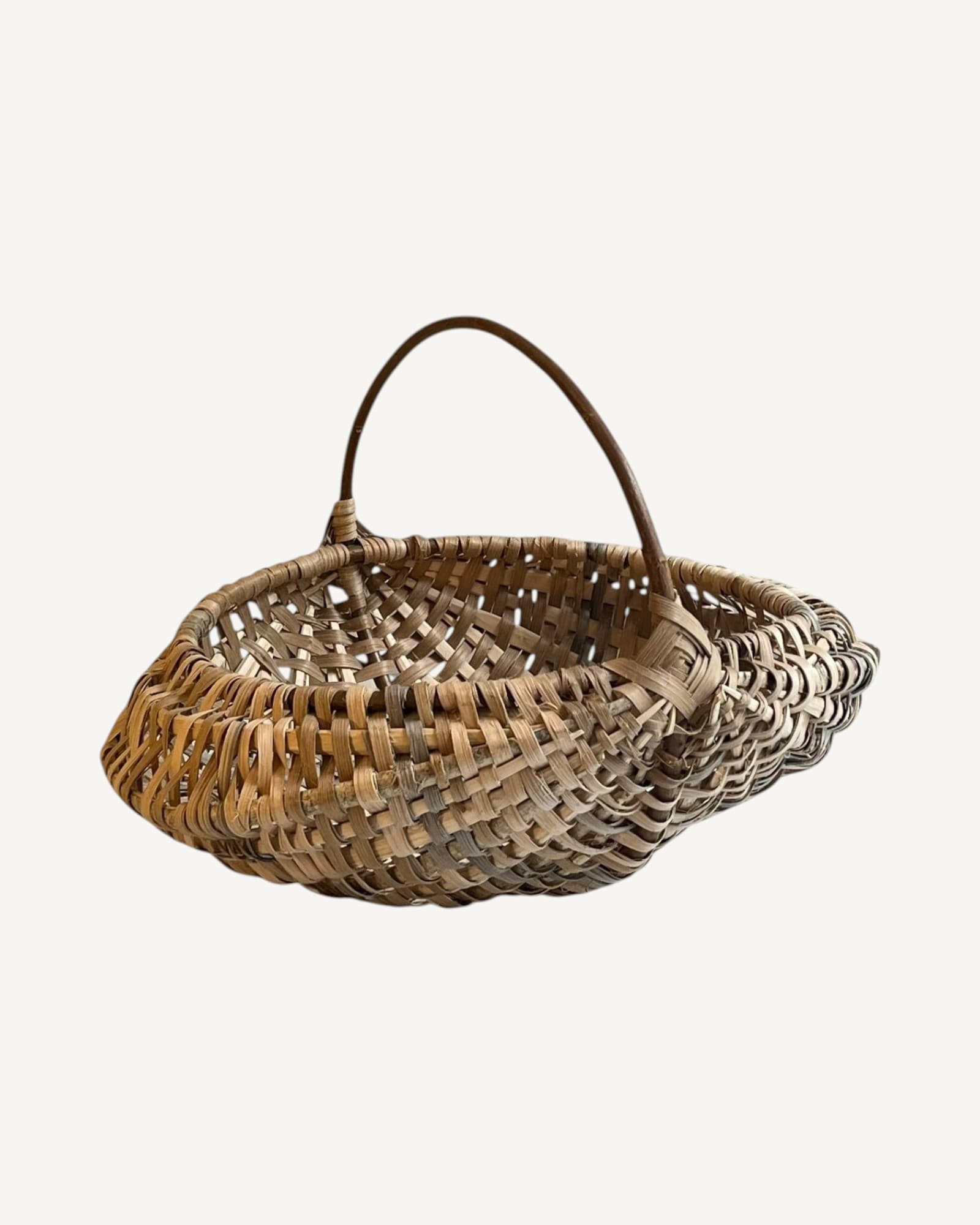
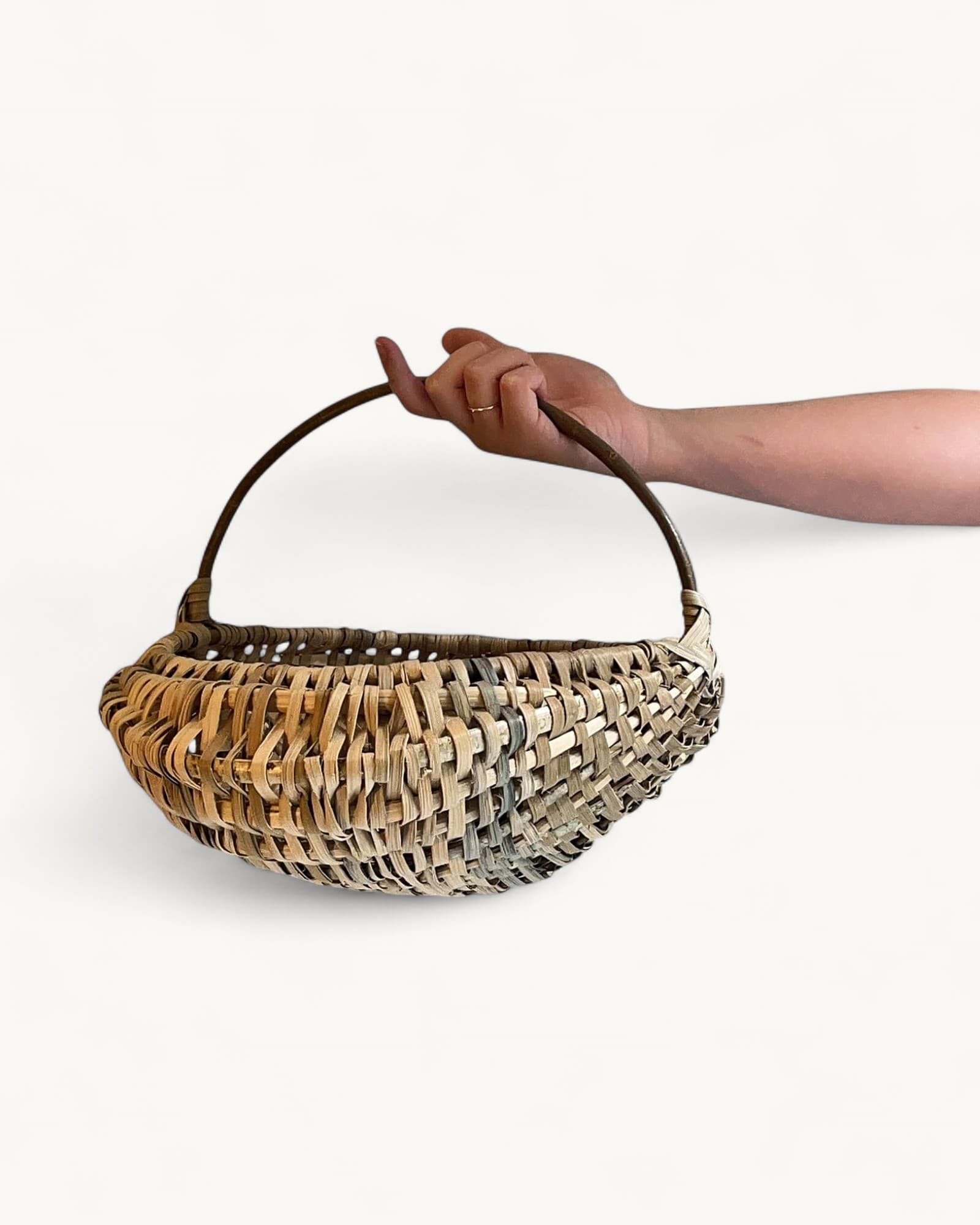
Oak swill is a southern Lake District form by origin. In Scotland the same baskets, made the same way, are called tattie baskets, after the potatoes they once carried. They moved coal onto steam ships. They went to market and to the hen run and out onto the riverbank with anglers. The lore goes that apprentices tested a finished basket by standing in it. Simon repeats this with the caveat that he wouldn't recommend trying it.
The process is slow. Coppiced oak is split along the grain, cleaved into thinner and thinner strips, dressed, boiled, and then woven while still wet around a peeled hazel rim. A peeled hazel handle is bent in. On some pieces a willow hoop goes through the rim too. Nothing is glued. Nothing is nailed. The basket holds because of the way it is woven.
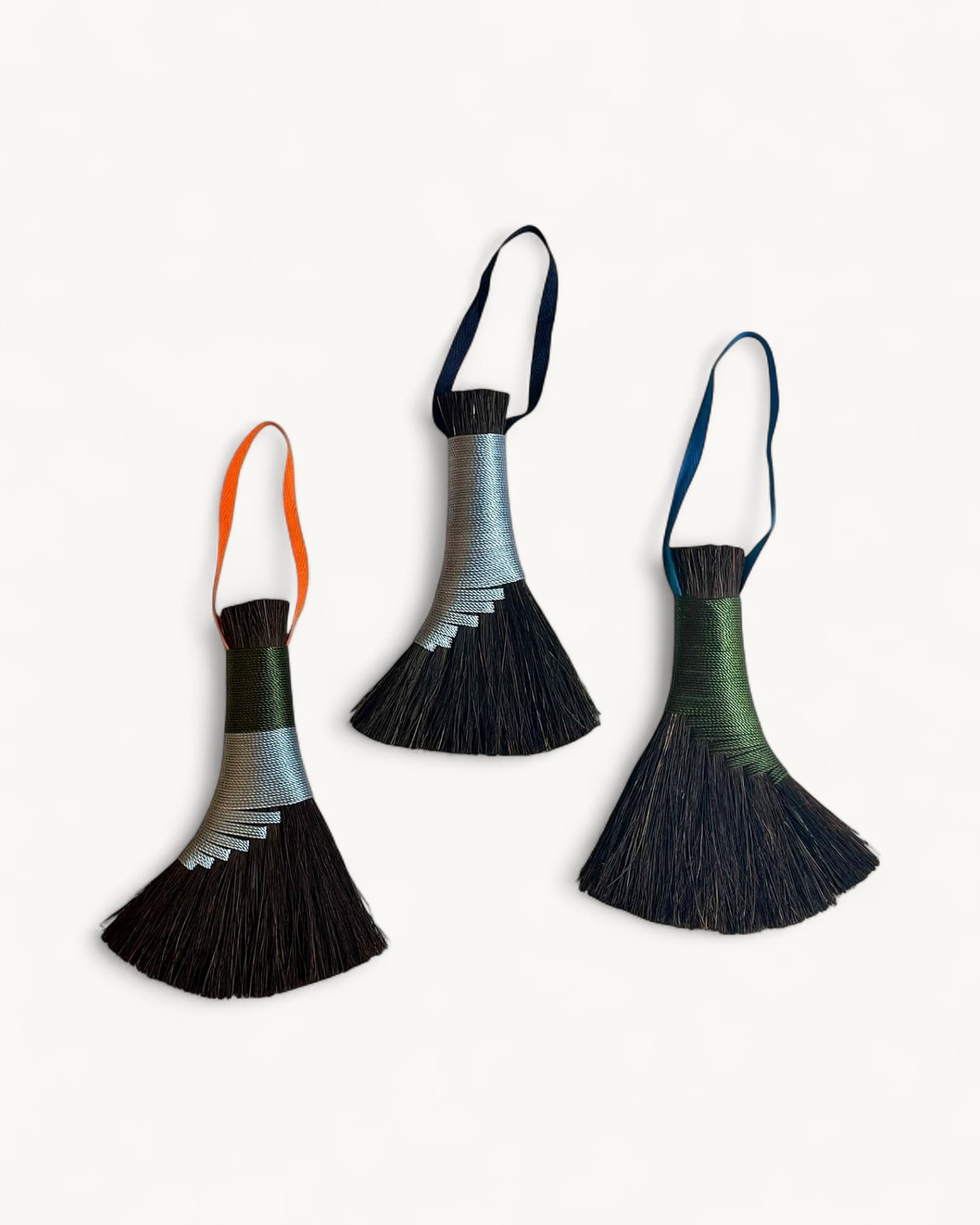
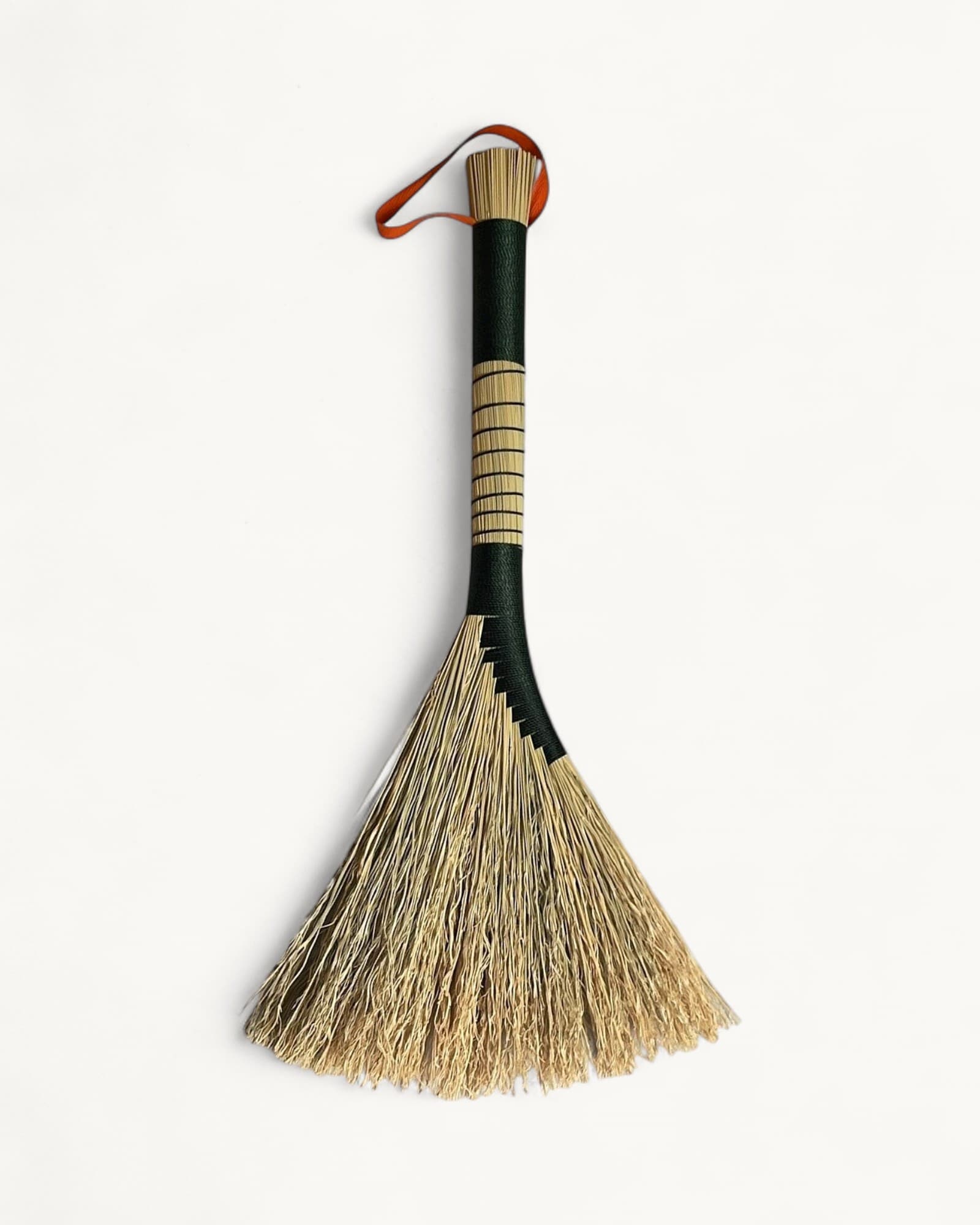
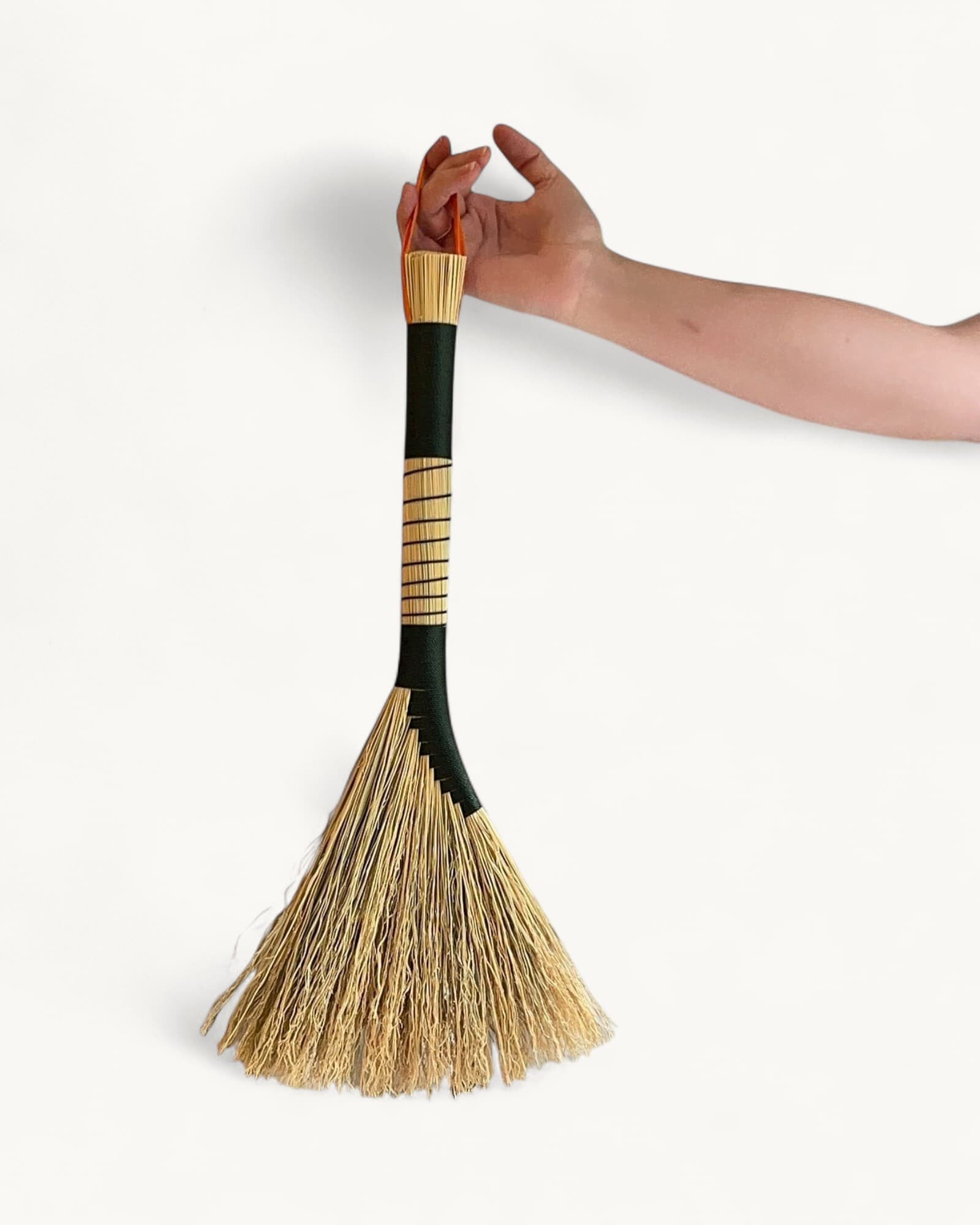
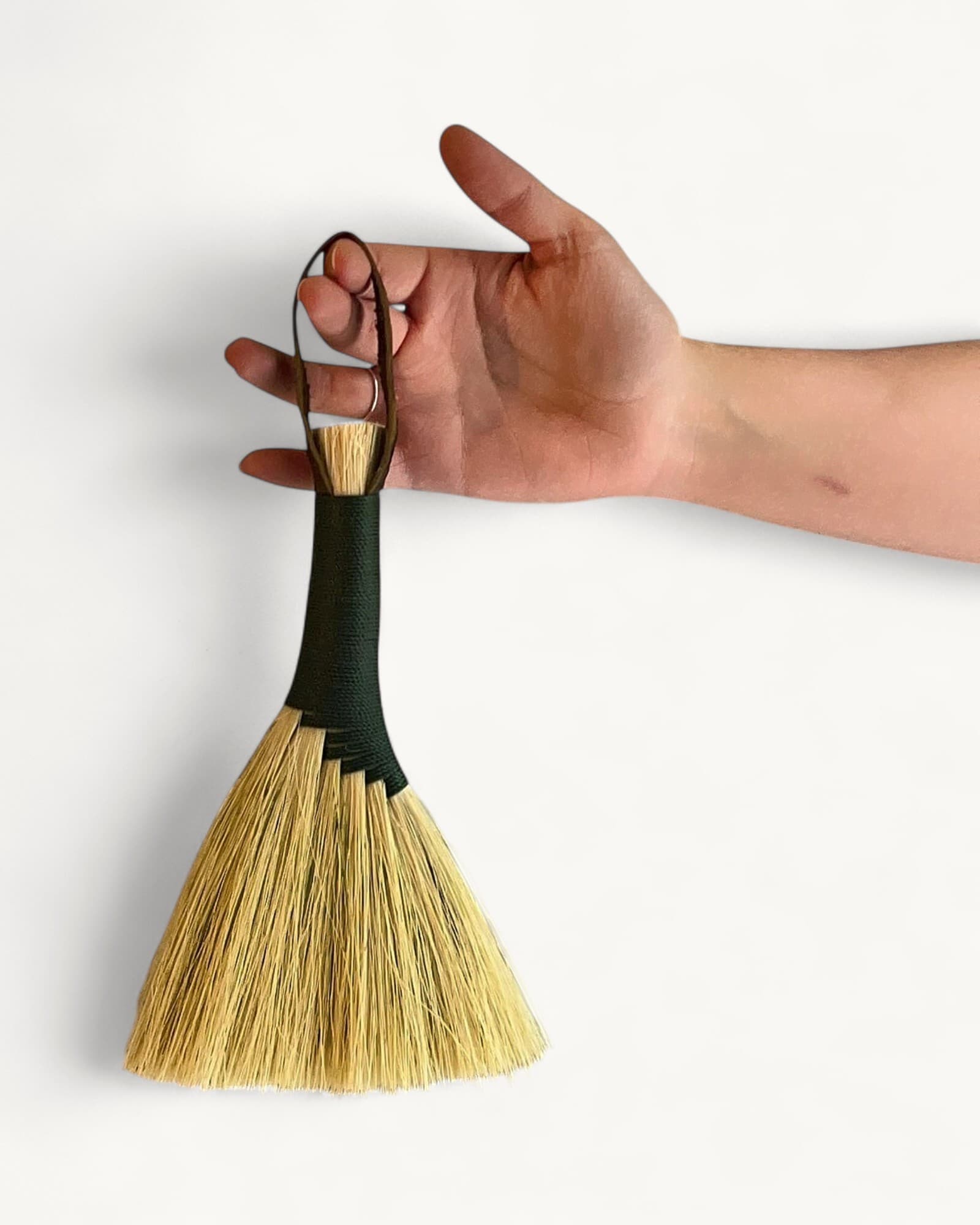
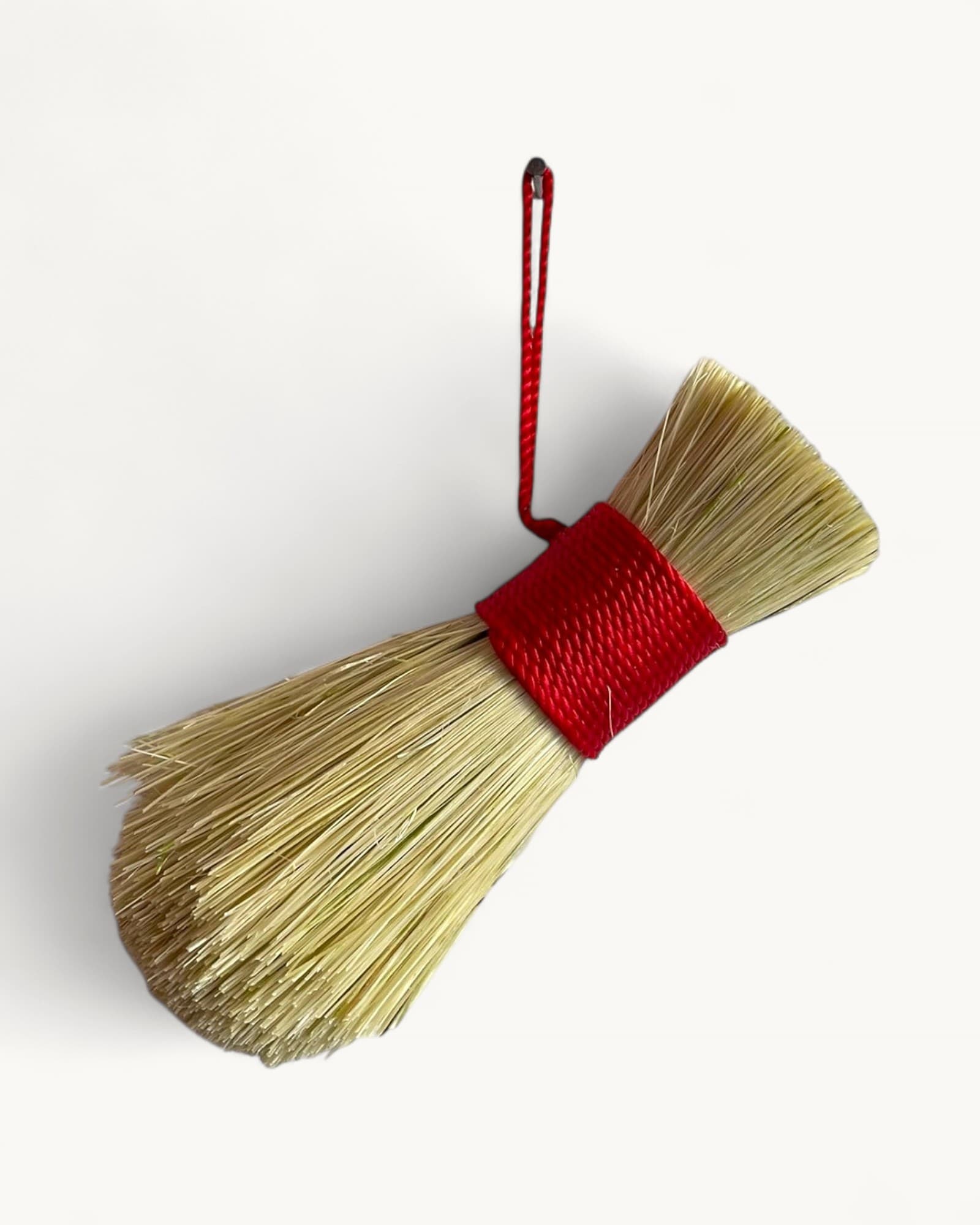
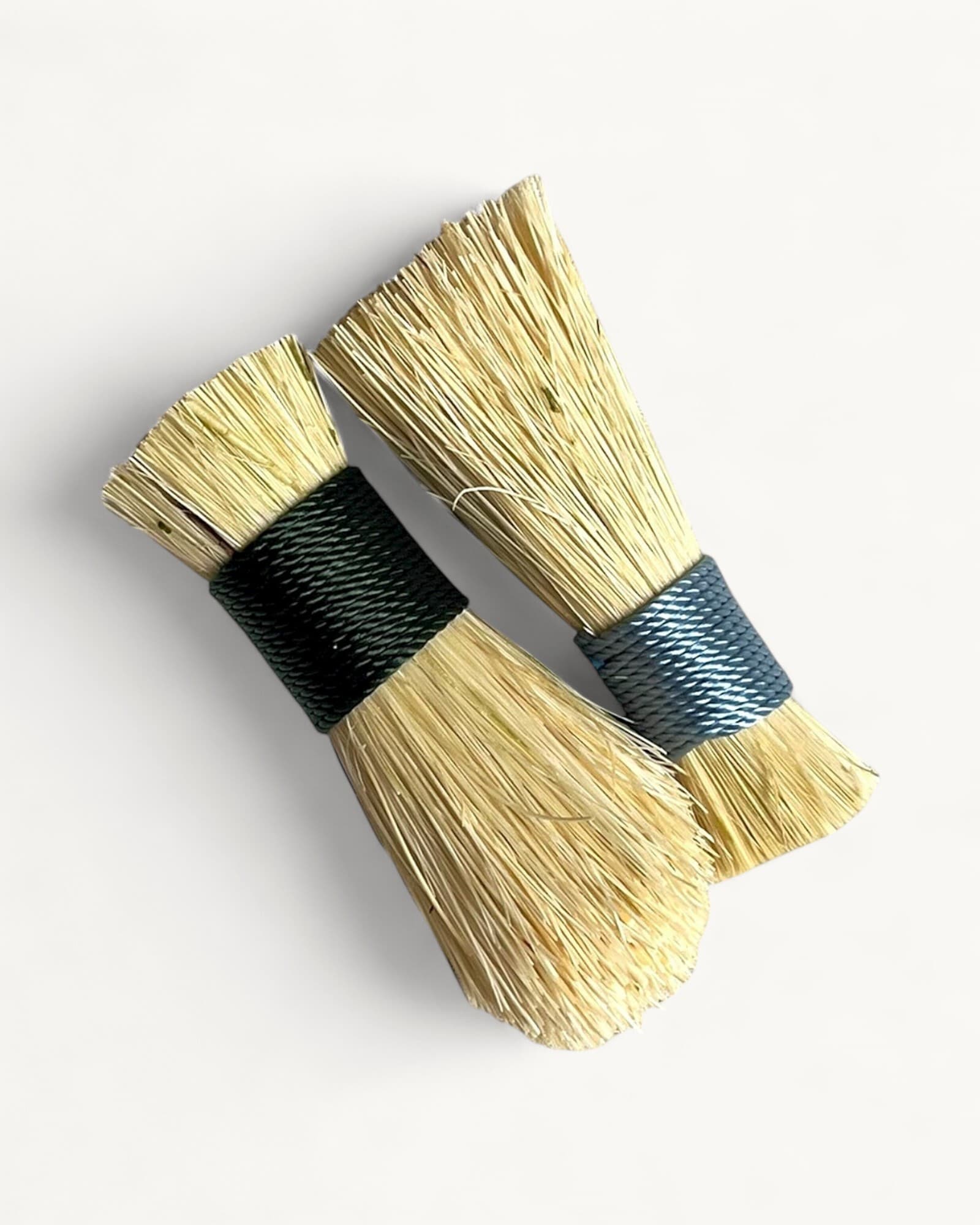
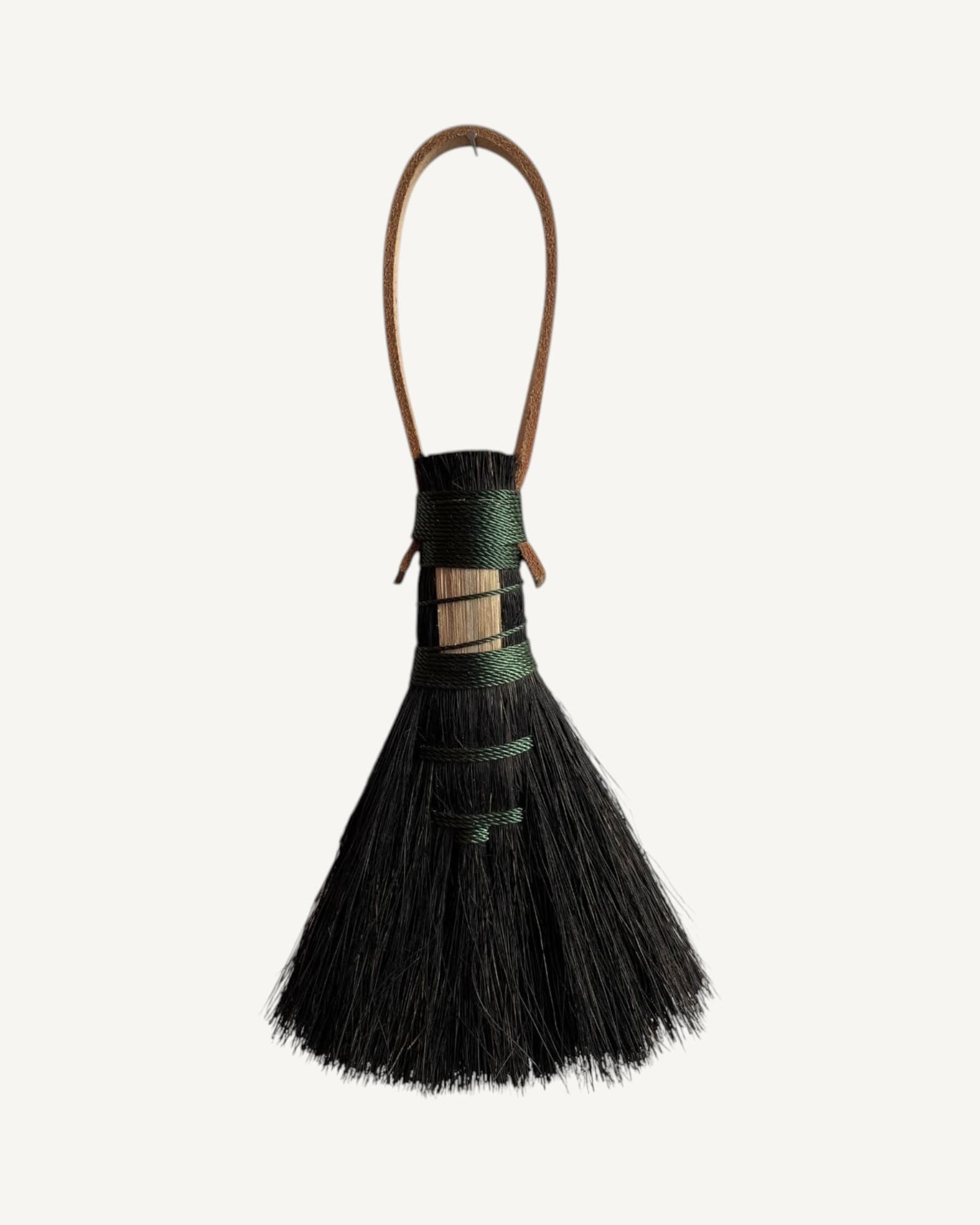
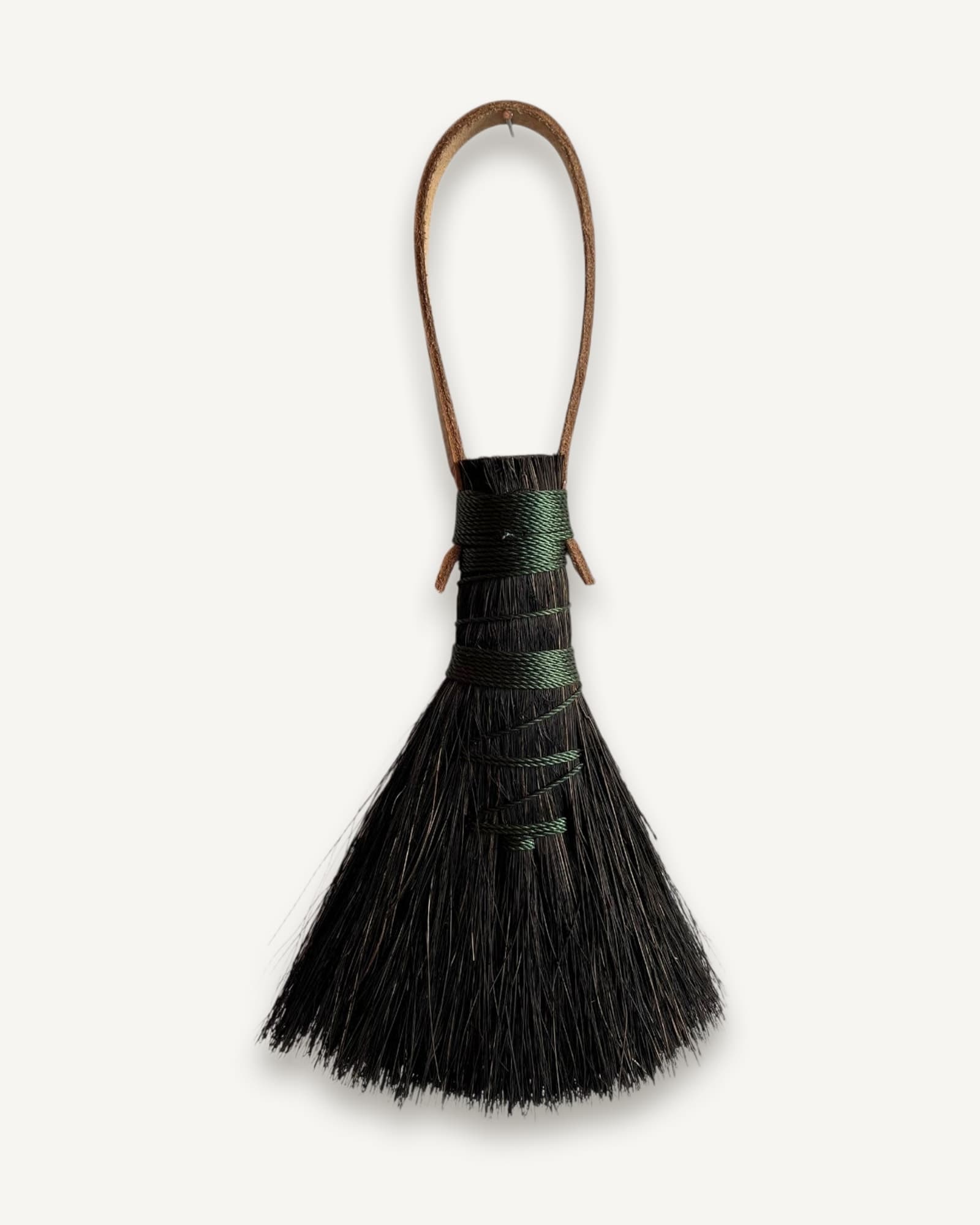
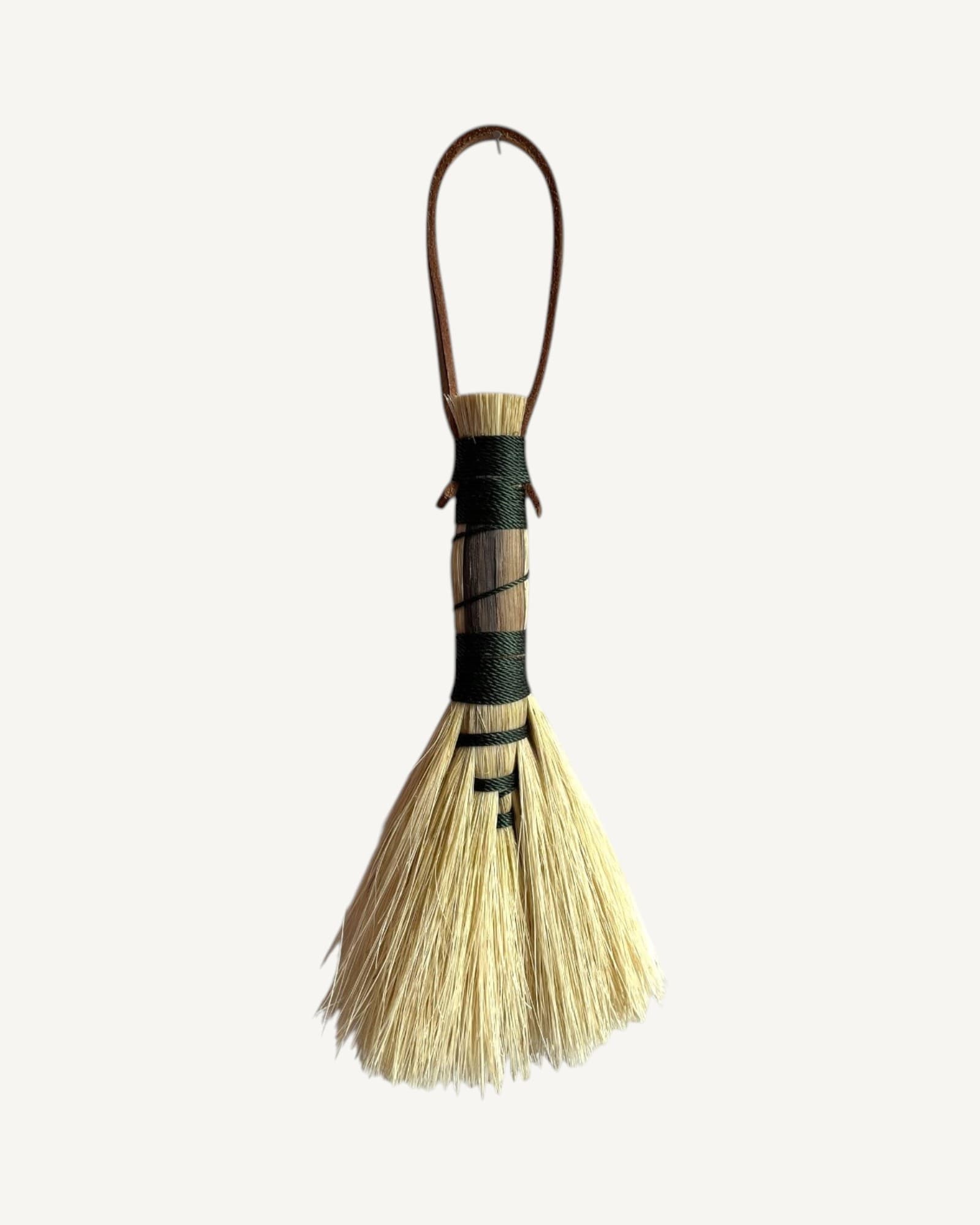
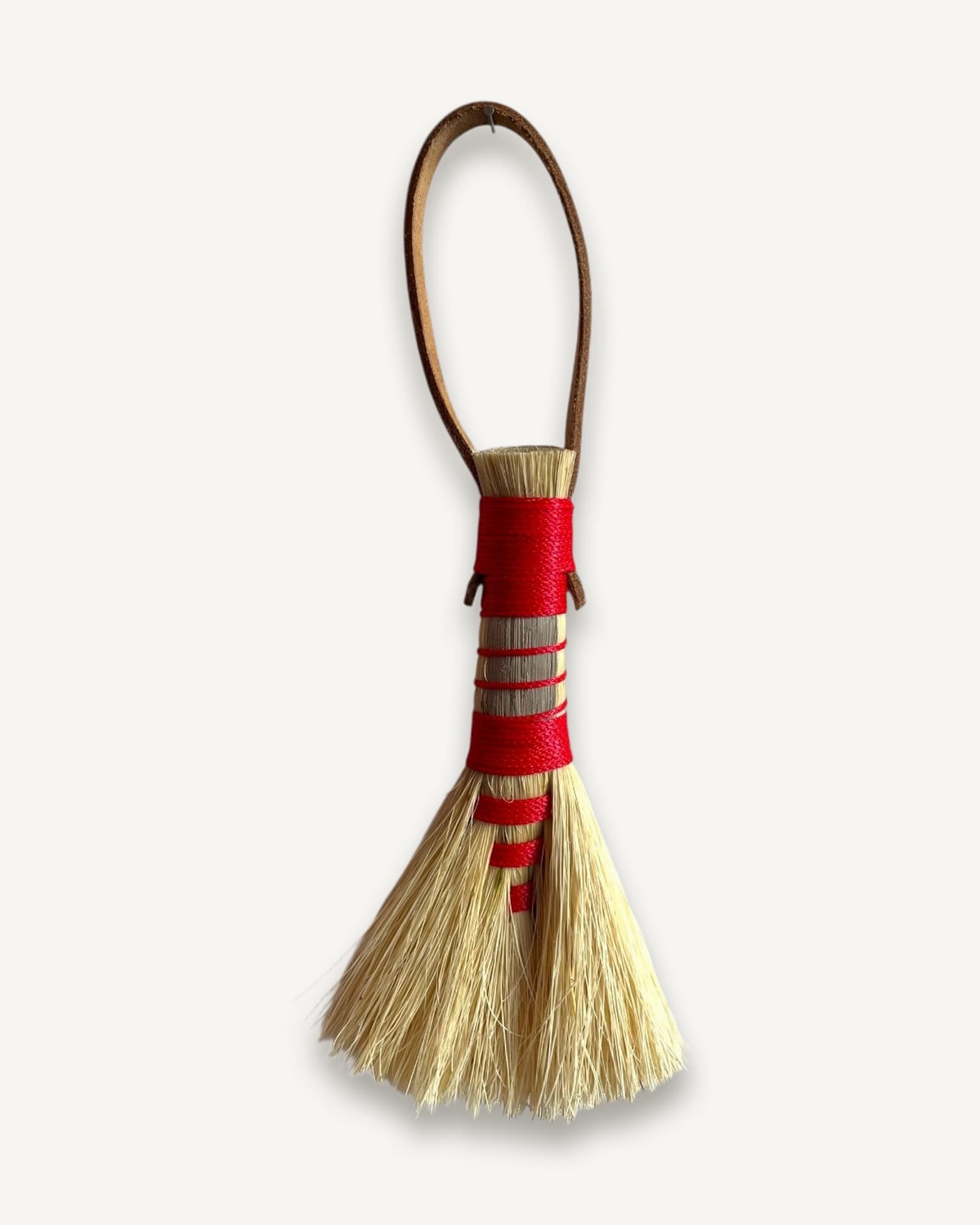
When he isn't weaving, Simon hand-binds brushes and brooms (broomcorn, tampico, arenga), wrapped in coloured cord against an oak bark tanned leather handle, often with a thin woven oak strip inset as a nod to the swill work. They are made to hang on the wall, not to be put away in a cupboard.
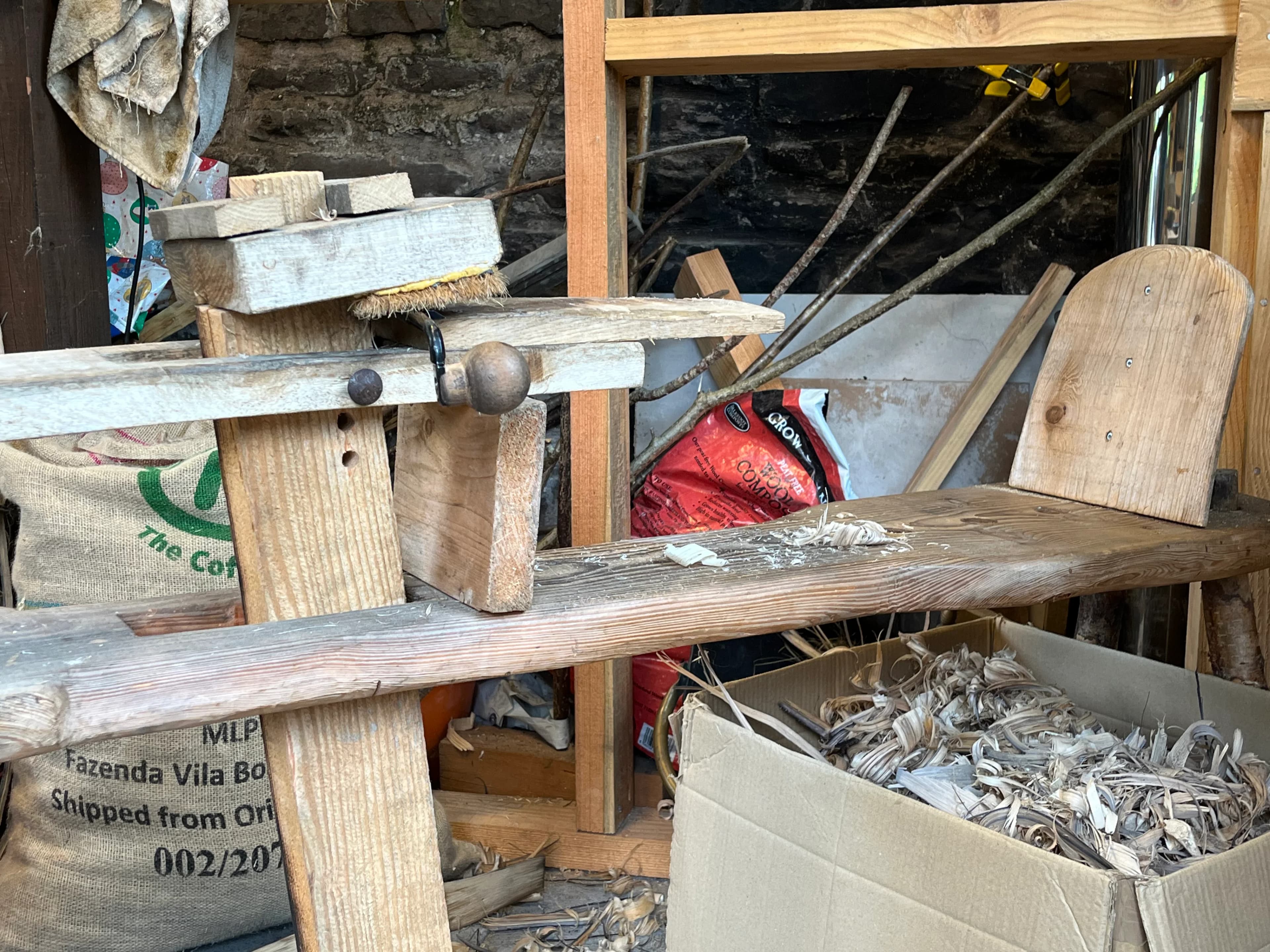

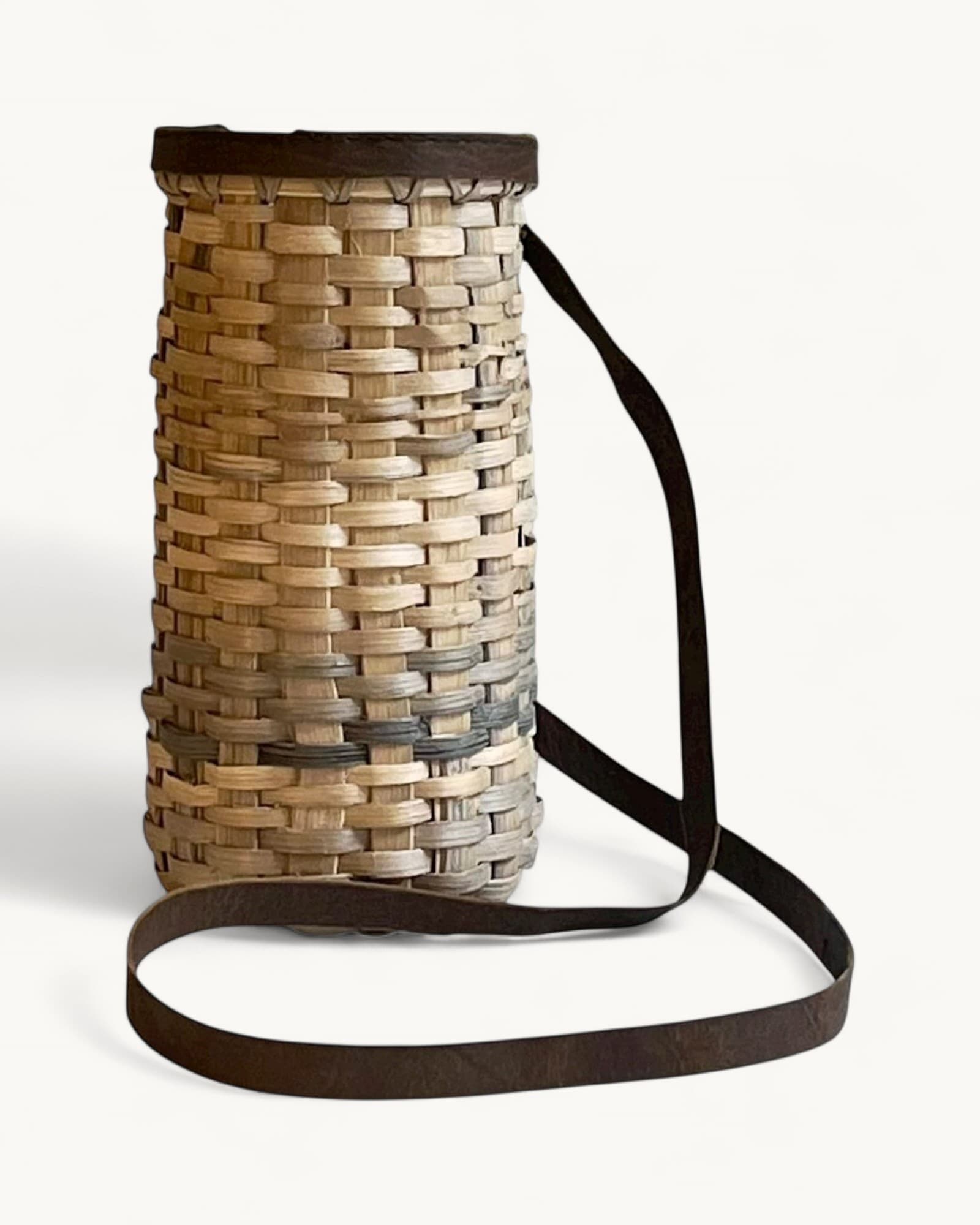
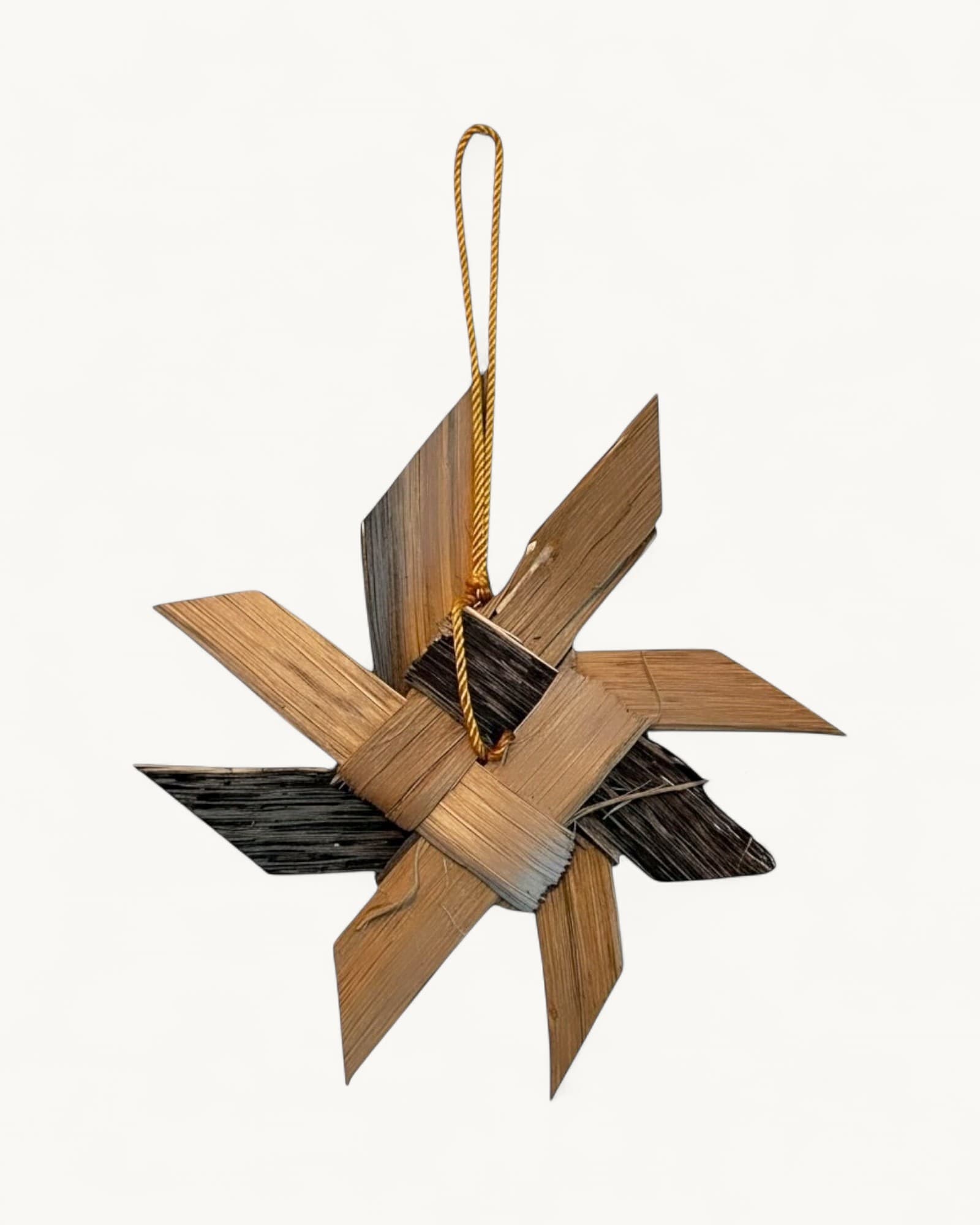
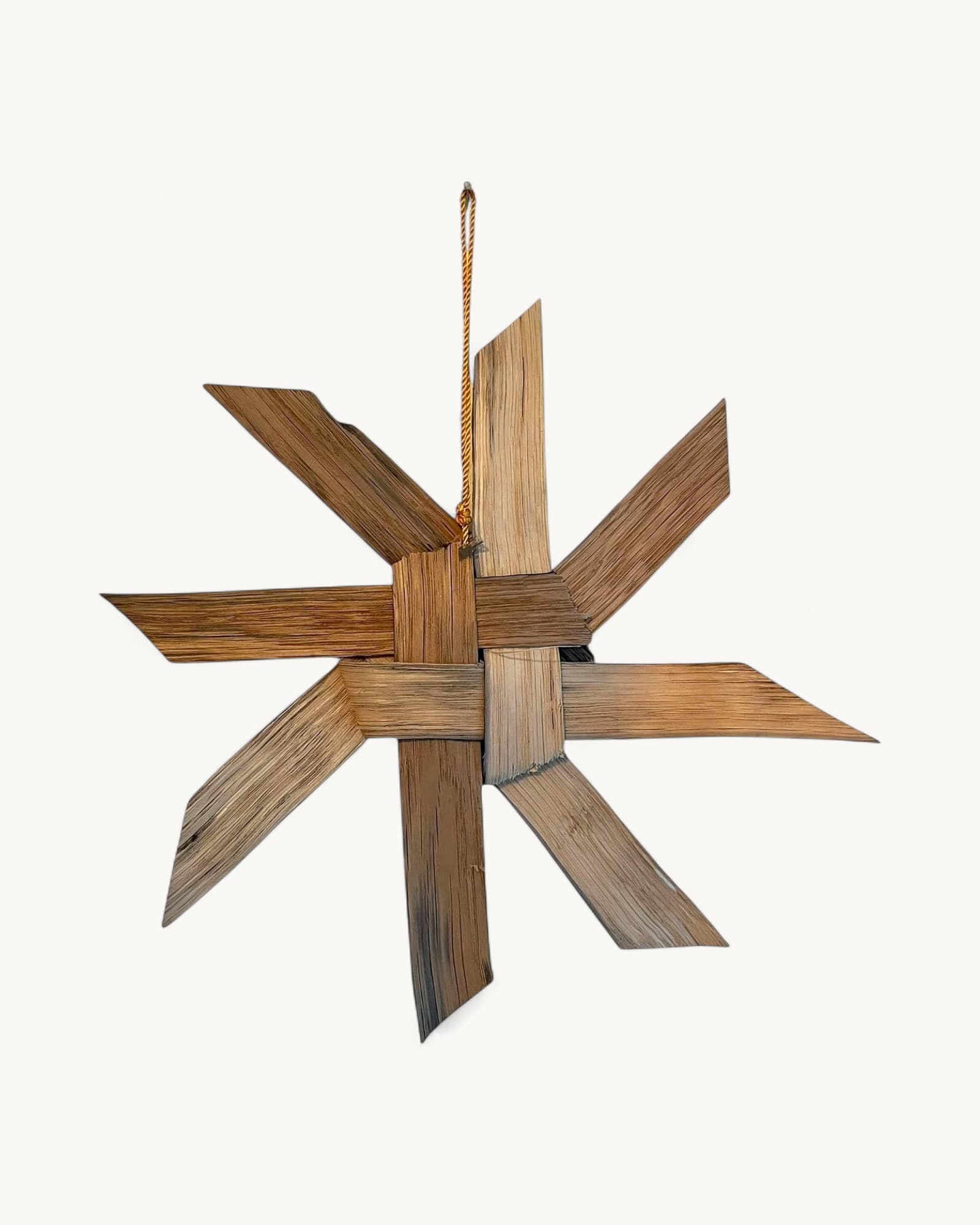
The baskets are coppiced oak, boiled and woven, with peeled hazel for the handle and willow hoops on some pieces. Simon harvests and prepares the oak himself. The leather, where it appears (bottle bag strap, fishing creel lid, brush handles), is generally oak bark tanned. It is a slow vegetable tanning method that pairs with the oak work in spirit as much as in fact. The brushes use natural plant fibre: broomcorn (a sorghum), tampico (Mexican Agave and Yucca), and arenga (a tropical Asian palm), wrapped with nylon cord. Star baubles are made from the strip offcuts of the basket work, threaded on coloured cord; nothing is wasted. The materials are nearly all local.
2 pieces that have found their home