Soft launching. More makers all summer.Soft launching with our founding makers. More arriving through the summer.
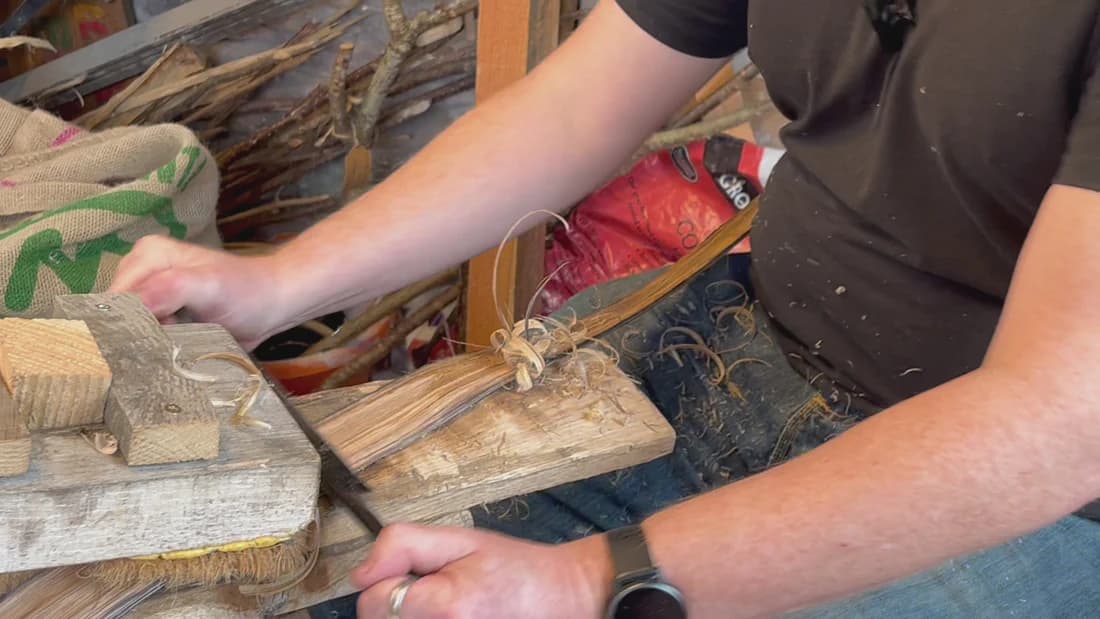
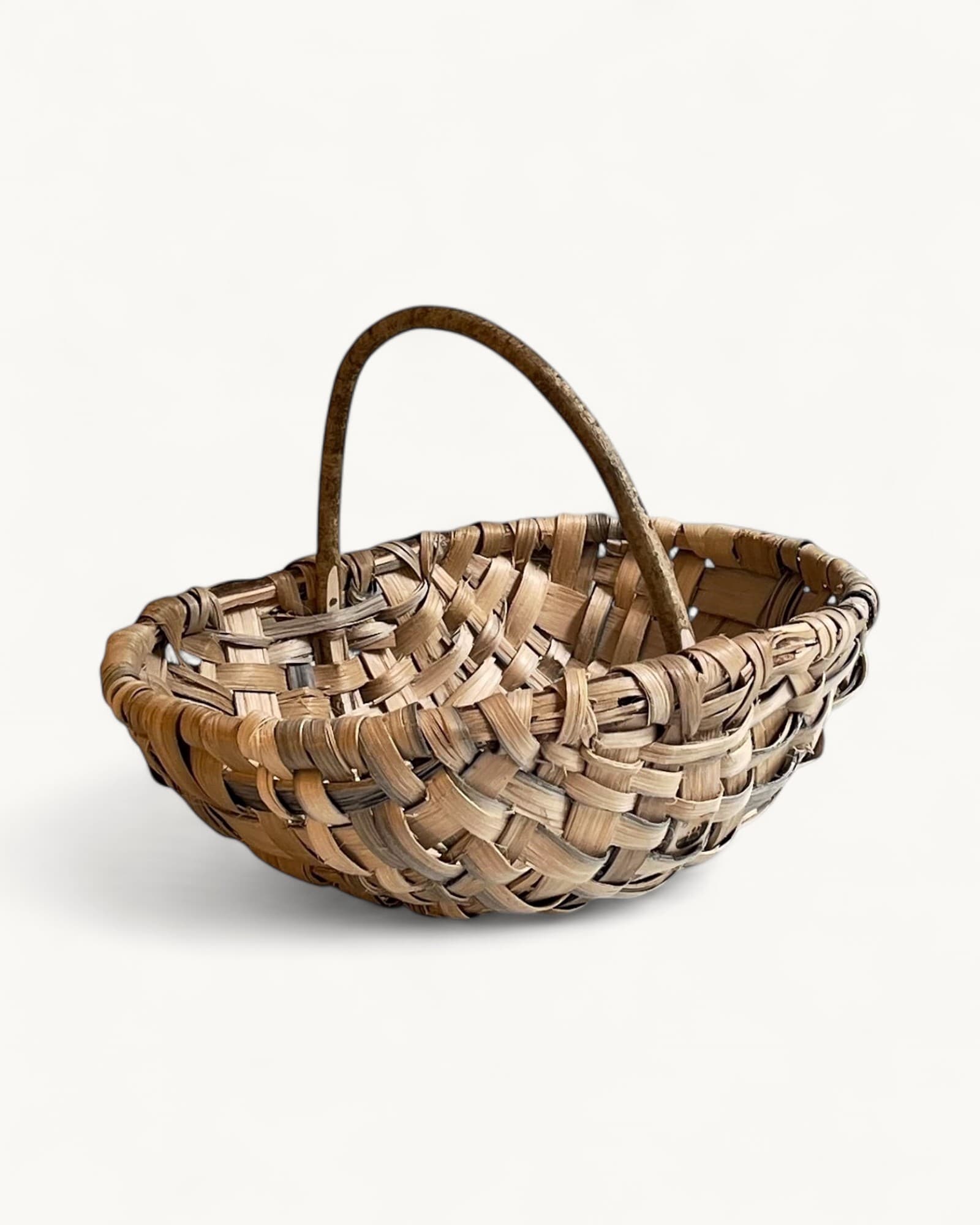
The 16-inch swill is the workhorse of the form. Coppiced oak is split along the grain, cleaved thin, dressed, boiled, and woven wet. A peeled hazel handle is bent in and locked under the rim. Nothing is glued. The basket holds because of how it is woven.
This is the form that did the original work. Oak swill is southern Lake District by origin; in Scotland the same baskets are called tattie baskets, after the potatoes they carried home from the field. They moved coal onto steam ships. They went to market. They were sturdy enough that apprentices tested finished baskets by standing in them.
You can put this one to the same kind of use. Logs, produce, market shopping, a stack of blankets by the sofa. It will outlast most of what you set inside it.
Simon is the only oak swill basket maker remaining in Scotland. The craft sits on the Heritage Crafts Red List as critically endangered.

The 16-inch swill is the workhorse of the form. Coppiced oak is split along the grain, cleaved thin, dressed, boiled, and woven wet. A peeled hazel handle is bent in and locked under the rim. Nothing is glued. The basket holds because of how it is woven.
This is the form that did the original work. Oak swill is southern Lake District by origin; in Scotland the same baskets are called tattie baskets, after the potatoes they carried home from the field. They moved coal onto steam ships. They went to market. They were sturdy enough that apprentices tested finished baskets by standing in them.
You can put this one to the same kind of use. Logs, produce, market shopping, a stack of blankets by the sofa. It will outlast most of what you set inside it.
Simon is the only oak swill basket maker remaining in Scotland. The craft sits on the Heritage Crafts Red List as critically endangered.


Simon Cooper is the only oak swill basket maker left in Scotland. He works from a single room in Crieff, splitting coppiced oak with a cleaver, soaking the strips, weaving them while still wet, the same way the form has been built for four hundred years.