Soft launching. More makers all summer.Soft launching with our founding makers. More arriving through the summer.
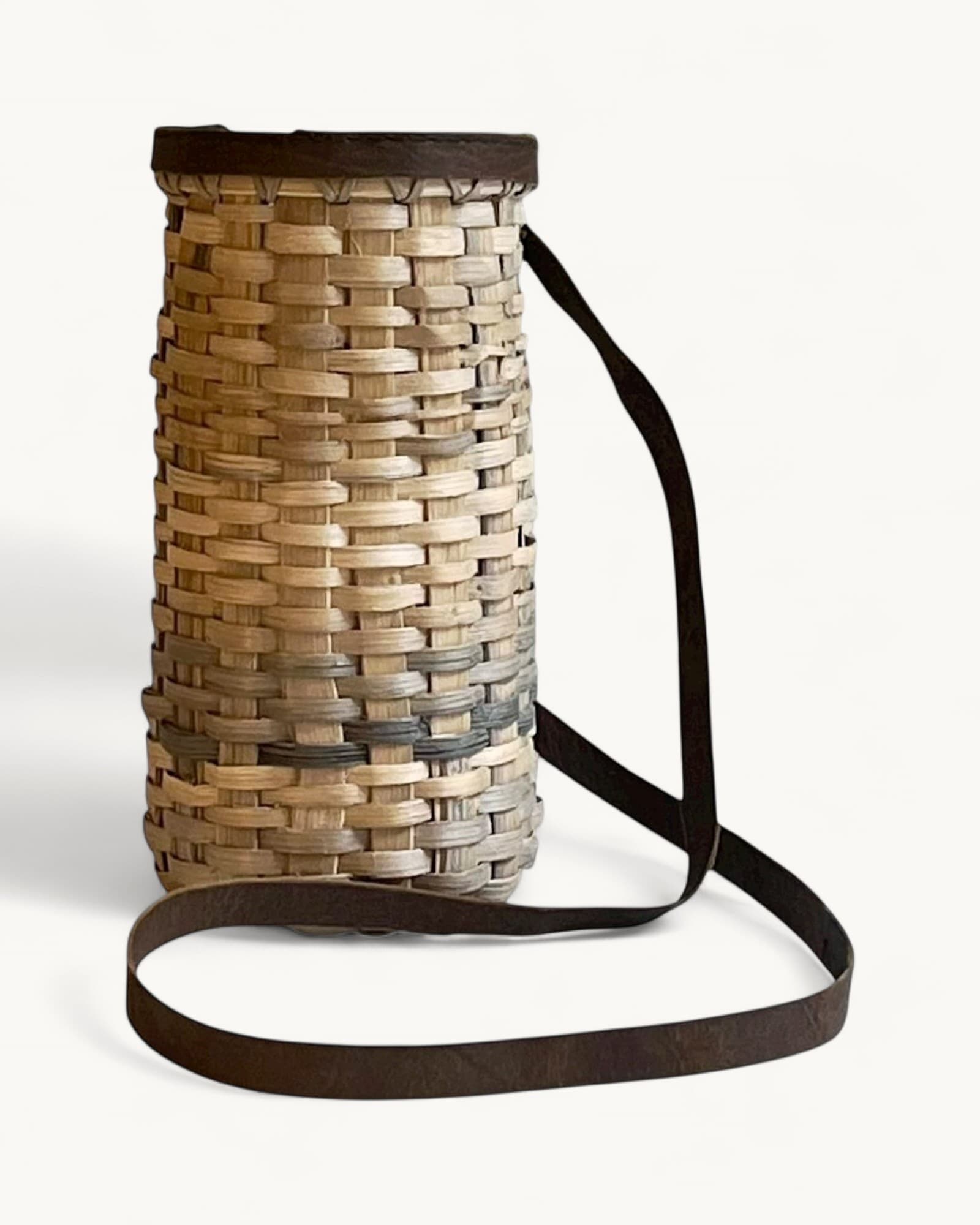
The 13-inch swill is the smaller everyday form. It is the right size for foraging, for a kitchen counter holding onions and garlic, for a hallway holding gloves and keys. Coppiced oak is split along the grain, cleaved thin, dressed, boiled, and woven wet around a hazel handle.
Oak swill is a southern Lake District form by origin; in Scotland the same baskets are called tattie baskets. They were workhorse vessels, used for potatoes, coal, market produce. They were so strong that apprentices were said to test them by standing in the finished basket.
At this size the weave shows more of itself. The strips are closer to the eye. The craft is more legible.
Simon is the only oak swill basket maker remaining in Scotland. The craft sits on the Heritage Crafts Red List as critically endangered.

The 13-inch swill is the smaller everyday form. It is the right size for foraging, for a kitchen counter holding onions and garlic, for a hallway holding gloves and keys. Coppiced oak is split along the grain, cleaved thin, dressed, boiled, and woven wet around a hazel handle.
Oak swill is a southern Lake District form by origin; in Scotland the same baskets are called tattie baskets. They were workhorse vessels, used for potatoes, coal, market produce. They were so strong that apprentices were said to test them by standing in the finished basket.
At this size the weave shows more of itself. The strips are closer to the eye. The craft is more legible.
Simon is the only oak swill basket maker remaining in Scotland. The craft sits on the Heritage Crafts Red List as critically endangered.


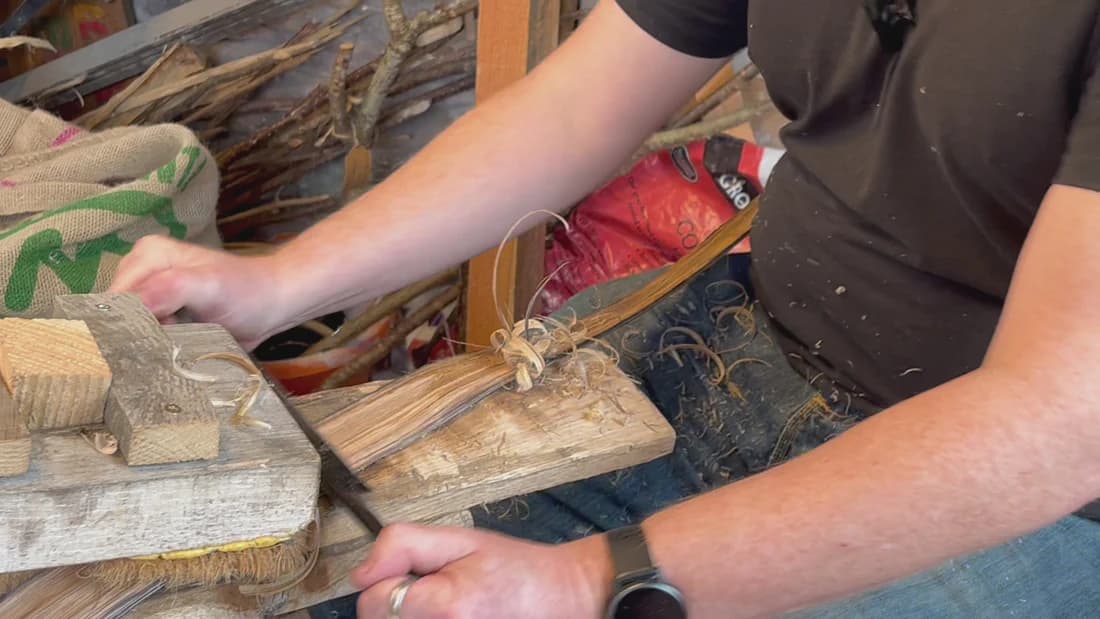
Simon Cooper is the only oak swill basket maker left in Scotland. He works from a single room in Crieff, splitting coppiced oak with a cleaver, soaking the strips, weaving them while still wet, the same way the form has been built for four hundred years.