Soft launching. More makers all summer.Soft launching with our founding makers. More arriving through the summer.
The smaller of the dead-stock doorstops. About 12cm square at the base and 16cm tall, around 700g in the hand. Heavy enough to do its job, light enough to lift without thinking.
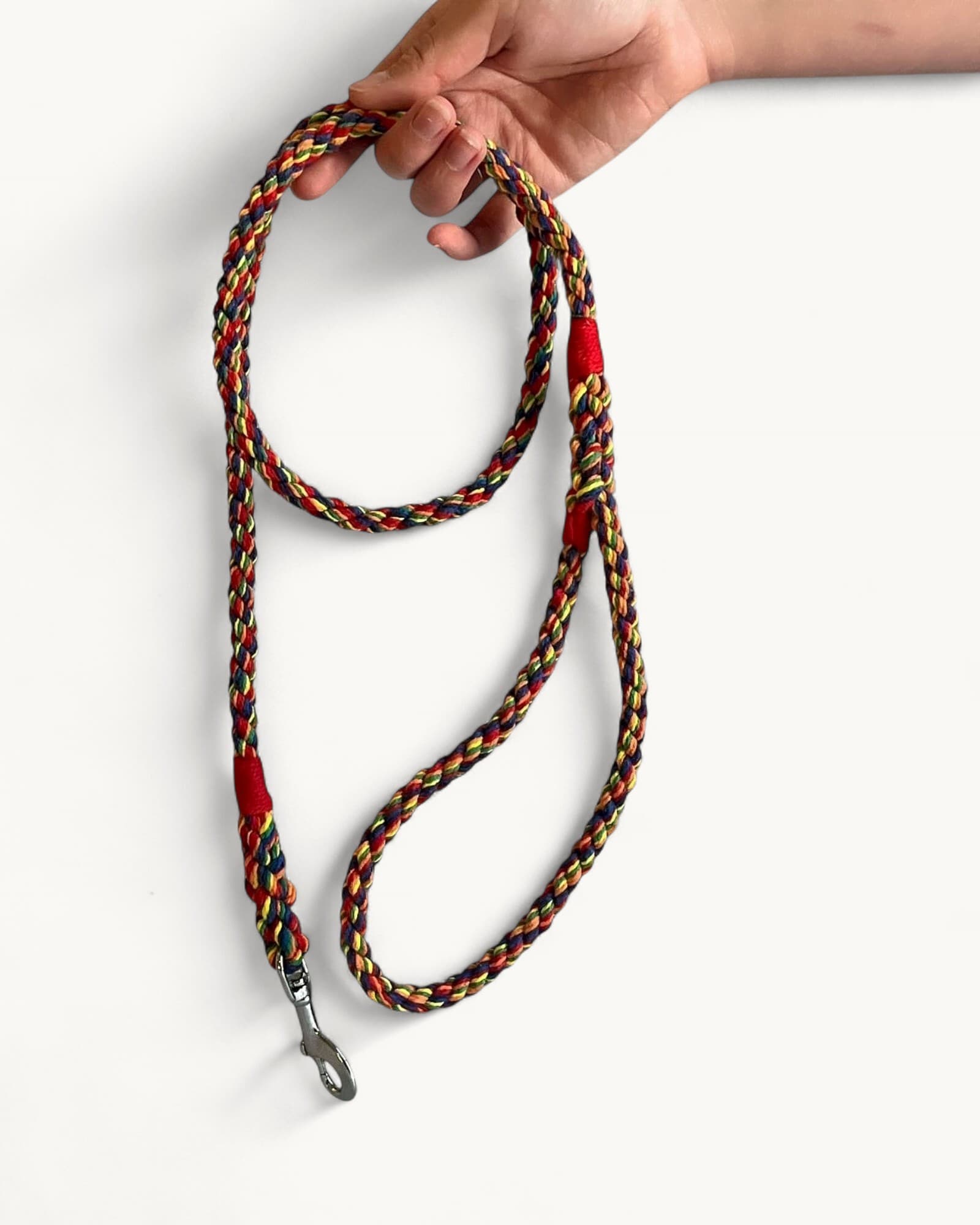
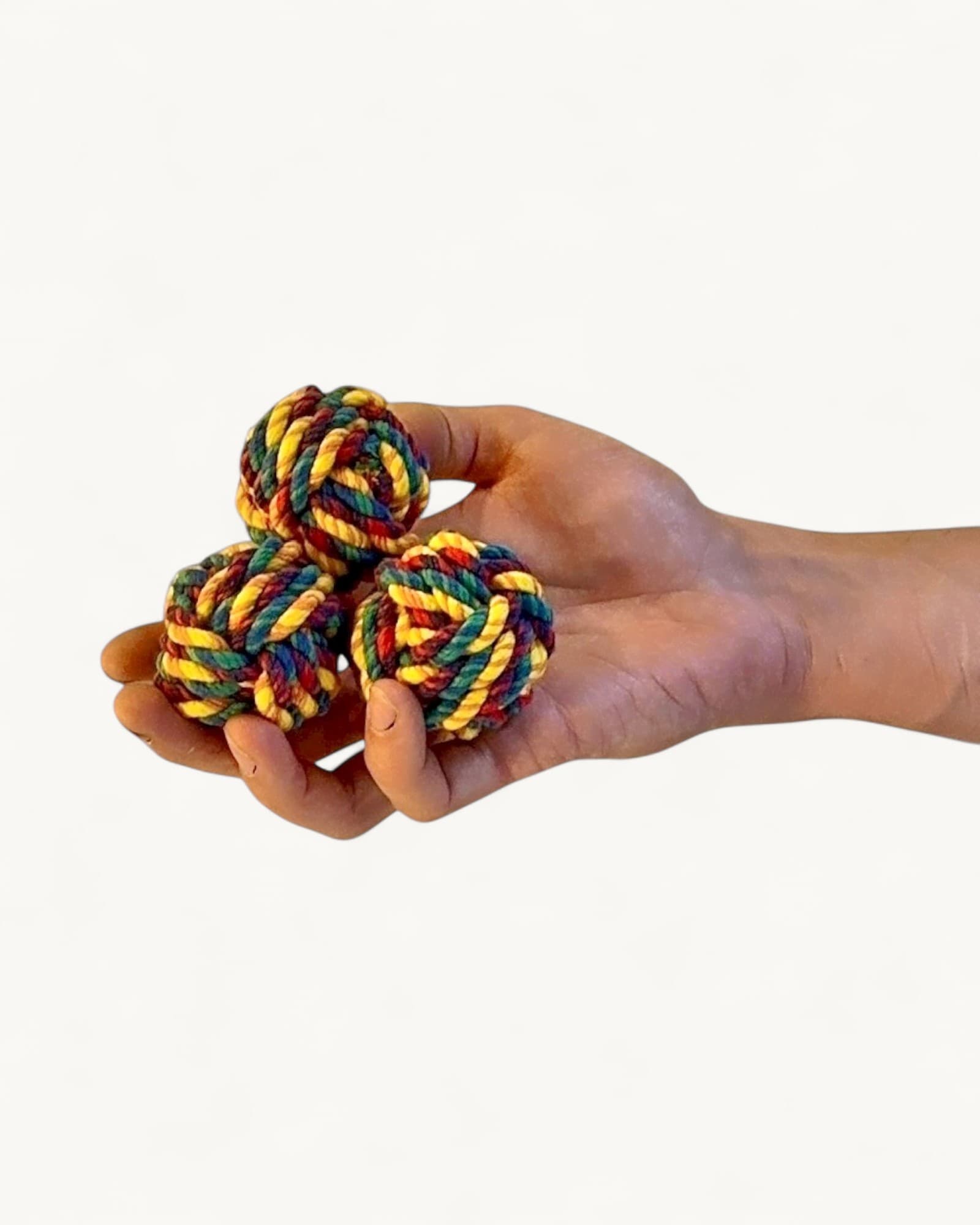
What makes the dead-stock range distinct is the yarn it is built from. Gem blends together mill ends and dead-stock yarns (wool, linen, cotton and whatever else turns up) by hand, then spins them into rope. The blend determines the colour. Because the yarn varies bobbin to bobbin, no two doorstops in this range share a palette. Some pull tighter and smaller; some are softer and fuller. The natural variation is the fingerprint.
Coiled and compressed under tension, finished cleanly, structurally sound. A small piece of slow textile work that happens to also stop a door.

The smaller of the dead-stock doorstops. About 12cm square at the base and 16cm tall, around 700g in the hand. Heavy enough to do its job, light enough to lift without thinking.
What makes the dead-stock range distinct is the yarn it is built from. Gem blends together mill ends and dead-stock yarns (wool, linen, cotton and whatever else turns up) by hand, then spins them into rope. The blend determines the colour. Because the yarn varies bobbin to bobbin, no two doorstops in this range share a palette. Some pull tighter and smaller; some are softer and fuller. The natural variation is the fingerprint.
Coiled and compressed under tension, finished cleanly, structurally sound. A small piece of slow textile work that happens to also stop a door.


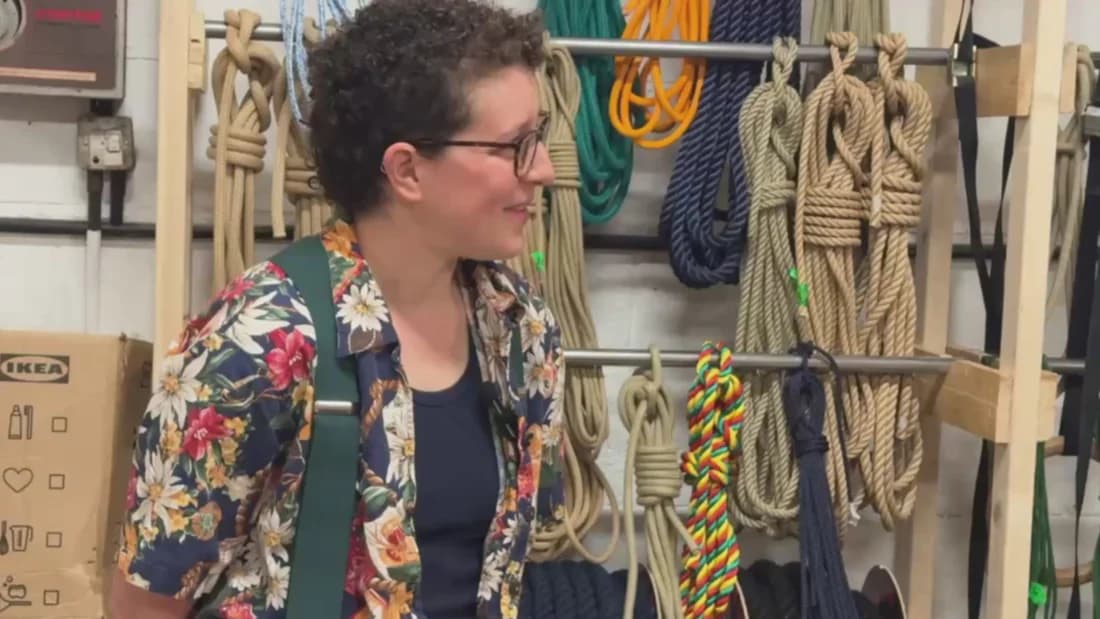
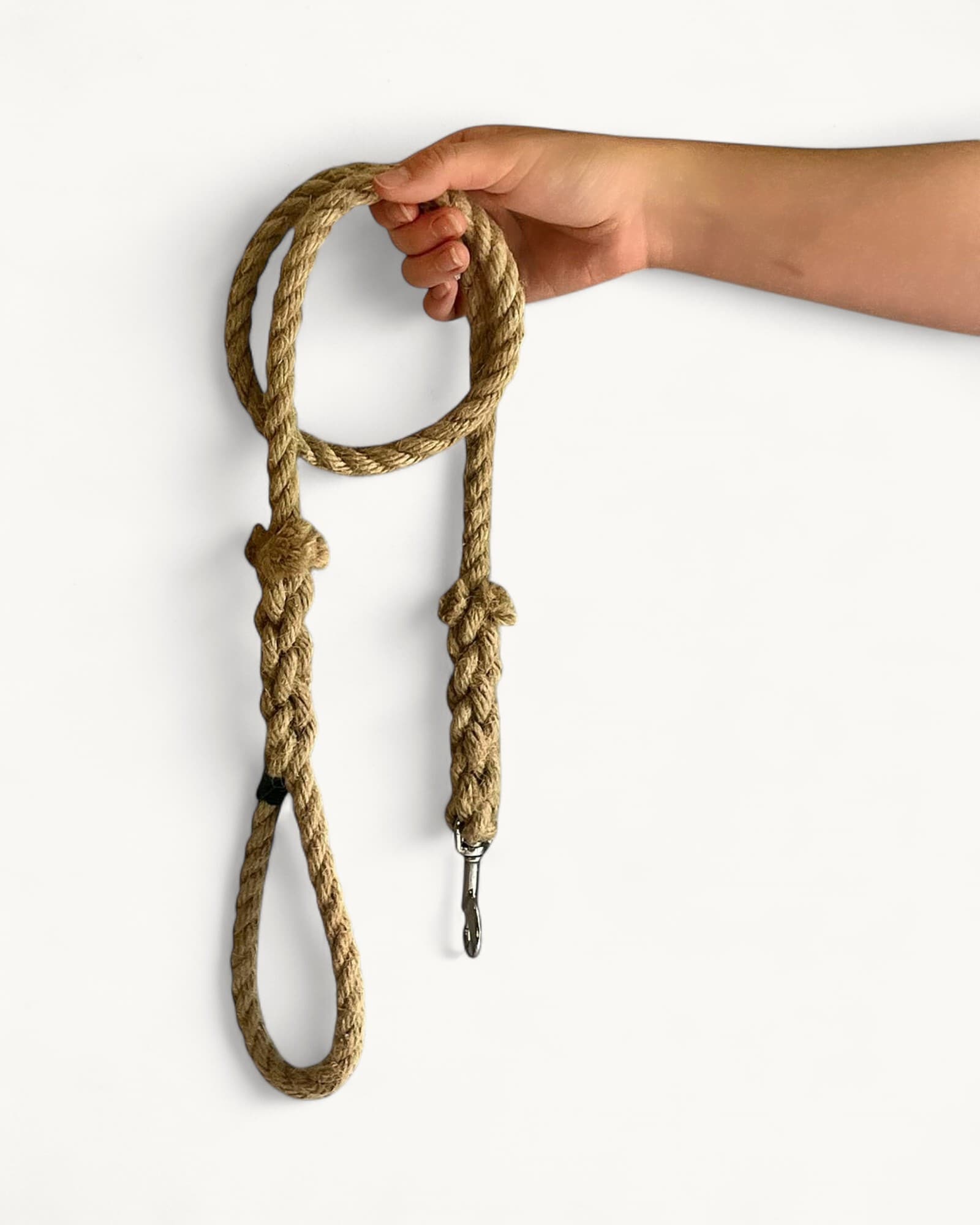
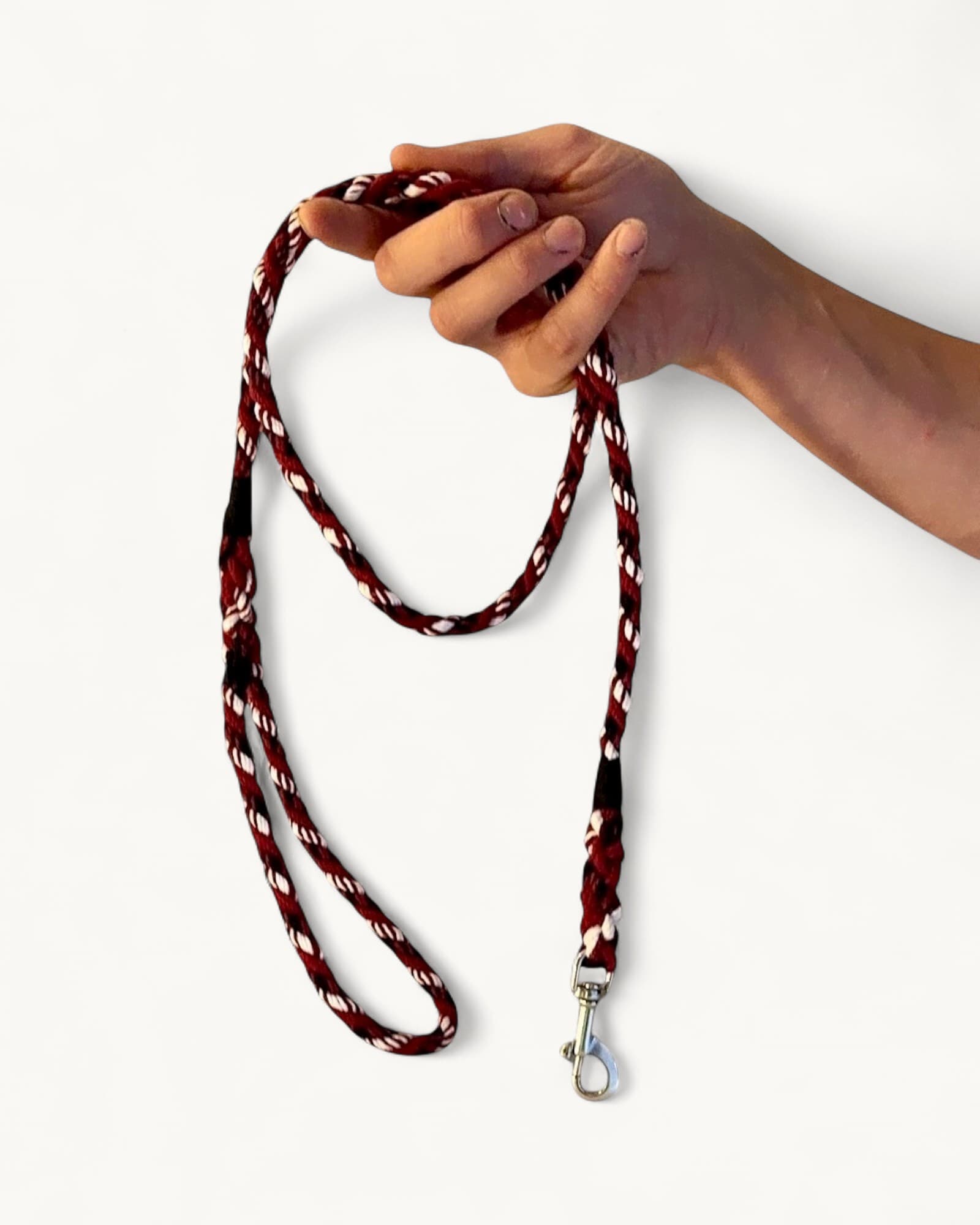
Gem Bowes learned to make rope at Arthur Beale, the Shaftesbury Avenue chandlery that has been splicing line since 1500-something. She works now from a Cambridge studio, hand-spinning flax and dead-stock yarn for dog leads, doorstops, juggling balls.