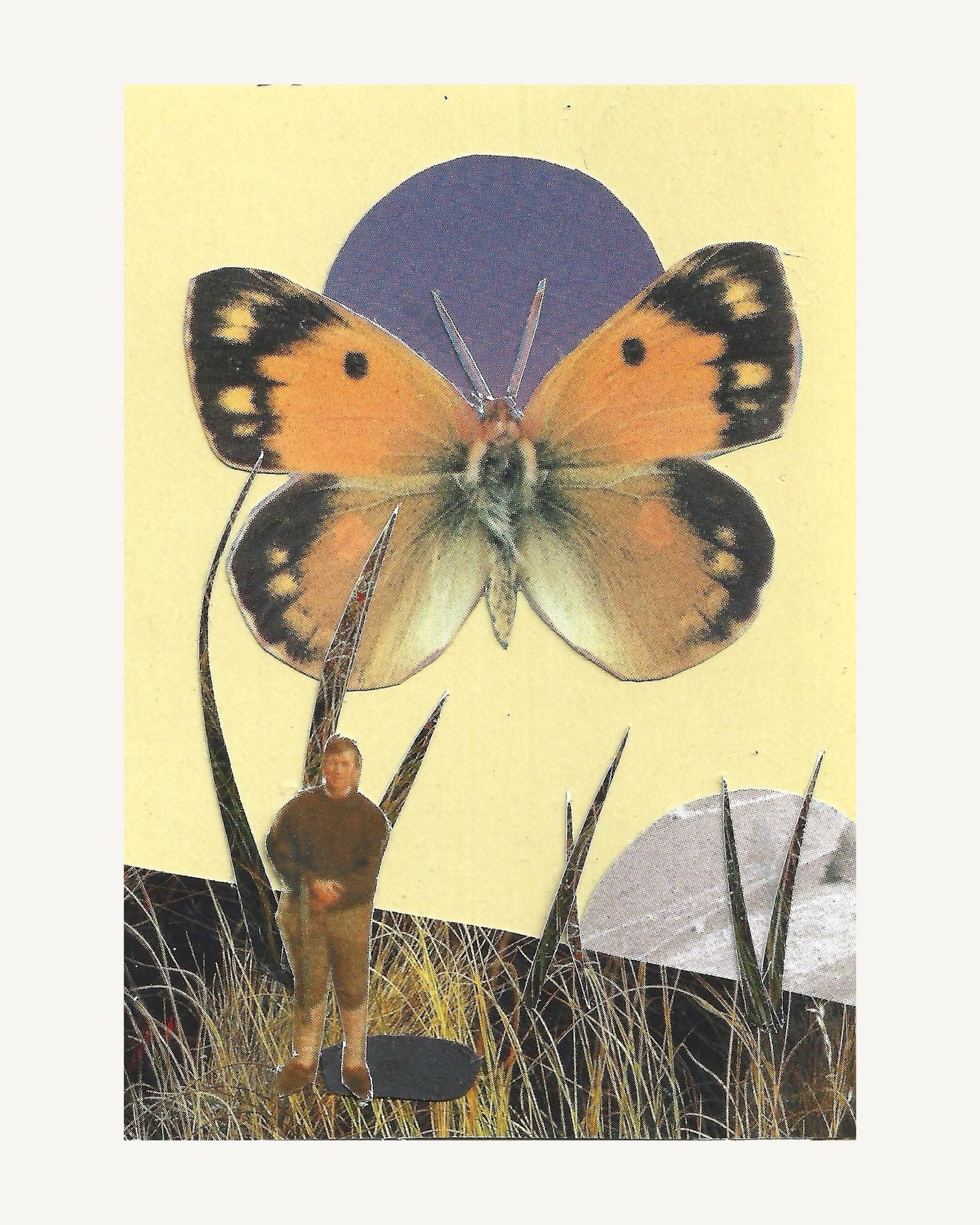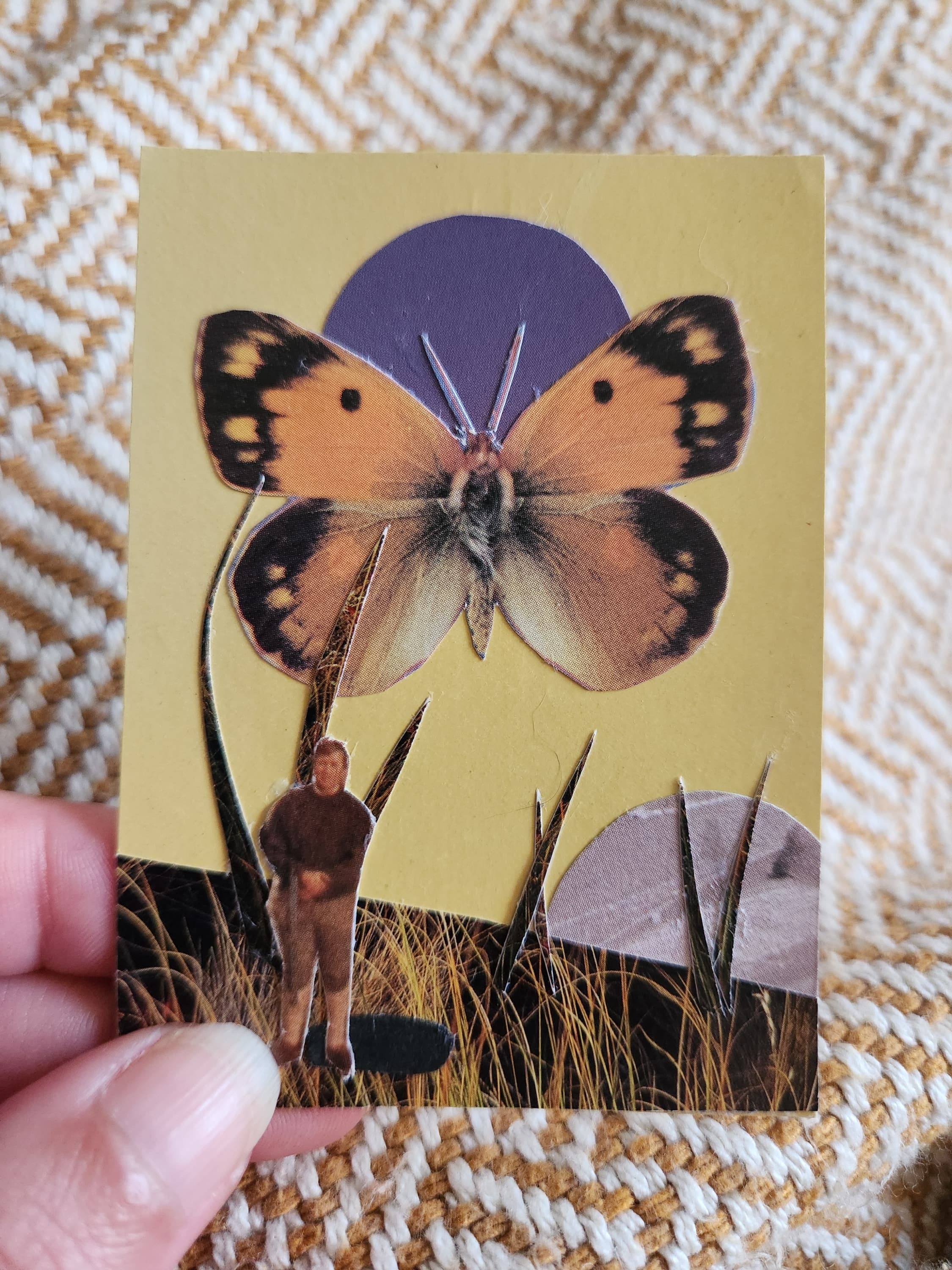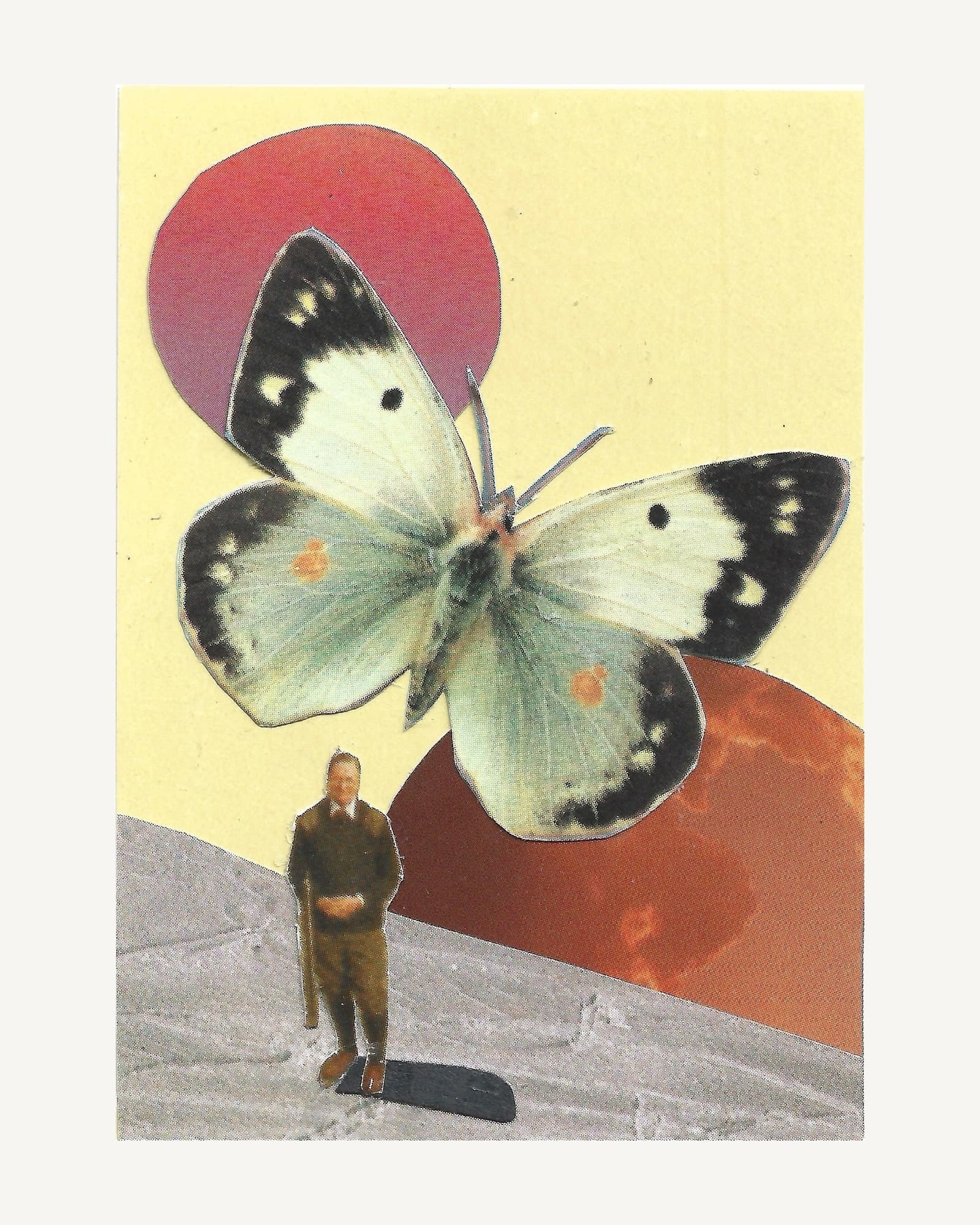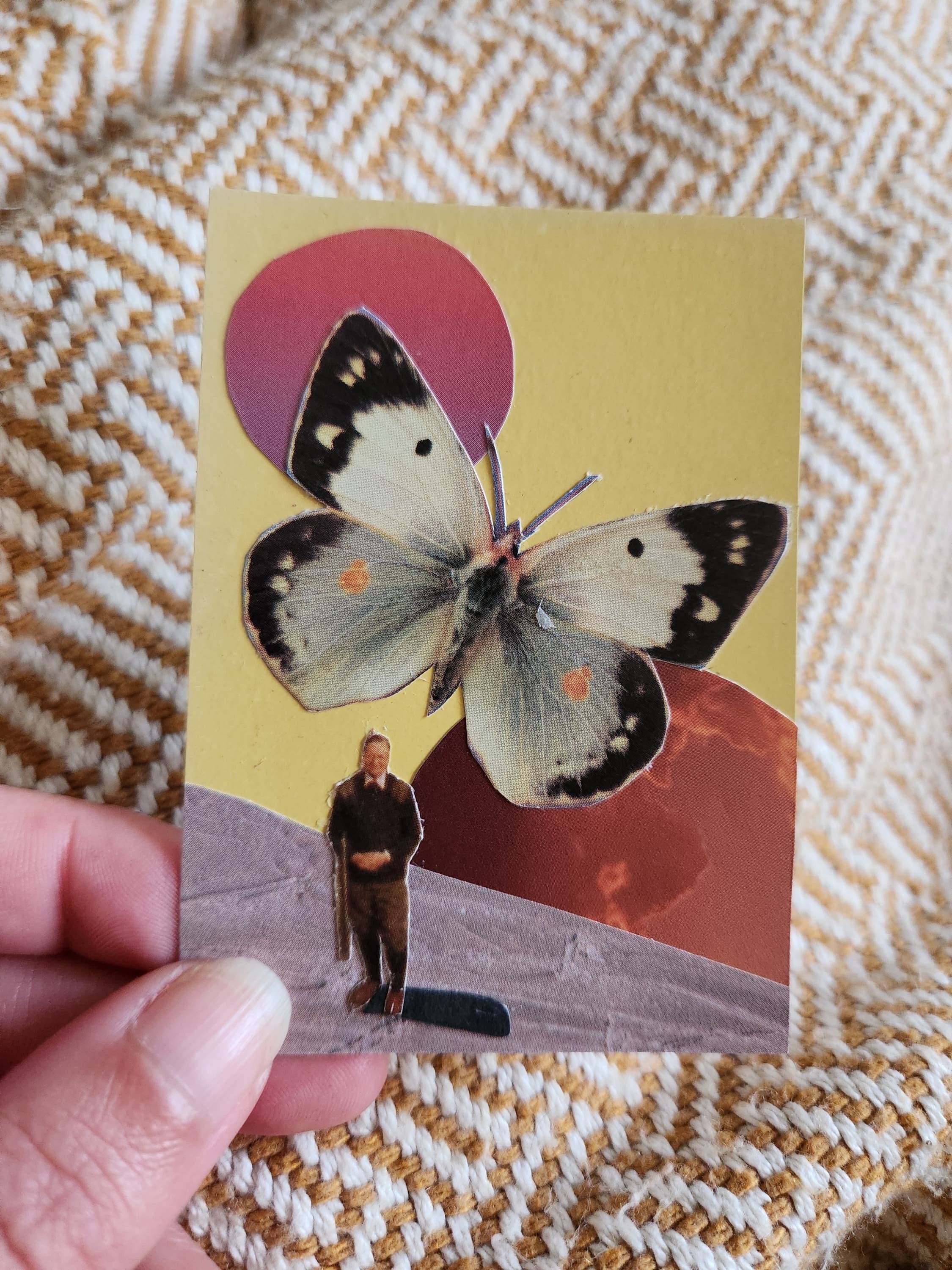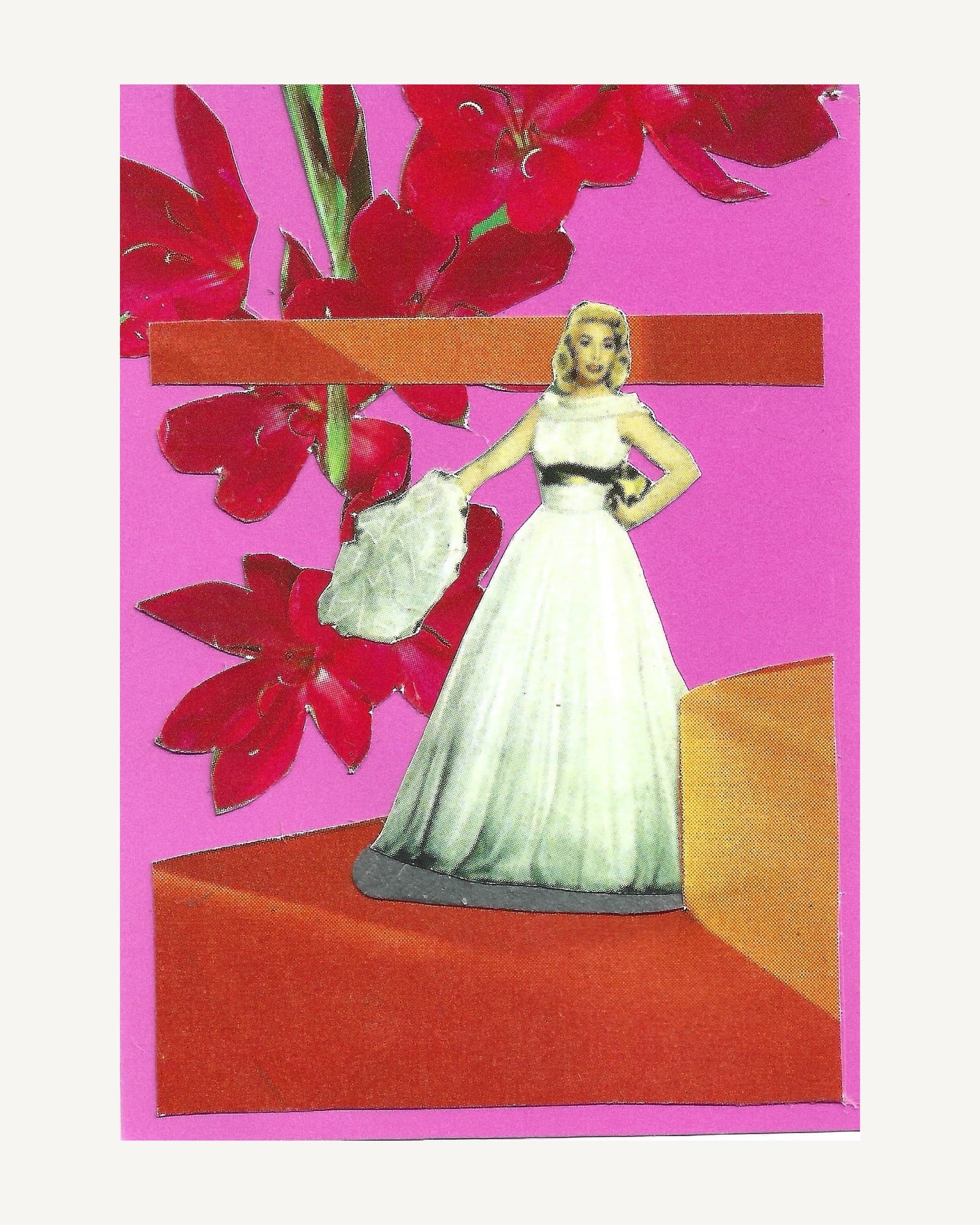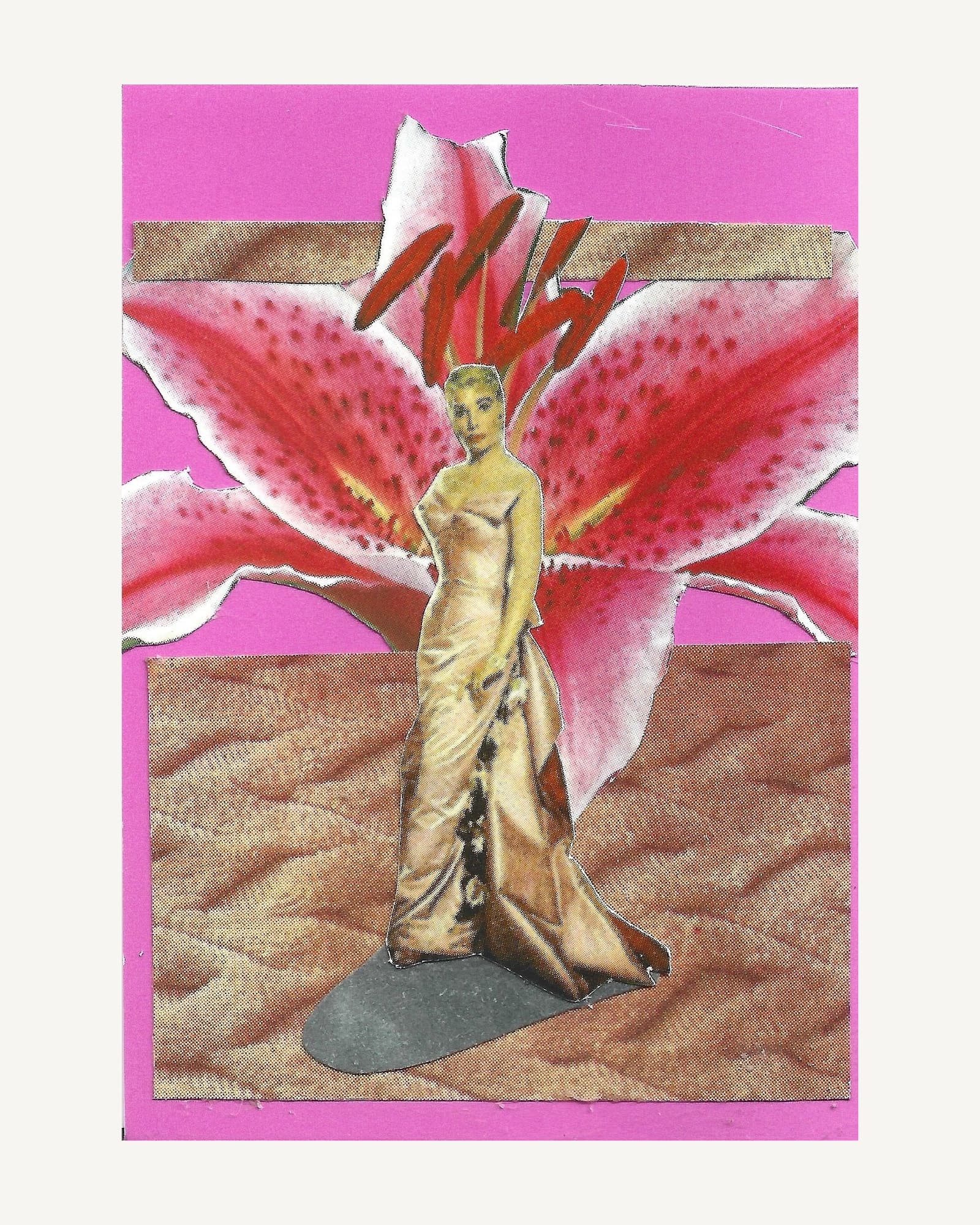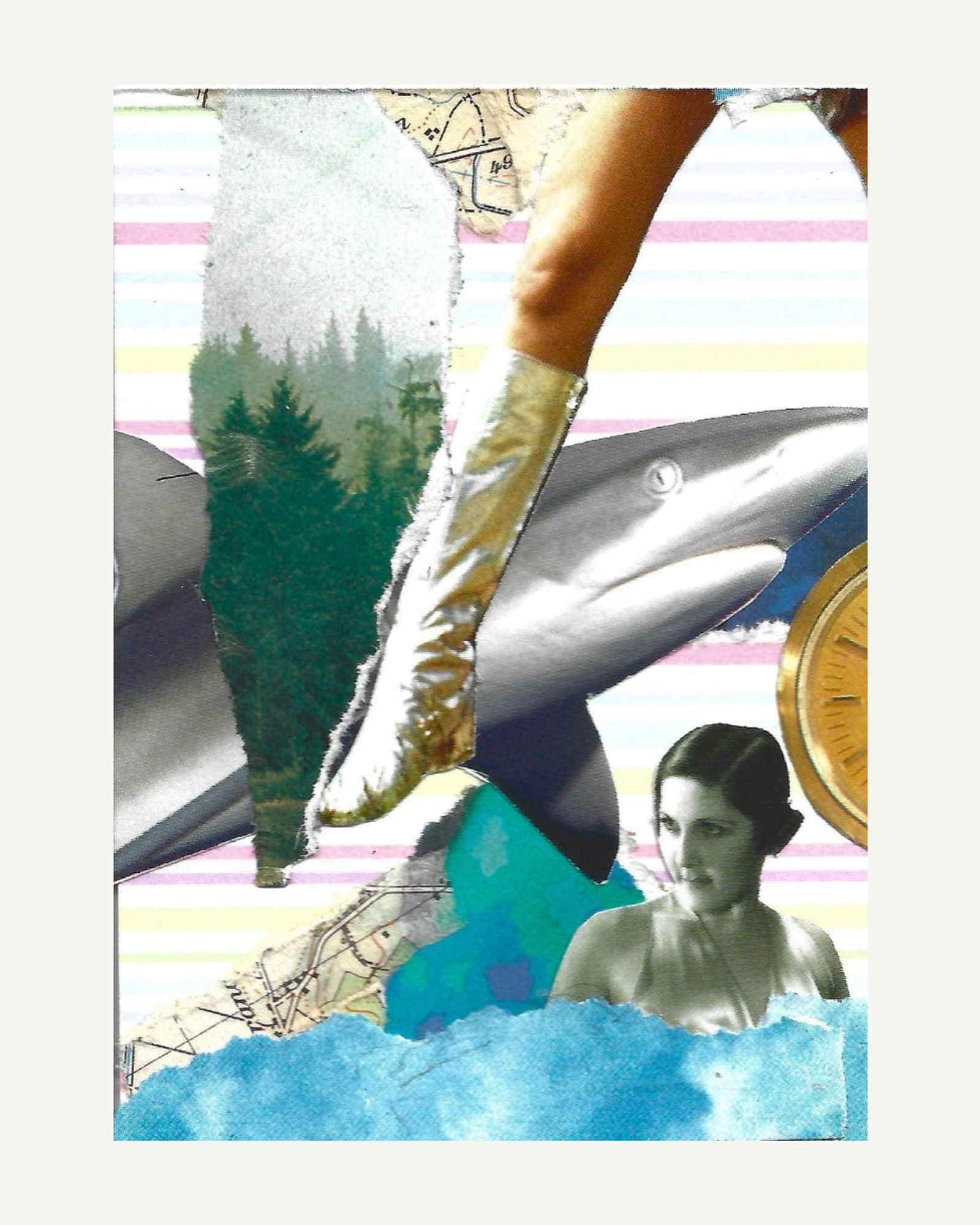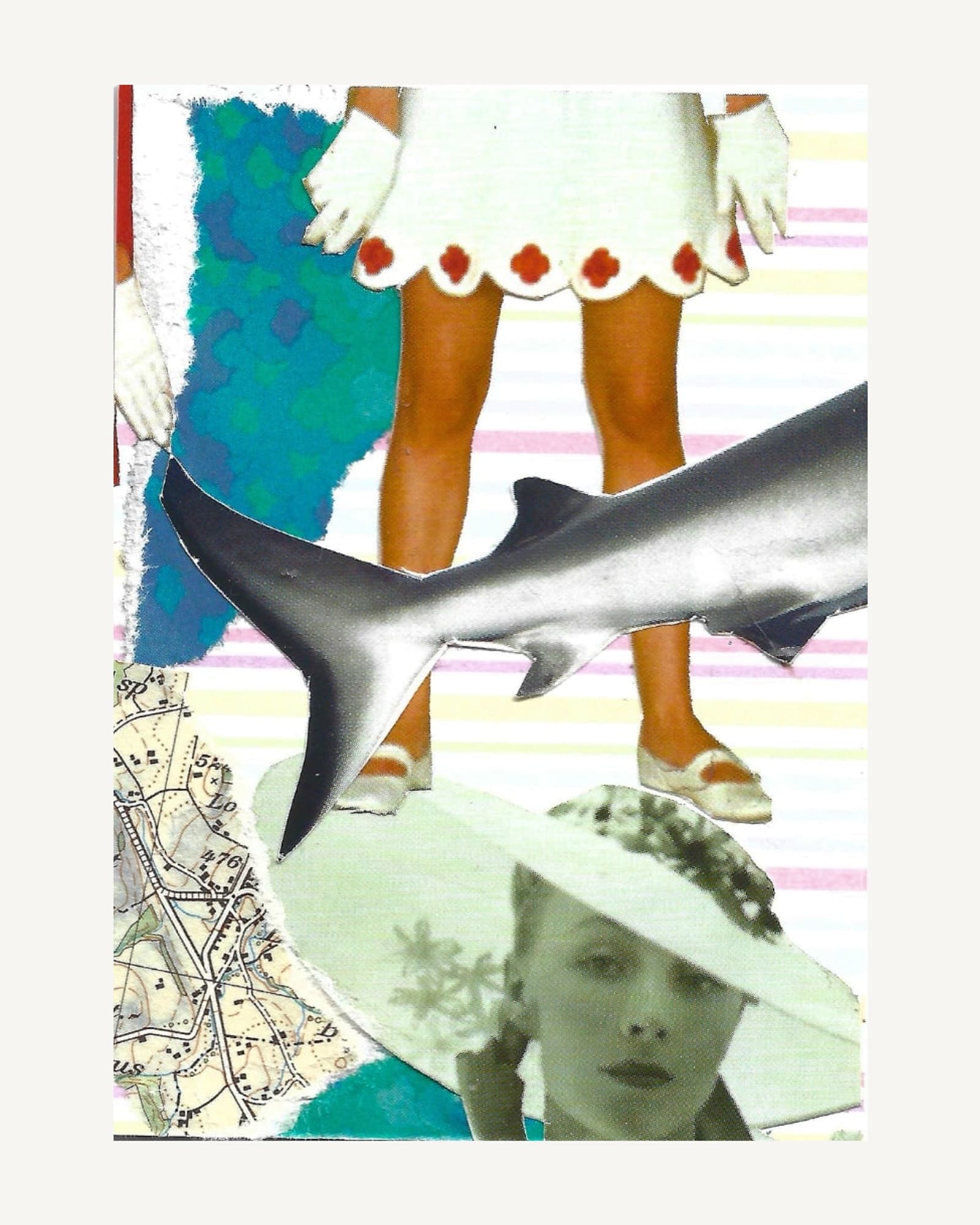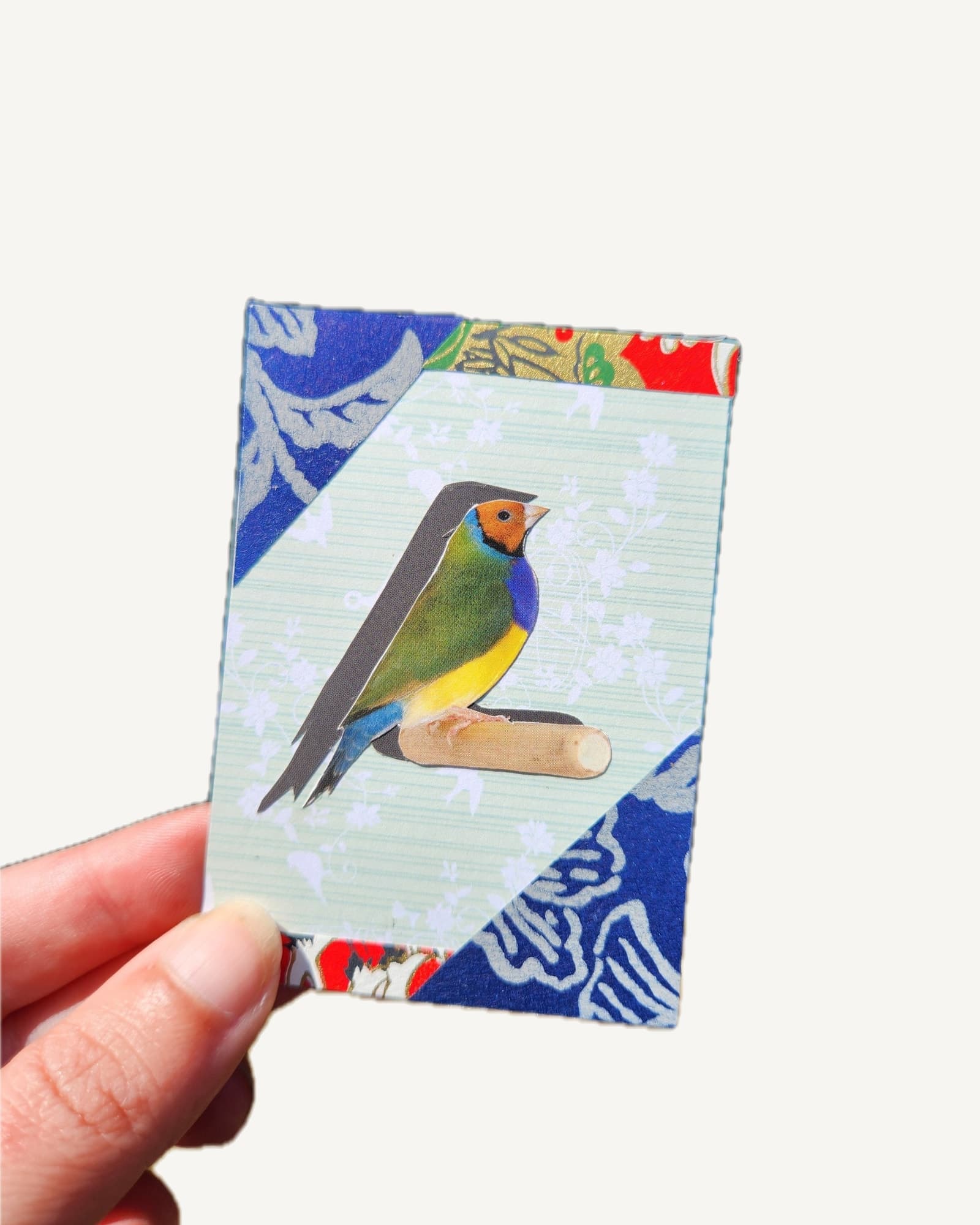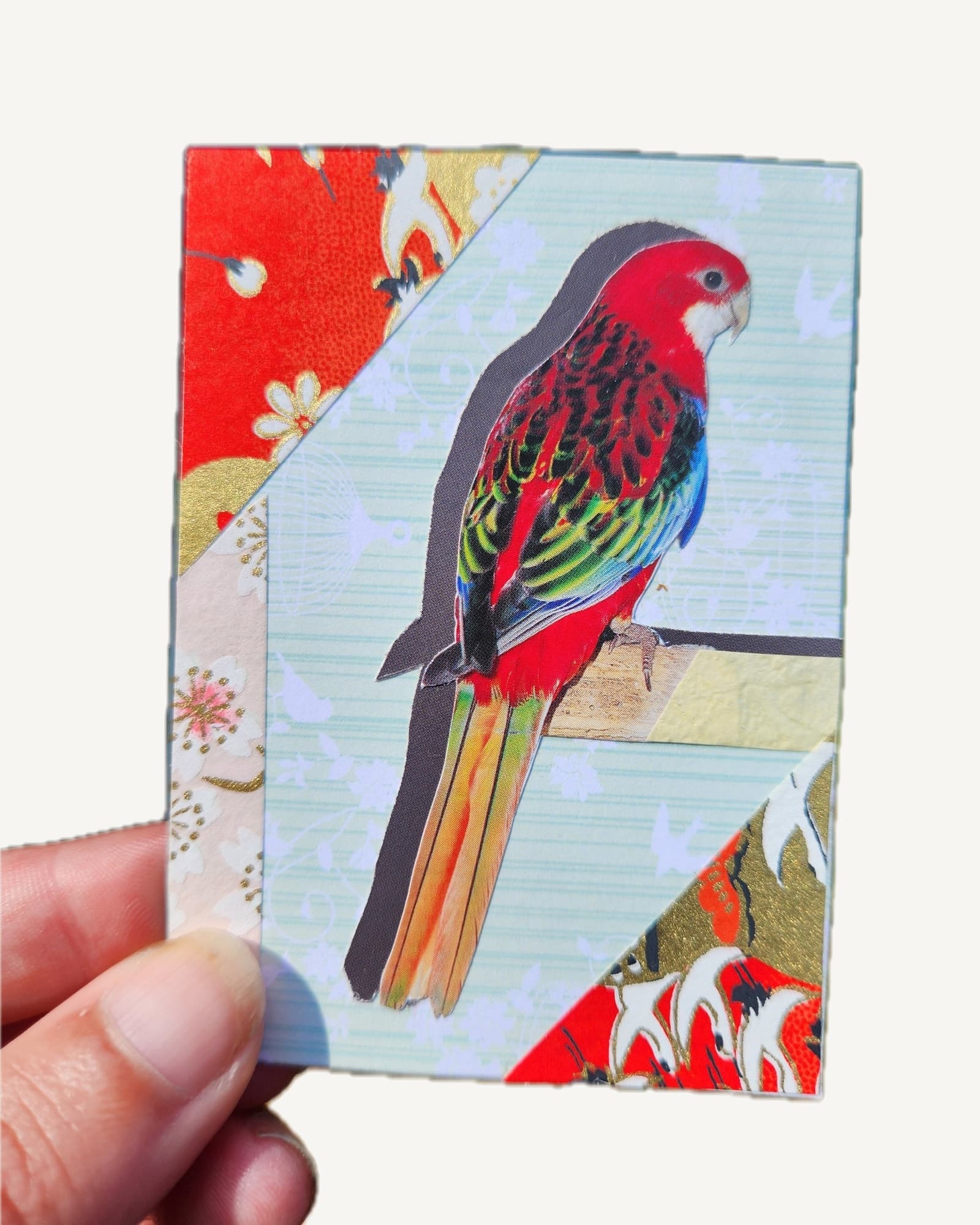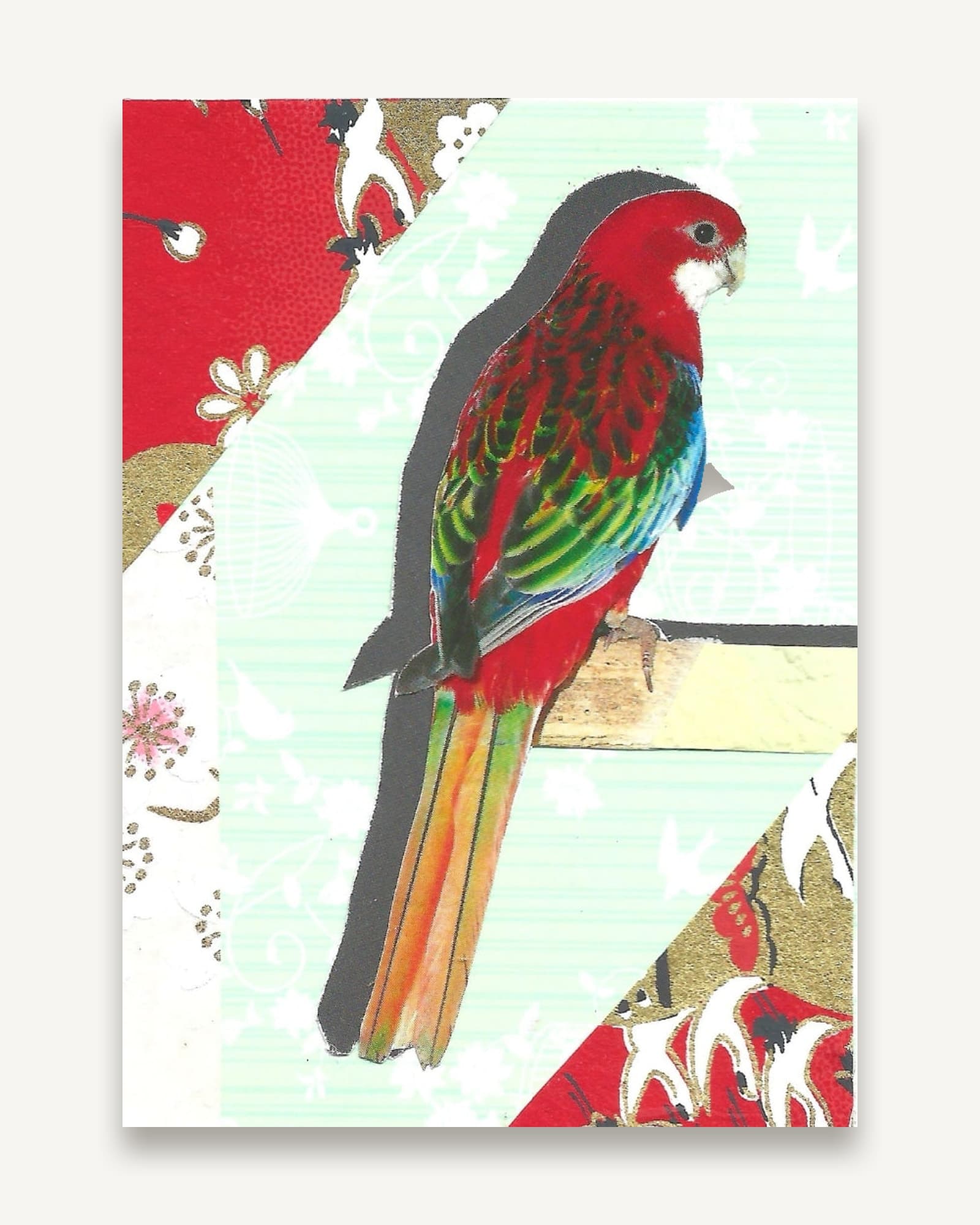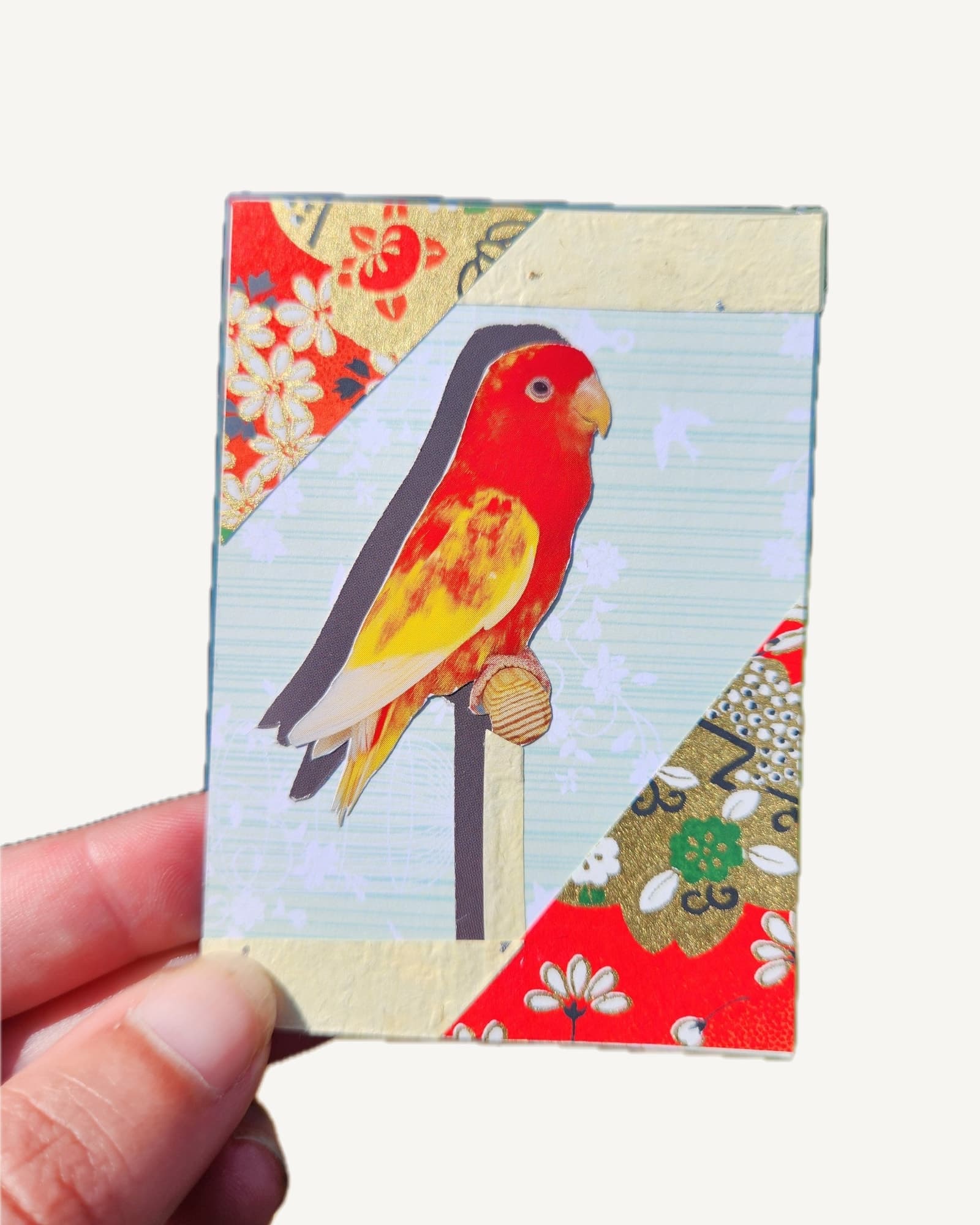
“You cannot start a collage piece with meaning in mind. You have to make first, and let meaning emerge.”
KR Moorhead never starts a piece with a specific image in mind. Every piece has to emerge from whatever materials can be found in local charity & vintage shops, so what is created is dependent on what is found: hardback photography books, old interior design manuals, a National Geographic if one turns up, and nothing at all out of a printer or a search bar.
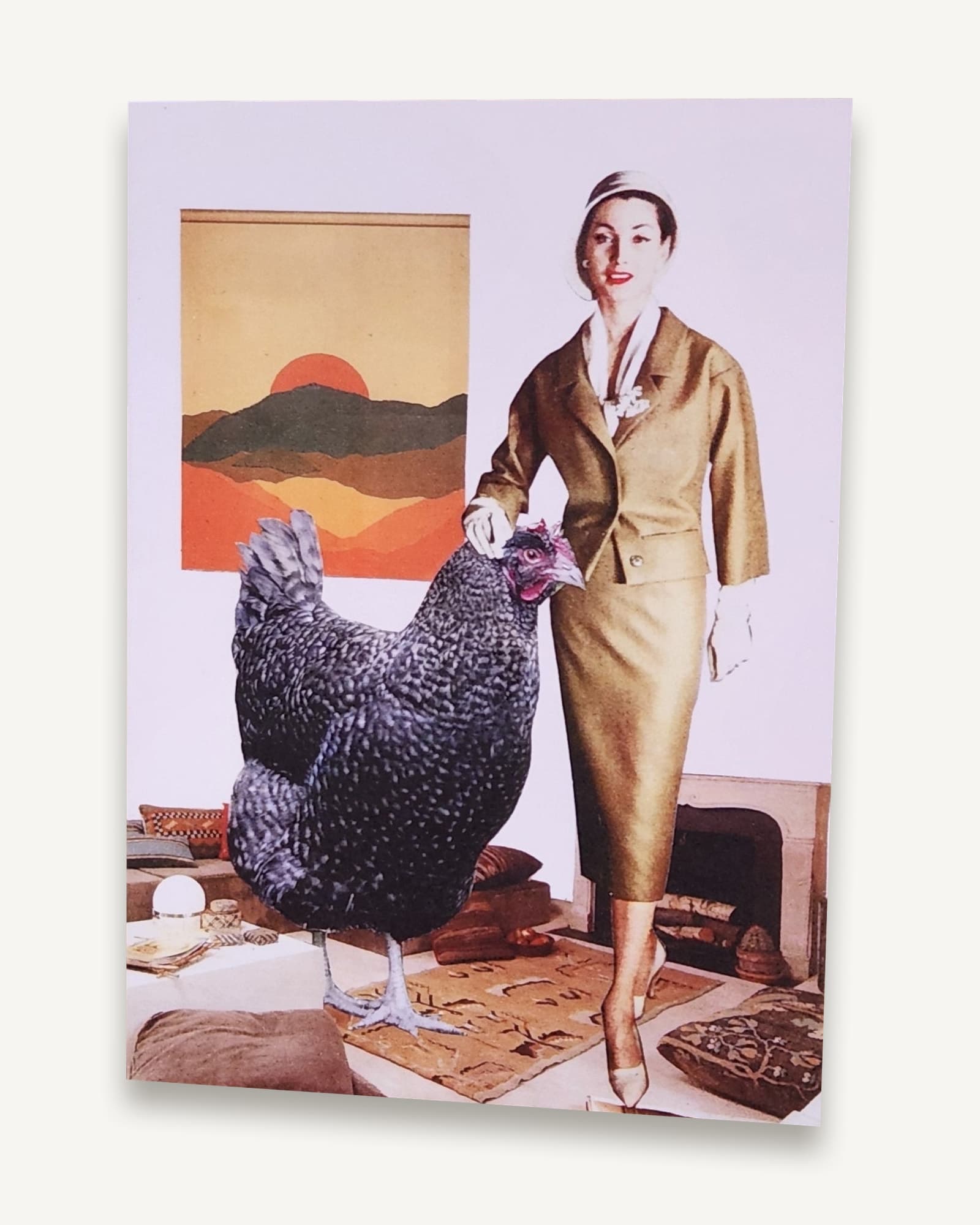
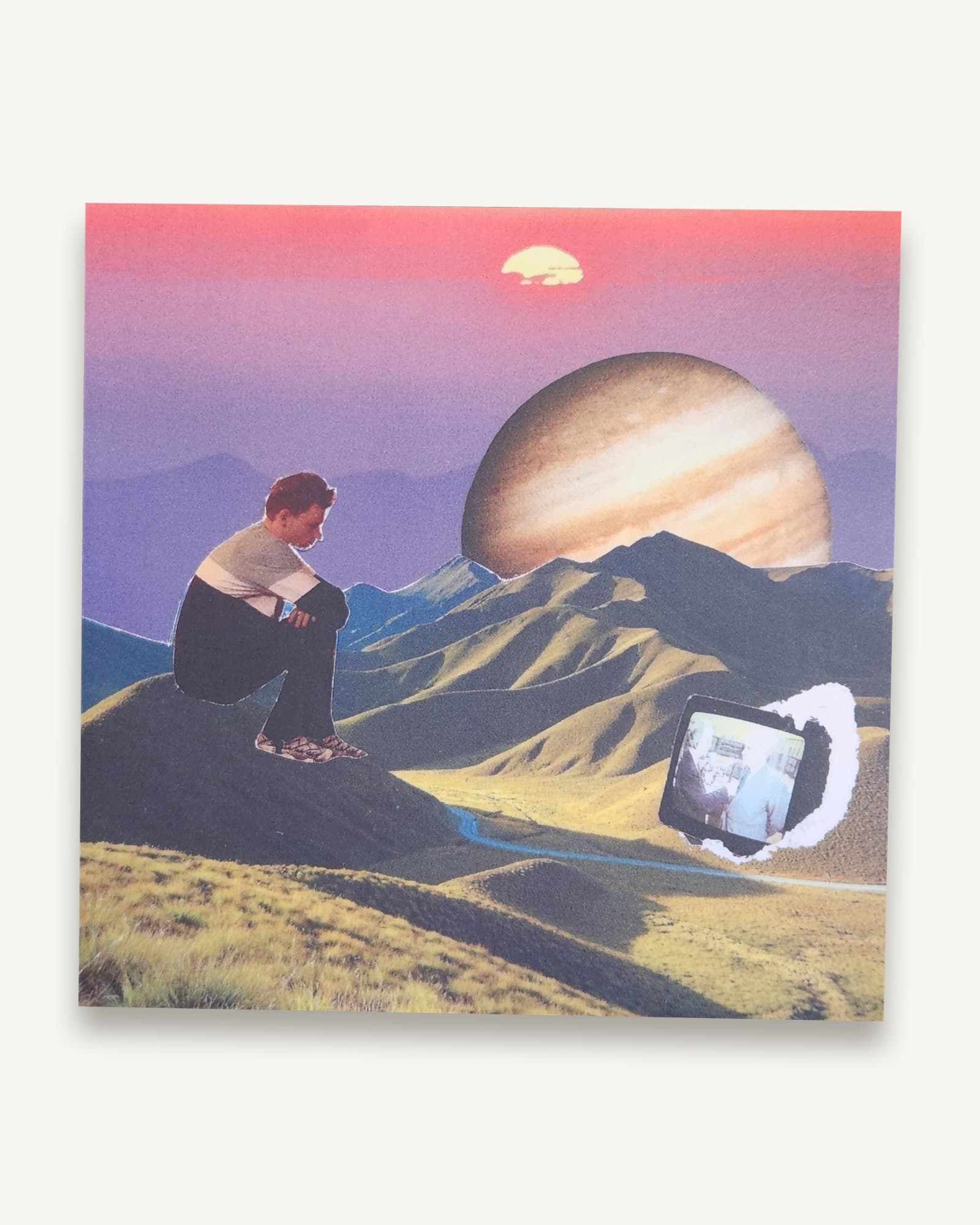
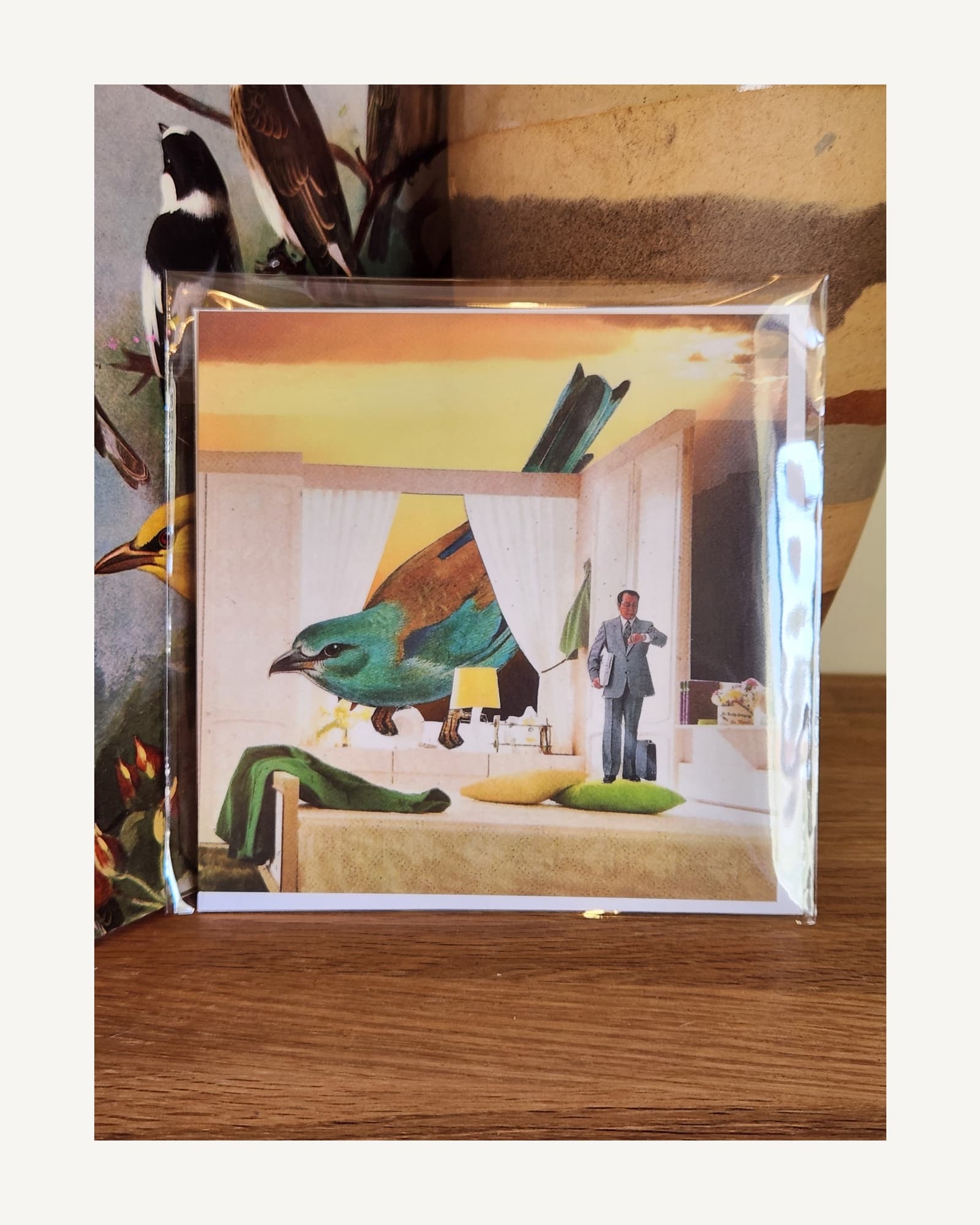
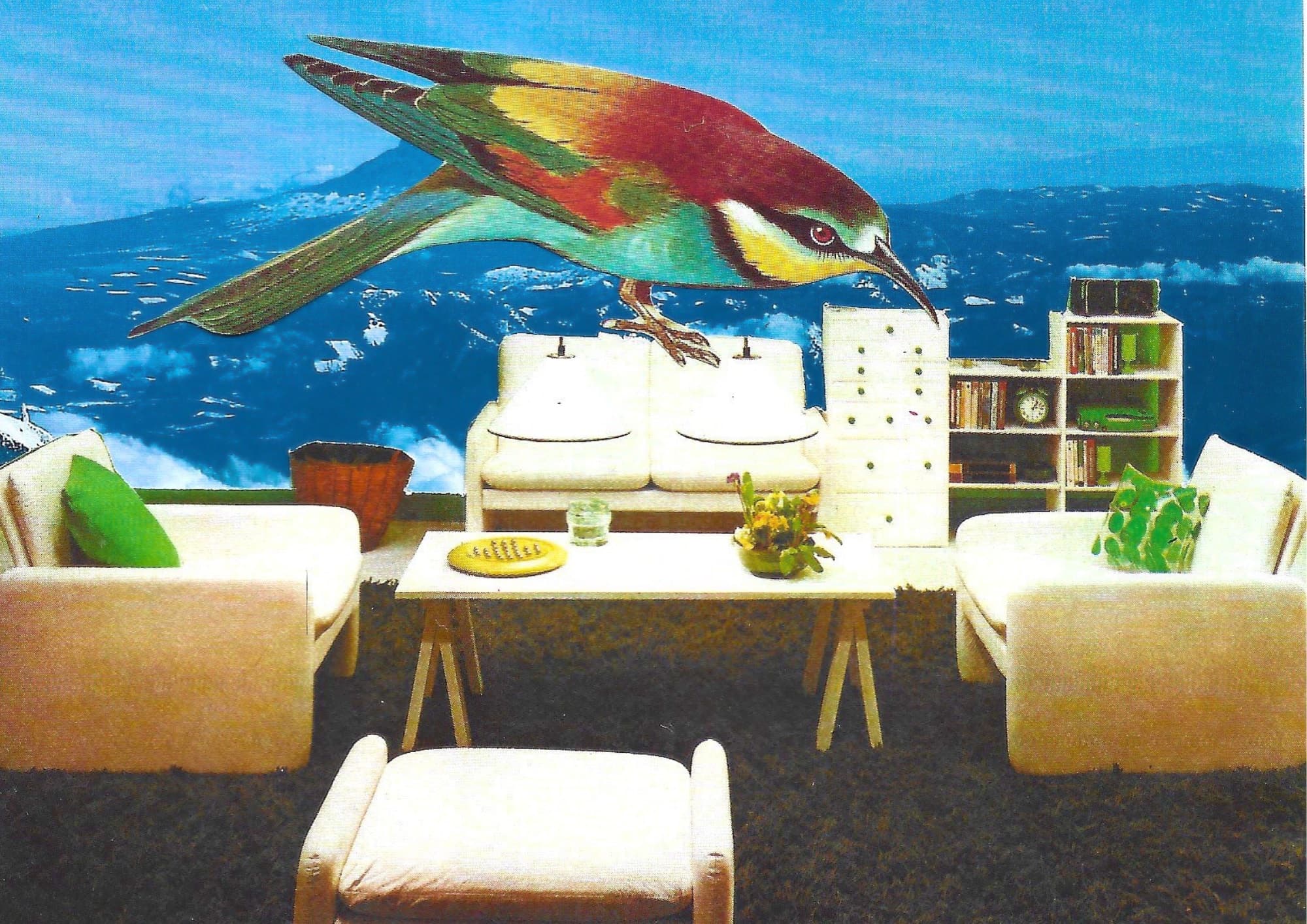
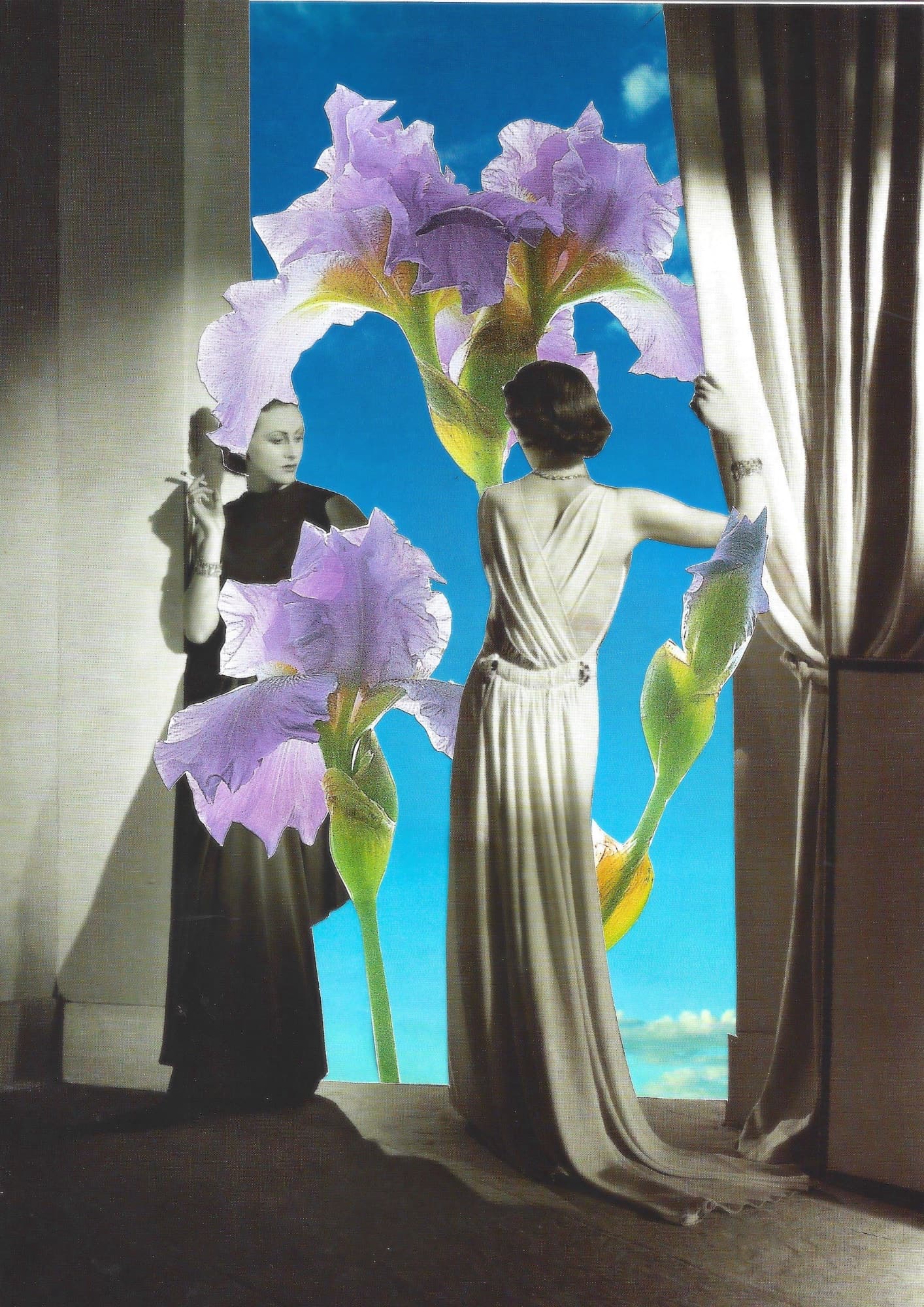
The work plays with scale & narrative. Too-large birds loom in vintage living spaces. Glamorous women are dwarfed by equally glamorous flowers, the size of trees. The colours are the colours of decades past: oranges and teals and golds that contrast the 'greige' neutrals dominating current design trends.
Collage came late. KR came back to visual art at 42, after fifteen years dedicated to creative writing and academia. Collage suits an AuDHD brain, they say, because it is constrained by the materials that are physically in front of you. It takes apart existing things to make something new, and it refuses to be planned. A piece cannot start with a meaning in mind. The meaning arrives through the process.
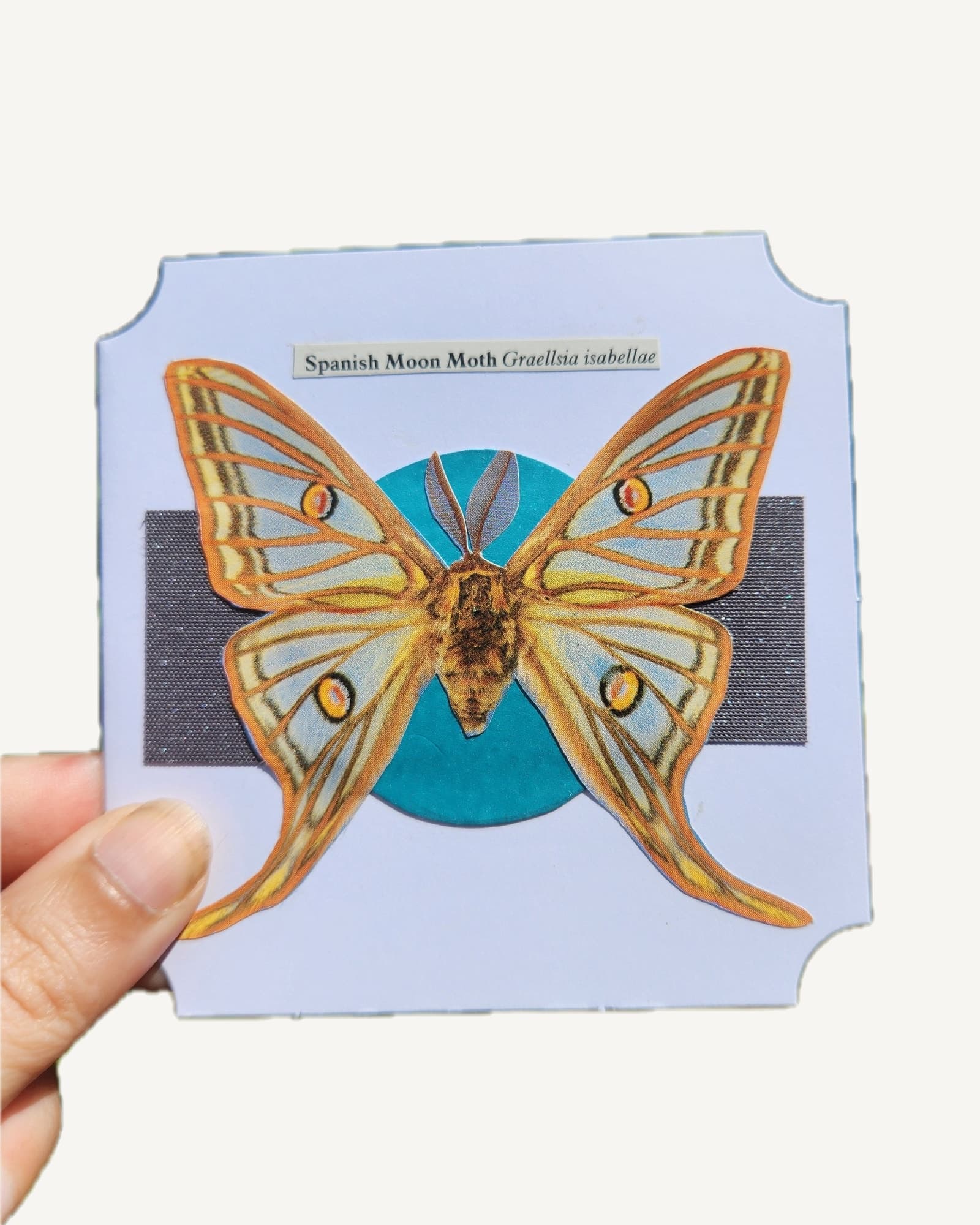
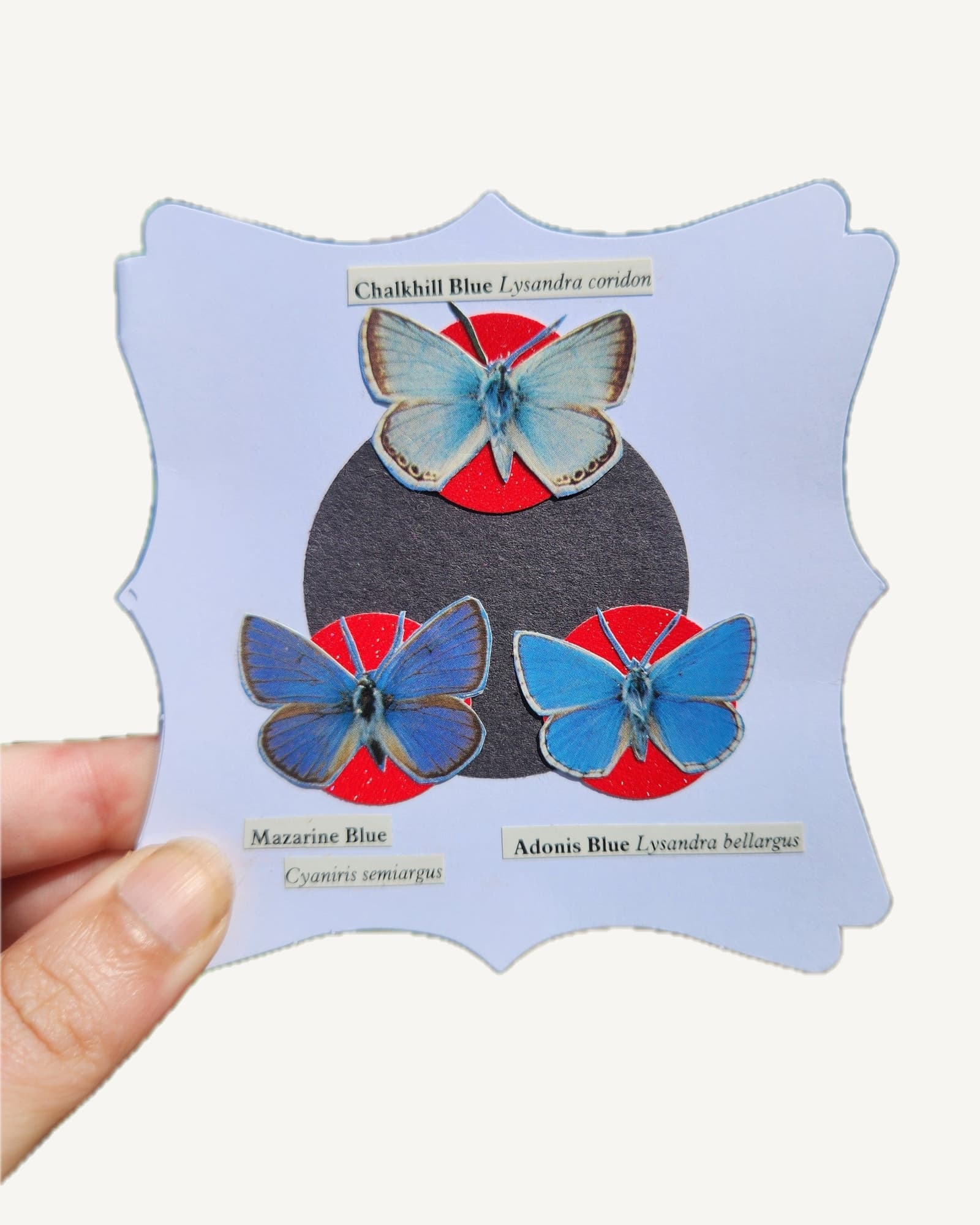
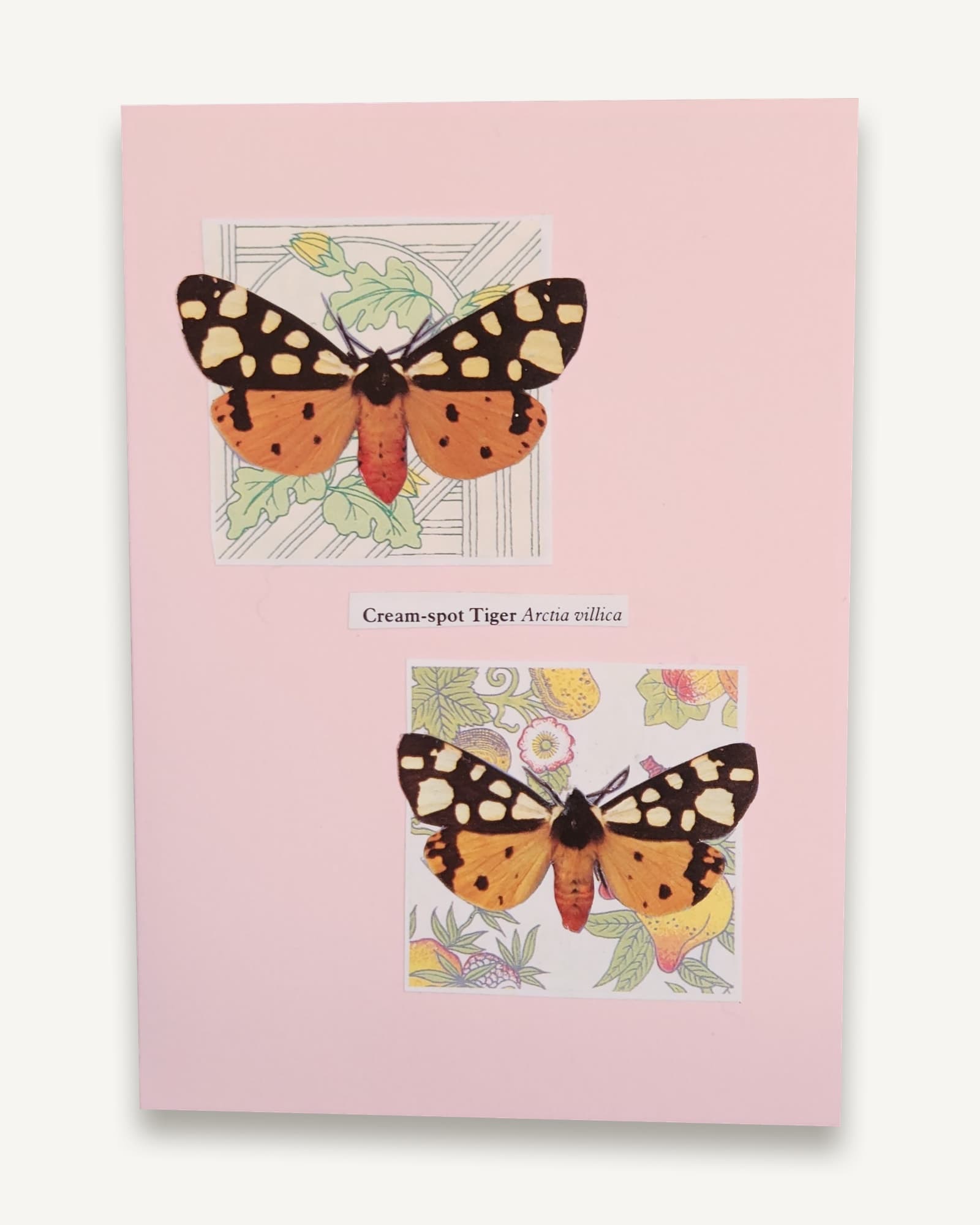
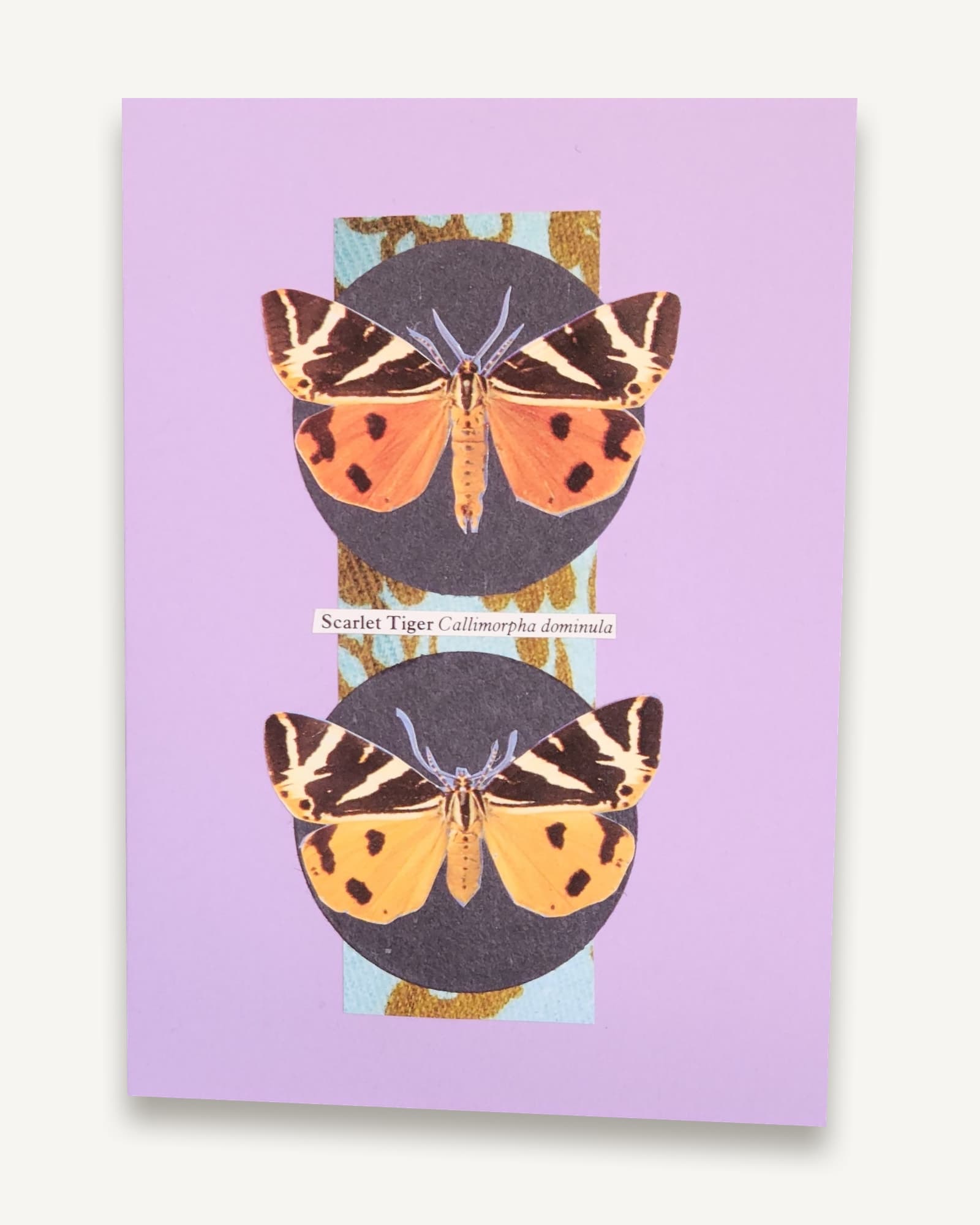
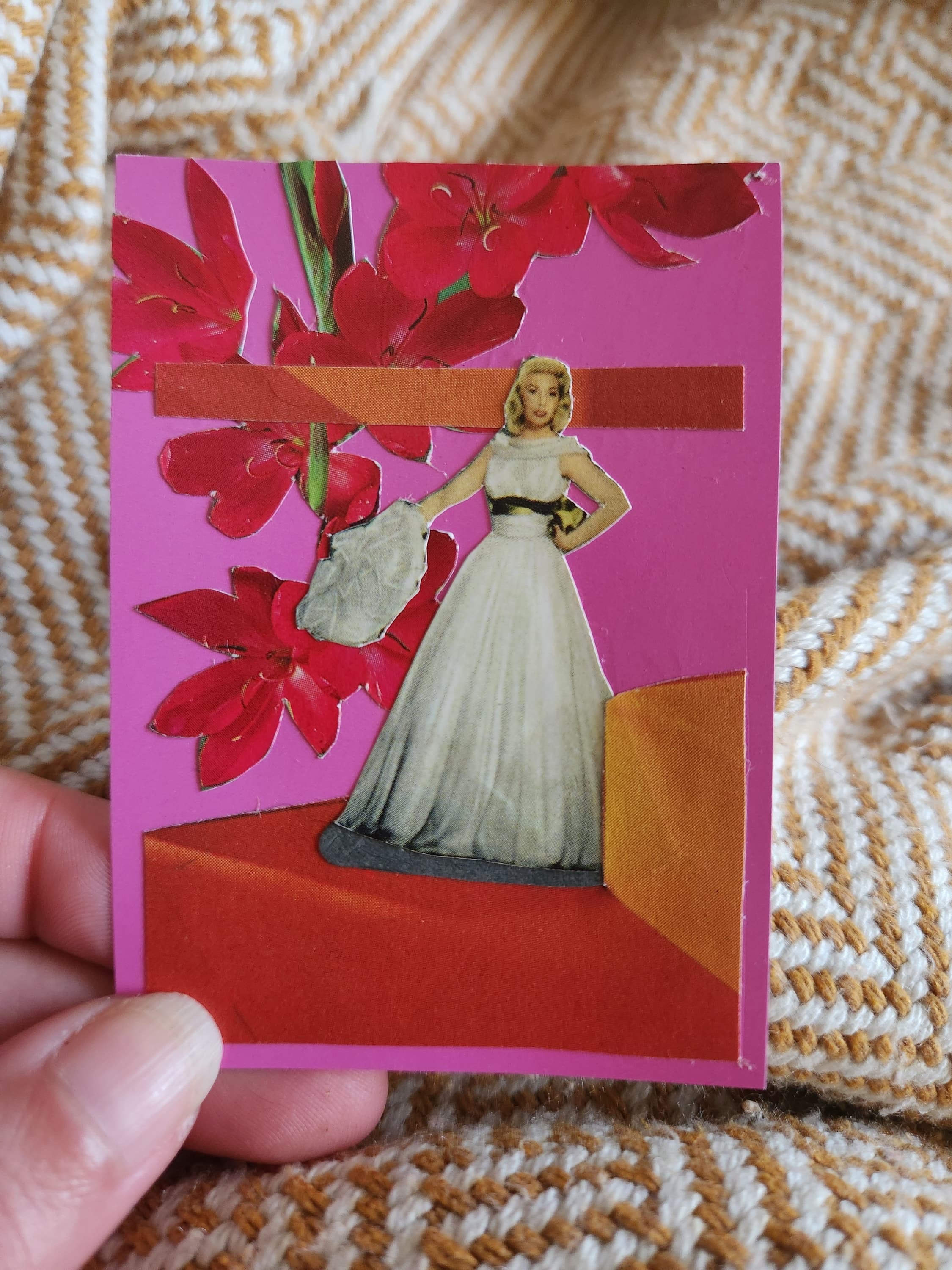
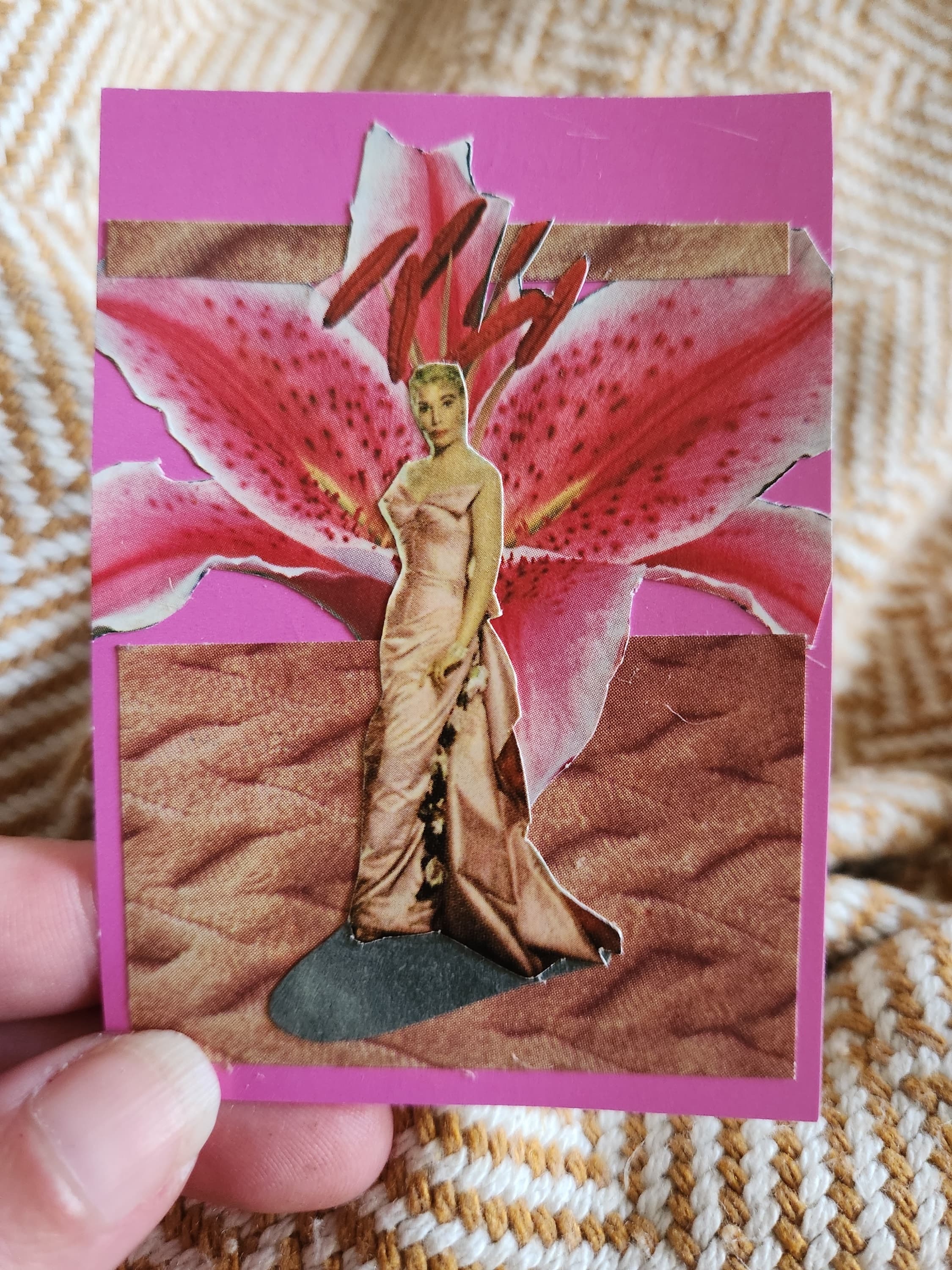
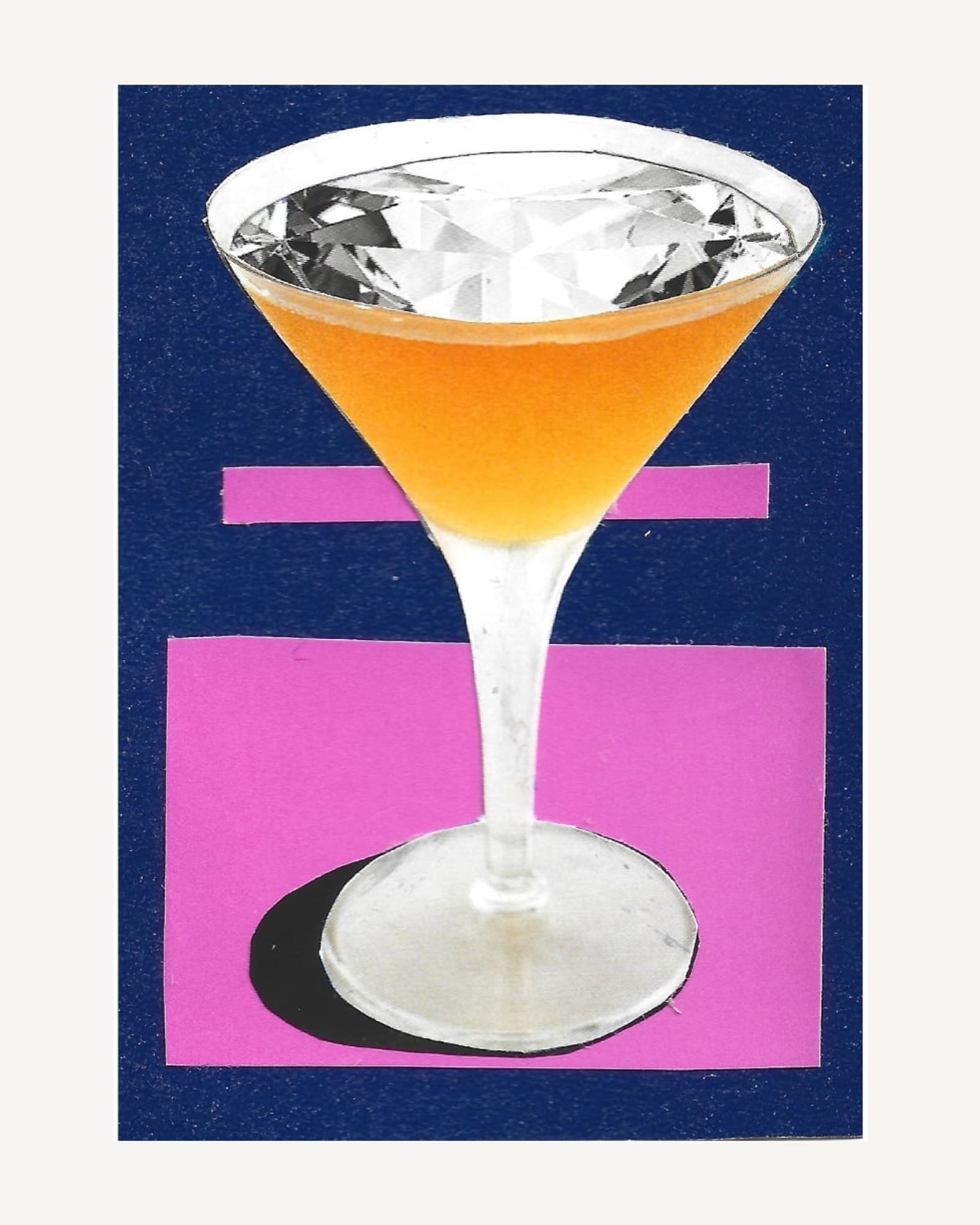
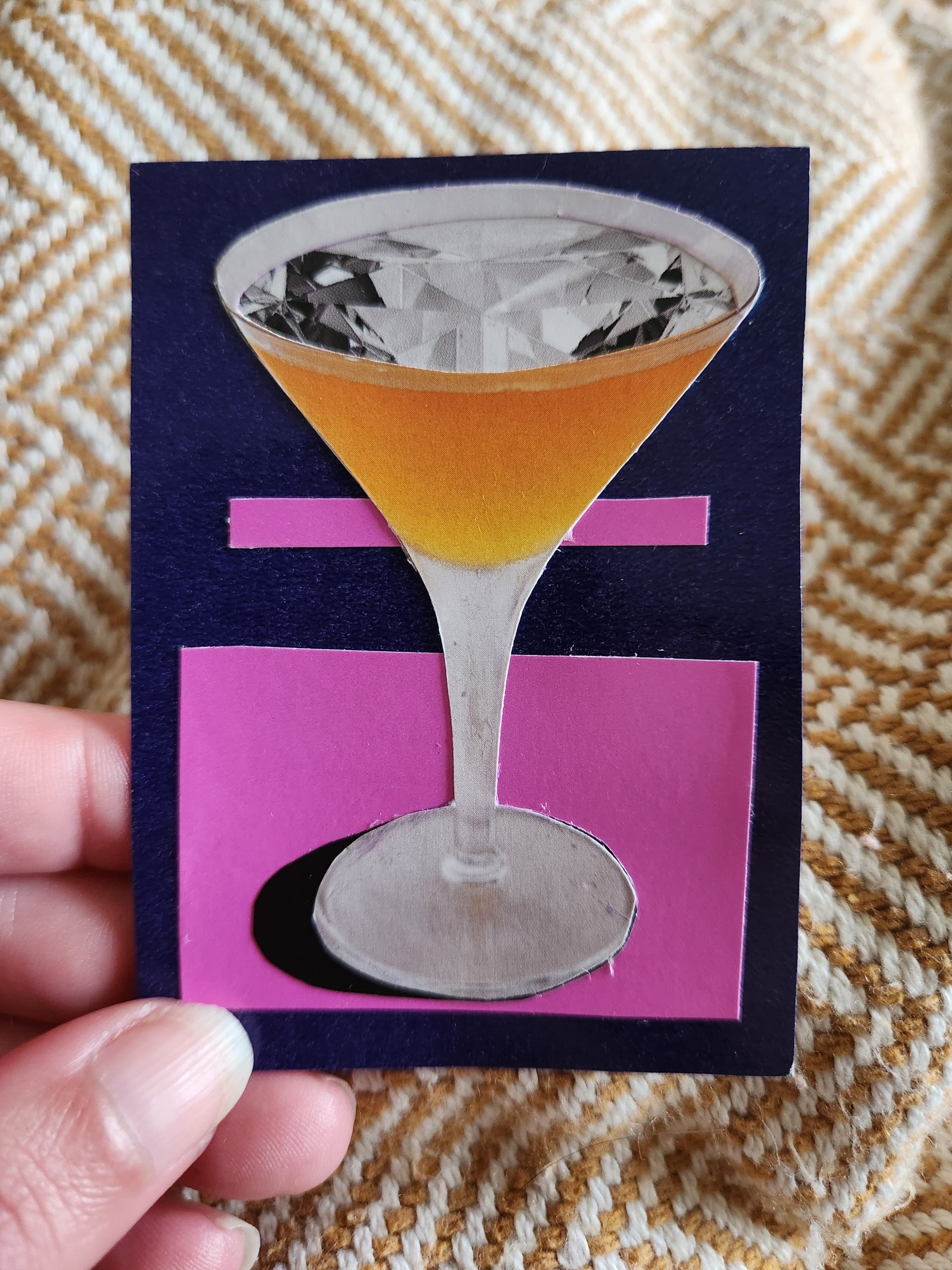
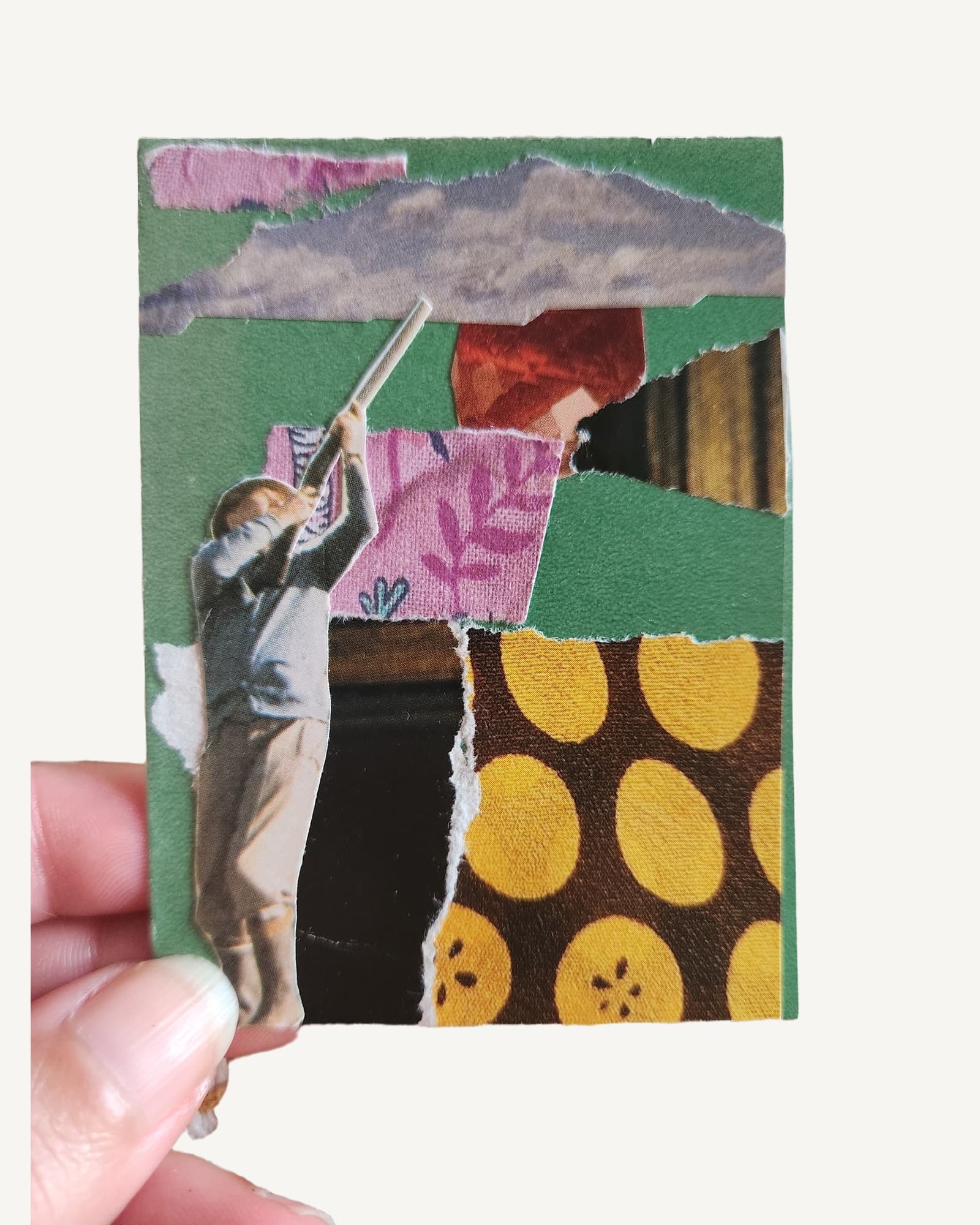
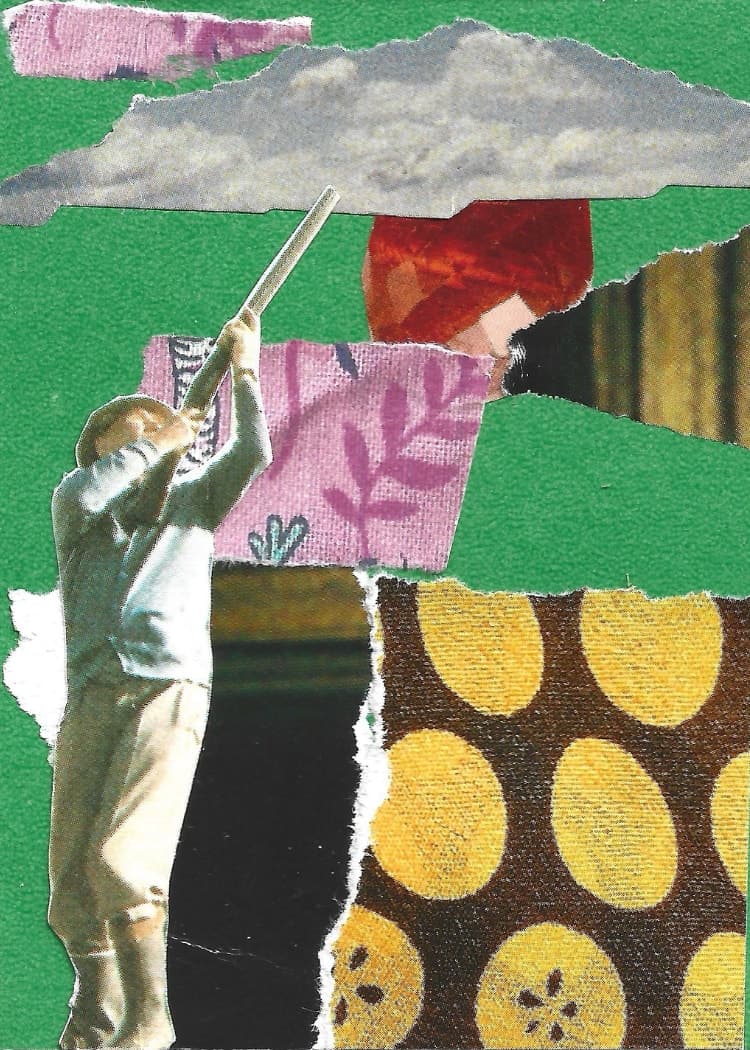
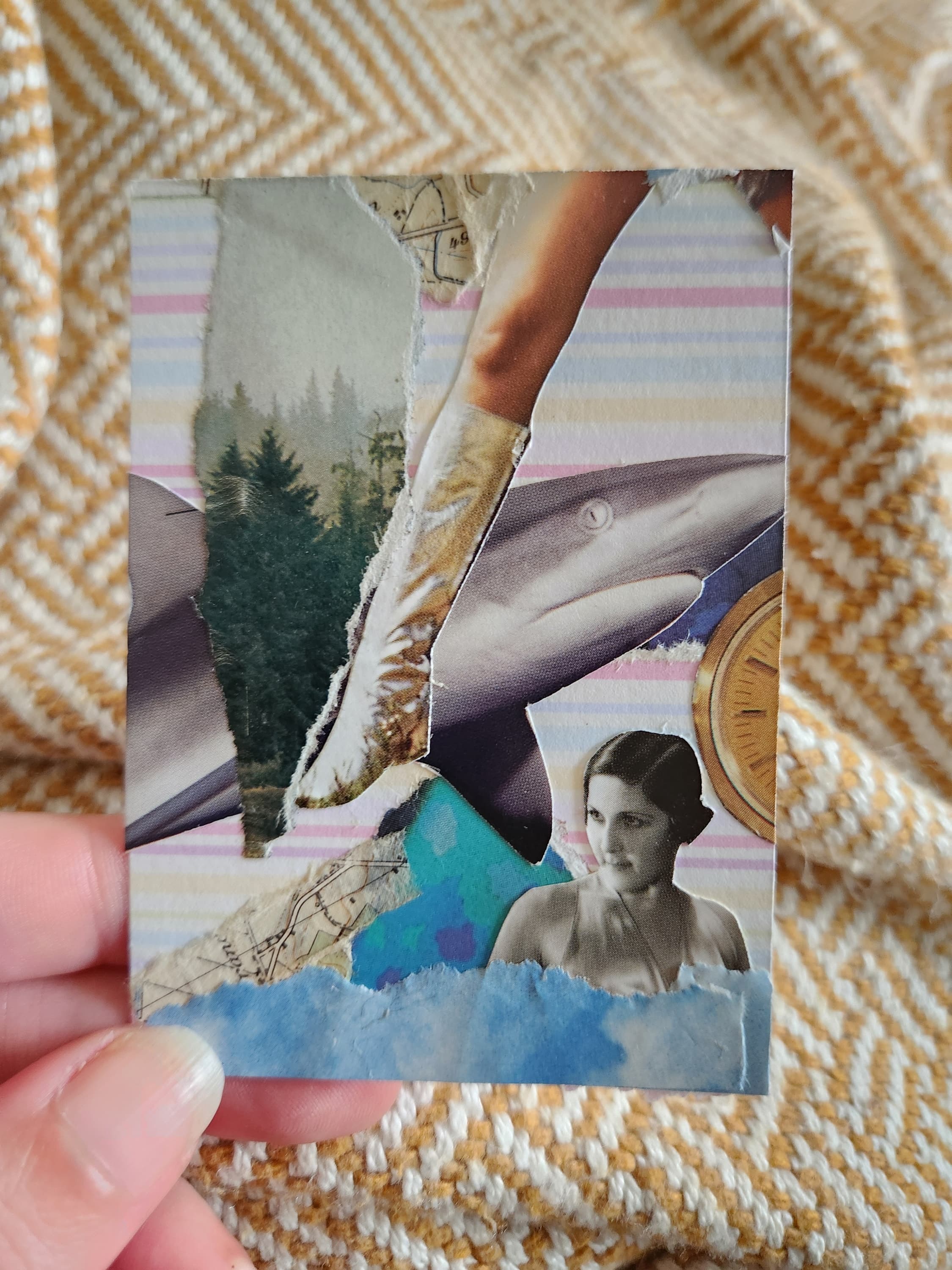
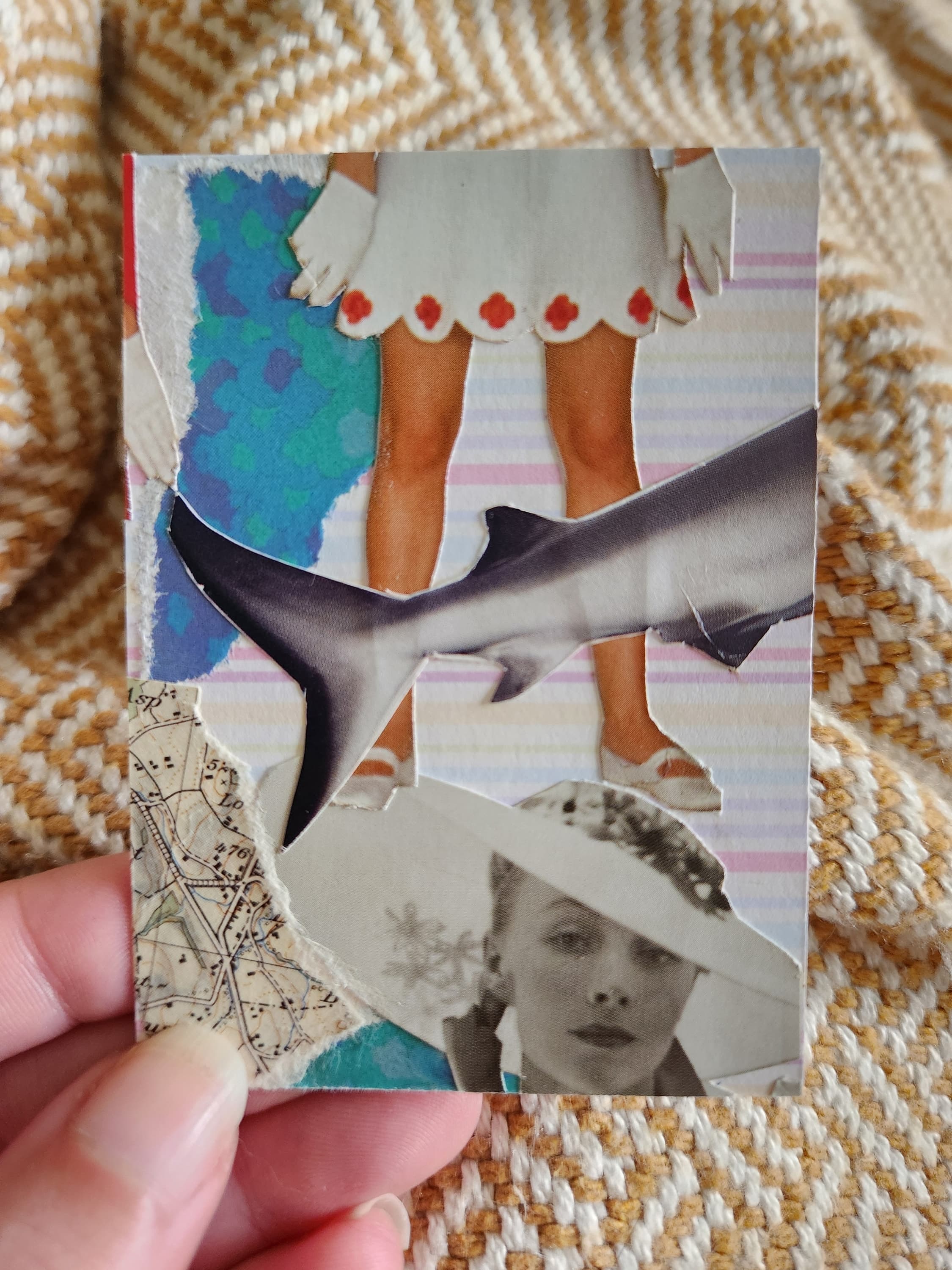
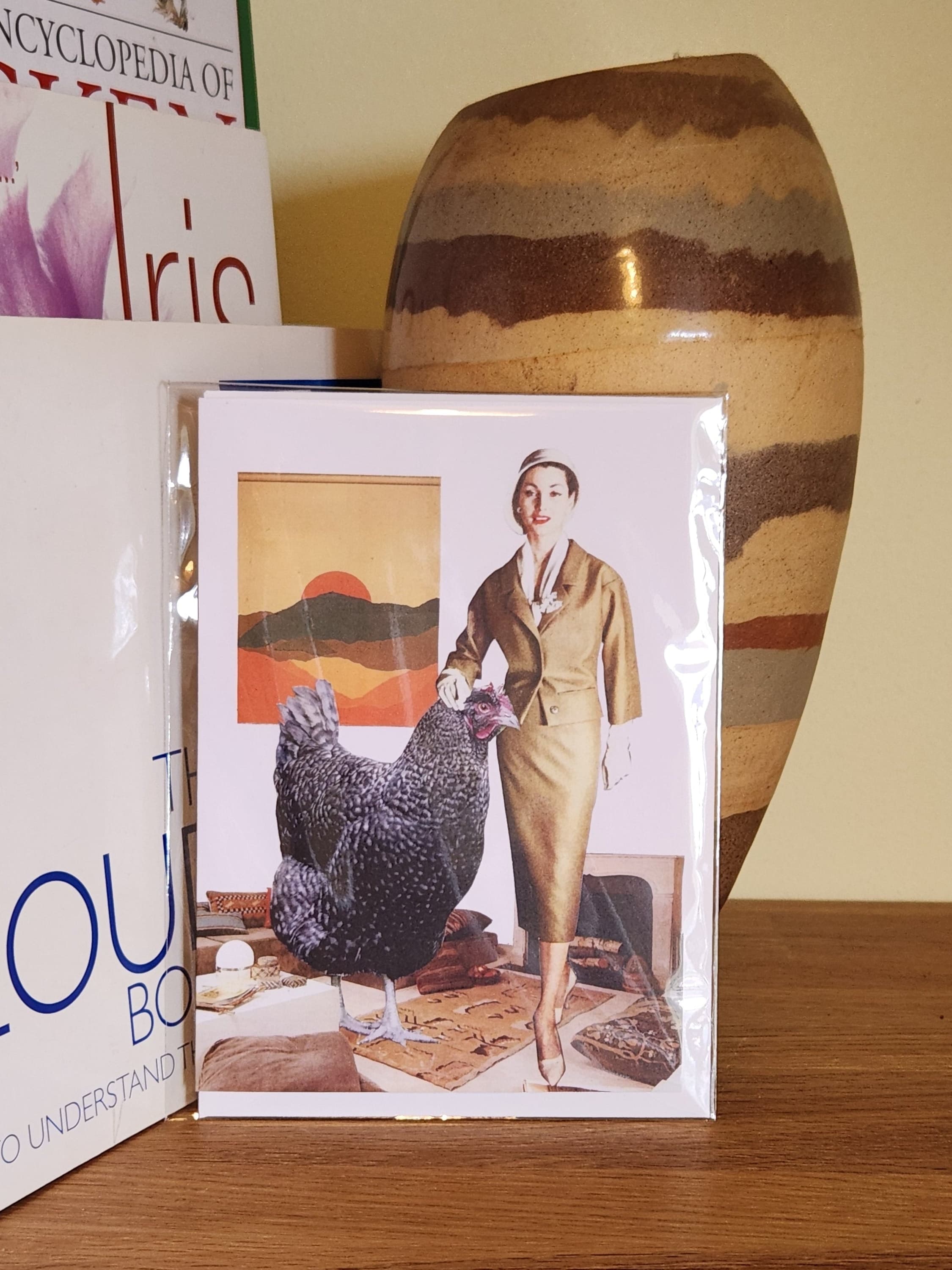
The smallest pieces are original collages the size of a trading cards: two and a half by three and a half inches, titled, signed and dated on the back. The majority of the gift and greeting cards are one-offs too, each cut and assembled onto thrifted card, so no two are alike. Printed cards and postcards of larger, original pieces are also available, as well as original collage art & prints.
KR runs in-person collage workshops in Norwich, with every material provided and nothing to bring. They have taught creative writing for over fifteen years: at the University of East Anglia from 2009 to 2023, and now for City Lit. They also founded Neuroqueer Creative, a collective of facilitators running learning spaces across creative practices. Their novella, The First Law of Motion, was published in the United States in 2009.
KR spent fifteen years as a writer and a lecturer in creative writing, and came back to visual art at 42. Collage began as somewhere to make without the pressure that had attached itself to writing. Thirty days of a collage a day later, it had become the main practice.
Everything is found in person and secondhand: photography and interior design hardbacks, old magazines, origami paper, and card and envelopes out of charity shops. Nothing is printed, sourced online, or purchased new, so a piece can only be made from what can be physically sourced. This includes all cardstock, which is why no two of the handmade cards are alike.