

Just In | Three new makers, and what only they make here
Three makers have opened their shops on The Haud in the last few weeks, and each of them makes something that nobody else on the site makes. Mark Pettit of Ammonite Studio steam-bends wooden rings in Cumbria, Mary Corkery of Alandale Glass paints, fires and leads stained glass panels in a workshop at the bottom of her garden near Harrow, and Bethan Lowri Hughes Jones of Cerameg Traed Bran inlays porcelain tiles in Cardiff using a technique Heritage Crafts lists as critically endangered. Before writing this I went through every live listing on the site, and there are no other rings, no other stained glass and no other tiles.
MARK PETTIT: RINGS BENT FROM ONE STRIP OF WOOD
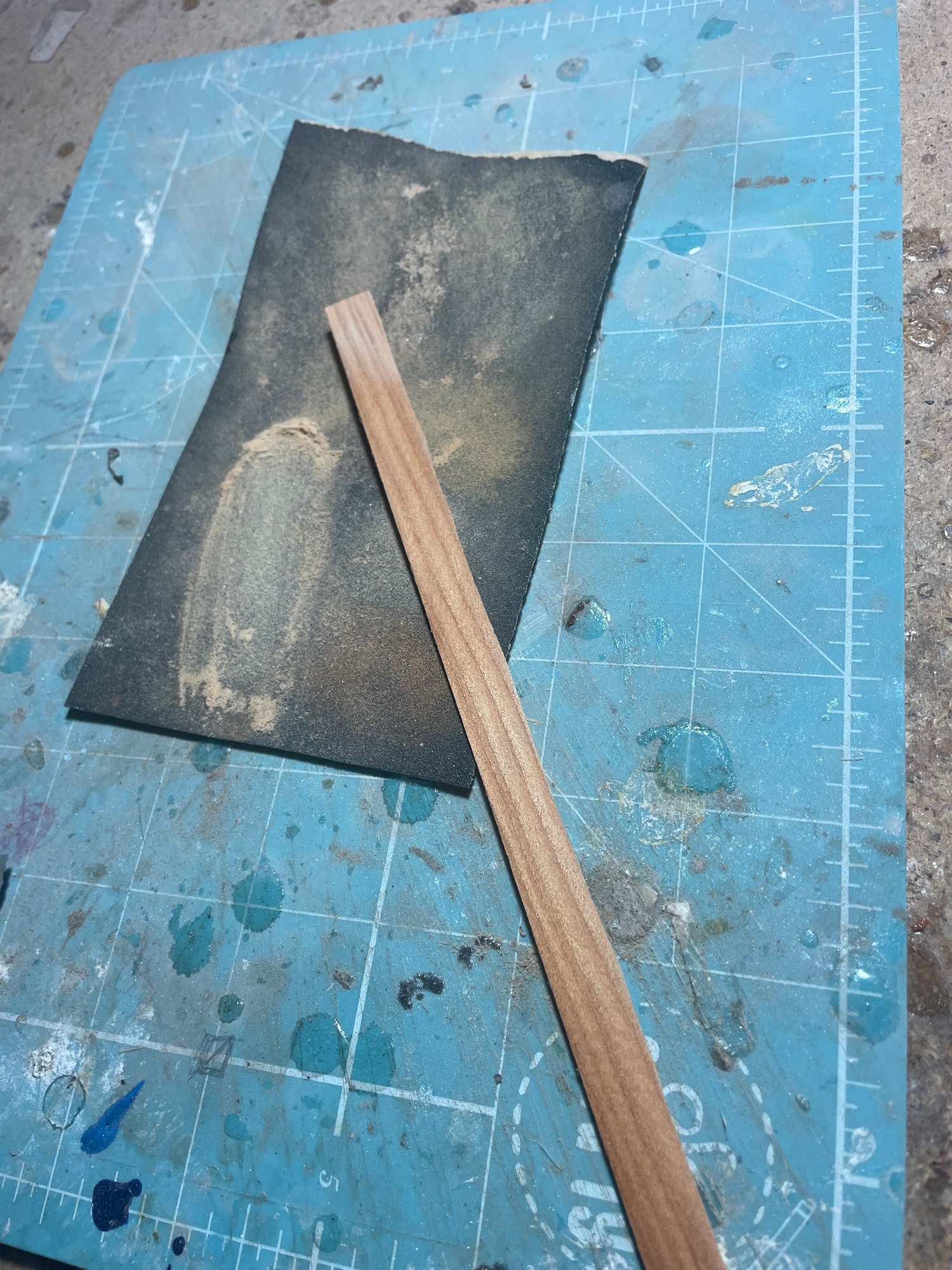
Mark is a plasterer by trade who tried various hobbies in his spare time before he came across a website showing how to steam-bend wood, decided he could do it, and made his first ring. That was about ten years ago, and he is entirely self-taught.
Each ring starts as a thin strip of wood, which is softened with steam and wound round on itself with glue between the layers, so the grain runs all the way round the band in one continuous piece. It is then shaped on a lathe and sanded by hand, and finished with either oil or a polished, glue-based coat.
Much of the inlay stone he collects himself, slate from the Borrowdale valley in the Lake District and marble from Skye, picked up on a family holiday there, and he will also set something you send him, such as a stone from a beach that means something to you. The plain woods are £99 and the inlaid rings £129.
MARY CORKERY: GLASS THAT IS PAINTED AND FIRED BEFORE IT IS LEADED
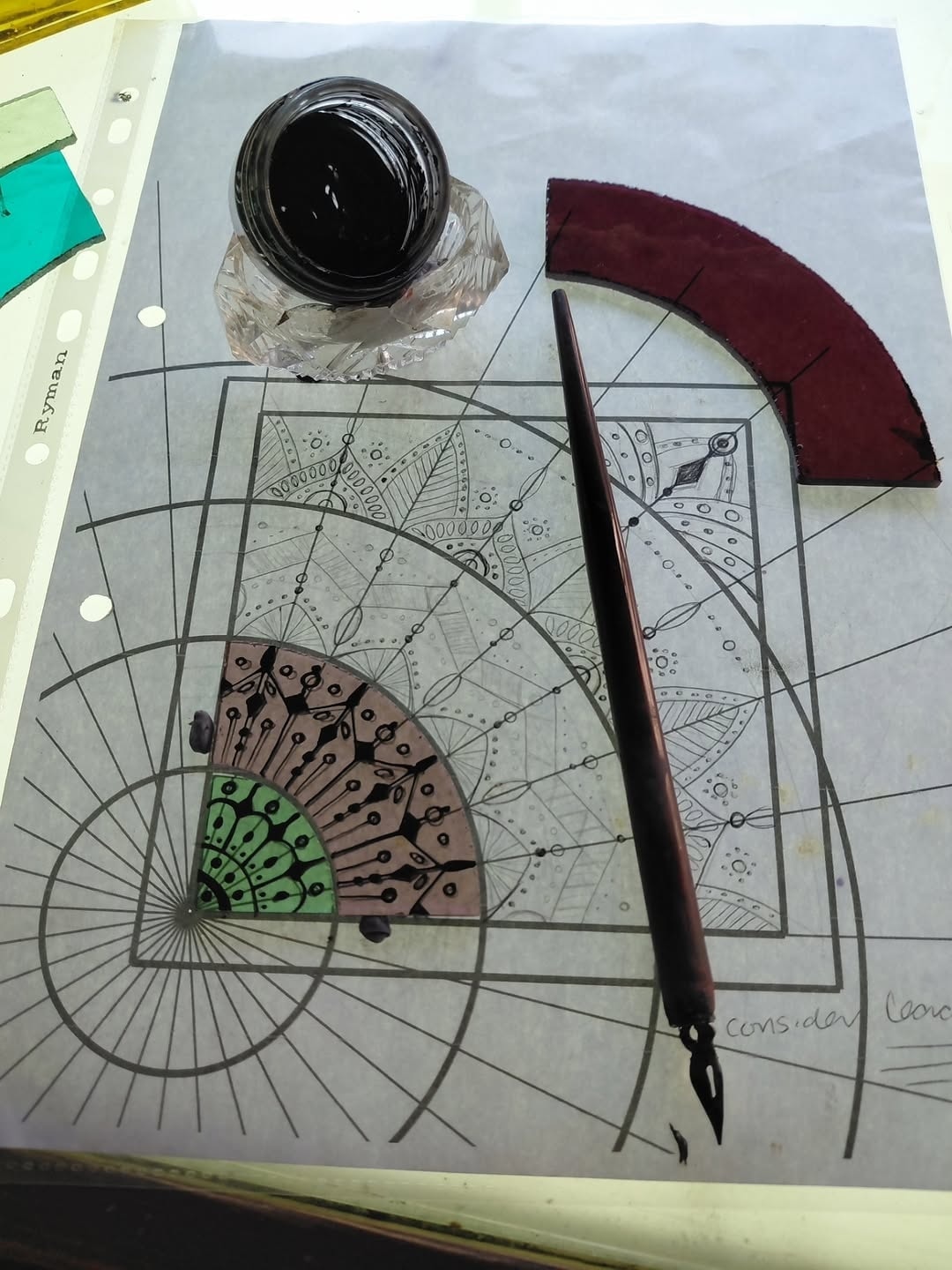
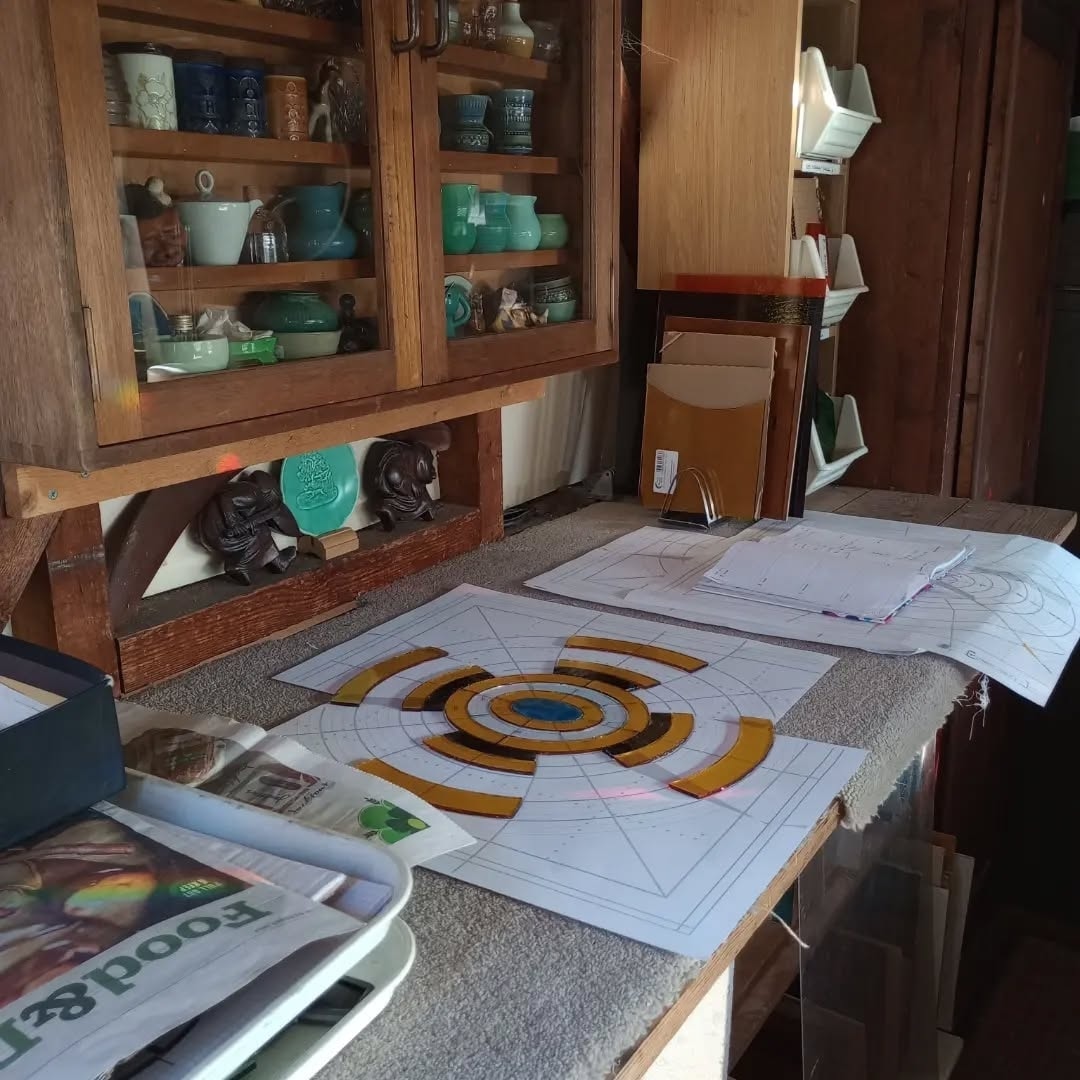
Most stained glass is cut and leaded and left at that, whereas Mary paints hers. She works from doodles and sketches, turns them into precise cutting patterns, and once the glass is cut she paints the detail on in layers, firing every layer in a kiln so that it fuses to the glass. A single panel can go through the kiln several times before she leads it up, cements it and polishes it, and some pieces take weeks.
She learned on a weekend course in 1996, and a later course introduced her to painting and kiln work. Her panels are made for a home rather than a church: small enough to hold, with detail meant to be looked at from close up.
Painting, firing and leading glass by hand is what Heritage Crafts calls historic stained glass window making, and its 2025 Red List puts it at Endangered, with between 21 and 50 people earning their main income from it.
BETHAN LOWRI HUGHES JONES: TILES INLAID WITH COLOURED CLAY
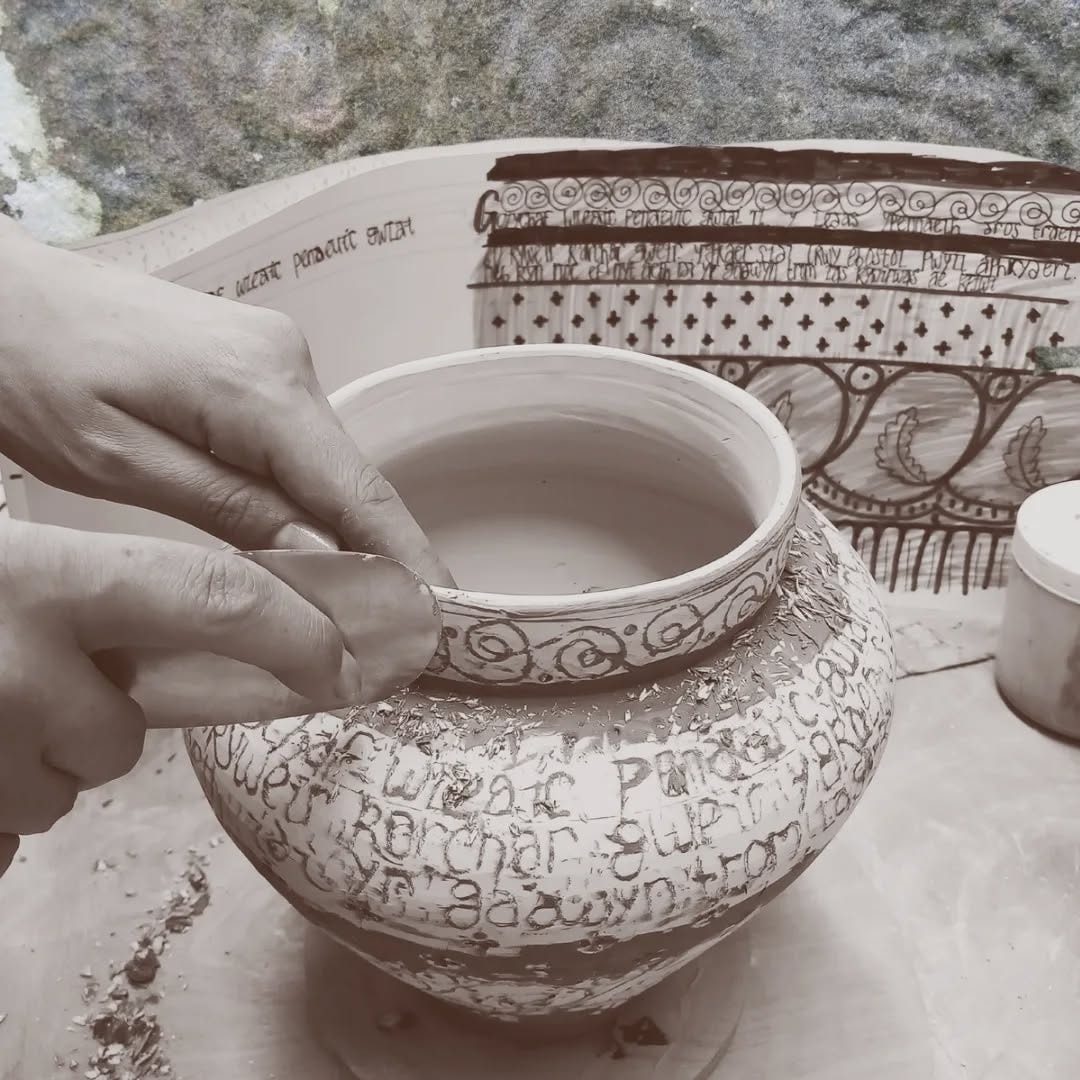
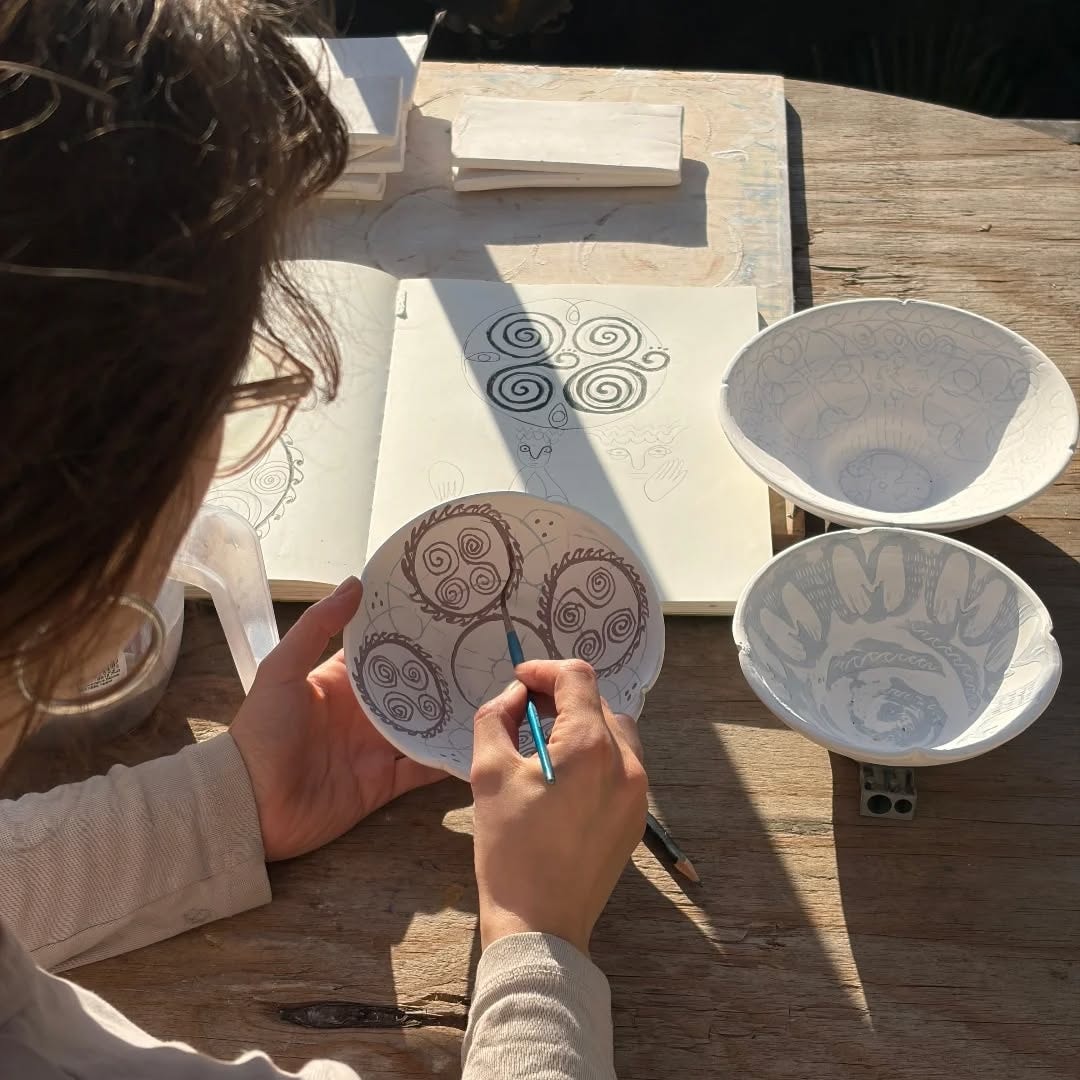
Bethan carves her design into porcelain while it is leather-hard, floods the carved lines with slip (a liquid clay she colours with cobalt), lets it dry and then scrapes the whole surface back. The pattern is whatever is left in the lines, and until the scraping is done she does not know whether she has it.
The technique is inlay, and the tiles it makes are called encaustic; it is how the floors of medieval Welsh abbeys were laid. Heritage Crafts lists encaustic tile making as critically endangered in its 2025 Red List, counting four skilled makers at one tile works in Shropshire who can carry out every process, and between one and five makers who do it alongside other work. Bethan chose the craft deliberately, knowing how few people still practise it.
Her designs come out of research in archives and at the sites themselves, including the medieval tile collection at Amgueddfa Cymru, Neath Abbey and the Neolithic chamber at Bryn Celli Ddu on Ynys Môn. The rook on her smallest tile came from the birds she watched on a beach in Ireland while she was sketching Neolithic burial chambers in County Meath.
Prices run from £10 for Bethan's rook tile to £220 for Mary's large quarter mandala, and every one of Mark's rings is made to order in your size.
More stories like this
One thoughtful email a month, not a marketing torrent. New makers, seasonal edits, and the stories behind the craft.
How we look after your details: privacy policy