





Bespoke commission


“Every piece has a little spirit within, designed to be held in the hand, like a totem of sorts.”
Annie takes commissions for animal figures and for vessels. Each animal is pinched by hand from a single lump of clay, so a commission is a conversation about the animal, the scale and the glaze, never a copy of something already made.
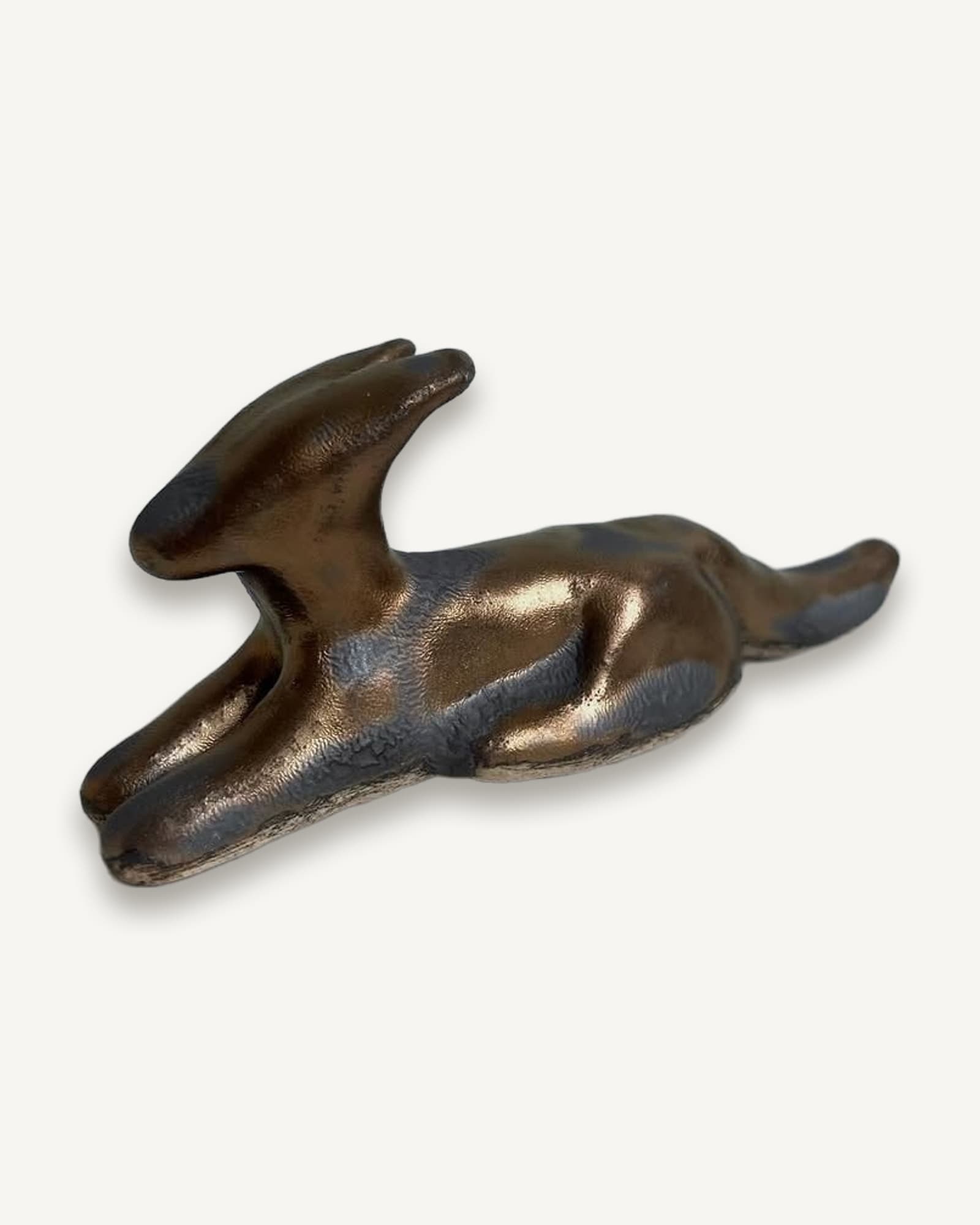
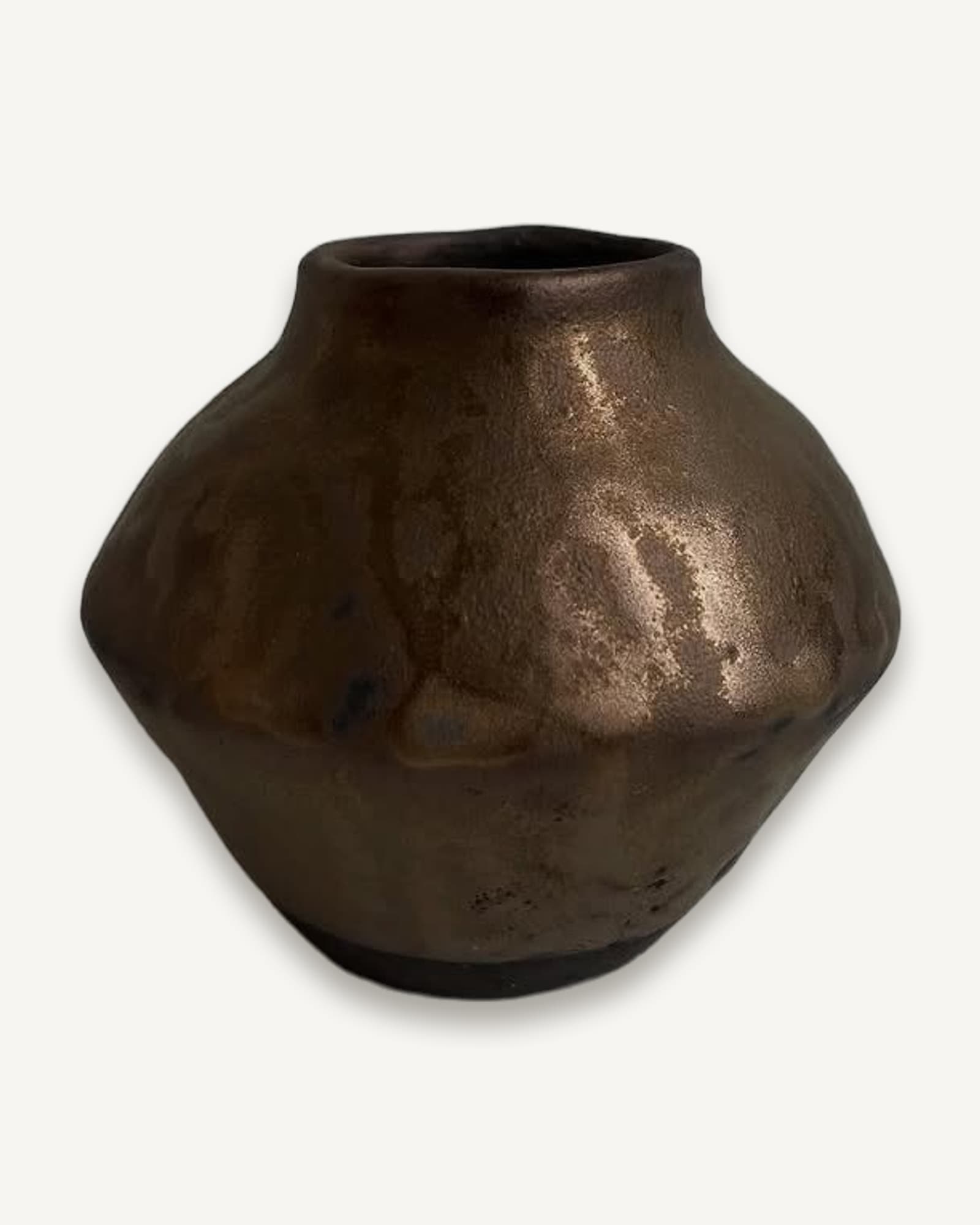
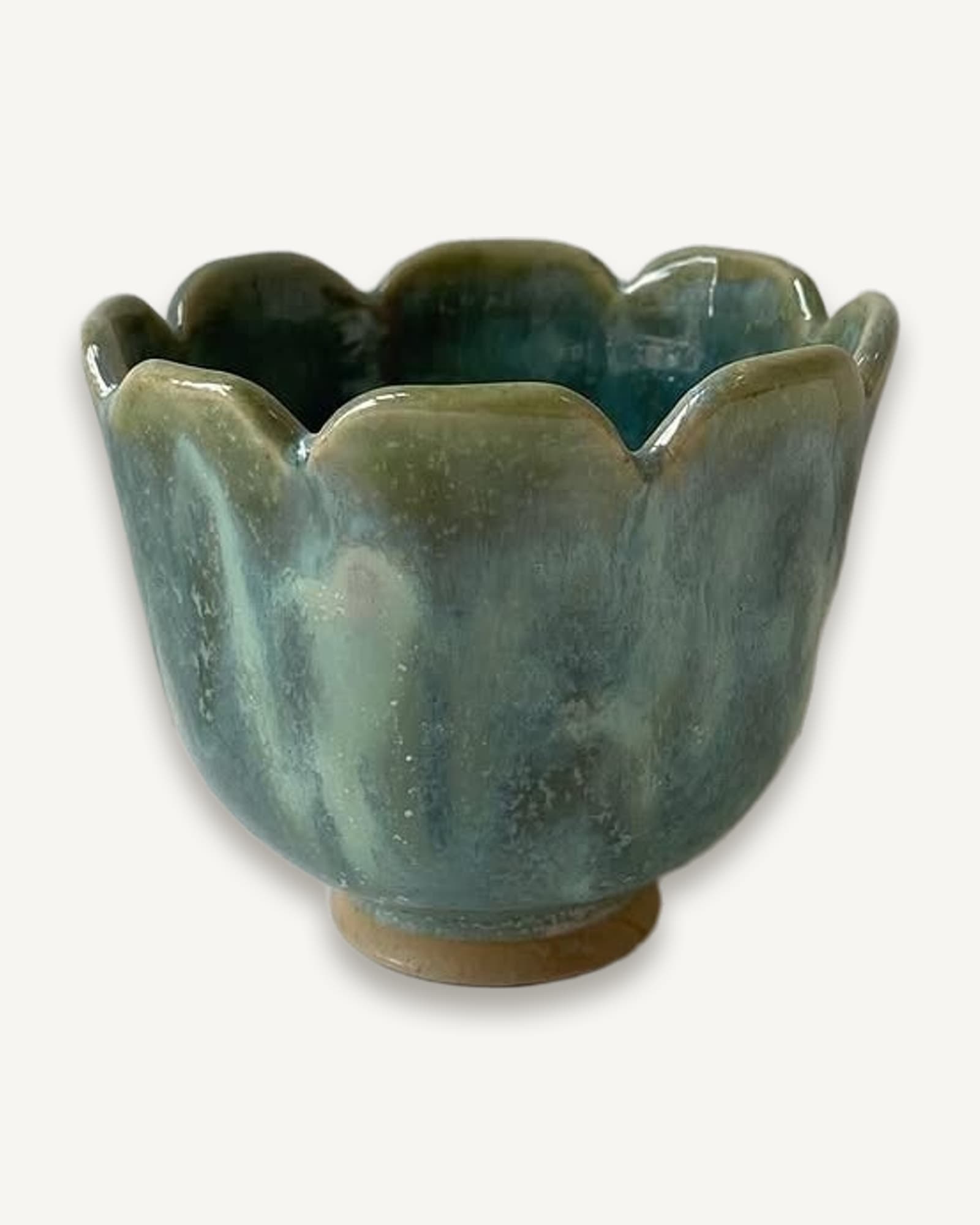
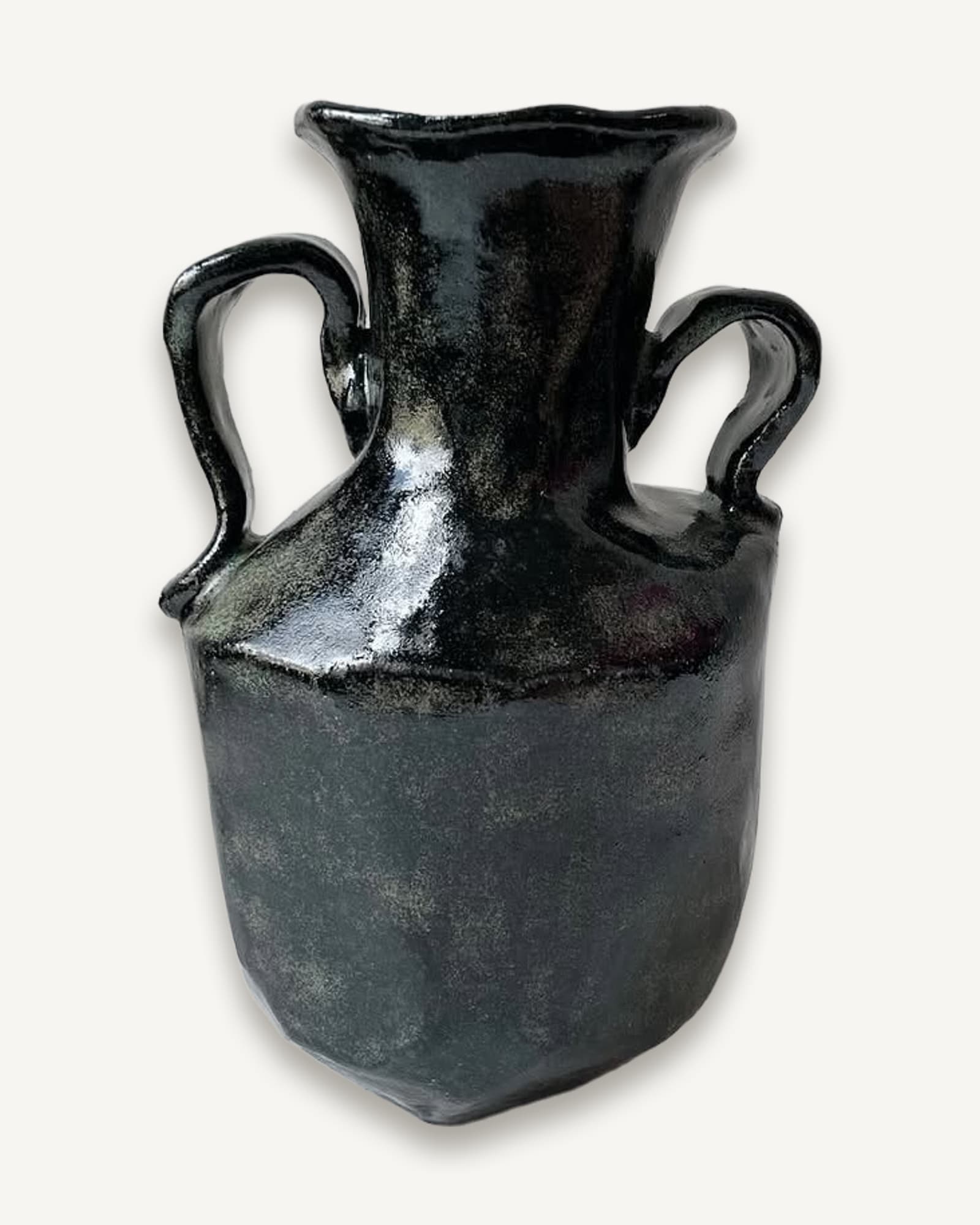
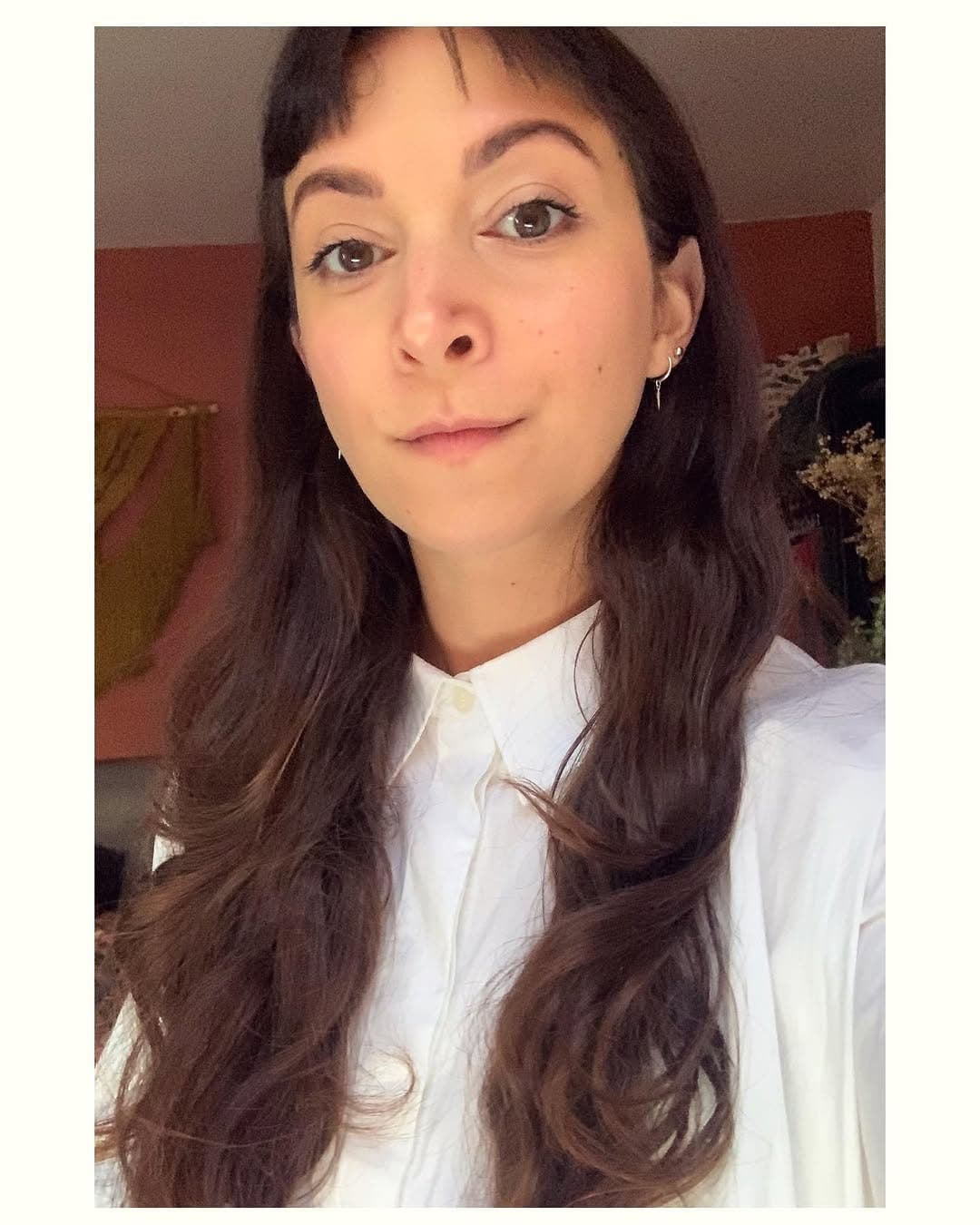
Annie Rose Edwards works from a studio in New Cross, south east London. Bristol raised, she came to clay through an apprenticeship with a potter, learning to hand-build functional ware, and has been making her own work in the city for five years.
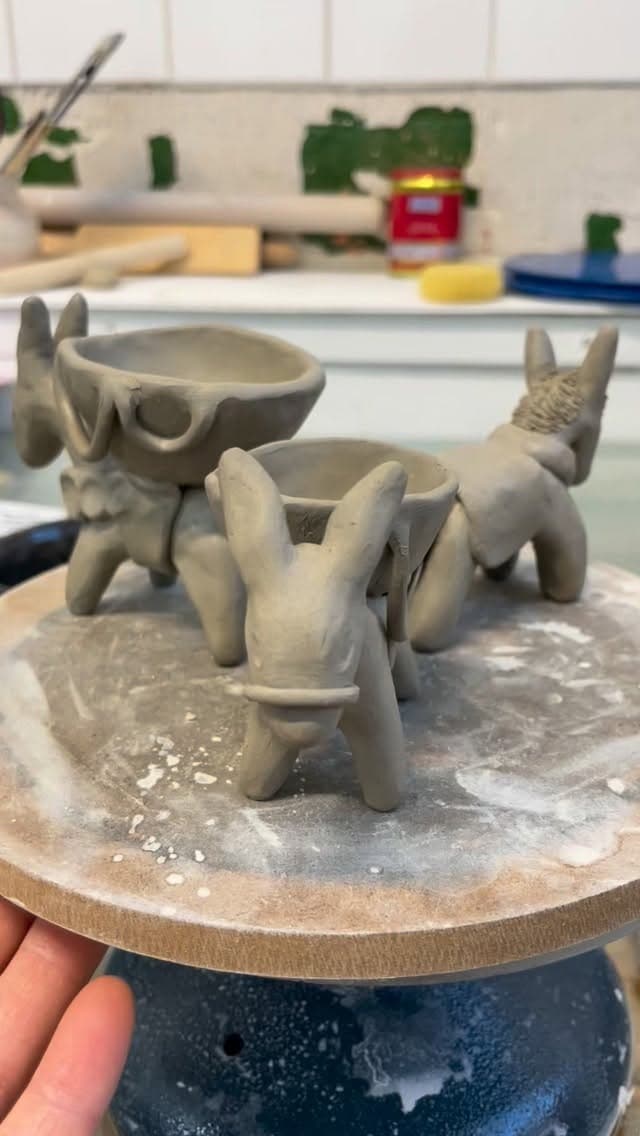
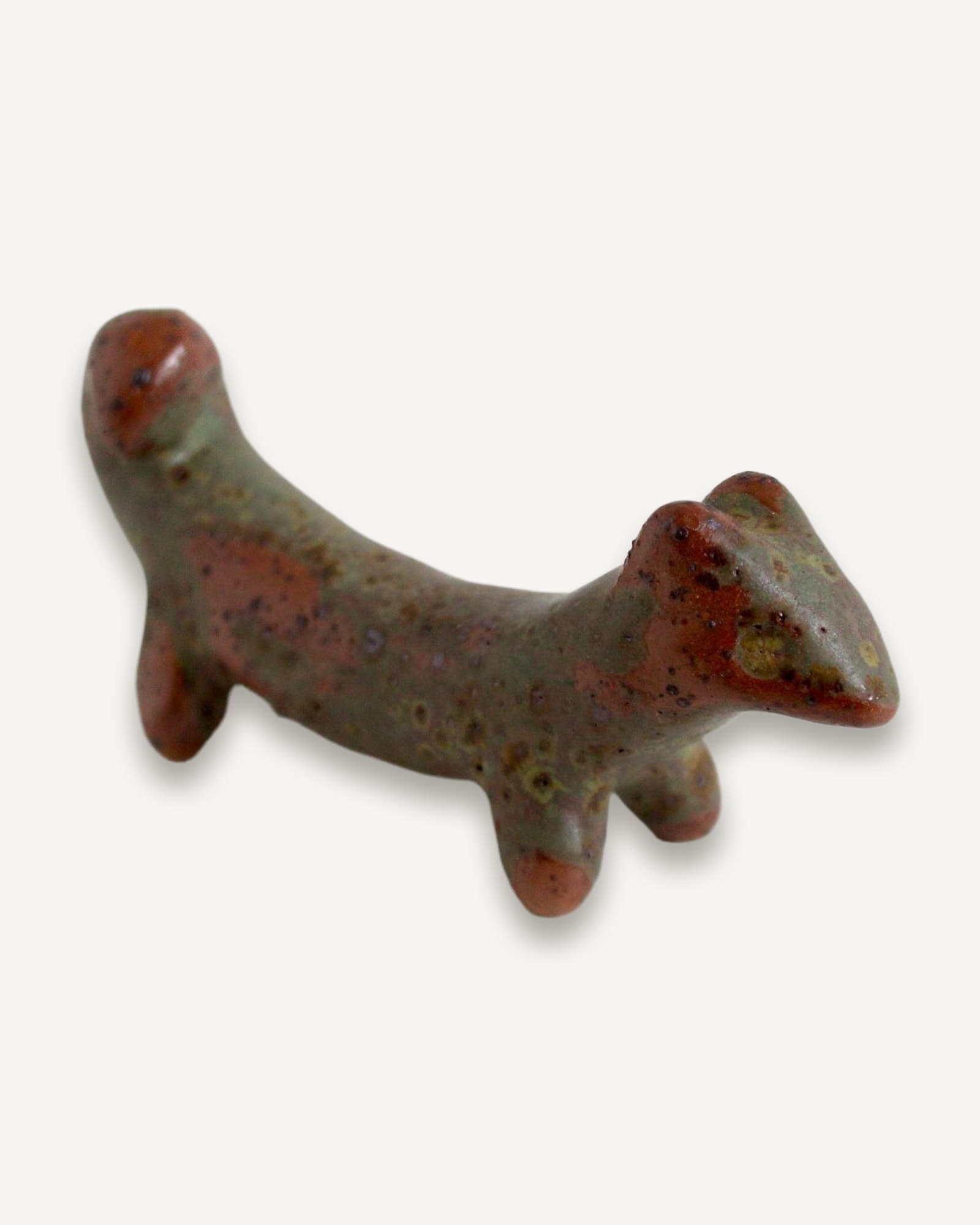
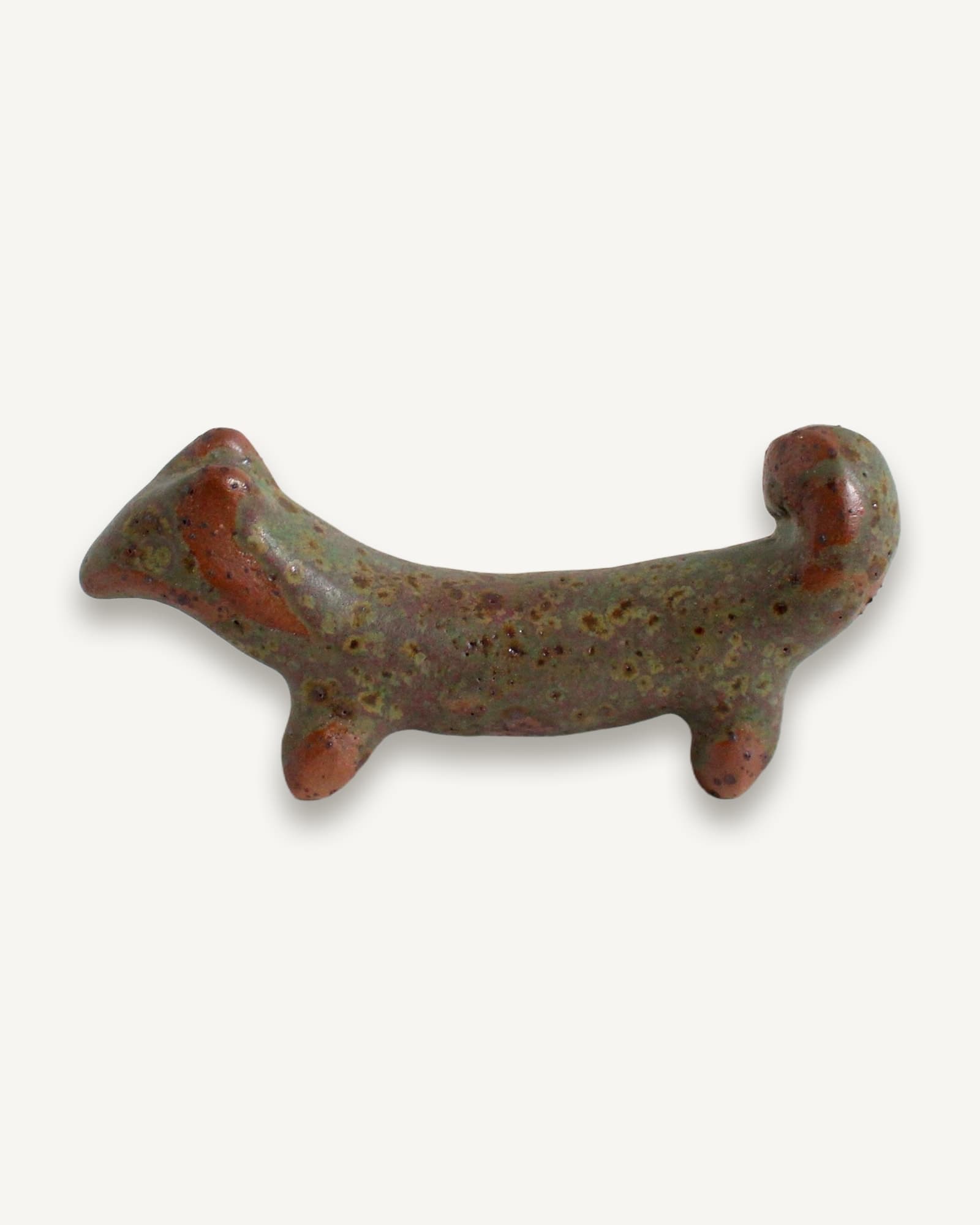
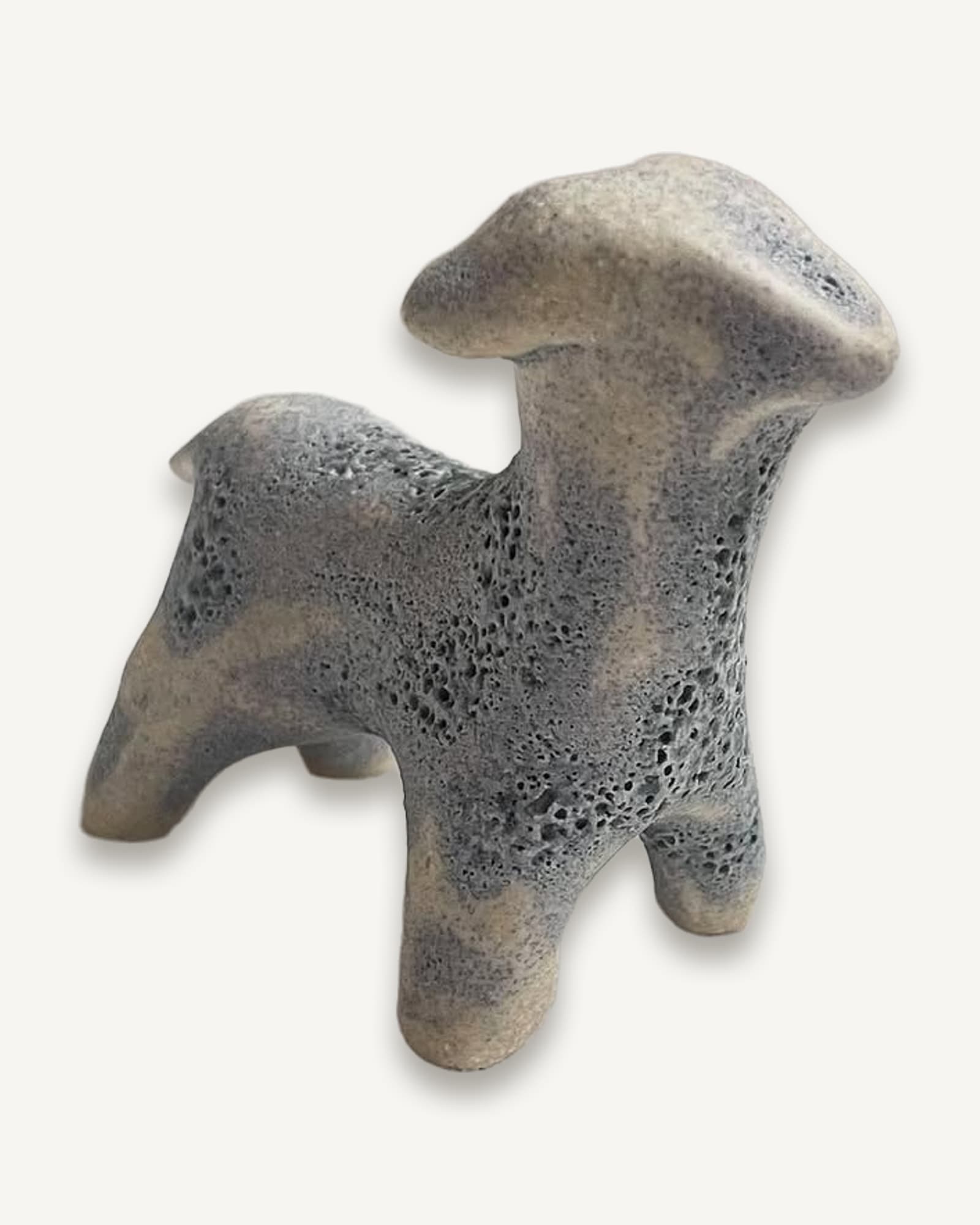
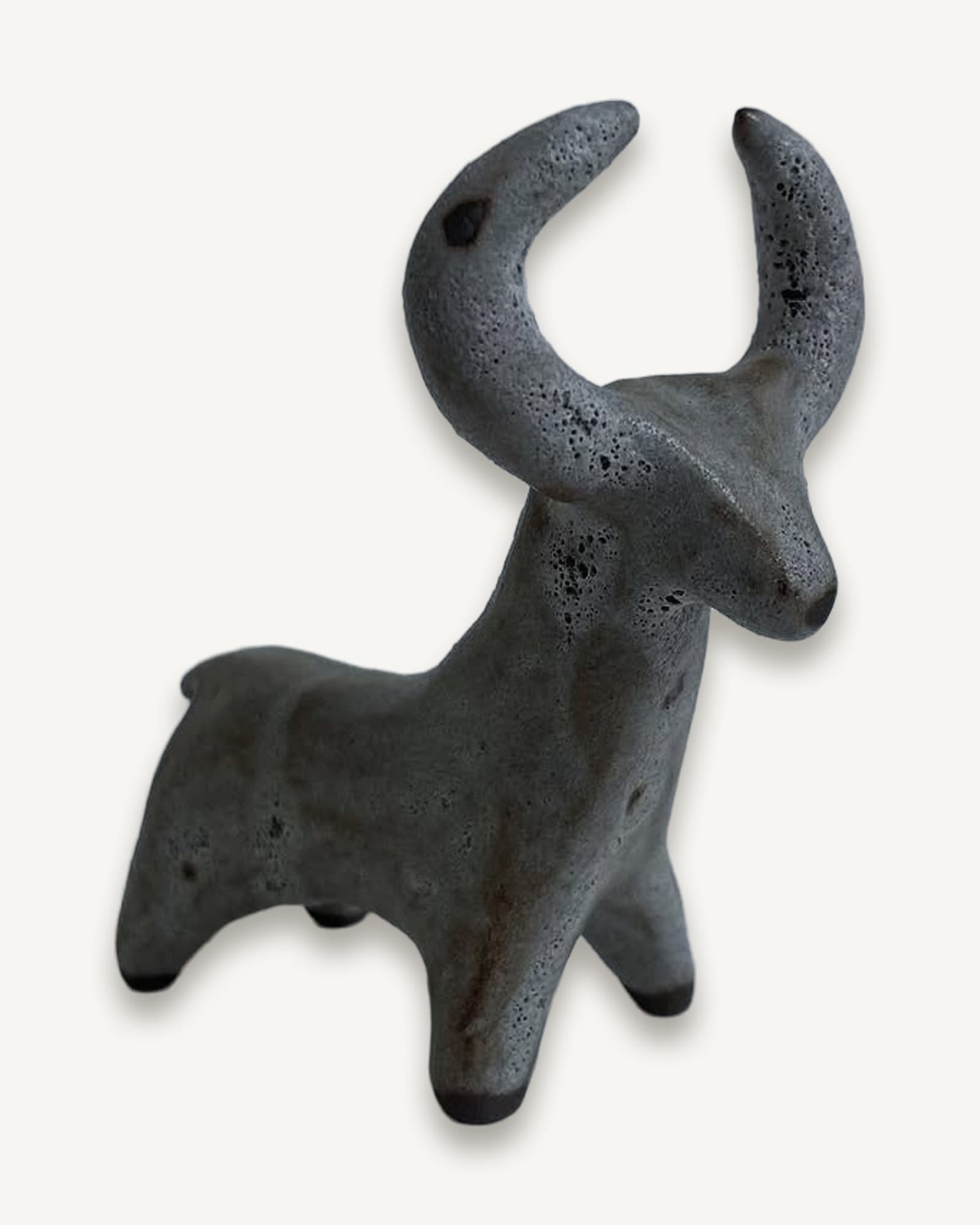
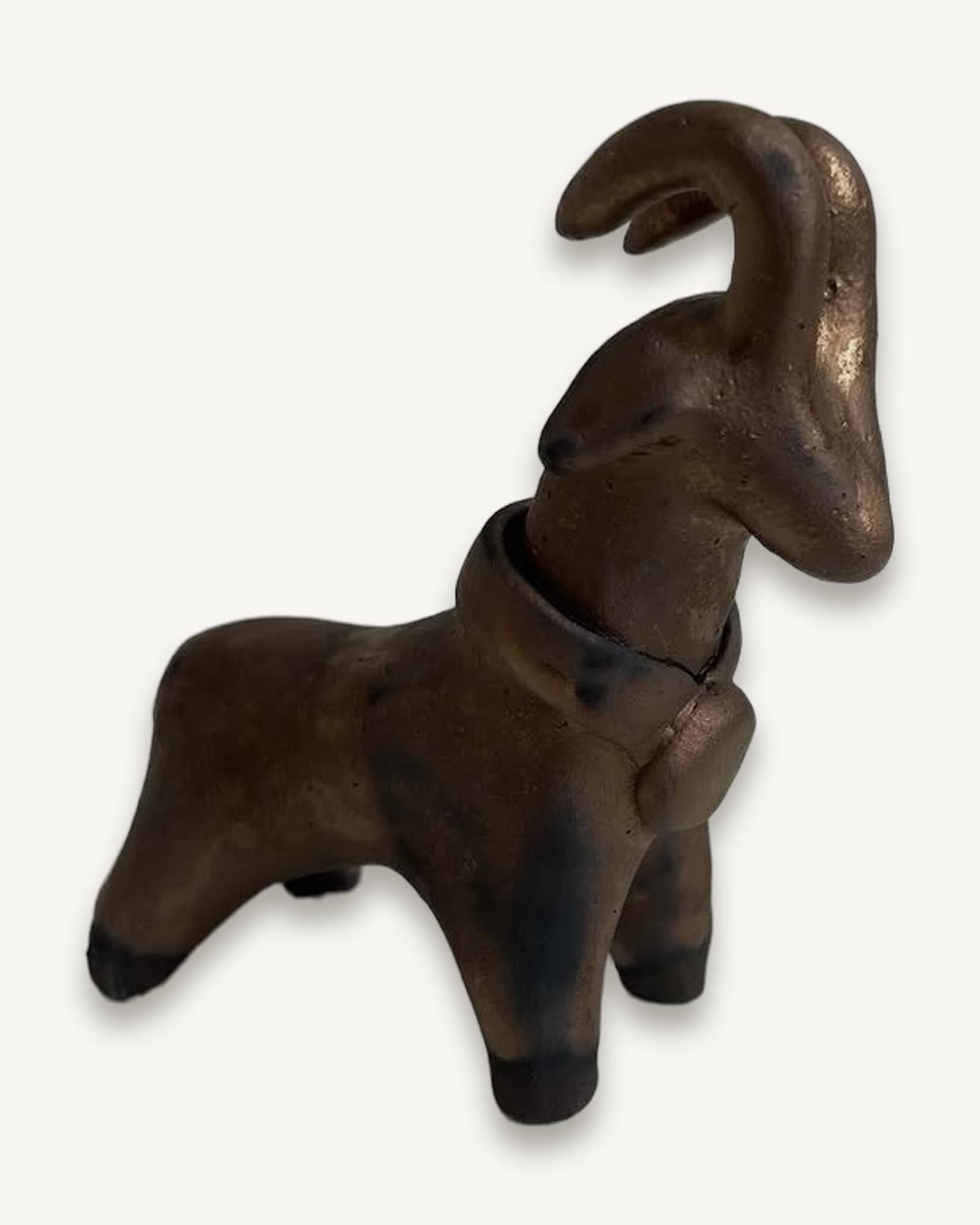
The sculptures are the pieces people reach for first. Each one is pinched from one lump of clay and finished small enough to close a hand around: horses, goats, a horned figure with the horns swept up and out, a hound stretched flat along the ground. None of them are drawn beforehand. The form arrives as she works, so no two come out the same.
It began with a tiny Roman dog in a museum in Seville. Drawing and painting run alongside the making, and much of her time goes on museum collections and sketching from antiquity. What holds her attention is folklore in which animals are deities, held with reverence, and what that says about living alongside them now. "I feel that every piece has a little spirit within," she says, "designed to be held in the hand, like a totem of sorts."
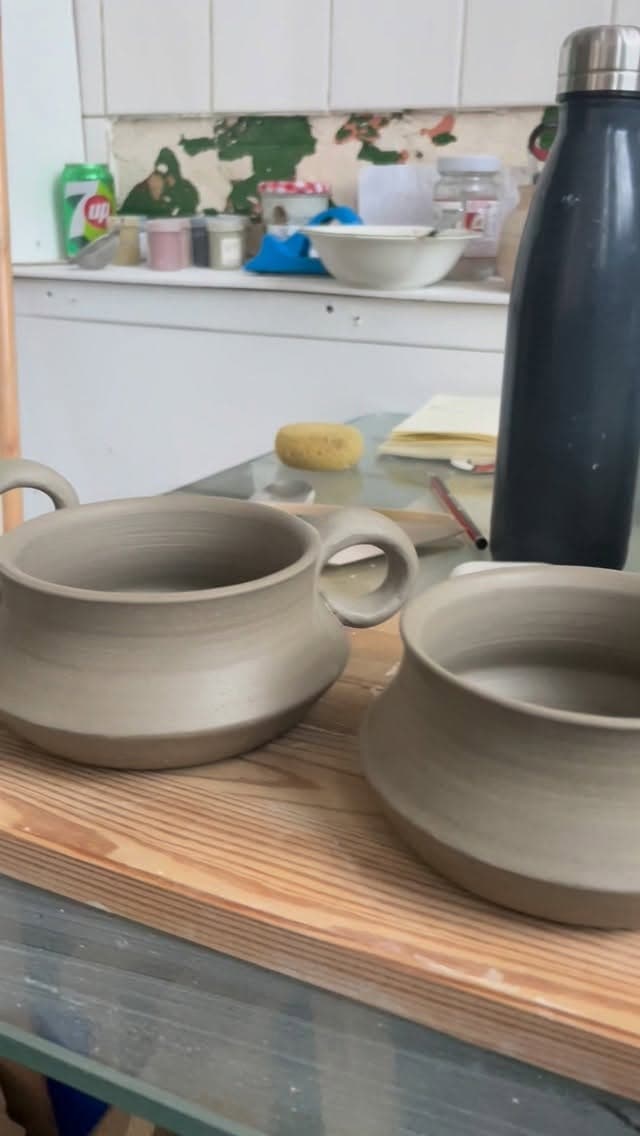
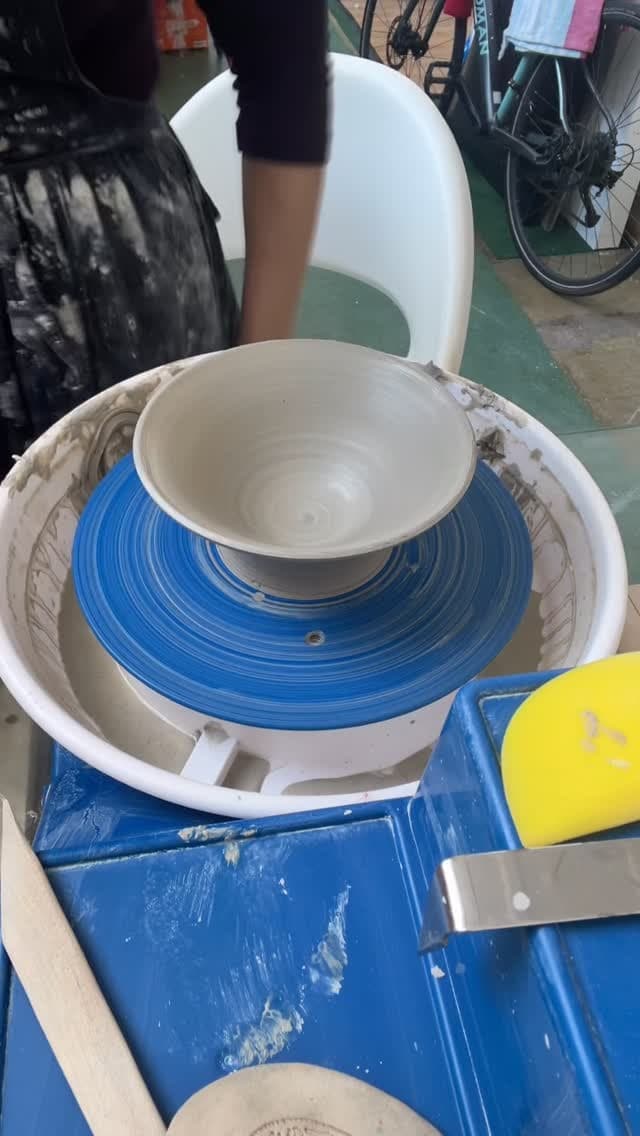
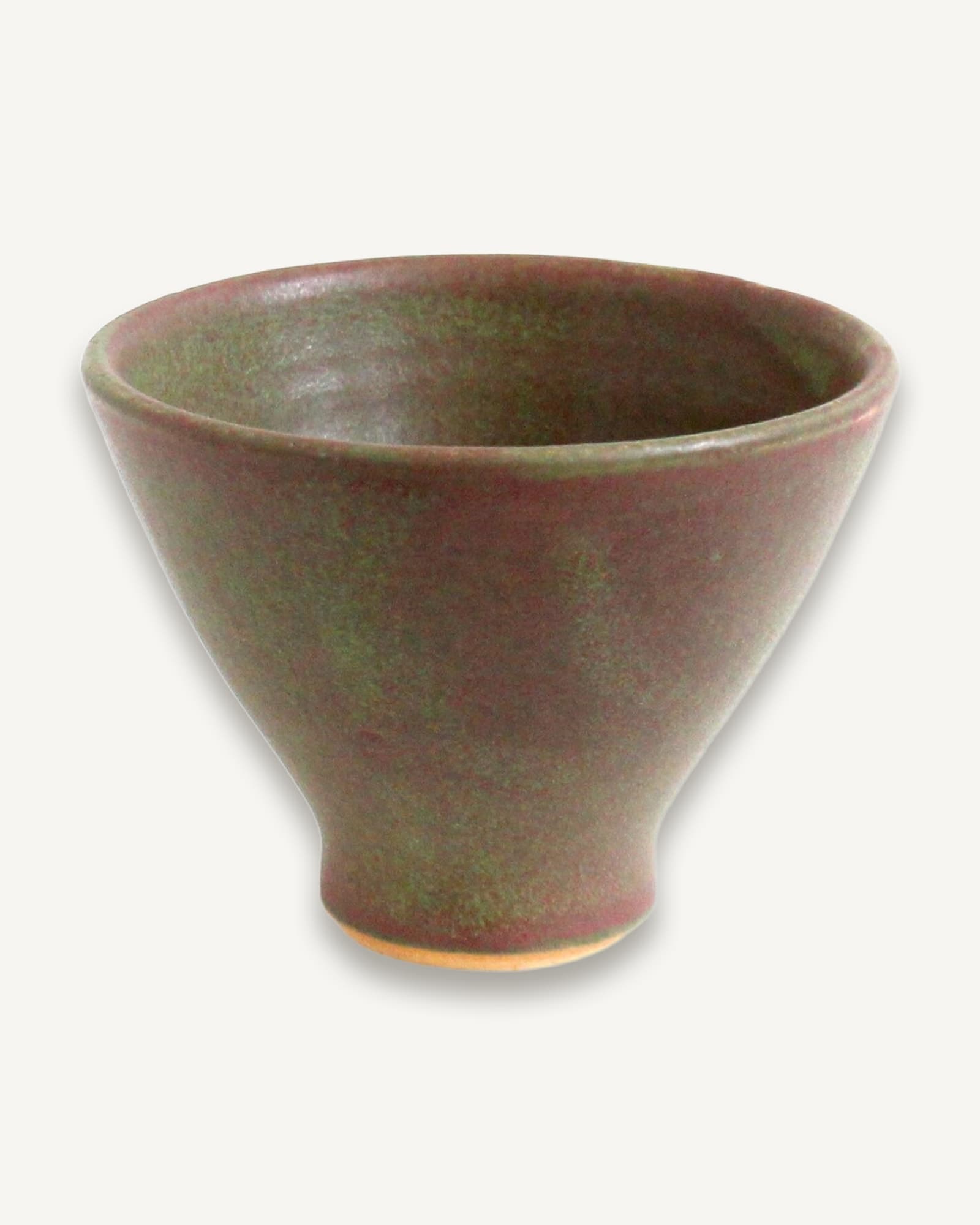
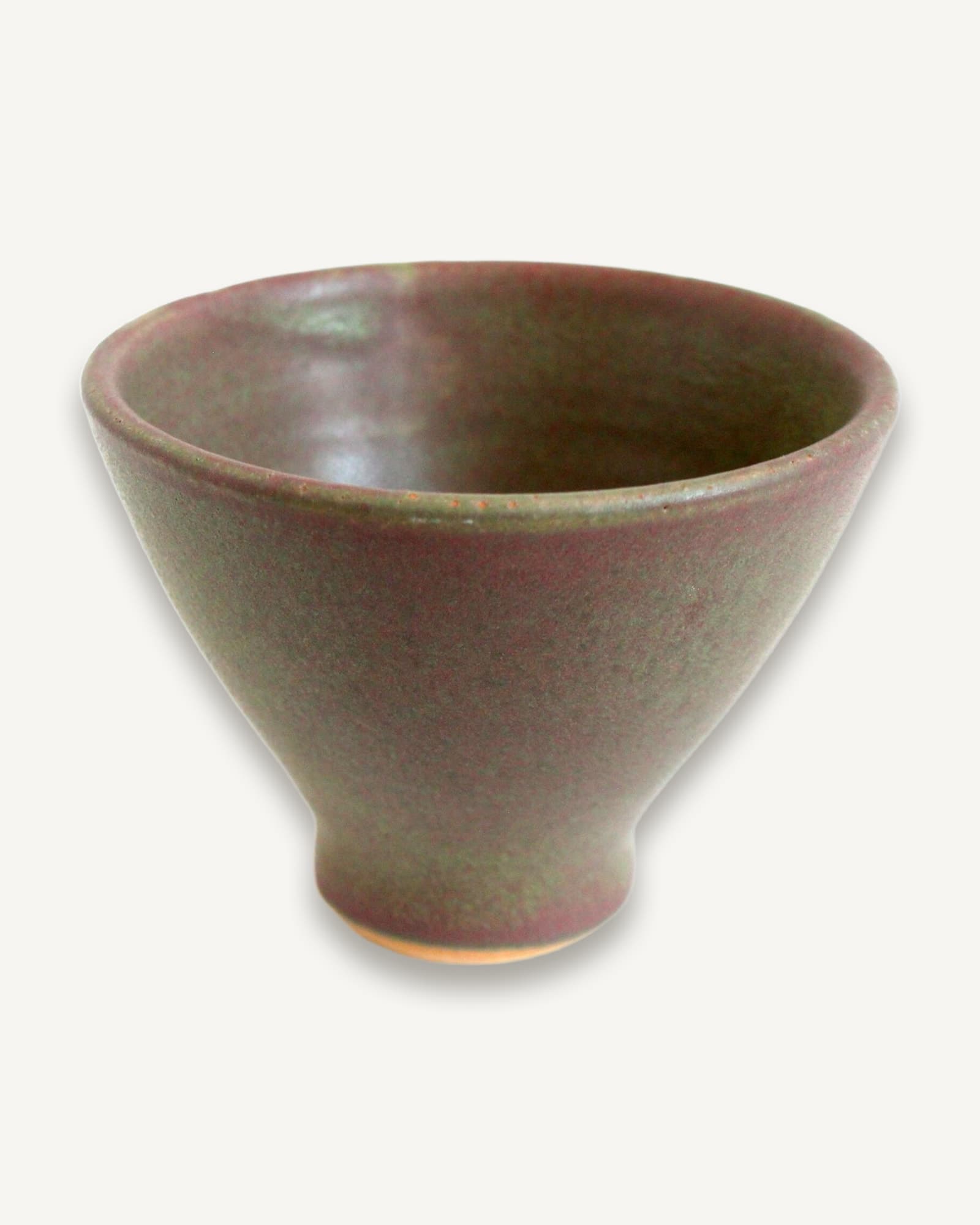
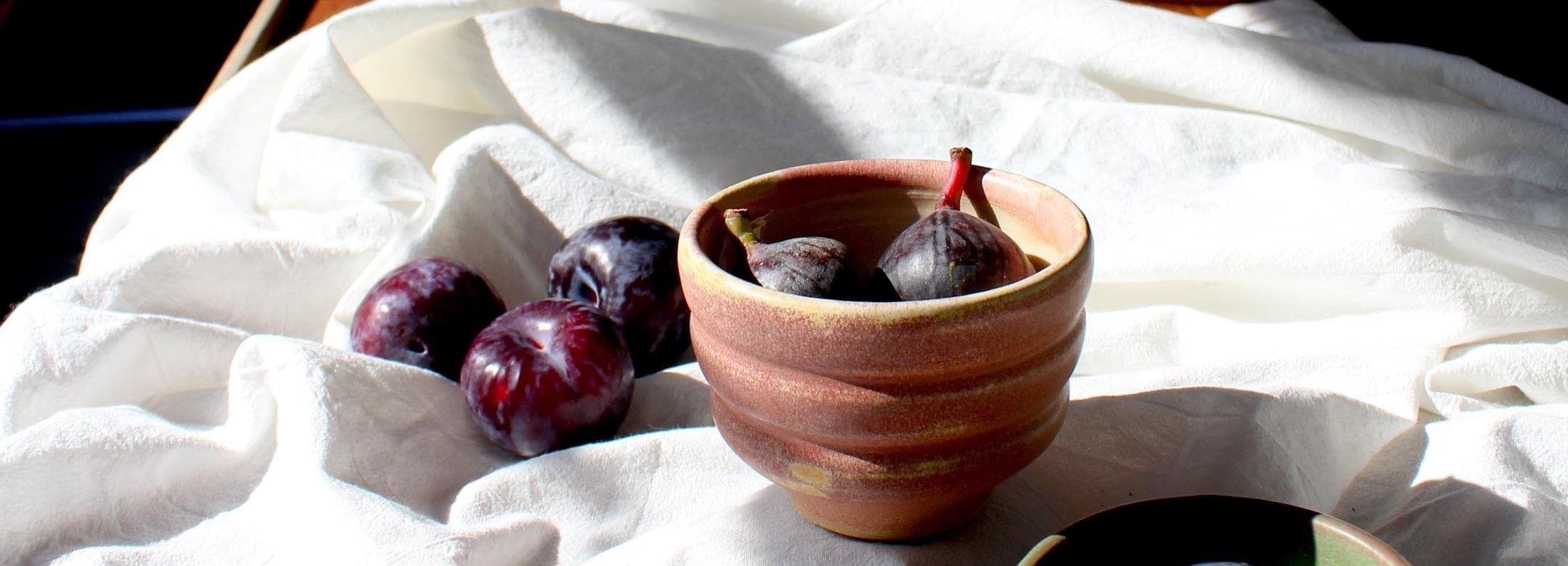
The functional work is thrown on the wheel. Curve cups sit in the palm on a chunky foot ring; cloud cups carry thick outer walls against a straight interior, so a hot drink stays comfortable to hold. Mugs, small bowls and butter dishes come off the same wheel. Every glaze is her own, mixed in the studio, and the surfaces matter as much as the forms: a mossy green shot through with purple, a mottled pebble pink, a turquoise that breaks and burns where it runs thin.
She teaches hand-building weekly in south London, and takes one to one sessions for students who want the room to themselves.
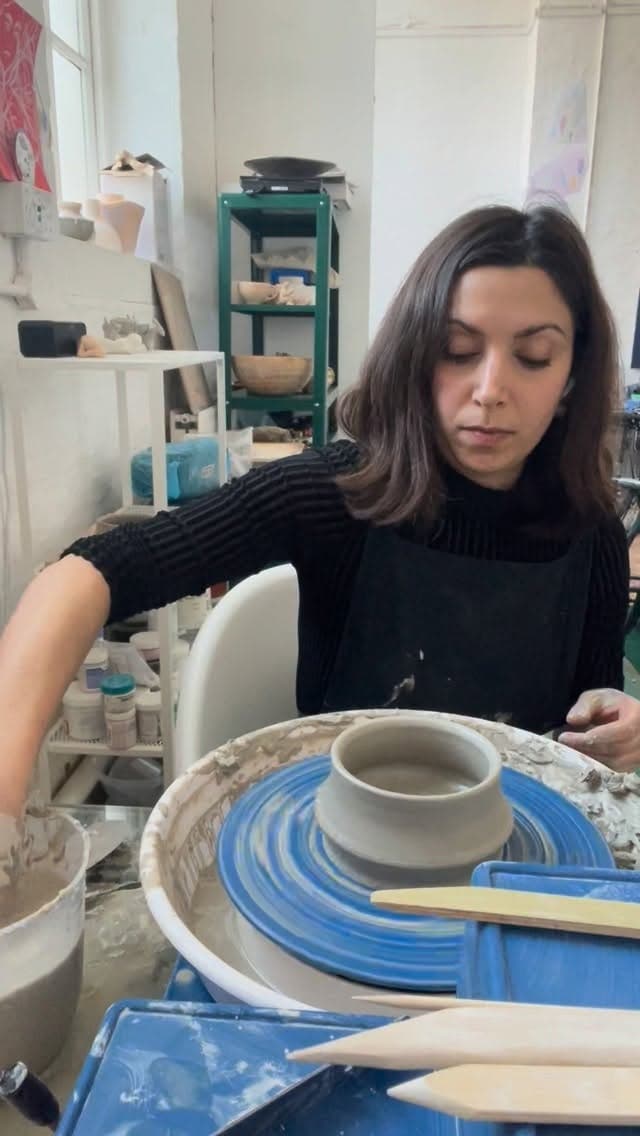
Annie Rose learned her craft through an apprenticeship with a potter in London, hand-building functional ware before making anything of her own. Five years on the practice runs in two lines that share a temperament: pinched sculpture and thrown tableware, both drawn towards the organic and the imperfect. Nothing is planned. A lump of clay becomes an animal as she handles it, and the piece is done when it stops changing.
She is an artist as much as a potter, working in watercolour, pastel and soft-ground etching, and the sketchbooks feed straight back into the clay.
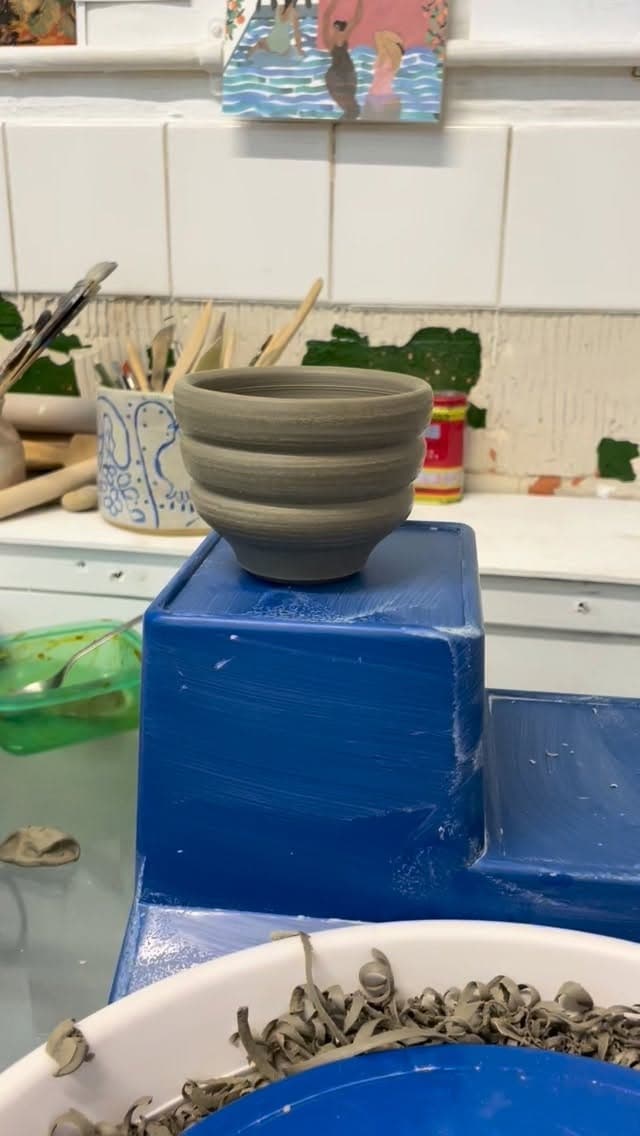
The clay is stoneware, speckled stoneware, black stoneware or porcelain, chosen for what the glaze will do over it. The glazes are her own, developed and mixed in the studio rather than bought in, which is why one green reads mossy over white stoneware and lichen-flecked over speckled. Volcanic glazes give the sculptures a pitted, weathered skin. Thrown cups take a glossy transparent interior over a matte or satin outside, so the surface stays interesting in the hand without getting in the way of the drink.
Every piece is a one-off. Her own line for it is that each is "a moment in time between the clay and the hands that form it".