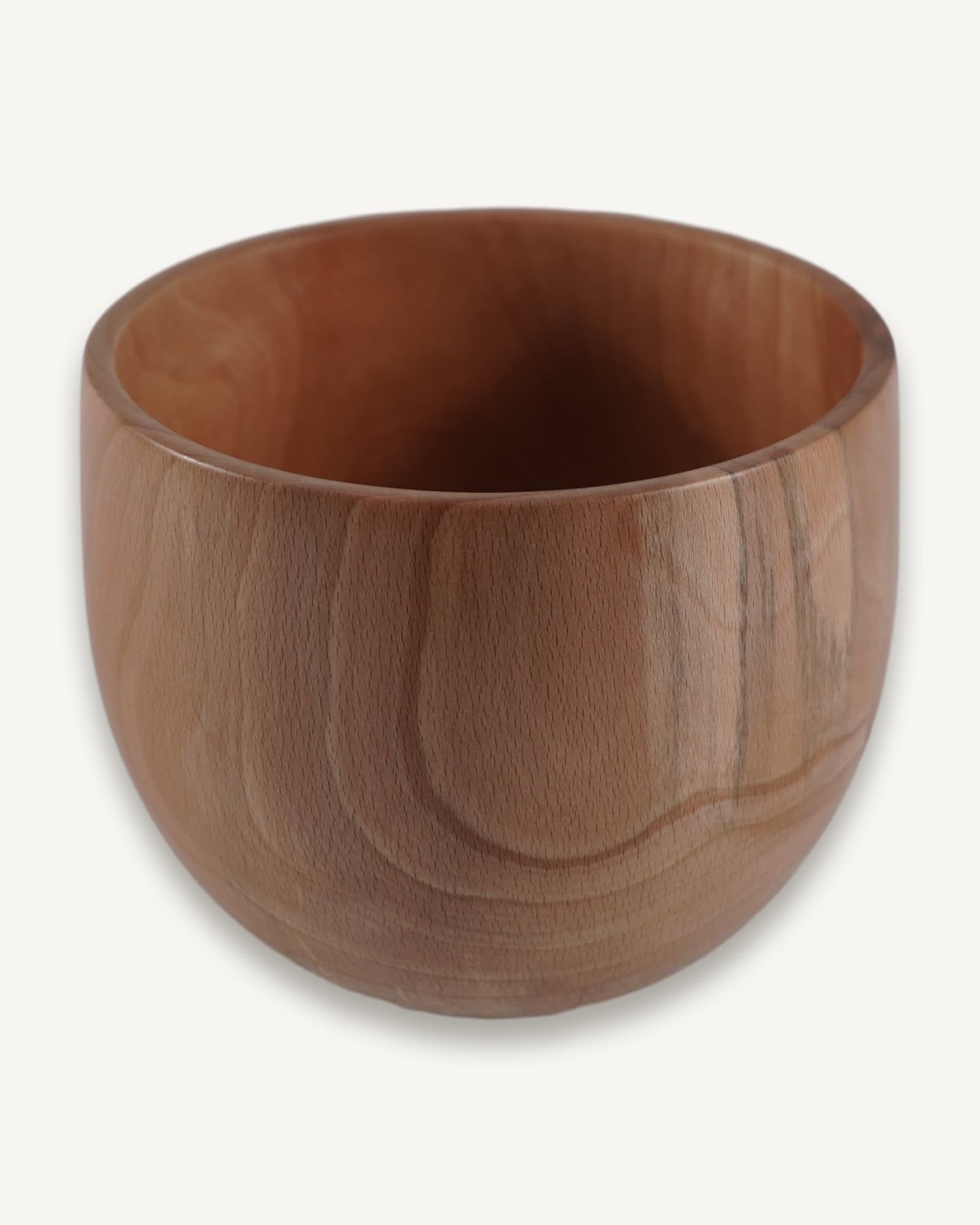
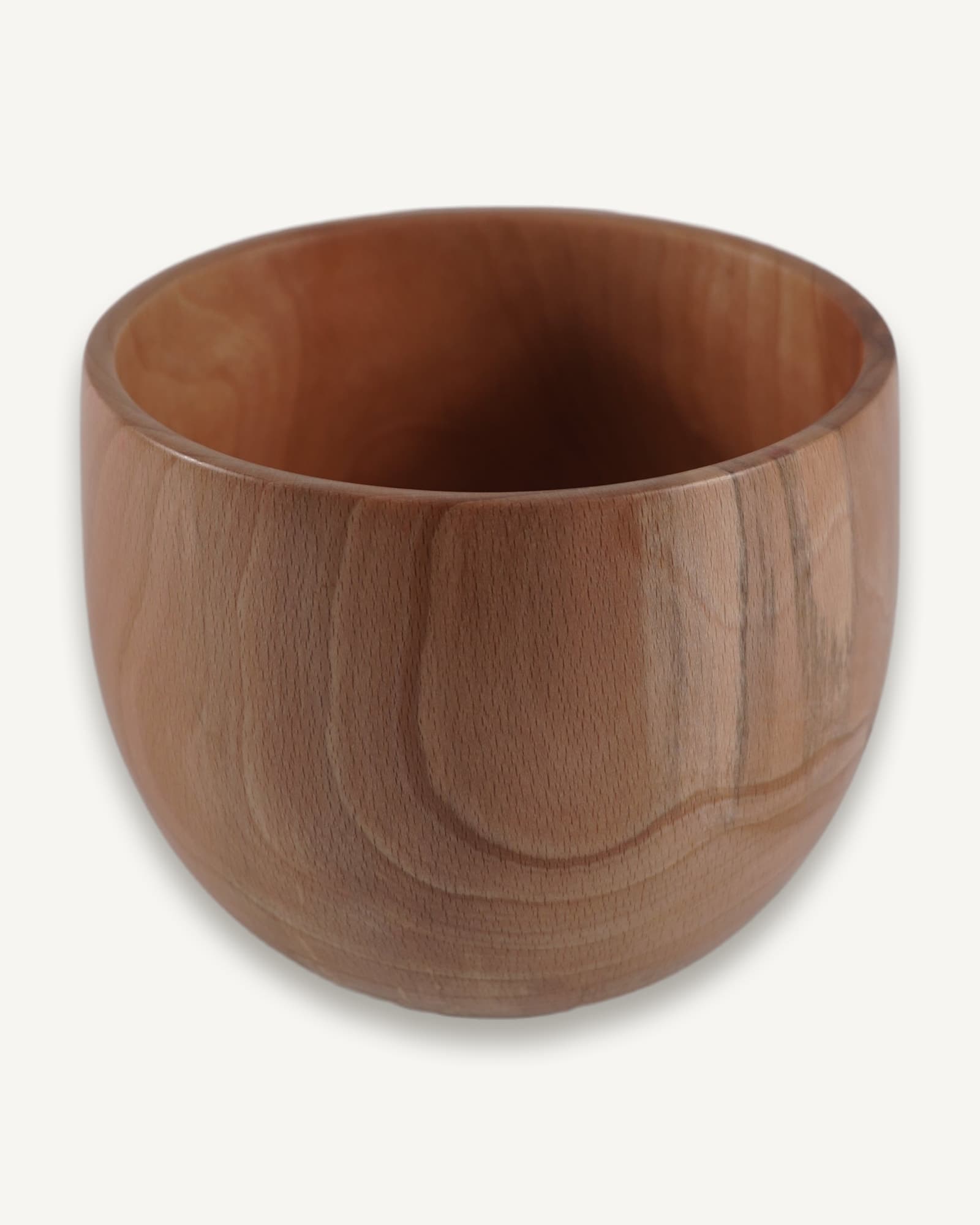


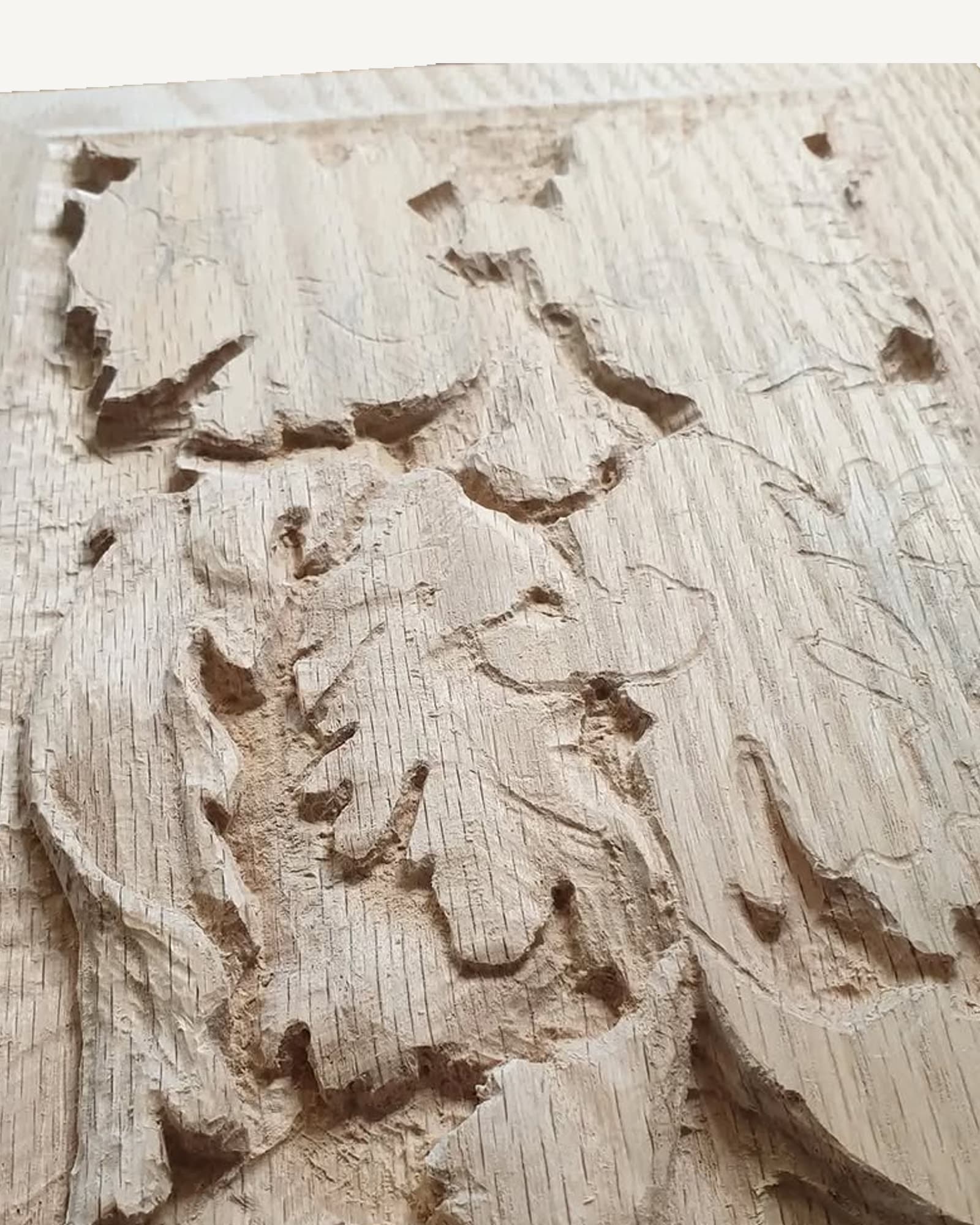
Bespoke commission

“Wood is always warm to the touch. You have to work with the timber; it won't respond to being forced.”
Bee takes commissions for pyrography portraits, animals mostly, worked from your own photographs onto timber or leather. Andy takes commissions for turned pieces: a platter marked for a retirement, a bowl out of a tree that meant something to you. Most start with a conversation about the wood.
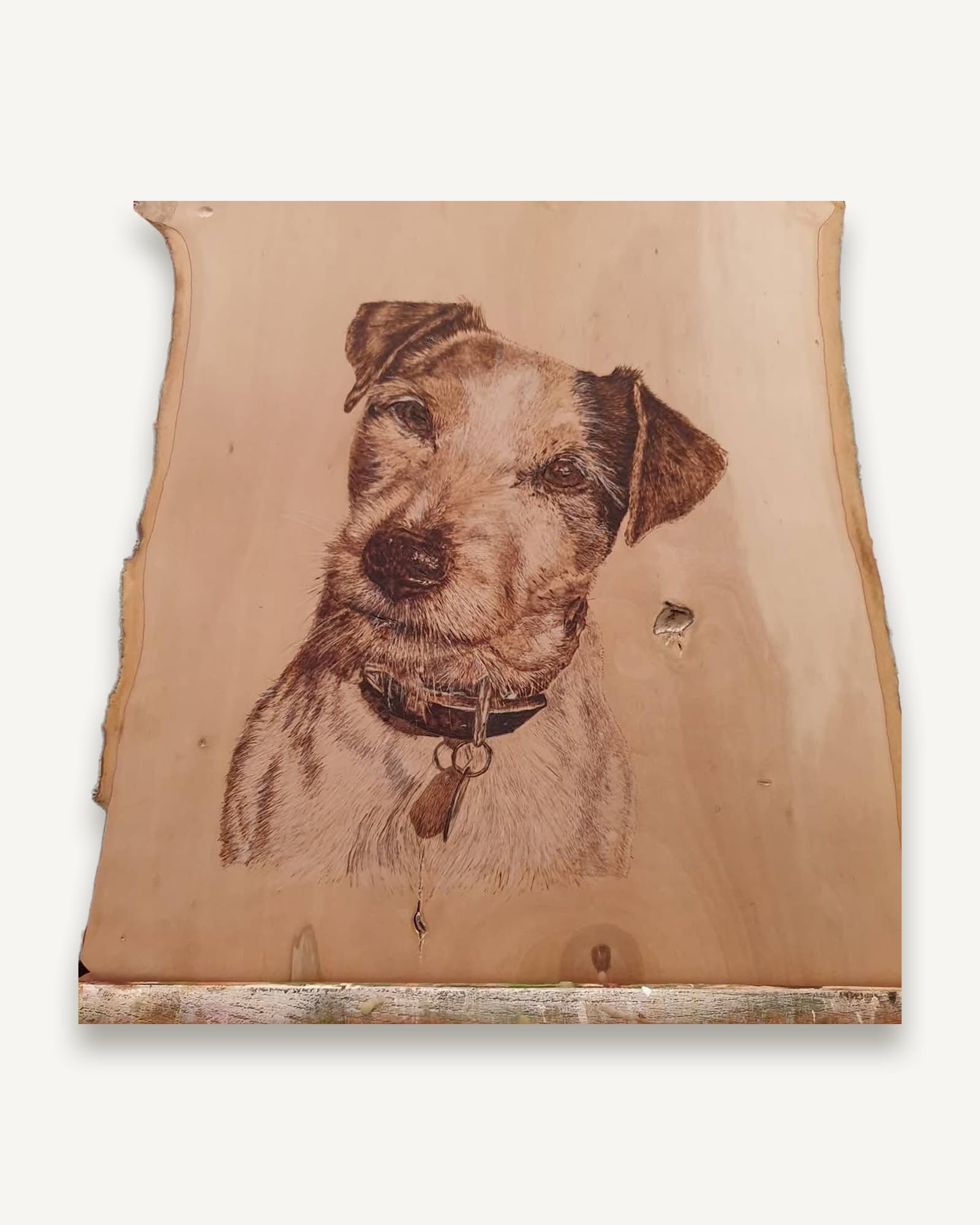
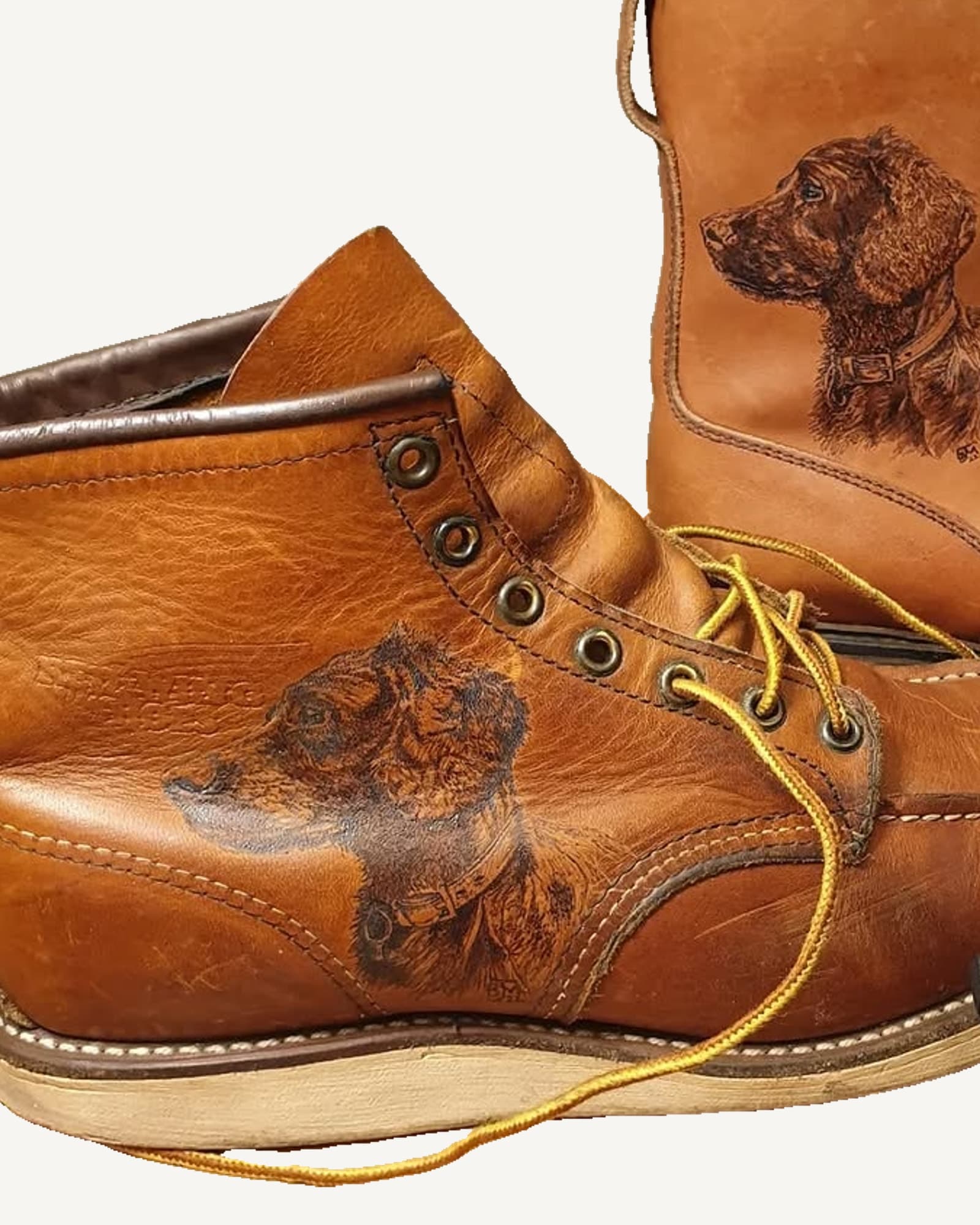
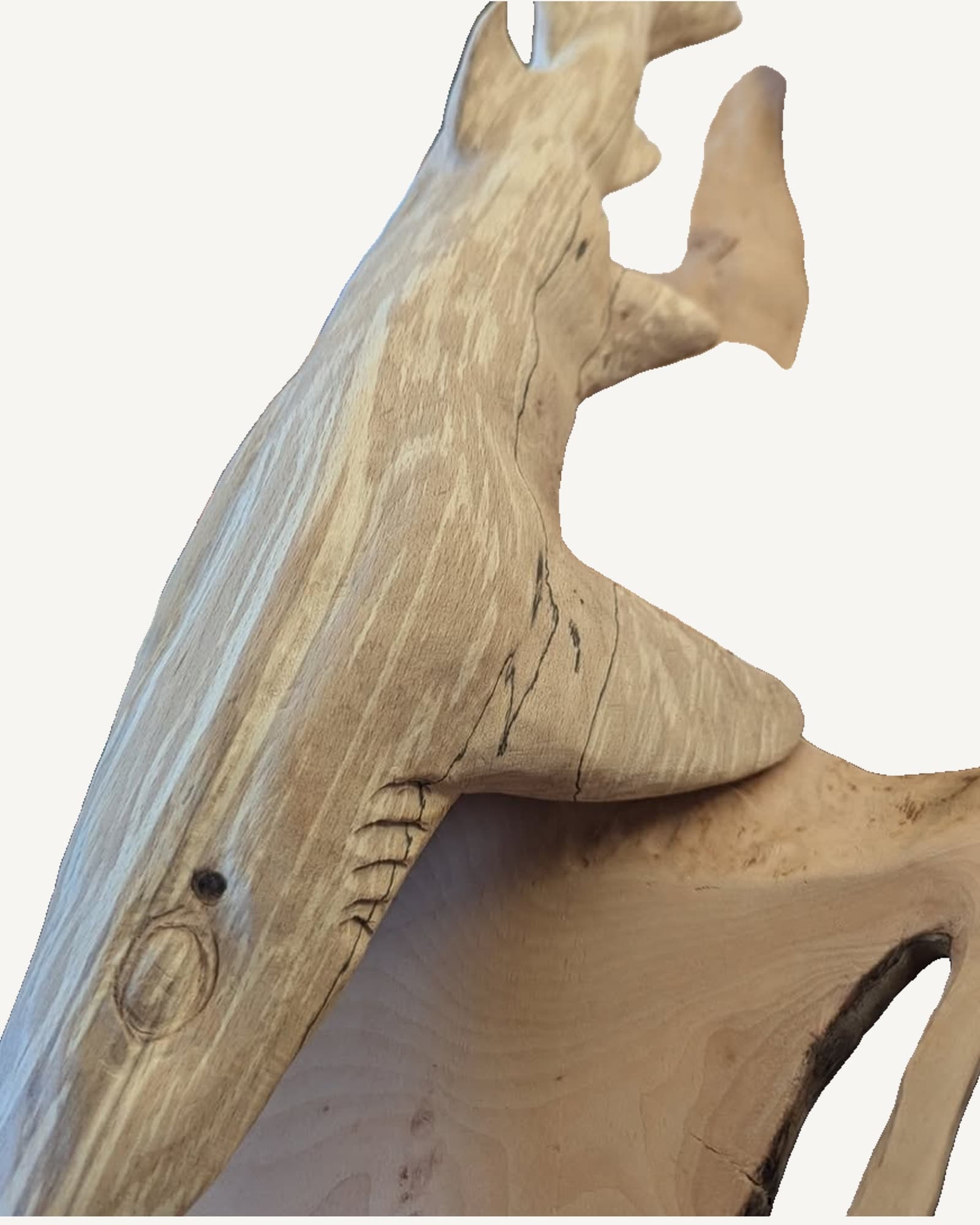
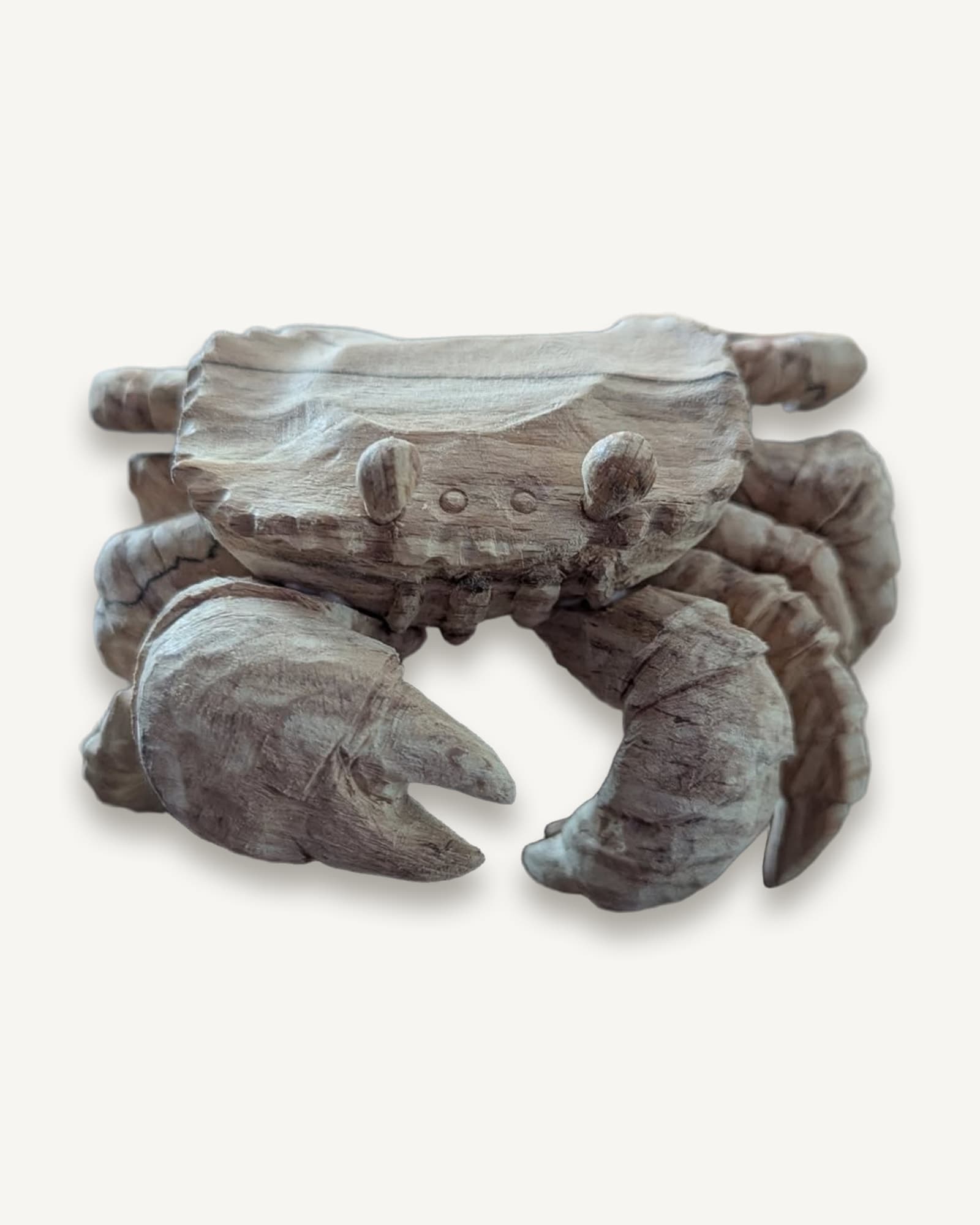
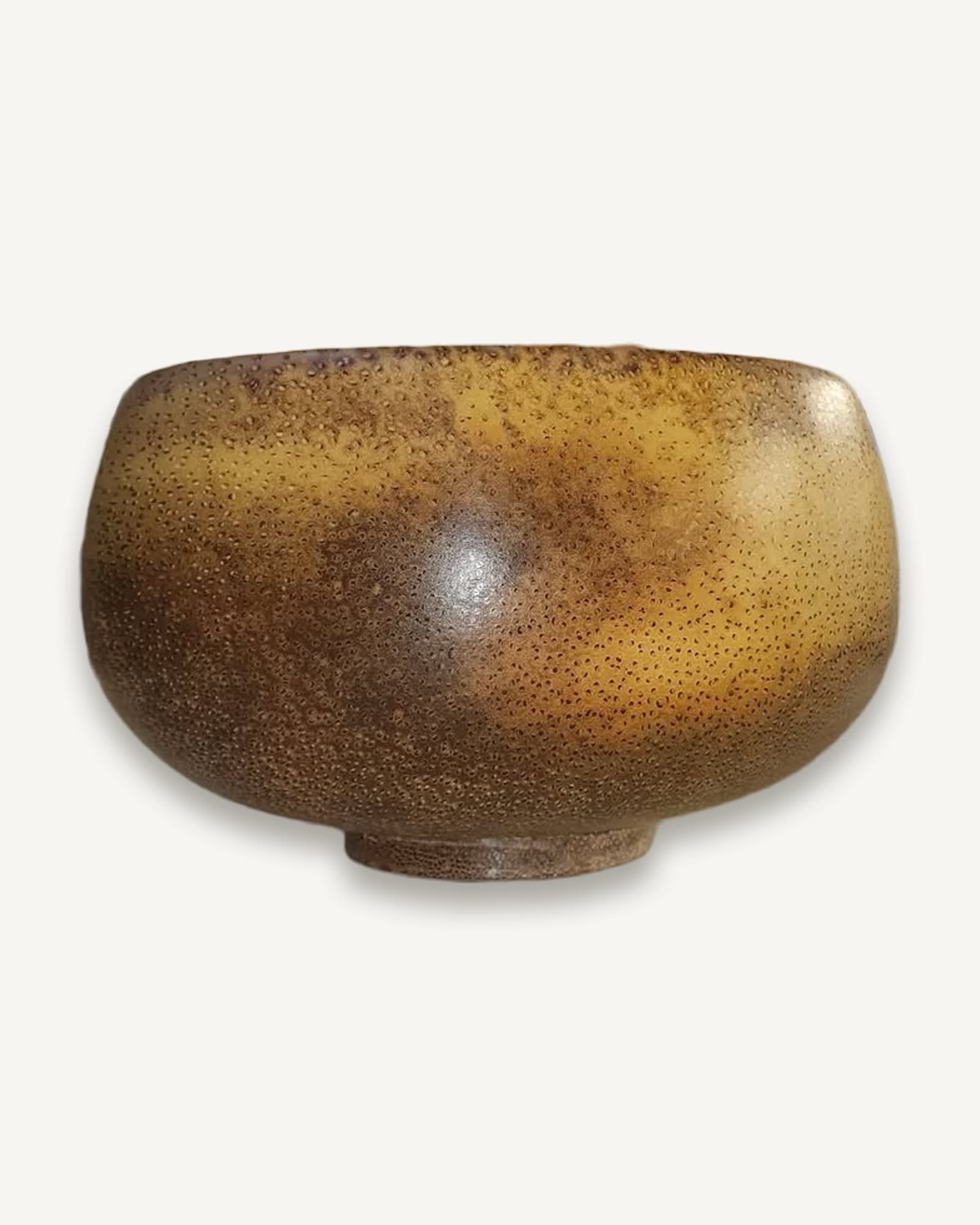
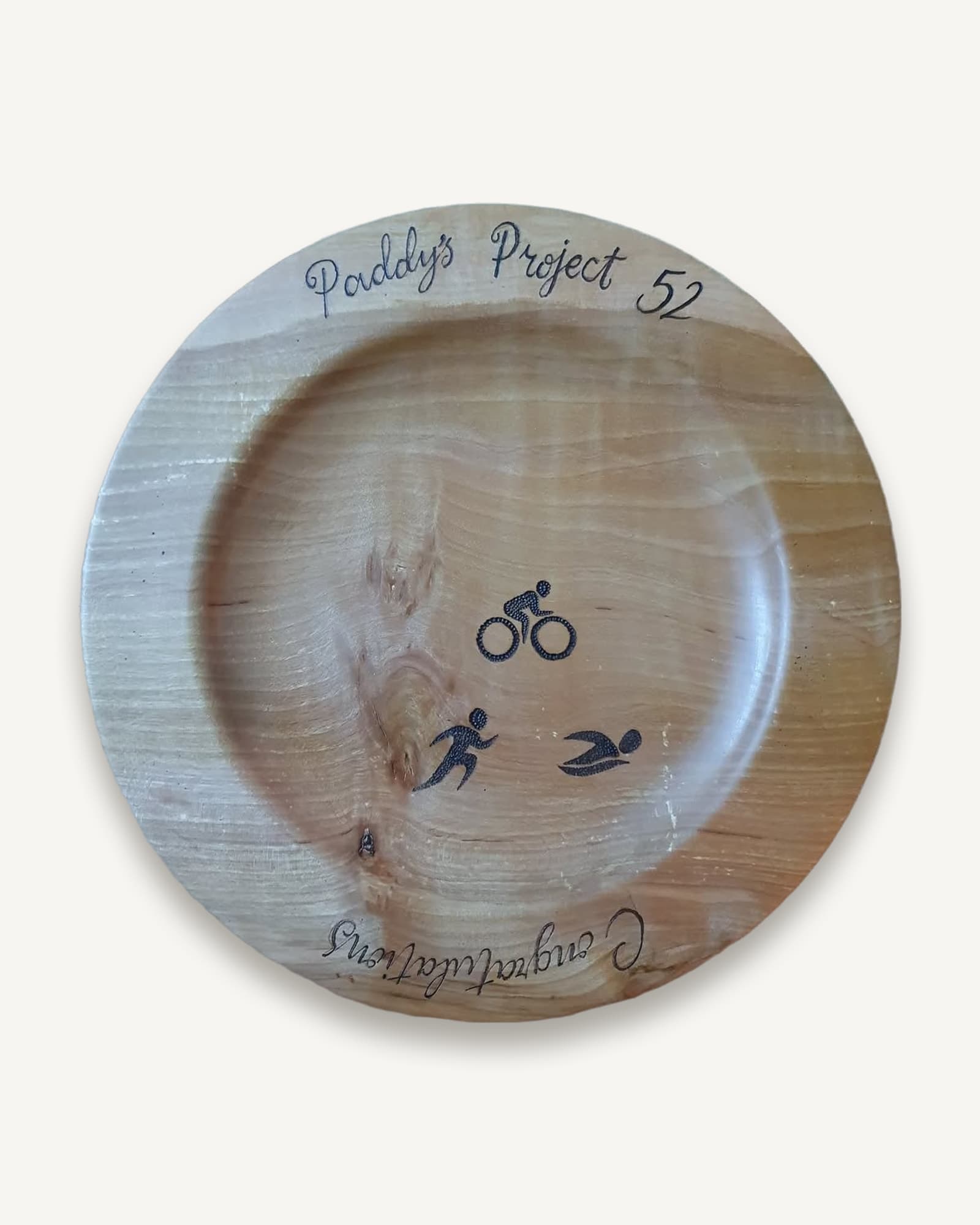
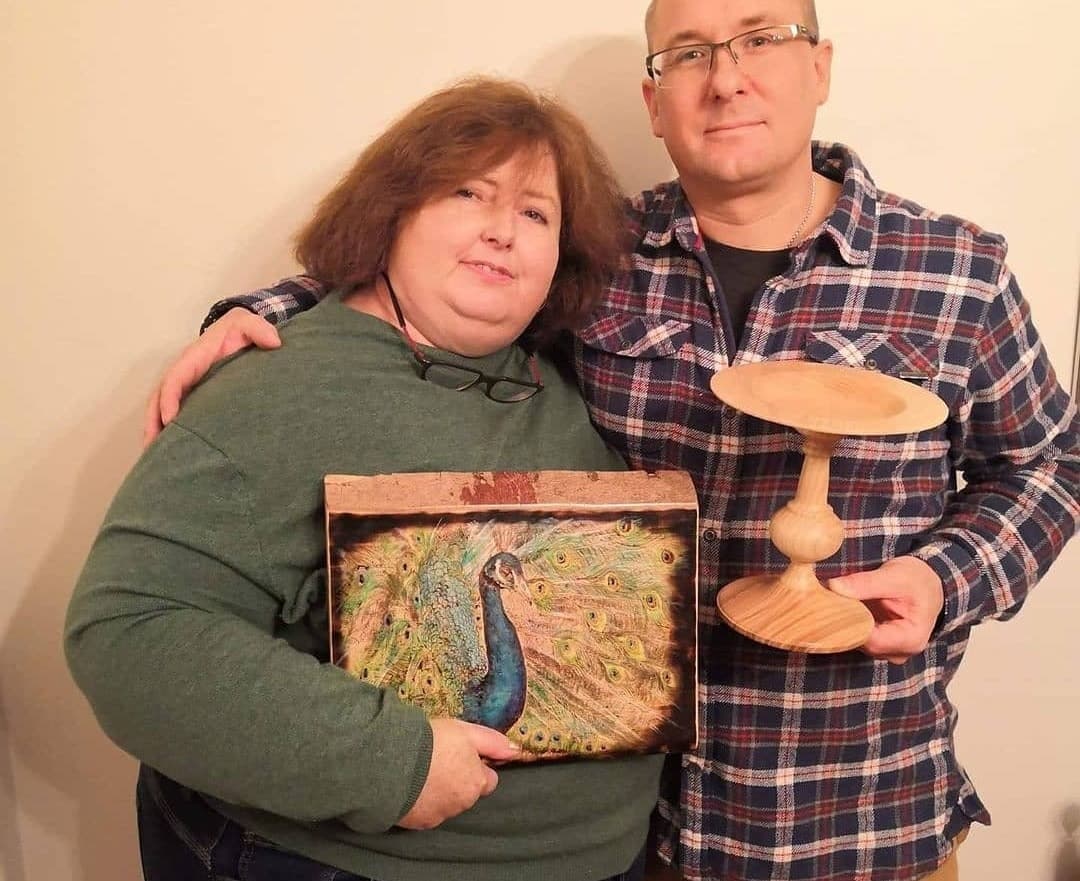
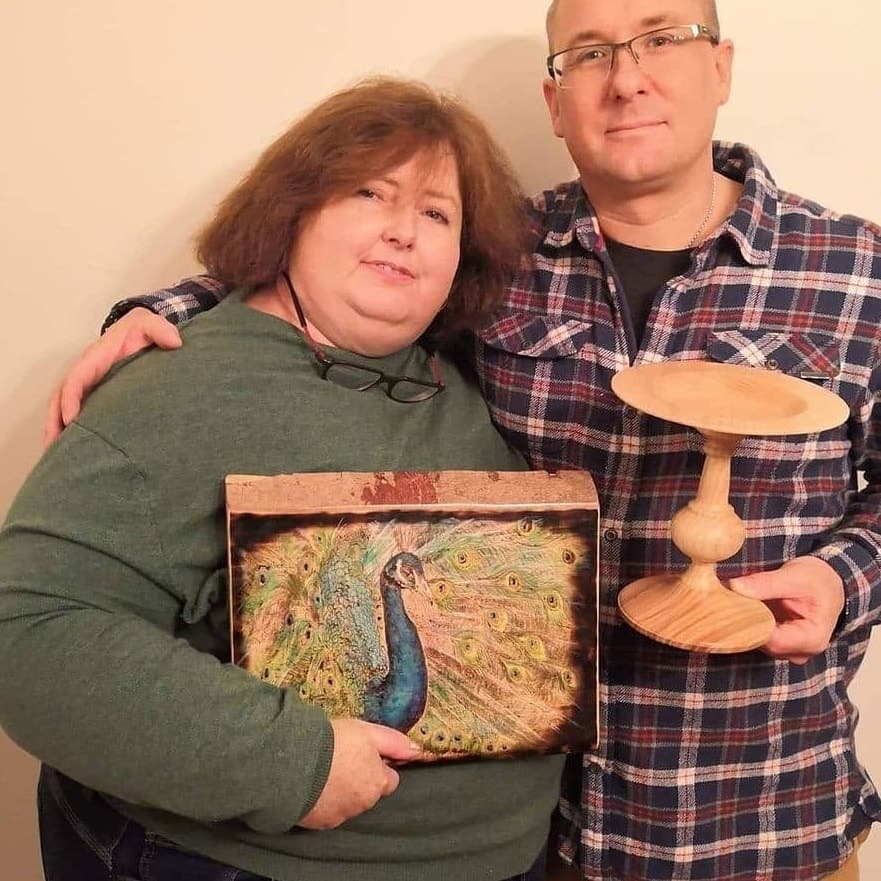
Andy and Bee Matthews share a workshop on the Hampshire side of the New Forest, on the edge of Fordingbridge. Andy turns, Bee burns, carves and paints. Most pieces pass between them before they are finished, and their own favourite is one neither could have made alone: a kingfisher carved by Bee and inserted into a plate Andy turned, mounted on apple wood and scorched almost black, with the spalting left showing on the underside.
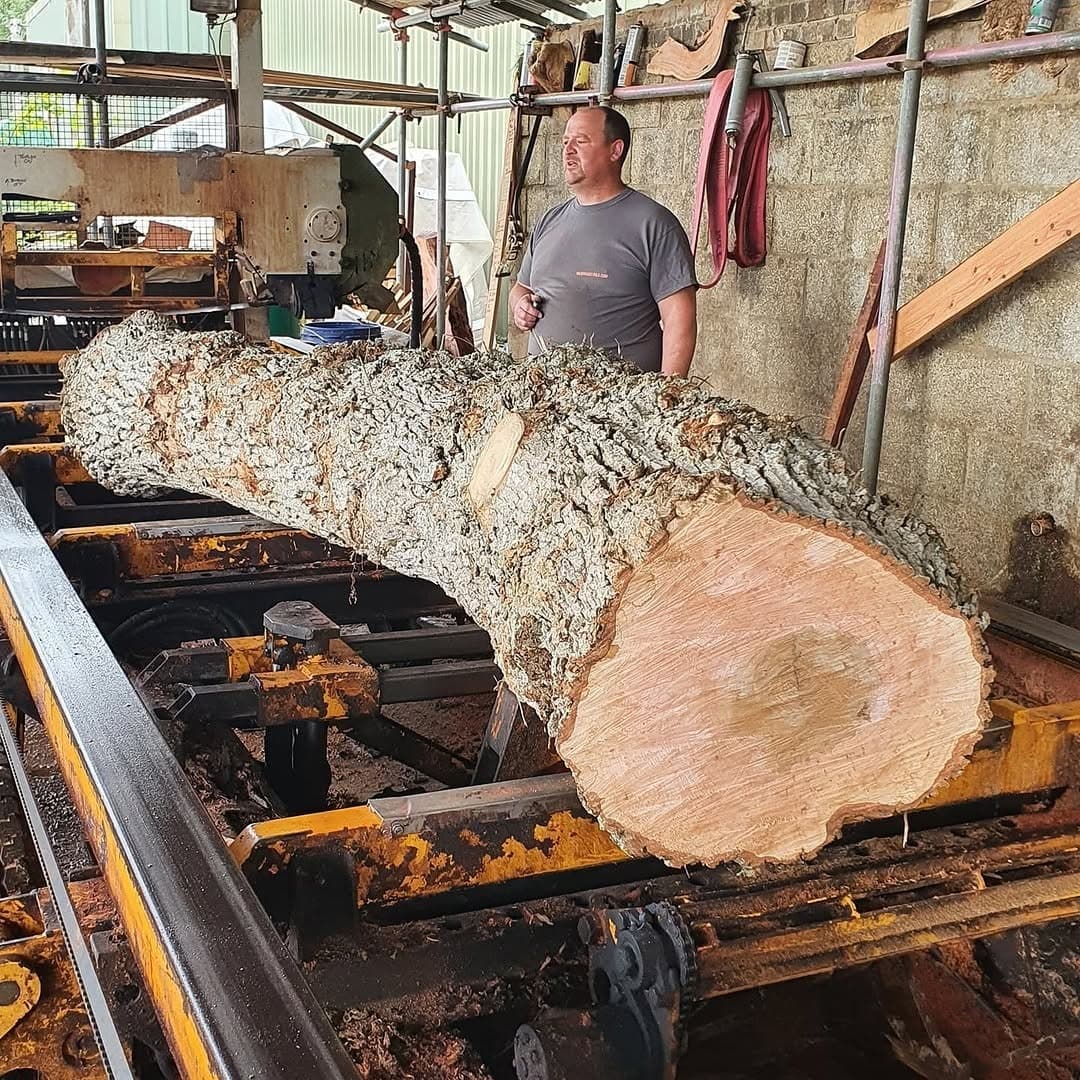
Their timber comes from Kingsley at South Western Sawmill, close enough to call in on. He works mainly with storm-felled and diseased trees locally scourced, so every board can be traced back to the tree it came off and none of it was cut for the purpose. Andy and Bee pick the boards with him. That is how a length of spalted beech became a dogfish rather than firewood.
Much of the work is chosen for what has already happened to the wood. Spalting is the pigmentation left in the timber when fungi has entered either felled of stressed trees. The black line, streaks of red or brown mottling are the marks left by the fungal mycelium leaves behind as it travels through a trunk, and it draws differently in every species.
Quarter-sawn oak, sweet chestnut and London plane give something else, opening their medullary rays so the surface catches light like the inside of a shell. Burring is where the tree has been injured or mechanically damaged and the burr is the scar left behind. Just like human scars the burr is a record of the an event in the life of the tree. The grain grows in all directions rather than straight and produces beautiful patterns.
Andy picks boards for what nature has already done, his role is to just accentuate natures hard work.
Andy's own vessels are hollow forms in a Japanese idiom: closed shapes with a small opening and a turned foot, of the kind that have to be planned before the first cut. On a joint piece he works from a sketch of Bee's, because he needs to know where it is going. The rest of the time he is chasing a form he has not got right yet, which by his own account is most of the time.
Bee has painted since she left school in 1984, starting with nature studies and pet portraits while studying graphic design and art at college in Winchester.
She works now in pyrography, carving, paint and engraved glass. A pair of magpies burned life-size across a live-edge board. An artist's mannequin hand covered end to end in fine burned pattern. She decides what a piece will be, and Andy often does not see it whole until it is surrendered to him for final finishing and polish.
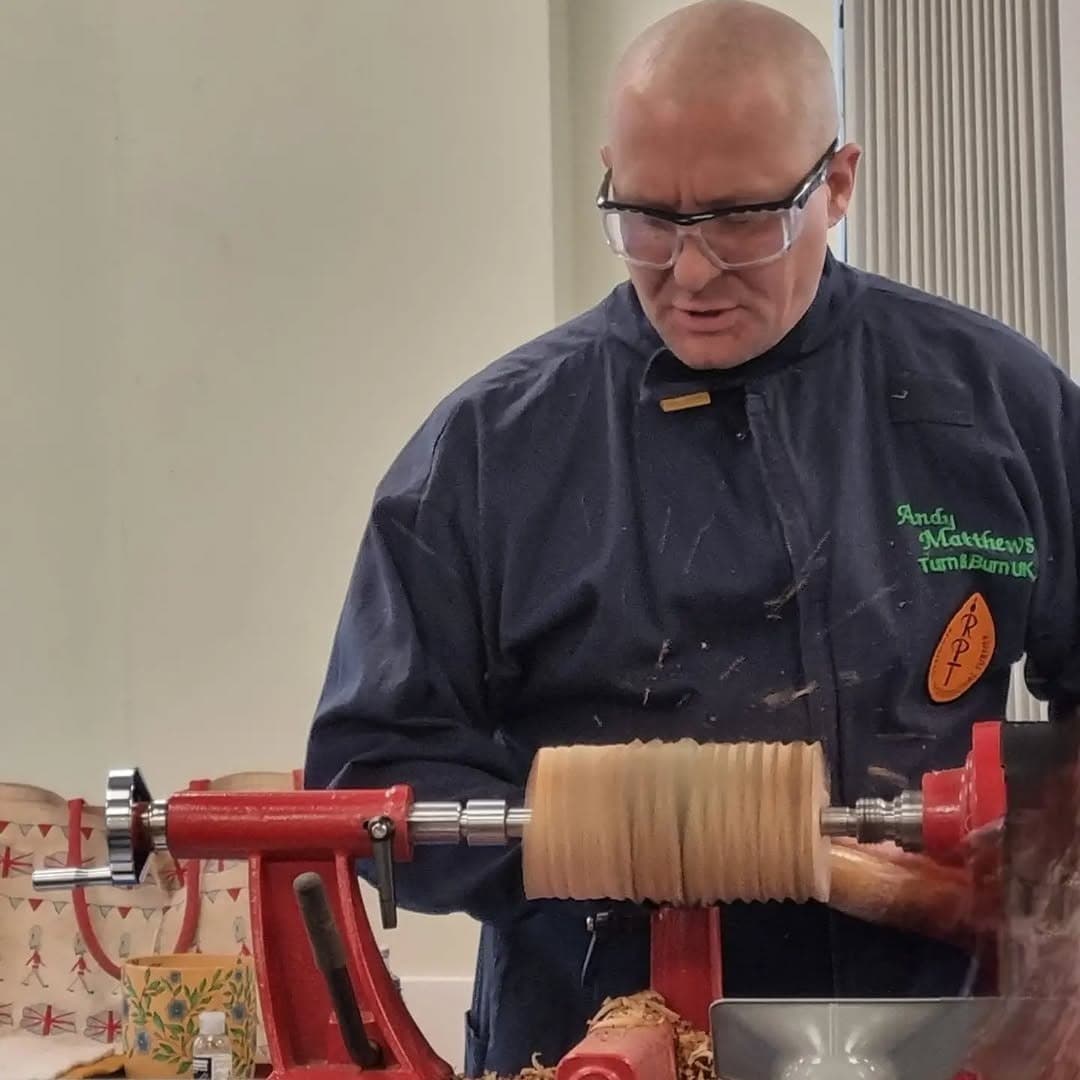
Andy came to the lathe in about 2015, on a forty-year-old machine given to him by his Dad, and taught himself via YouTube. Bee arranged for a days tutorship with Mark Sanger as a birthday present and their friendship has grown from there. He completed the certificate in Woodturning with the Association of Woodturners of Great Britain in 2019 and was assessed and accepted onto the Register of Professional Turners in March 2025. He credits two people for this achievement: Bee, who is his muse and Mark Sanger RPT, who mentored him.
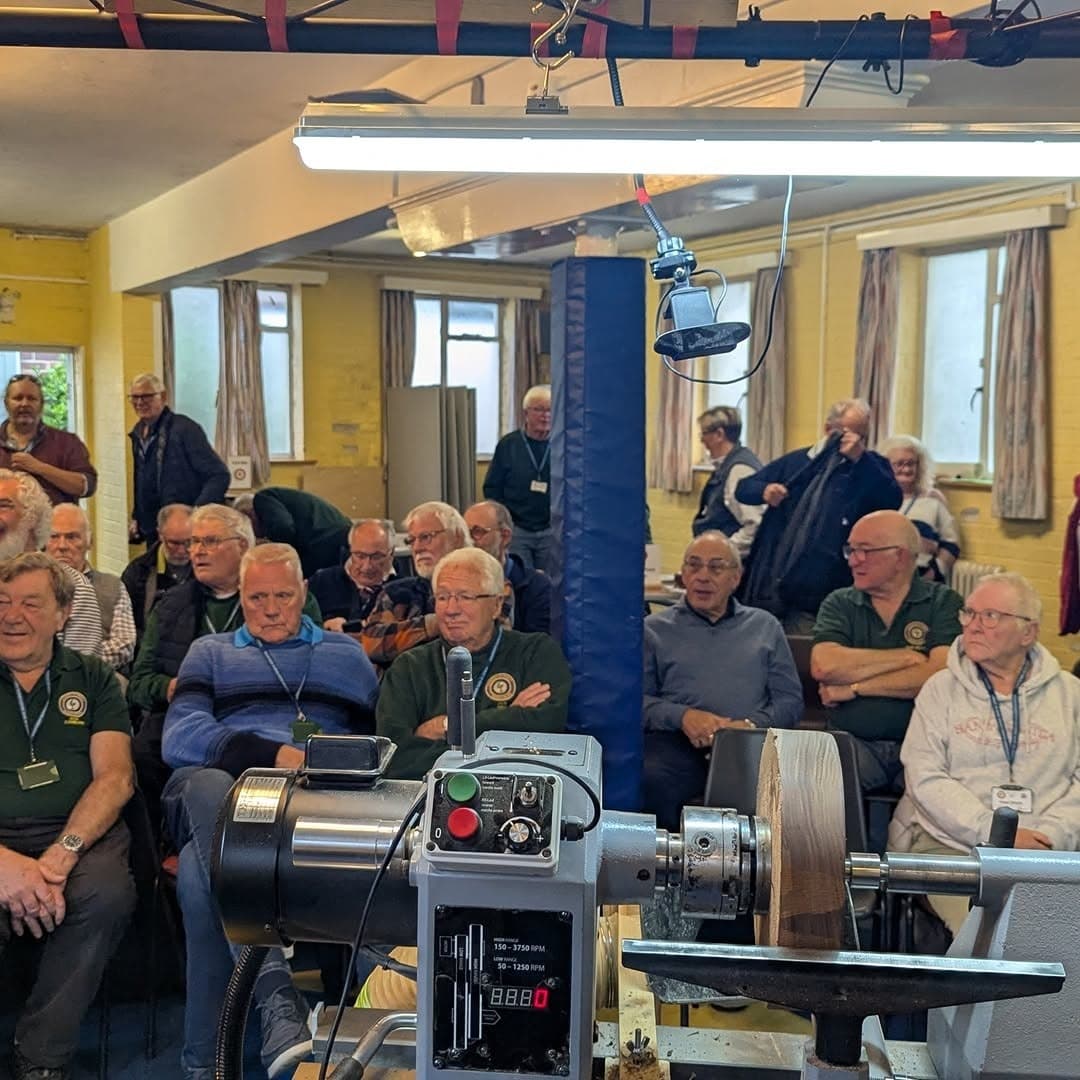
They both demonstrate now, at woodturning clubs across England and they teach pyrography and turning. In 2025 Andy was one of the headline demonstrators at the Chestnut Products Woodturning Weekender, turning a two-part hollow form in English walnut from the same sawmill.
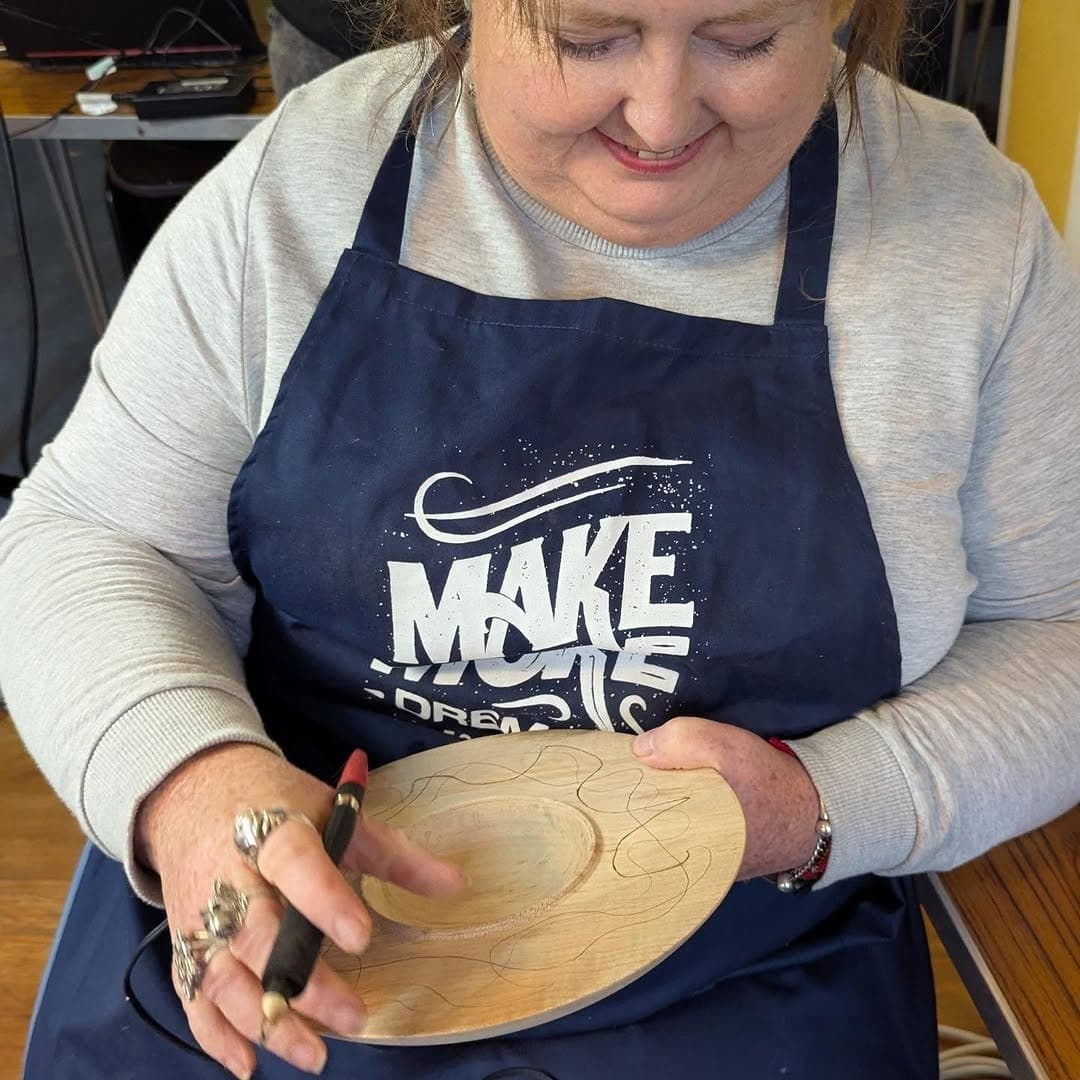
British hardwood throughout: oak, beech, ash, walnut, apple, sweet chestnut, London plane and yew. All of it storm-felled or diseased, none of it cut for the purpose, and most of it heading for biomass before they got to it.
Andy does not use epoxy resin. It is the usual way to fill a split or a void in turned work, and he has decided against it because it puts more microplastic into the world, so a split or a void stays as it is. Finishes are Danish oil, hard wax oil, Microcrystalline wax or lacquer depending on the piece.
Colour, where it appears, is Bee's: spirit stain or high pigment artist acrylics and burned line rather than anything poured. They work to the timber in front of them, so two pieces to the same design come out different.