

Medieval and folklore crafts still made in Britain today
Several crafts that began in medieval Britain are still made here by hand today: inlaid floor tiles, leaded stained glass, letterpress printing from hand-set metal type, and oak swill baskets. Each of them is now on the Heritage Crafts Red List of endangered crafts. Alongside them sit the folk crafts and folk stories that grew up around the farming year, from the corn dolly plaited from the last sheaf of harvest to the riddle ballads that were being written down in the fifteenth century.
Medieval things are having a moment this autumn, on the catwalks and all over Pinterest and TikTok, but most of what gets called medieval is costume. The makers below are doing the real thing, using the same materials and, in most cases, the same methods as the people who made the originals seven or eight hundred years ago.
WHICH MEDIEVAL CRAFTS ARE STILL MADE IN BRITAIN?
- Inlaid (encaustic) floor tiles, first made in Britain in the mid-thirteenth century and now Critically Endangered.
- Leaded stained glass, made in Britain since glaziers were brought over from Gaul in 674; the historic, leaded form is Endangered.
- Letterpress printing, brought to England by William Caxton in the fifteenth century and now Endangered.
- Oak swill baskets, a splint basket whose first records in the UK date from the fifteenth century, now Critically Endangered.
- Corn dollies and straw work, harvest figures recorded from the 1500s. Endangered, with nobody now earning their main living from it.
The statuses are from the Heritage Crafts Red List, checked in October 2026.
WHAT IS A MEDIEVAL INLAID FLOOR TILE?
An inlaid tile has its pattern set into the clay rather than painted on top of it. A carved wooden stamp is pressed into a slab of soft red clay, the hollow it leaves is filled with white clay slip, and once the tile has dried to leather-hard the excess is scraped back to reveal the design. Because the pattern goes right through the surface, it survives being walked on, which is why thirteenth-century floors can still be read today. They are often called encaustic tiles, a Victorian name borrowed from wax painting that is not really accurate, since nothing is burnt in.
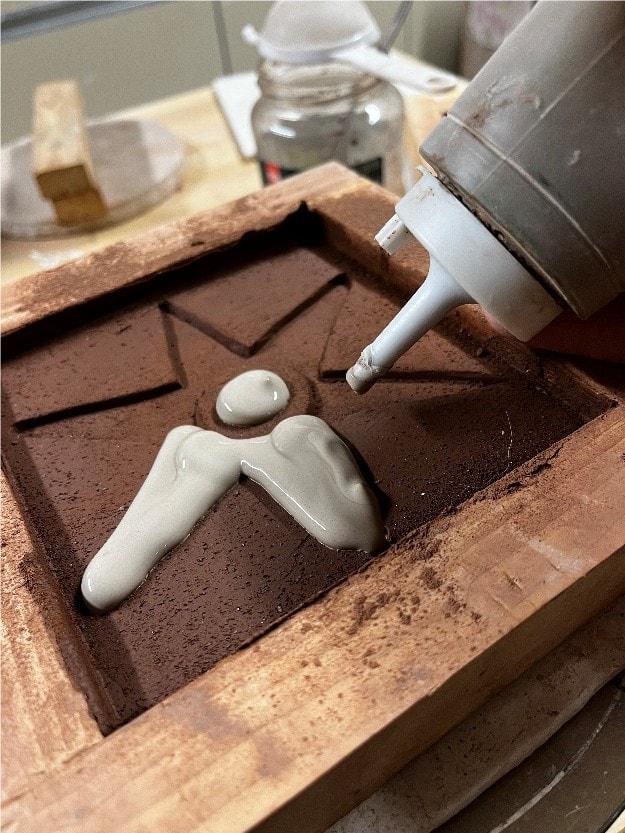
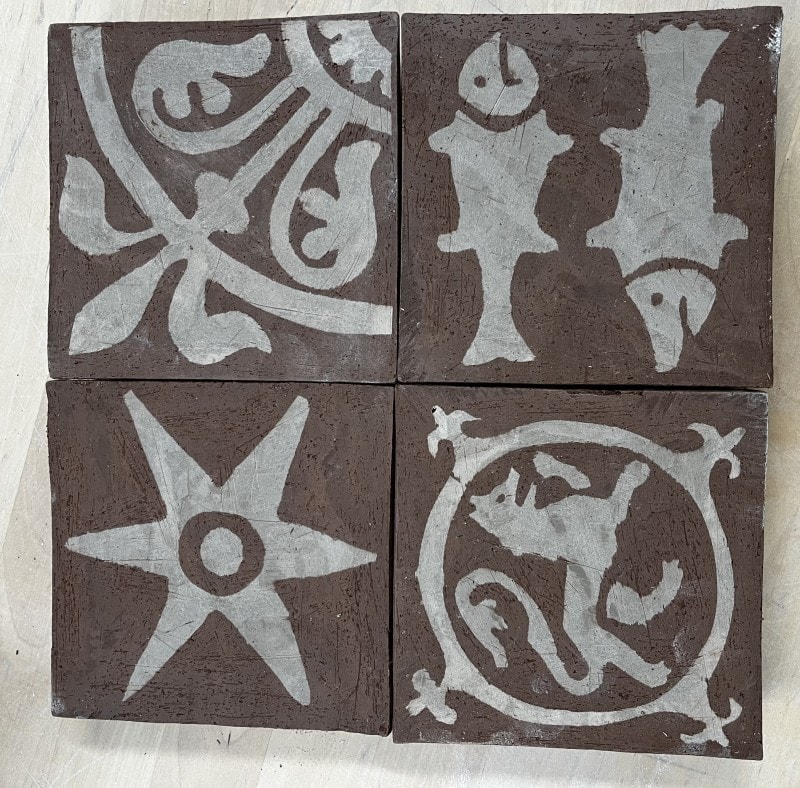
Tom Chamberlain makes them in Hampshire, near Wickham, from red clay he digs himself, and he copies his designs from real medieval tiles. His lion comes from a tile found at Winchester Cathedral and Winchester College; Winchester's retrochoir is often described as the largest area of thirteenth-century inlaid tiles still in place in England. His elephant is copied from a tile in the parish church at Muchelney on the Somerset Levels, and the briar rose that runs across a set of four comes from a tile from Berry-au-Bac in France, now in the Musée de Cluny in Paris. He glazes them with a modern lead frit, a descendant of the lead glaze the medieval tilers used, so they are for walls and shelves rather than for food.
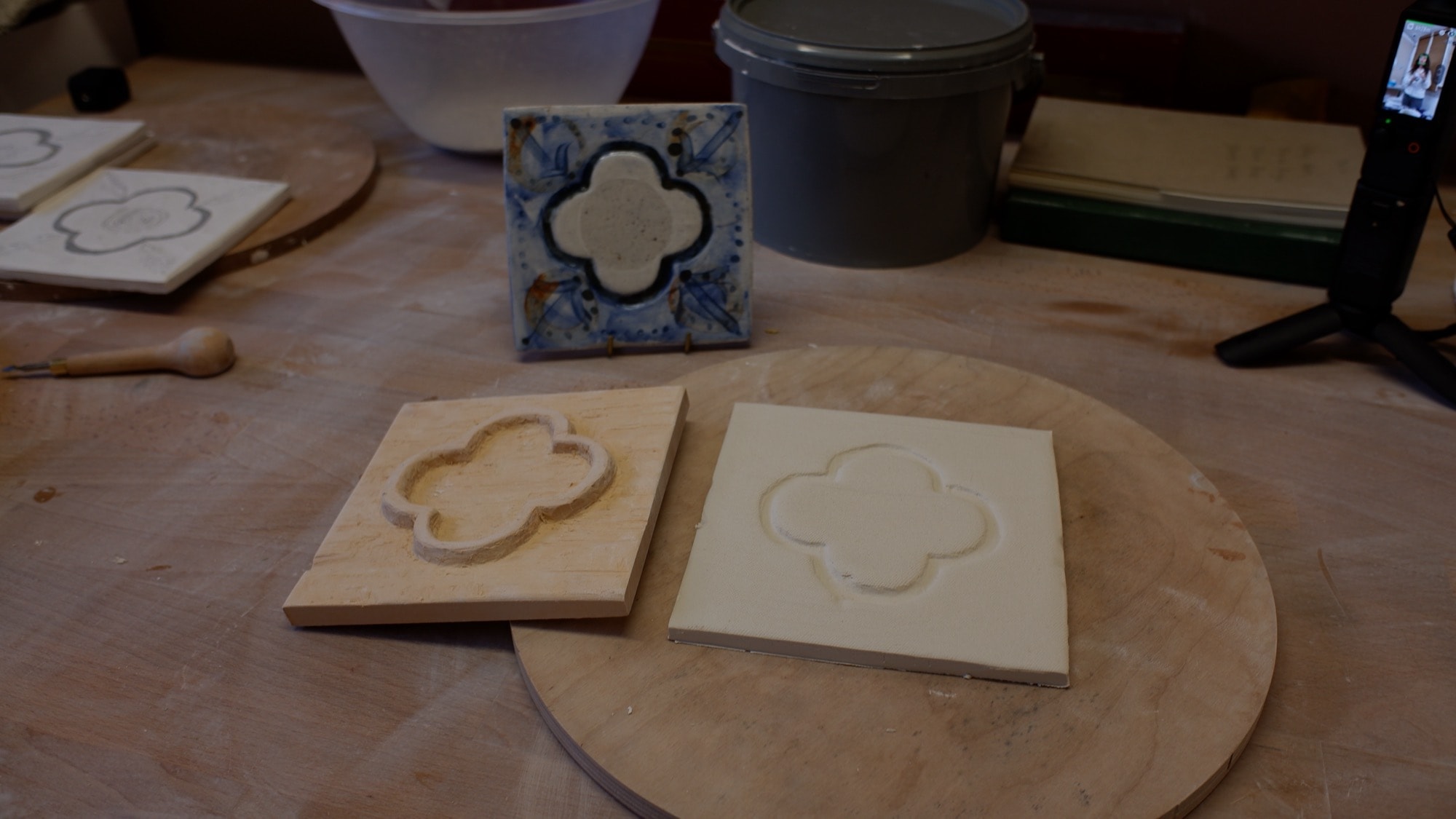
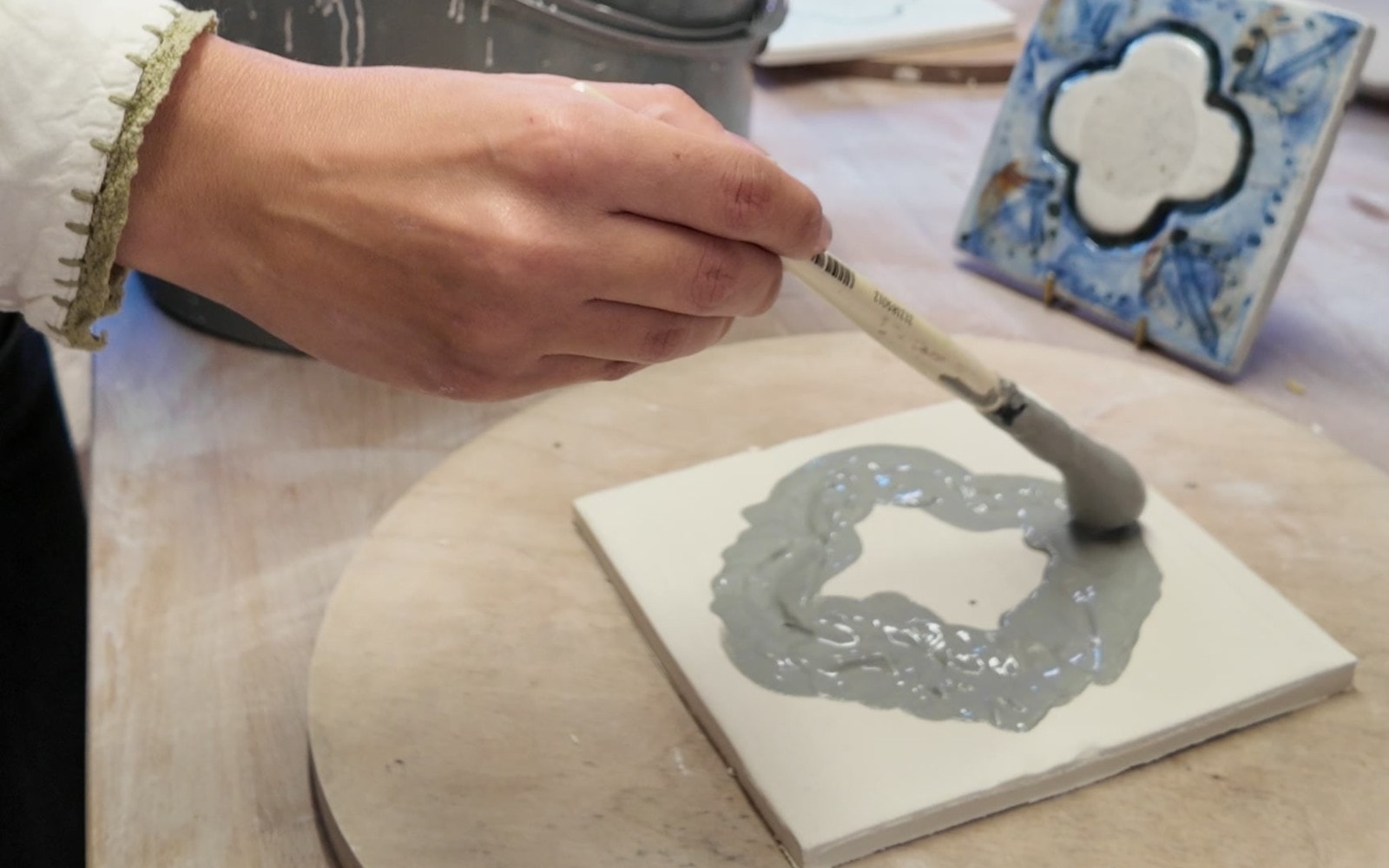
In Cardiff, Bethan Hughes Jones of Cerameg Traed Brân uses the same technique on porcelain, carving her own wooden stamps and filling the hollows with coloured slip, so her quatrefoil tiles come out blue and white rather than red and cream. Heritage Crafts lists encaustic tile making as Critically Endangered, with between one and five people in Britain earning their main income from it. The industry began to decline in the 1450s, was revived in the 1830s and 1840s by firms such as Minton, and died out again in the early 1950s, so every tile made this way now is part of its third life.
IS STAINED GLASS STILL MADE THE MEDIEVAL WAY?
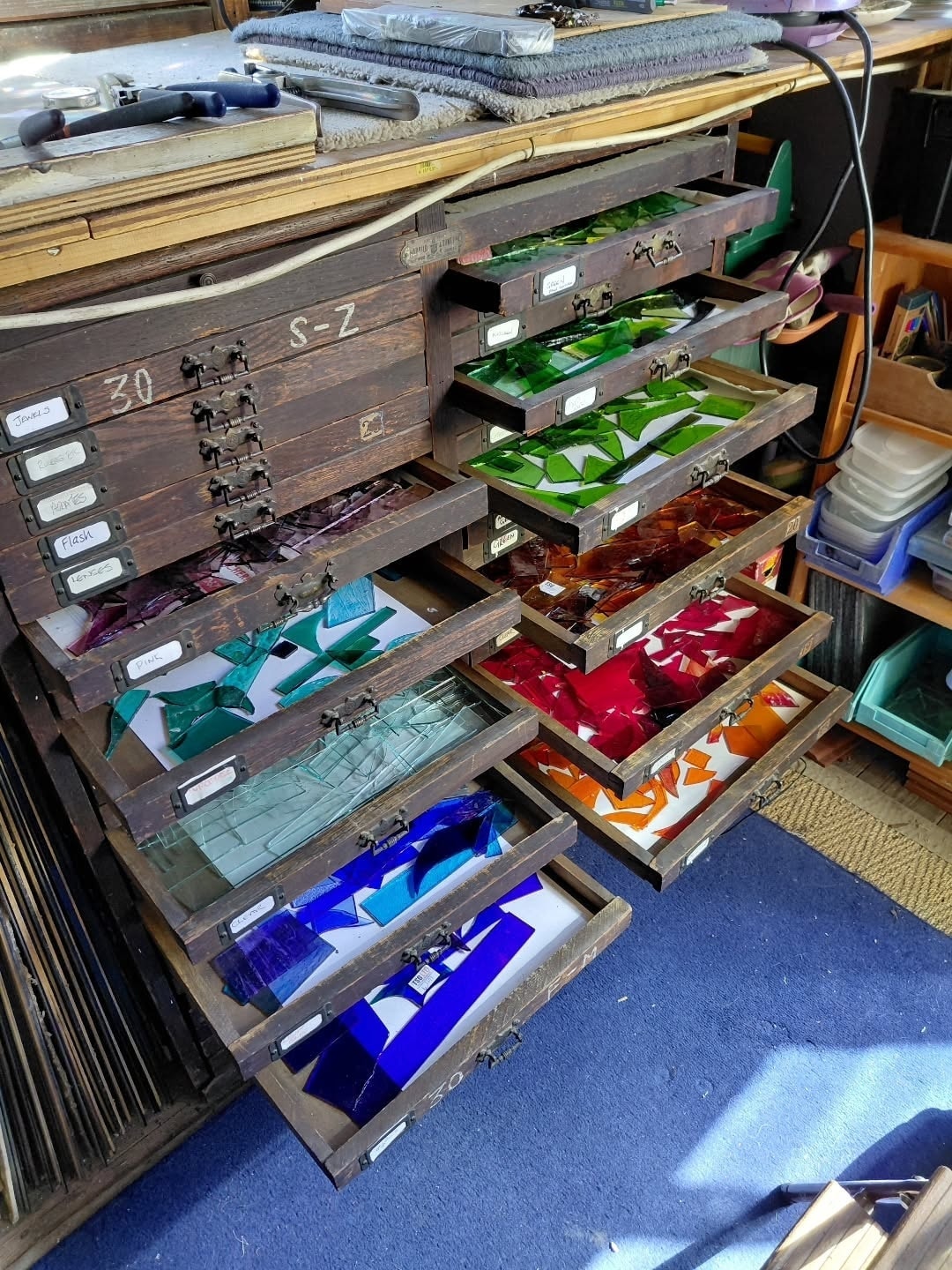
Some of it still is, and it is made in almost exactly the way it was eight hundred years ago. The Venerable Bede records that in 674 Benedict Biscop sent to Gaul for glaziers to make the windows of the new monastery at Wearmouth, because the craft was then unknown in Britain. A medieval window was made from pieces of coloured glass cut to a full-size drawing, painted with a dark glass paint, fired in a kiln, and then held together with strips of lead, with the joints soldered and the whole panel cemented to make it weatherproof. Around 1300 glaziers discovered that silver could stain white glass yellow, which is where the golds in so many church windows come from.
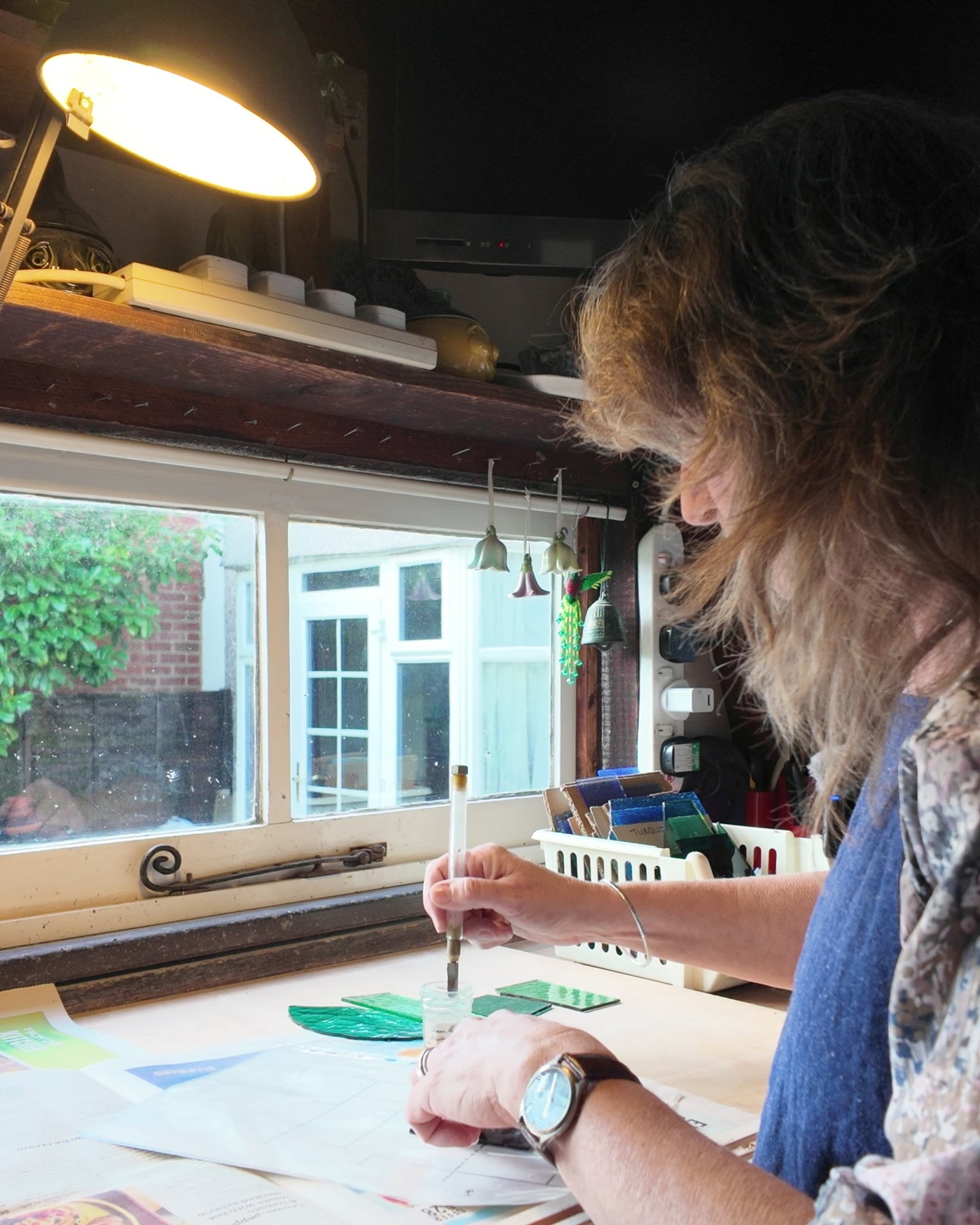
Mary Corkery of Alandale Glass works this way in a garden workshop near Harrow. She draws, cuts, paints, fires, leads and cements every panel herself, which is the craft Heritage Crafts calls historic stained glass window making and lists as Endangered. Between twenty-one and fifty people in Britain earn their main income from it, and many of the courses that trained them no longer exist. Her panels are made to hang in a window, where the light changes them through the day.
WHO STILL SETS TYPE BY HAND?
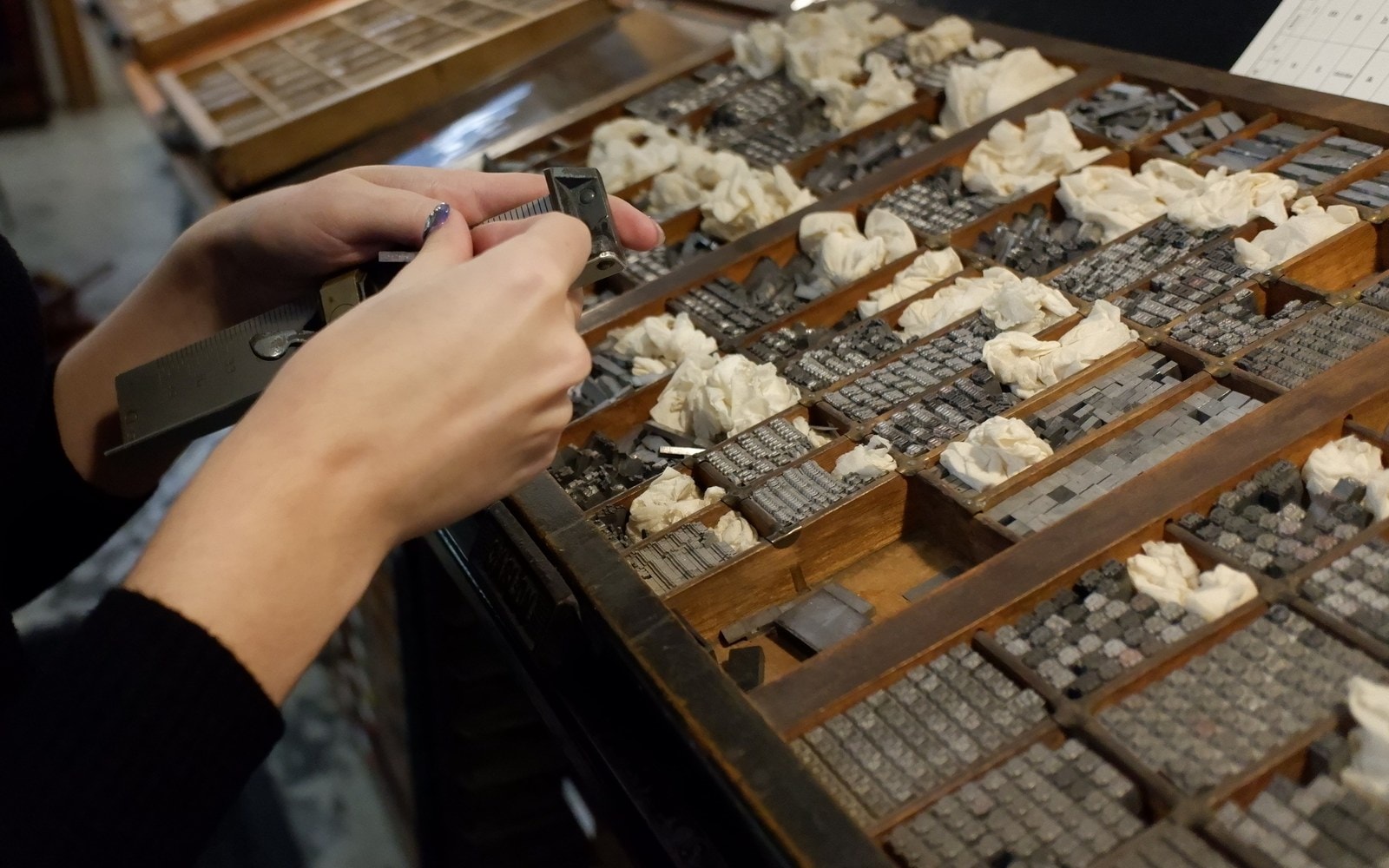
Letterpress printing reached England in the fifteenth century, when William Caxton set up his press, and for the next four hundred years almost every printed word in Britain was set by hand, one metal letter at a time, upside down and back to front, in a composing stick. Offset printing replaced it in the twentieth century, and by around 1980 it had stopped being a commercial process at all. Heritage Crafts lists letterpress as Endangered, with between eleven and twenty people earning their main income from it.
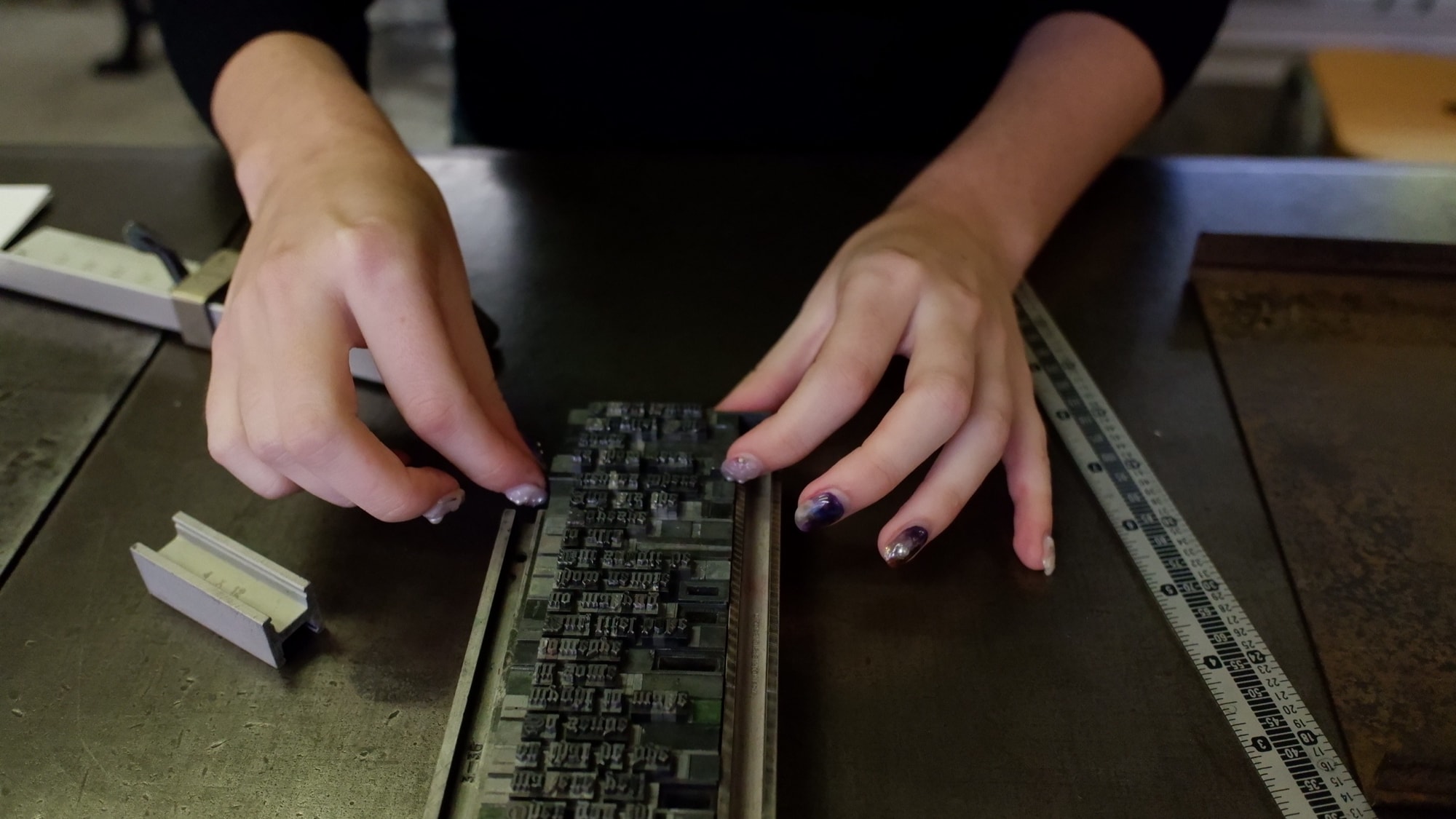
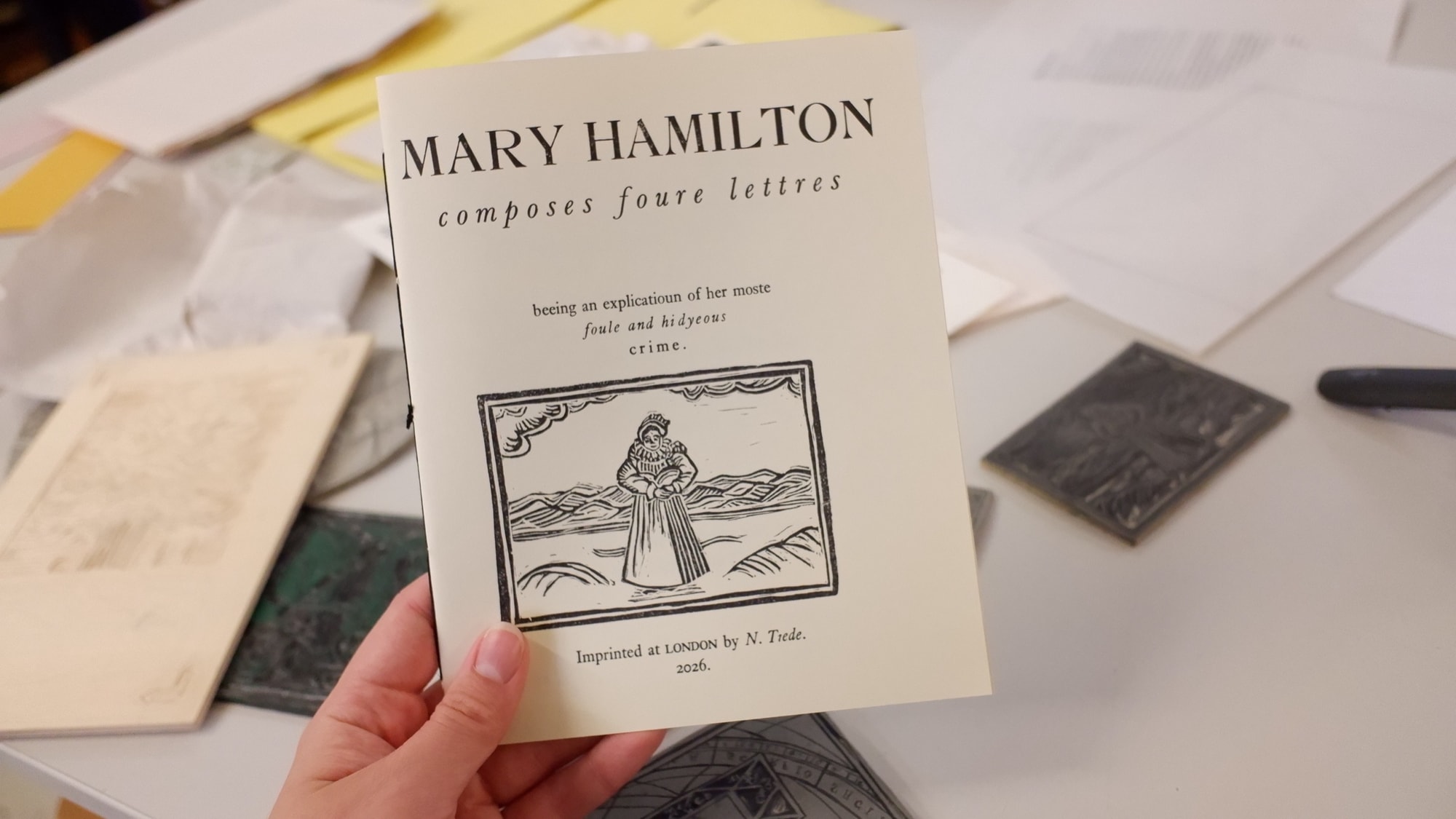
Natalie Tiede sets metal type by hand on the presses at the London Centre for Book Arts, where I filmed her in October, and she prints chapbooks and broadsides of old ballads and tales. Her pamphlet Mary Hamilton composes foure lettres is set in metal type, sewn by hand, and illustrated with block prints, in a numbered edition. The ballad pages are set in blackletter, the heavy gothic type that early English printers used.
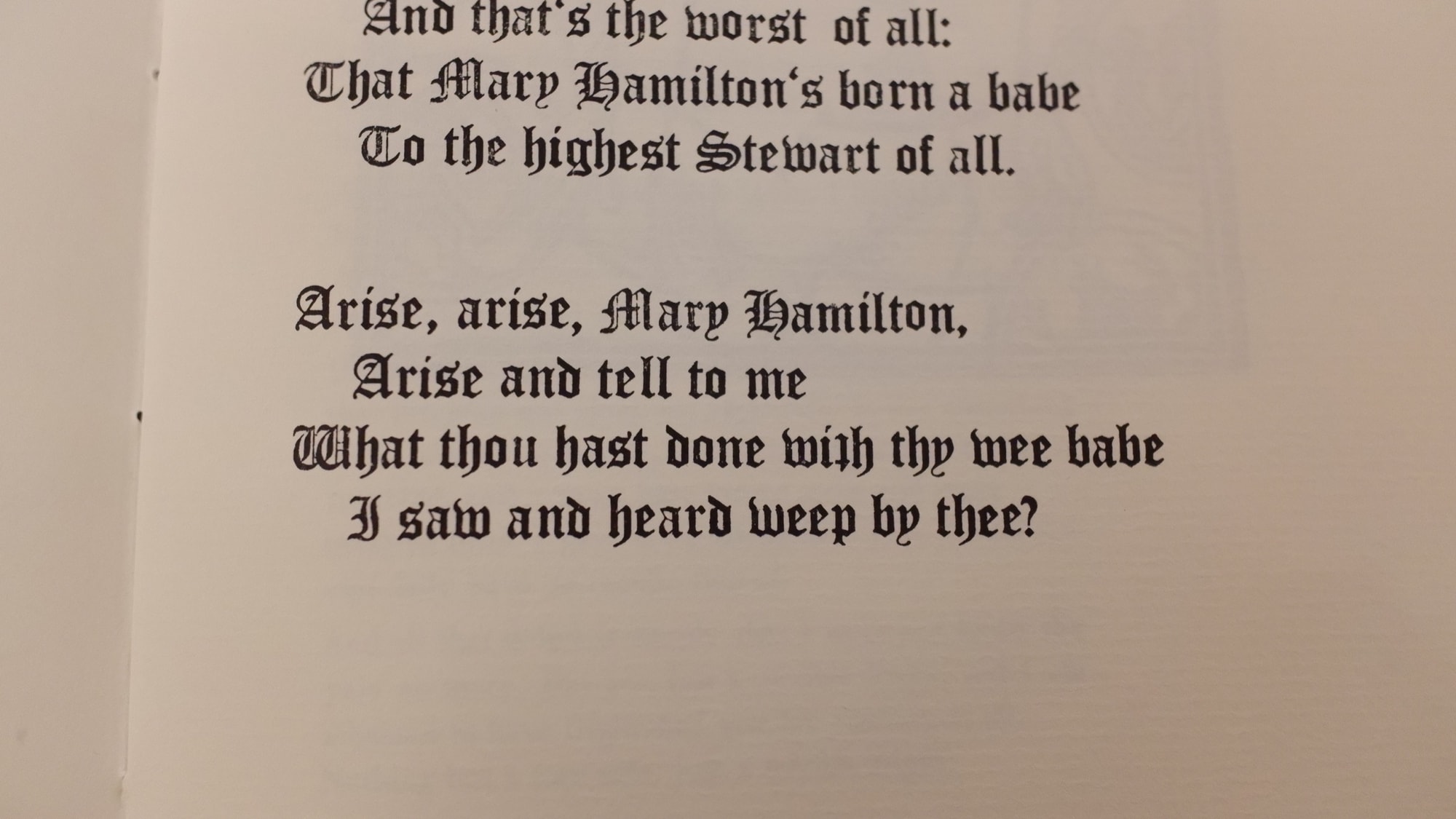
Two of her prints come straight out of the medieval period. Riddles Wisely Expounded is the first ballad in Francis Child's great collection of English and Scottish ballads, and its earliest surviving text, in which a maiden has to answer the devil's riddles to escape him, was written down around 1450. The Nightingale is taken from Laüstic, one of the short verse tales written by Marie de France in the twelfth century. Her St Michael and the dragon is cut in the bold black line of the woodcuts in medieval blockbooks.
HOW OLD IS THE OAK SWILL BASKET?
A swill is a shallow basket woven from thin strips of oak that have been split from a log, boiled and shaved by hand, then woven round a rim of hazel. Heritage Crafts dates the first records of splint baskets in the UK to the fifteenth century, and swills have been made in the southern Lake District for centuries, to carry coal, potatoes, washing and seed. It is now Critically Endangered, with two people in the country earning their main income from it.
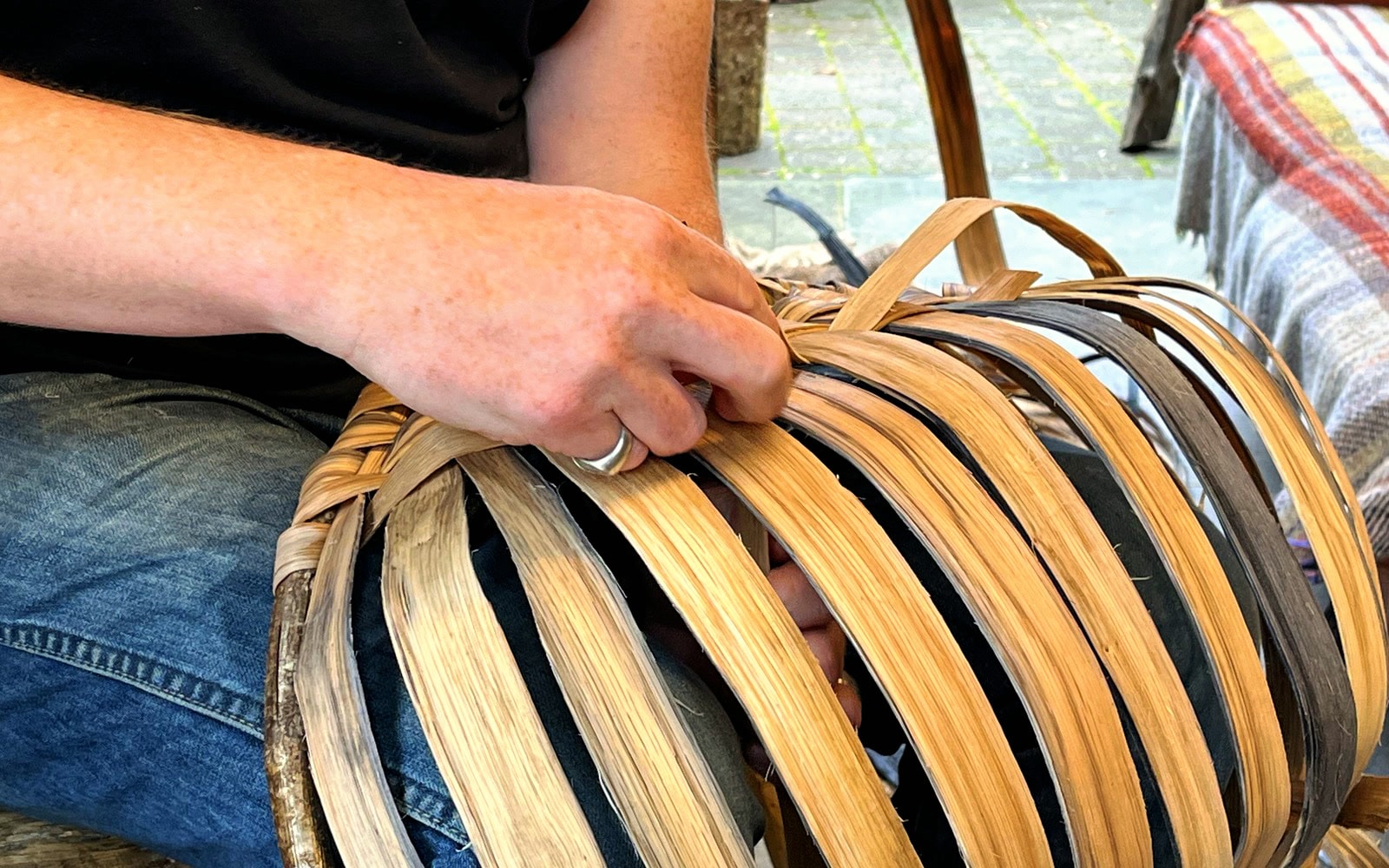
Simon Cooper, The Bumbling Basketeer, makes his swills in the southern Lake District tradition at his workshop in Crieff in Perthshire. A swill is built to be loaded and dropped, so one bought now for logs or apples will still be in use in fifty years.
WHERE DO CORN DOLLIES COME FROM?
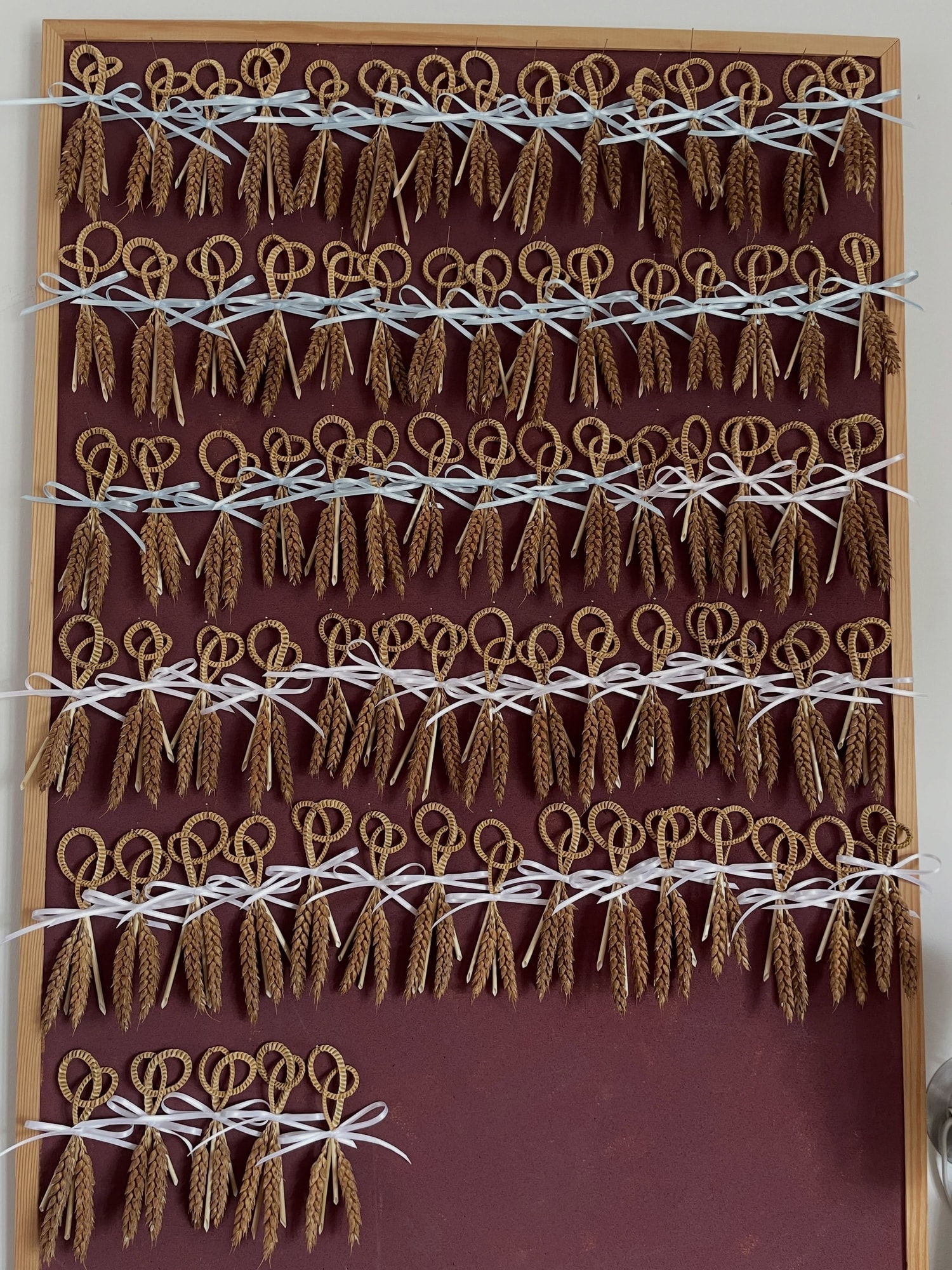
Corn dollies are figures and tokens plaited from straw at the end of harvest. A harvest figure known as the Harvest Maiden is recorded at Windsor in the late 1500s, and the custom was probably older; the name "corn dolly" itself only came into wide use in the twentieth century. The last sheaf of the harvest was plaited into a token and kept through the winter, and in some places it was ploughed back into the field in spring. Heritage Crafts lists corn dolly making as Endangered and records nobody in Britain earning their main living from it.
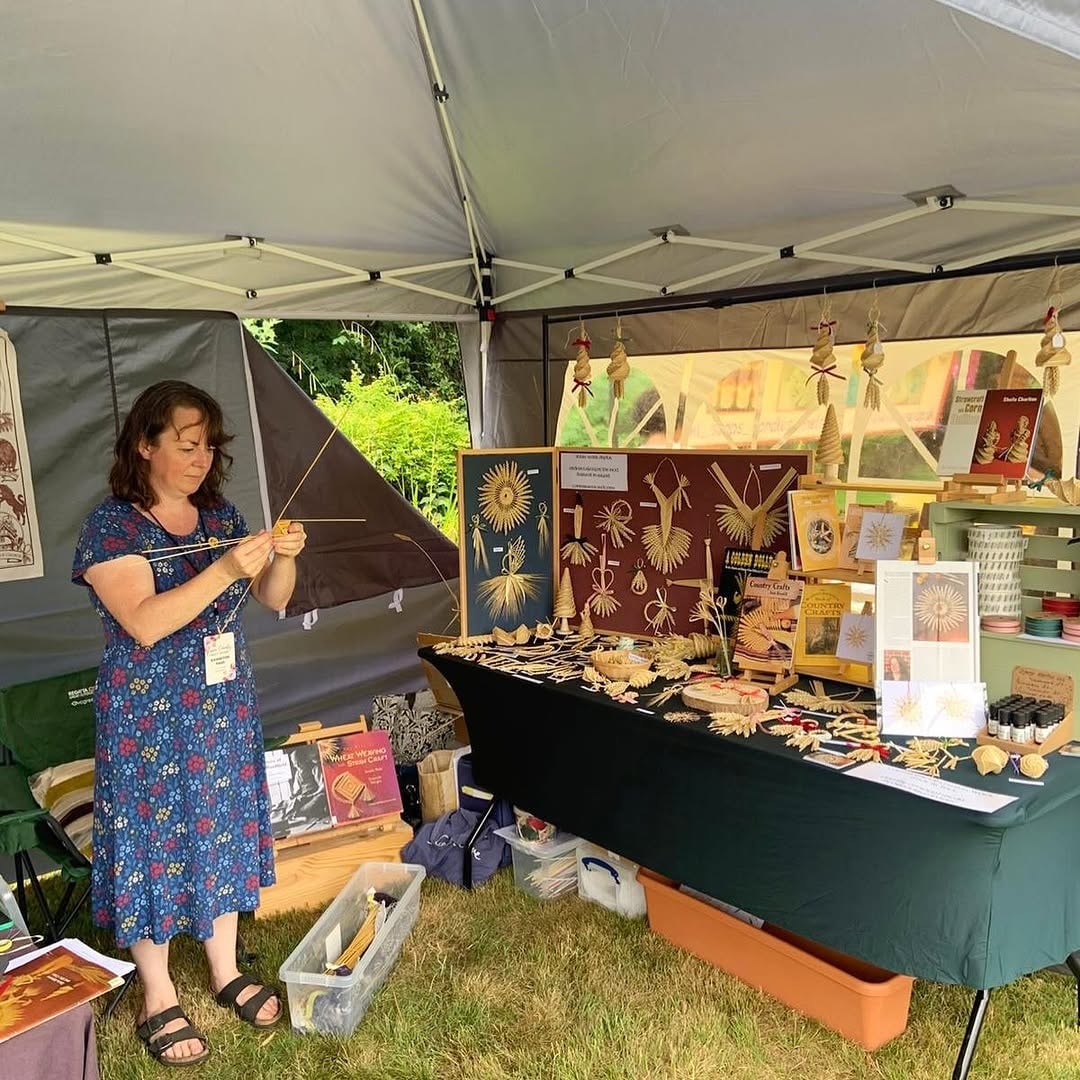
Lucy Hook-Child plaits corn dollies, harvest tokens and lover's knots in Essex from heritage varieties of long-stemmed wheat, grown for straw rather than for grain. Her harvest pieces have sold out for this season, and new ones appear on her shop page as she makes them.
WHICH FOLKLORE CRAFTS CAN YOU BUY?
Folklore lives in stories as much as in objects, and a few makers on The Haud draw on it directly. Megan at Strange Meadows cuts linocuts from myths and stories in rural Scotland, including a series of witches (bog, sea, gothic and Victorian among them) and a wishing tree printed from two blocks in black and gold on Nepalese lokta paper. Annie Rose Edwards pinches small animals and horned figures from stoneware in her studio in New Cross, and Rachael Matthews' book Rag Manifesto, about making, folklore and community, is stocked by Quickthorn Books.
WHERE CAN YOU BUY MEDIEVAL CRAFTS MADE IN BRITAIN?
Everything in this piece is gathered in one place in The Haud's Medieval & Folklore collection, along with each maker's shop. Several of these makers also take commissions, so a tile copied from your own parish church, or a panel made to fit a particular window, can be made to order.
More stories like this
One thoughtful email a month, not a marketing torrent. New makers, seasonal edits, and the stories behind the craft.
How we look after your details: privacy policy